

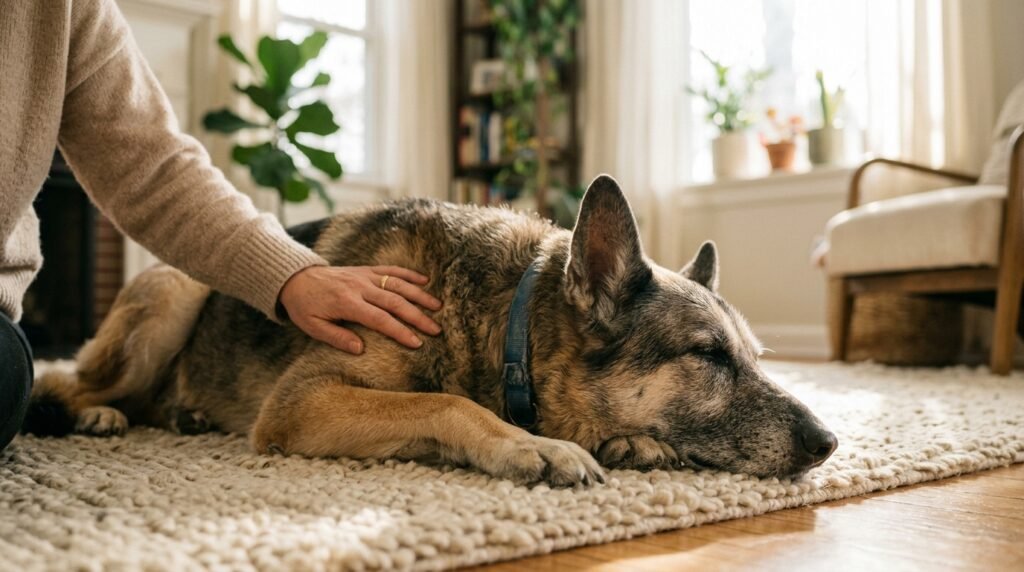
Watching your old dog’s back legs giving out is an alarming experience for any pet owner. You notice your sweet senior dog struggling to rise from their bed, wobbling while walking across hardwood floors, or having their hind legs buckle during a slow stroll in the yard.
You wonder if your aging companion is simply growing tired from old age and you worry whether that sudden hind leg collapse points to a spinal nerve condition like Degenerative Myelopathy or severe joint arthritis pain.
Your concern is completely justified. Hind leg weakness is one of the most visible indicators of physical change in senior dogs. However, rear leg instability is not something you should accept as an inevitable dead end. Many causes are manageable with proper veterinary diagnosis and home mobility aids.
Quick Answer:
An old dog’s back legs giving out is most commonly caused by severe hip osteoarthritis, Intervertebral Disc Disease (IVDD), progressive Degenerative Myelopathy (DM), or age-related muscle atrophy. Early veterinary diagnosis is essential to differentiate painful joint conditions from neurological nerve decay and select appropriate support harnesses or pain management. When sudden hind leg paralysis strikes, review our recovery protocol for IVDD in dogs. Maintaining daily muscle strength safely is essential; read our practical senior dog walking tips.
Key Takeaways:
- Primary Causes: Severe osteoarthritis, Degenerative Myelopathy (DM), IVDD disc herniation, or muscle loss.
- Key Signs: Paw knuckling (walking on tops of toes), foot dragging, crossing hind legs, or sudden collapse.
- Immediate Home Step: Lay non-slip rubber mats over slick floors and use a rear support harness or belly sling.
- Veterinary Threshold: Sudden loss of leg movement or bowel/bladder control requires immediate emergency vet evaluation.
This guide explains why senior dogs lose hind leg strength, six common medical causes, red flags that require a vet, and five practical mobility fixes to keep your dog moving comfortably.
Why Hind Leg Weakness Happens in Senior Dogs
Rear leg strength relies on a complex network of spinal nerves, hip joints, and support muscles. In older dogs, natural aging can weaken any part of this system.
Spinal cord signals that tell the legs how to move can become delayed. At the same time, joint inflammation makes weight bearing painful, causing dogs to avoid using their back legs. Over time, disuse causes leg muscles to shrink.
| Symptom Pattern | Likely Primary Condition |
|---|---|
| Painless foot dragging, paw knuckling | Degenerative Myelopathy (DM) |
| Stiffness rising after rest, improves with movement | Hip Osteoarthritis |
| Sudden back leg collapse with severe pain crying | Intervertebral Disc Disease (IVDD) herniation |
| Swaying rear end, hind legs crossing over | Lumbosacral Stenosis or nerve compression |
| Sudden leg weakness with head tilt and eye darting | Old Dog Vestibular Disease |
Observing how your dog walks and whether they experience pain helps narrow down the exact cause. Let us examine the six main conditions responsible for back leg failure.
6 Causes of Old Dog Back Legs Giving Out
1. Degenerative Myelopathy (DM)
Degenerative Myelopathy is a progressive neurological disease affecting the spinal cord in older dogs. It is most commonly seen in breeds like German Shepherds, Boxers, Corgis, and Golden Retrievers past age eight.
DM causes the myelin sheath protecting spinal nerves to slowly break down. The hallmark of DM is that it is progressive yet entirely painless. It begins with subtle hind leg weakness, foot dragging, and paw knuckling, where the dog walks on the tops of their toes.
As DM advances over six to twelve months, rear leg weakness progresses toward full paralysis. While there is no cure, physical therapy and supportive mobility carts help dogs maintain high quality of life.
2. Severe Hip Osteoarthritis and Joint Degeneration
Hip arthritis is the most frequent cause of hind leg weakness. Years of activity wear down joint cartilage, resulting in bone-on-bone friction inside the hip sockets.
Unlike DM, arthritis is painful. Your dog may struggle significantly when rising from a lying position, move with a stiff gait, and show hind leg trembling. They may hesitate before attempting stairs or couch steps.
Targeted pain relief, joint supplements, and non-slip home rugs can dramatically improve mobility for arthritic dogs. Explore our guide on helping a senior dog get up for practical lifting techniques.
In severe cases where joint degeneration causes unmanageable bone grinding, an orthopedic procedure such as FHO surgery for dogs can eliminate painful hip contact and restore pain-free movement.
3. Intervertebral Disc Disease (IVDD)
Spinal discs act as shock-absorbing cushions between vertebrae. In older dogs, these discs can dry out, bulge, or rupture into the spinal canal.
A ruptured disc compresses spinal nerves, causing sudden hind leg weakness, wobbliness, or paralysis. IVDD is usually painful. Your dog may arch their back, cry out when touched, or refuse to move their head.
According to spinal health guidelines on PetMD’s guide on canine neurological conditions, sudden onset spinal weakness requires urgent vet evaluation to prevent permanent nerve damage.
4. Lumbosacral Stenosis and Nerve Compression
Lumbosacral stenosis occurs when the spinal canal narrows at the junction where the spine joins the pelvis. This narrowing squeezes the nerve roots that control the hind legs and tail.
Dogs with lumbosacral stenosis often experience tail weakness, hind leg weakness, and pain when their lower back is pressed. Their back legs may cross over each other while walking, causing them to trip.
Veterinary anti-inflammatory medications and strict activity modification can relieve nerve pressure effectively.
5. Old Dog Vestibular Disease
Vestibular disease affects the balance center in the inner ear and brain. While it is not a leg disorder, it causes sudden, dramatic balance loss that looks like back leg failure.
An old dog with vestibular disease will suddenly stumble, fall over, tilt their head severely, and have rapidly darting eyes (nystagmus). They may be unable to stand because the world is spinning around them.
While frightening, vestibular disease usually improves significantly within a few days with supportive care. Read our complete guide on senior dog losing balance for recovery expectations.
6. Sarcopenia (Severe Age-Related Muscle Loss)
Sarcopenia is the natural loss of muscle mass that occurs in geriatric dogs. Without adequate muscle mass, rear leg joints lose their structural support.
Dogs with severe sarcopenia have noticeably thin, hollow-looking thighs. Their back legs sway while walking, and their knees may buckle when standing still.
Gentle low-impact exercise and vet-guided protein nutrition help preserve remaining muscle tissue.
When to Call Your Vet: Urgent Red Flags
Back leg weakness should always be evaluated by a veterinarian. However, certain symptoms indicate a medical emergency that cannot wait.
| Symptom Combination | Required Action |
|---|---|
| Leg weakness + Dragging toes slowly over months | Schedule vet check within a few days |
| Sudden collapse + Inability to move rear legs | Immediate emergency clinic visit |
| Leg weakness + Loss of bladder/bowel control | Immediate emergency veterinary evaluation |
| Leg weakness + Crying out in severe pain | Same-day emergency vet appointment |
Schedule a prompt vet visit if:
- Your dog’s rear legs have been getting progressively weaker over recent weeks.
- Your dog is scraping the tops of their nails on the pavement during walks.
- Your dog has trouble standing up on smooth indoor floors.
Seek immediate emergency care if:
- Your dog suddenly loses all movement in their back legs within hours.
- Your dog screams or whines in intense spinal pain when moving.
- Your dog loses urinary or fecal sphincter control alongside leg weakness.
According to veterinary research on VCA Hospitals guide on Degenerative Myelopathy, early diagnosis is essential to begin physical therapy before severe atrophy sets in.
5 Safe Home Mobility Solutions for Weak Back Legs
While working with your vet on a diagnosis, you can transform your home environment to support your dog’s mobility safely.
1: Install Non-Slip Rubber Mats and Yoga Mats
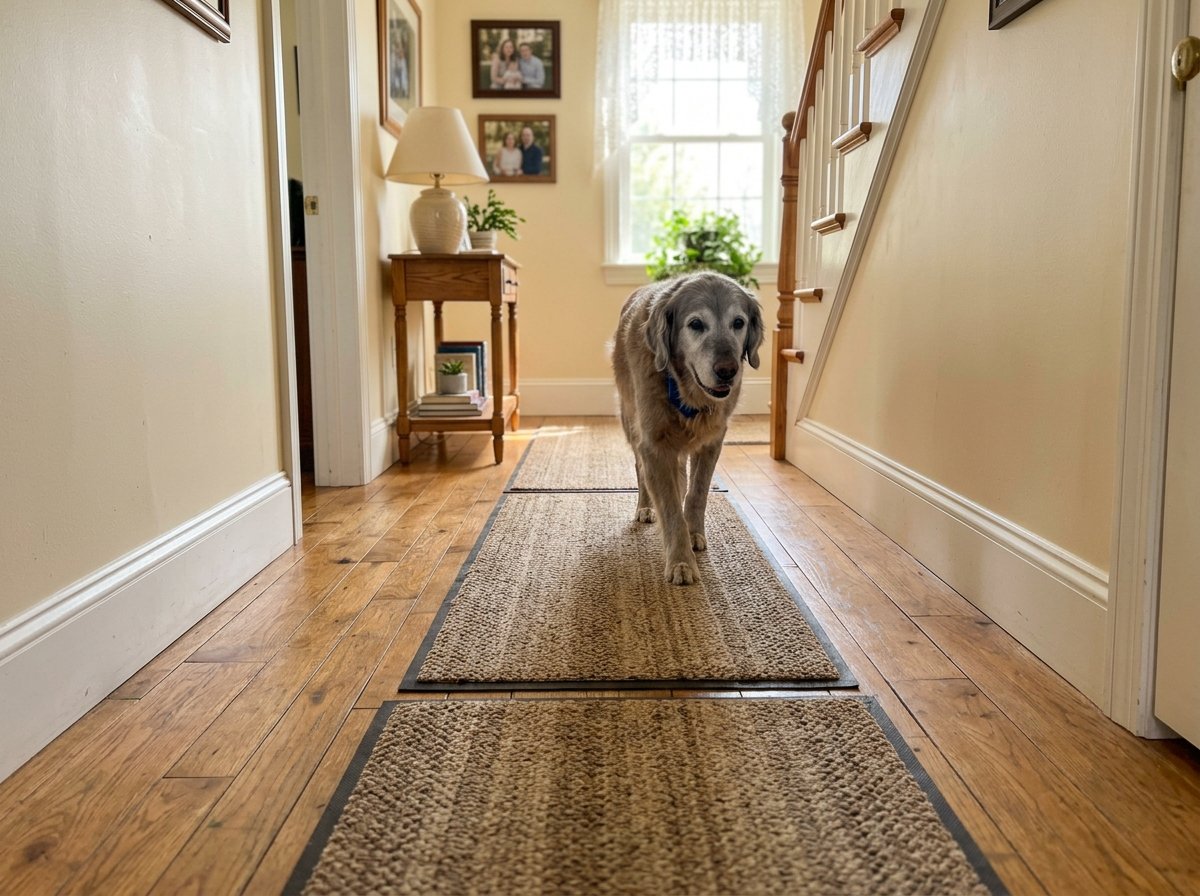
Slick hardwood, laminate, or tile floors are major hazards for dogs with weak rear legs. Slipping causes panic and joint strain.
Cover all primary walking paths with non-slip rubber-backed rugs or inexpensive yoga mats. Mats give your dog’s paws immediate traction, allowing them to stand without slipping.
Place non-slip mats around their food bowls, water dishes, and favorite sleeping spots.
2: Use a Rear Support Harness or Belly Sling
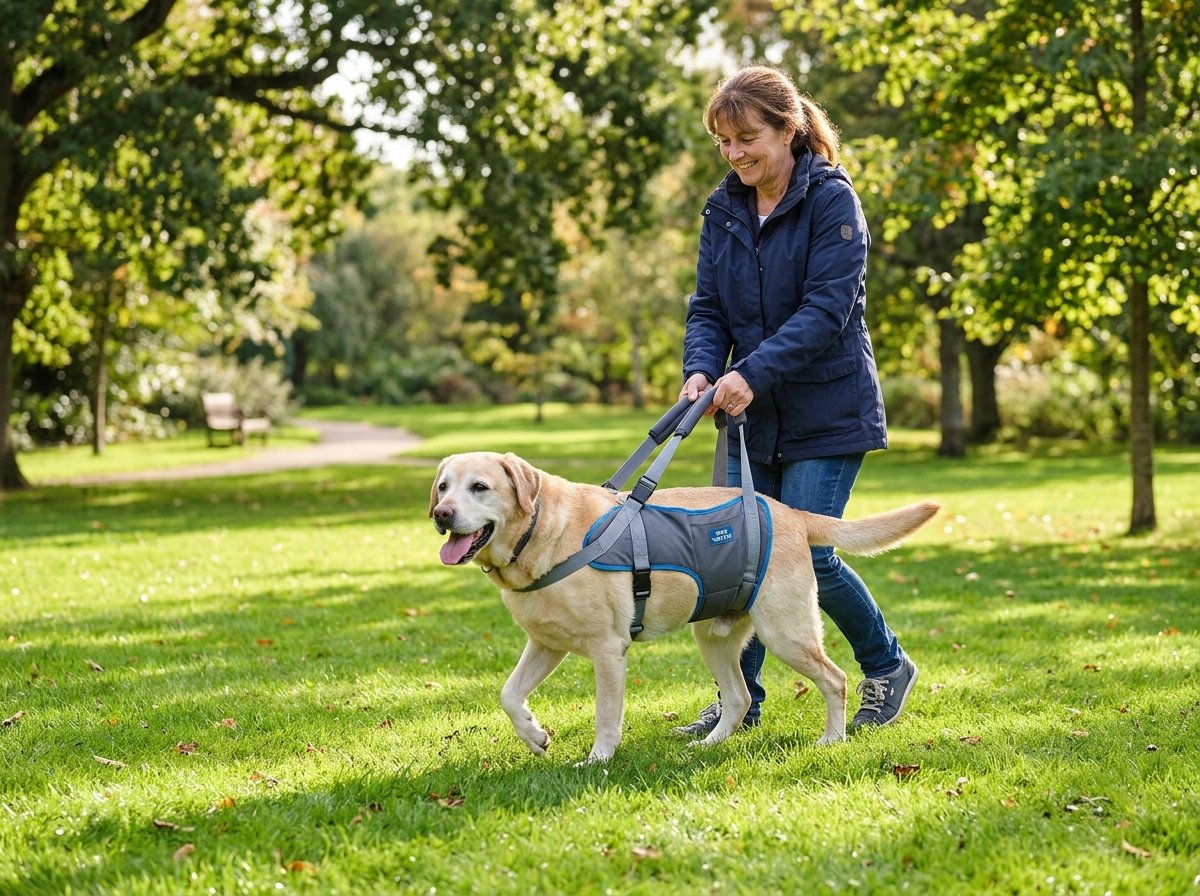
Lifting a large dog by their tail or legs can cause severe injury. A rear support harness or soft belly sling allows you to assist them safely.
Pass a padded towel or commercial mobility sling under your dog’s belly just in front of their rear legs. Hold the handles to support their weight while they rise or walk outside to potty.
Rear support harnesses take weight off weak joints, preventing falls while keeping your back safe. Learn about specialized carts and slings in our overview of mobility aids for senior dogs.
3: Block Access to Stairs and Elevated Furniture
Stairs present severe risks for dogs with failing back legs. A single missed step can result in a dangerous fall.
Block access to staircases using sturdy baby gates. Use low-angle padded ramps if your dog needs to navigate one or two steps to reach the yard.
Never allow a dog with weak hind legs to jump on or off couches or beds.
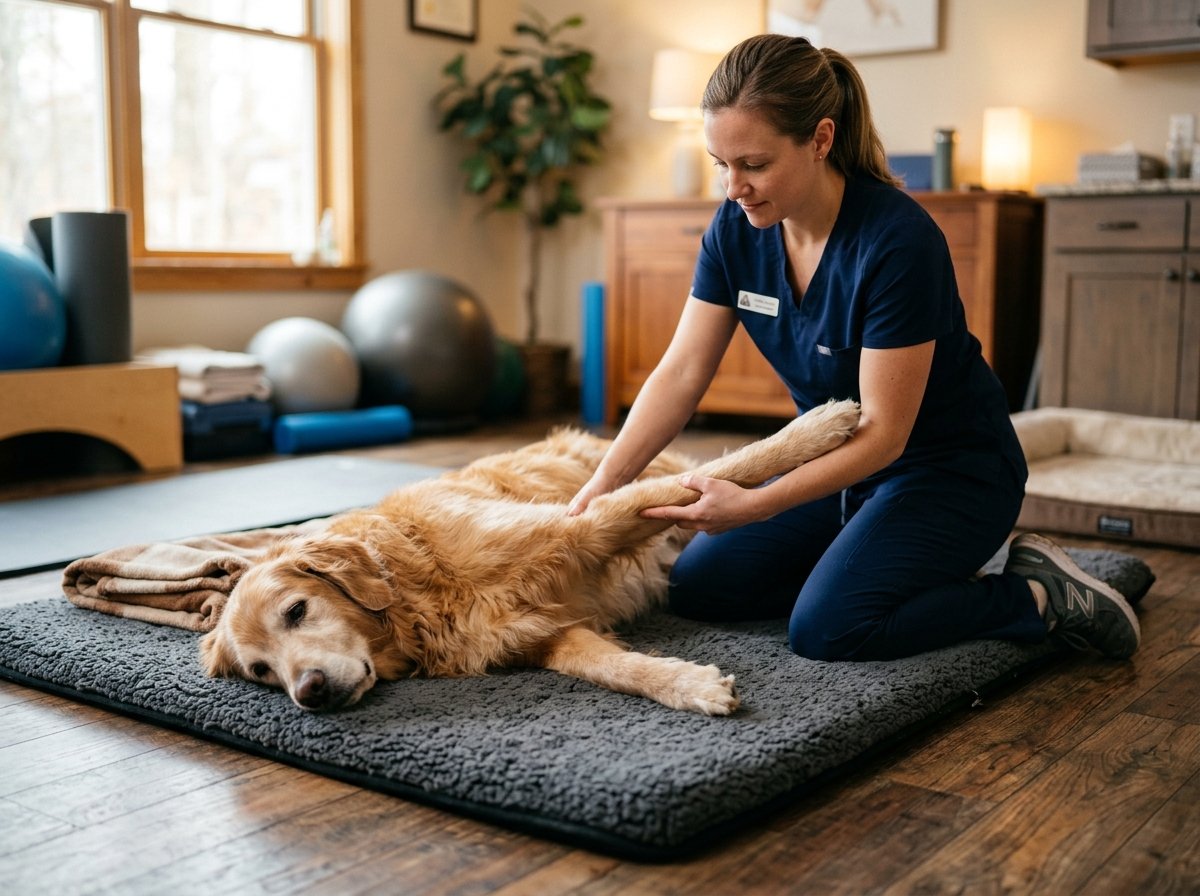
4: Engage in Gentle Range-of-Motion Physical Therapy
Physical therapy helps maintain joint flexibility and stimulates nerve pathways in weak legs.
With your dog lying comfortably on their side, gently guide one rear leg in a smooth bicycle motion. Flex and extend the hip, knee, and ankle gently without pushing past resistance.
Perform ten gentle repetitions per leg twice daily. Stop immediately if your dog shows any signs of discomfort.
5: Apply Non-Slip Toe Grips or Rubber Booties
If your dog knuckles or drags their toes, non-slip rubber grips or lightweight booties can provide valuable assistance.
Friction rings attached to the middle toenails give your dog extra grip on indoor floors. Outdoors, lightweight rubber booties protect dragging toes from scraping bleeding sores on concrete.
Always inspect your dog’s paws daily for any rub marks or irritation.
What Not to Do When Your Dog’s Back Legs Give Out
Avoid these common mistakes when managing hind leg weakness:
- Never Drag Your Dog by their Front Legs: Pulling a dog across floors can dislocate shoulders and cause painful skin friction burns.
- Do Not Give Human Pain Medications: Aspirin, Tylenol, and ibuprofen are toxic to dogs and cause stomach perforation.
- Do Not Restrict All Movement: Complete bed rest causes rapid muscle wasting. Gentle, assisted movement is vital.
Frequently Asked Questions
What is the most common cause of an old dog’s back legs giving out?
The most common causes are severe hip osteoarthritis, Degenerative Myelopathy (DM), Intervertebral Disc Disease (IVDD), and age-related muscle loss (sarcopenia). A vet exam is required to determine the exact trigger.
Is Degenerative Myelopathy painful for dogs?
No. Degenerative Myelopathy (DM) is a progressive neurological condition that is entirely painless. Dogs with DM experience weakness and paralysis without crying out or showing pain signs.
How can I help my old dog get up when their back legs give out?
Use a padded rear support harness or a soft towel placed under their belly. Gently lift upward to take weight off their hind legs while supporting them on non-slip rugs.
Can a dog recover from back legs giving out?
Recovery depends on the cause. Weakness from arthritis, disc bulges, or vestibular disease often improves significantly with vet treatments, pain management, and physical therapy. DM is progressive, but mobility carts maintain quality of life.
When should I put down a dog whose back legs are giving out?
Loss of leg function alone does not mean it is time. If your dog is free of unmanageable pain, alert, eating well, and comfortable using mobility aids, they can enjoy great quality of life. Consult your vet to evaluate daily quality of life.
Supporting Your Senior Dog’s Golden Years
Seeing your old dog’s back legs give out is challenging, but mobility assistance and compassionate care can restore your dog’s confidence. Simple adjustments like non-slip mats and support harnesses make a dramatic difference.
Work closely with your veterinarian to diagnose the root cause and build a safe mobility plan. Review guidance from the American Veterinary Medical Association senior care FAQ to keep your senior pet safe and mobile.