
Seeing your senior dog struggle to stand up, hesitate at the foot of the stairs, or slip on hard floors is heartbreaking. But age-related mobility loss doesn’t mean your dog’s active, joyful life is over. Today’s mobility aids—from simple floor grips to custom support harnesses and wheelchairs—can restore your dog’s confidence and independence.
Choosing the right assistance tool depends on the stage of mobility loss, your dog’s size, and their specific physical weakness. This guide walks you through every major category of senior dog mobility aids, helping you select safe, comfortable equipment for your companion.
Introducing mobility support early protects your own back while preventing secondary joint injuries and skin sores in your aging dog.
Matching Mobility Aids to Your Dog’s Stage of Weakness
Veterinary physical rehabilitation experts classify mobility impairment into progressive stages. Matching your assistance tools to these stages ensures optimal comfort and safety.
| Stage of Mobility Loss | Common Signs | Recommended Mobility Aids |
|---|---|---|
| Stage 1: Early / Mild | Slipping on hardwood floors, hesitation before jumping into car | Toe grips, non-slip rug runners, car ramps |
| Stage 2: Moderate | Difficulty rising from bed, rear leg wobbling on stairs | Padded rear-lift harness, pelvic support sling |
| Stage 3: Advanced | Unable to bear hind-leg weight, dragging paws (knuckling) | Full-body support harness, dog wheelchair cart |
1. Floor Traction Aids: Stop Slipping Indoors
For many senior dogs, smooth hardwood or tile flooring is a terrifying barrier. Slips cause groin strain, hip subluxation, and anxiety that makes dogs fearful of walking indoors.
Simple floor traction solutions restore immediate confidence:
- Rubber Toe Grips: Non-toxic rubber rings that slide over your dog’s middle nails. Toe grips flex against hard floors, giving natural grip without covering sensitive paw pads.
- Paw Pad Friction Paste / Spray: Applied to paw pads to increase grip on slick surfaces. Requires reapplication every few days.
- Rubber-Backed Carpet Runners: Placing non-skid rug runners along main indoor paths creates safe “highways” between beds, food bowls, and doorways.
2. Ramps and Dog Stairs
Jumping on and off sofas or out of SUV trunks subjects front legs and spine to high impact forces. Ramps create a gentle incline that bypasses joint stress entirely.
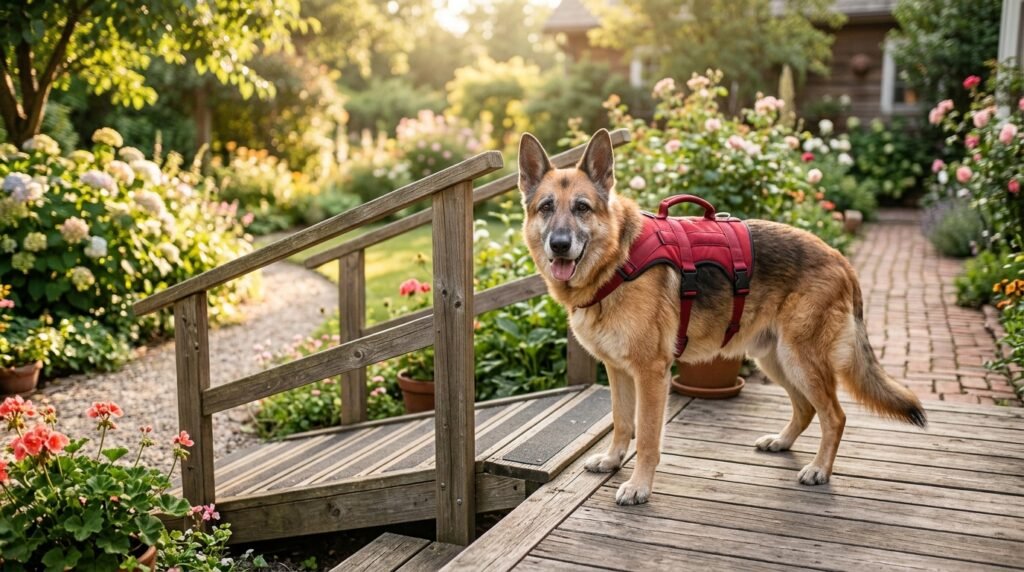
When selecting a ramp, look for a non-slip rubberized or carpeted walking surface, side safety rails, and a slope angle under 20 degrees. For large dogs, folding aluminum telescoping ramps offer heavy-duty stability with easy car trunk storage.
For couch access, foam orthopedic dog stairs work well for small breeds, provided the tread depth accommodates your dog’s full body length.
3. Support Harnesses and Lift Slings
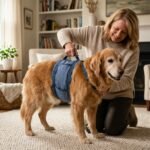
Support harnesses allow owners to assist dogs when standing, climbing stairs, or getting into vehicles without putting pressure on painful joints or delicate abdominal organs.
Key harness types include:
- Rear-Lift Slings: Padded belly bands with long handles, ideal for quick potty breaks for dogs with mild hind leg weakness.
- Full-Body Support Harnesses: Dual-handle harnesses (front chest and rear pelvis) that stay on your dog comfortably all day, allowing balanced two-person lifts if needed.
- Knuckling Boots: Specialized elastic boots that gently pull knuckled rear toes upward into a natural flat-foot position during walks.
4. Dog Wheelchairs (Mobility Carts)
A dog wheelchair cart is not a last resort; it is a liberating tool that allows dogs with severe arthritis, degenerative myelopathy (DM), or spinal disc disease to run, play, and explore outdoors independently.
According to veterinary rehabilitation studies, dogs adapt to mobility carts remarkably fast—often within minutes of proper fitting. Wheelchairs support the rear pelvis, allowing front legs to steer and exercise while keeping spinal alignment neutral.
Consult a veterinary rehabilitation specialist to ensure accurate pelvic measurements before purchasing a cart. Pair wheelchair exercise with senior dog joint supplements to support front-limb joint health.
Preventing Pressure Sores and Skin Irritation
When using harnesses or wheelchairs daily, monitor skin integrity carefully. Ill-fitting straps cause friction sores over prominent bone areas like the groin, chest, and hip joints.
Follow these safety tips:
- Remove full-body harnesses at night to allow skin to breathe.
- Add soft sheepskin or neoprene padding to harness leg straps.
- Ensure your dog rests on a supportive orthopedic bed when not moving. Read our recommendations for the best orthopedic beds for senior dogs.
Frequently Asked Questions
#### Will using a support harness make my dog’s legs weaker?
No. Using a harness provides necessary assistance, allowing your dog to stay active without falling. Movement preserves muscle tissue, whereas fear of slipping leads to immobility and rapid muscle atrophy.
#### At what age should I buy a ramp for my dog?
Introduce ramps proactively around age seven or eight for large breeds, before severe arthritis sets in. Teaching ramp use while your dog is mobile builds easy habits for their later years.
#### Can a dog lie down while wearing a wheelchair cart?
No. Standard two-wheeled carts hold the pelvis elevated, so dogs cannot lie flat while strapped in. Limit wheelchair sessions to 30-60 minutes at a time before placing your dog back on a comfortable bed.
#### What is the best mobility aid for a dog with Degenerative Myelopathy (DM)?
Progressive DM begins with hind leg weakness and paw knuckling. A rear-lift harness works in early stages, transitioning to a rear-wheel cart as paralysis progresses to preserve outdoor quality of life.
#### How do I measure my dog for a support harness?
Measure chest girth (widest part behind front legs), waist girth (narrowest part in front of hind legs), and total length from shoulder to hip. Check manufacturer sizing charts carefully.
#### Are toe grips safe for dogs to wear all the time?
Yes. Non-toxic rubber toe grips stay on nails for 1 to 3 weeks until natural nail growth or shedding occurs. Inspect nails weekly to ensure proper fit.
Restoring Independence and Joy
Mobility aids are powerful tools that bridge the gap between an aging body and an active spirit. Whether it’s adding simple rug runners indoors, using a padded harness on stairs, or introducing a wheelchair cart for park walks, the right equipment keeps your senior dog moving alongside you comfortably.
“@