

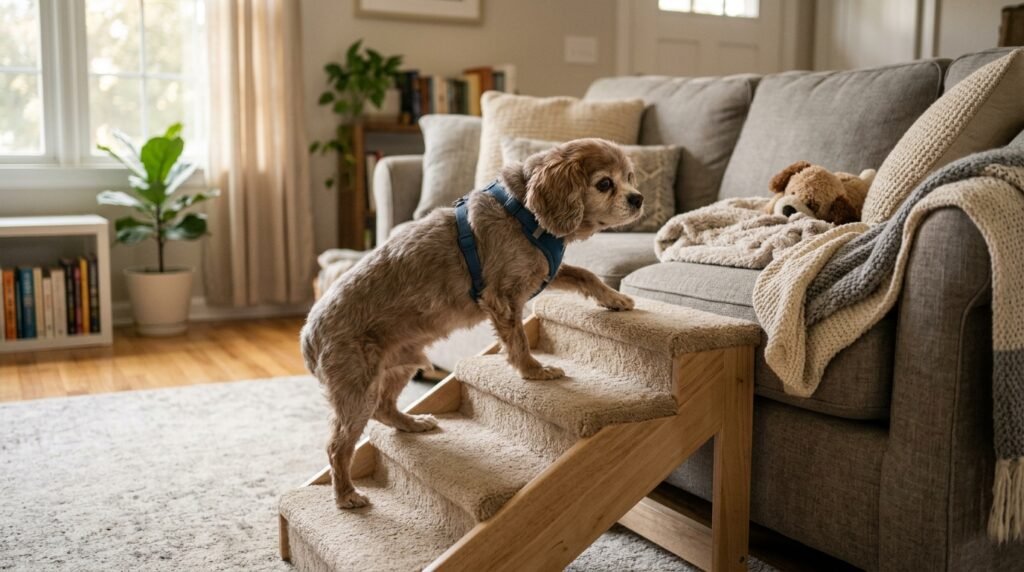
If your senior dog still loves cuddling on the couch or sleeping at the foot of your bed, watching them hesitate or stumble before jumping up is tough. While jumping was effortless in their younger years, high-impact launches and landings place severe strain on aging hips, knees, and spinal discs.
Introducing dog stairs or ramps eliminates jumping impact, allowing your pet to access their favorite spots safely. But choosing between stairs and ramps requires matching the design to your dog’s specific weight, height, and mobility condition.
This guide breaks down dog stairs versus ramps, key safety features to look for, and how to train your senior dog to use steps with confidence.
Dog Stairs vs. Dog Ramps: Which Is Better for Senior Dogs?
Both stairs and ramps prevent dangerous jumping, but they suit different physical abilities and home setups:
| Feature | Dog Stairs (Pet Steps) | Dog Ramps |
|---|---|---|
| Biomechanical Motion | Stepping upward / downward | Continuous gradual incline (zero impact) |
| Best For | Small/medium dogs with mild stiffness | Large breeds, severe arthritis, IVDD/back issues |
| Space Needed | Compact footprint; fits tight spaces | Requires longer floor space for gentle slope |
| Joint Strain | Low impact (requires lifting legs) | Zero impact (smooth walking) |
According to veterinary rehabilitation guidelines from PetMD, ramps are the safest choice for dogs with advanced hip dysplasia or spinal disc disease (IVDD) because they require zero stepping motion. Foam or wooden dog stairs work wonderfully for smaller dogs with mild aging stiffness.
Key Safety Features to Look For in Senior Dog Stairs
Not all pet steps sold online are suitable for senior dogs. Avoid lightweight plastic steps with narrow treads that can tip over or cause slipping.
Look for these essential safety specs:
- Deep Tread Depth (Minimum 10-12 inches): Deep treads ensure your dog’s entire paw fits on each step without toe hanging off the edge.
- Low Step Height (5-6 inches max): Shallow step rises mean your dog doesn’t have to lift stiff knees excessively high.
- High-Density Foam or Solid Wood Frame: Heavy, sturdy bases prevent wobble or tipping when a dog steps on the edge.
- Non-Slip Carpet Traction: Removable, washable carpet or rubber tread covers prevent paw slipping.
1. Training Your Senior Dog to Use Steps Comfortably
Senior dogs can be suspicious of new furniture additions. Never force or push your dog onto steps, as fear can cause panic and falls.
Follow this positive reinforcement training plan:
- Flat Ground Introduction: Place the steps flat on the living room floor for 24 hours so your dog can sniff and investigate them naturally.
- Tempt with High-Value Treats: Place a favorite treat on the first step. Reward your dog with praise when they touch or place a paw on the step.
- Lure Step-by-Step: Slowly place treats on each ascending step, guiding your dog upward gently.
- Practice Controlled Descents: Going down is harder on front shoulders than going up. Stand alongside your dog, holding a padded harness handle to guide them down slowly.
2. When to Switch from Stairs to a Ramp
As joint conditions progress, stairs that worked well at nine years old may become difficult at twelve. Switch from stairs to a full-incline ramp if you observe:
- Hesitation or trembling before stepping up
- Knuckling rear toes on step edges
- Attempting to leap over multiple steps at once
- Vocalizing or slipping when going down steps
Learn more about ramp fitting in our comprehensive guide on mobility aids for senior dogs.
Frequently Asked Questions
#### Are foam or wooden dog stairs better for an old dog?
High-density foam stairs are ideal for small and medium dogs up to 30 lbs because the soft foam cushions joint impact. Solid wooden or aluminum stairs are necessary for large dogs over 50 lbs to ensure zero wobbling.
#### How wide should dog stairs be for a senior dog?
Stairs should be at least 15 to 18 inches wide for medium dogs, and 20+ inches wide for large breeds, giving ample room for wide, unstable stances.
#### Why is my old dog afraid to go down pet stairs?
Going down stairs concentrates body weight on front elbows and shoulders while requiring visual depth perception. Declining vision or elbow pain makes going down scary. Use a padded harness to guide them down gently.
#### Can dog stairs help prevent arthritis from worsening?
Yes. By eliminating high-impact jumps on and off furniture, dog stairs prevent repetitive cartilage micro-trauma, slowing down arthritis progression.
#### What slope angle is safest for a senior dog ramp?
A safe ramp slope for a senior dog should be between 18 and 22 degrees. Angles steeper than 25 degrees make climbing difficult for weak hind legs.
#### What bed works best alongside pet stairs?
Pair pet stairs with a supportive orthopedic memory foam mattress. Read our review of the best orthopedic beds for senior dogs.
Protecting Every Step
Providing sturdy dog stairs or ramps is a simple, effective way to protect your senior dog’s joints while maintaining their beloved spot by your side. Choose wide, non-slip steps, train with patience and treats, and enjoy watching your companion climb safely into comfort.
“@
,Description: