
Watching your aging dog wake up in the morning can break your heart when every movement looks slow and guarded. You remember years when your companion sprang out of bed at the first rustle of the leash. Now, you watch them push up carefully with trembling front paws, hesitate on stiff back legs, and take wooden steps across the floor.
Every loving owner of an aging dog recognizes this morning routine. You want to ease their physical discomfort, but you may wonder what actually helps and what simply masks joint ache. Chronic senior dog joint stiffness is common, but daily discomfort does not have to be an accepted cost of getting older.
Morning stiffness responds remarkably well to simple changes in temperature, gentle handling, and proactive veterinary care. Implementing a warm morning wake-up routine helps your faithful companion start each day with greater freedom and comfort.
Quick Answer:
Senior dog joint stiffness in the morning stems from osteoarthritis, cool overnight room temperatures, and reduced synovial fluid circulation during long sleep periods. Daily relief combines gentle passive range-of-motion massage, supportive orthopedic memory foam bedding, targeted joint supplements, and veterinarian-prescribed anti-inflammatory pain management.
Key Takeaways:
- Morning Gelling Phenomenon: Synovial joint fluid thickens overnight, causing stiff, hesitant first steps.
- Gentle Wake-Up Routine: Spend three to five minutes warming muscles and massaging stiff hips before rising.
- Environmental Adaptations: Memory foam bedding and non-slip rugs prevent joint stress and painful morning slips.
- Medical Treatment Options: Modern therapies like NSAIDs and monoclonal antibodies provide targeted anti-inflammatory relief.
Why Older Dogs Are Stiffest in the Morning
Veterinary orthopedists refer to early morning rigidity as the gelling phenomenon. Healthy canine joints contain slick synovial fluid that lubricates cartilage and absorbs shock during movement. When your companion lies still for eight hours overnight, this fluid cools and thickens like chilled gelatin.
Osteoarthritis compounds this natural morning sluggishness significantly. Decades of running and playing wear down the smooth protective cartilage capping the bones. Inflammatory cytokines irritate the joint capsule, leaving surrounding ligaments, tendons, and muscles tight and sore.
Clinical data compiled in the Cornell University College of Veterinary Medicine osteoarthritis resources show that cold overnight room temperatures worsen joint rigidity substantially. Drafty hardwood floors drain warmth from older joints, making those initial steps feel like walking on rusty hinges.
Shifts in barometric pressure and indoor humidity also irritate sensitive nerve endings inside arthritic joint capsules. When overnight temperatures drop, blood vessels constrict to conserve core heat, reducing peripheral circulation to the extremities. This temporary decrease in limb blood flow leaves joints feeling noticeably tight until morning movement begins.
The 5-Minute Morning Wake-Up Routine
Rushing an arthritic dog onto their feet immediately upon waking invites muscle strain and joint irritation. Taking five calm minutes to warm your companion body while they remain lying down changes the tone of their entire morning. This gentle ritual builds comfort and strengthens the bond you share.
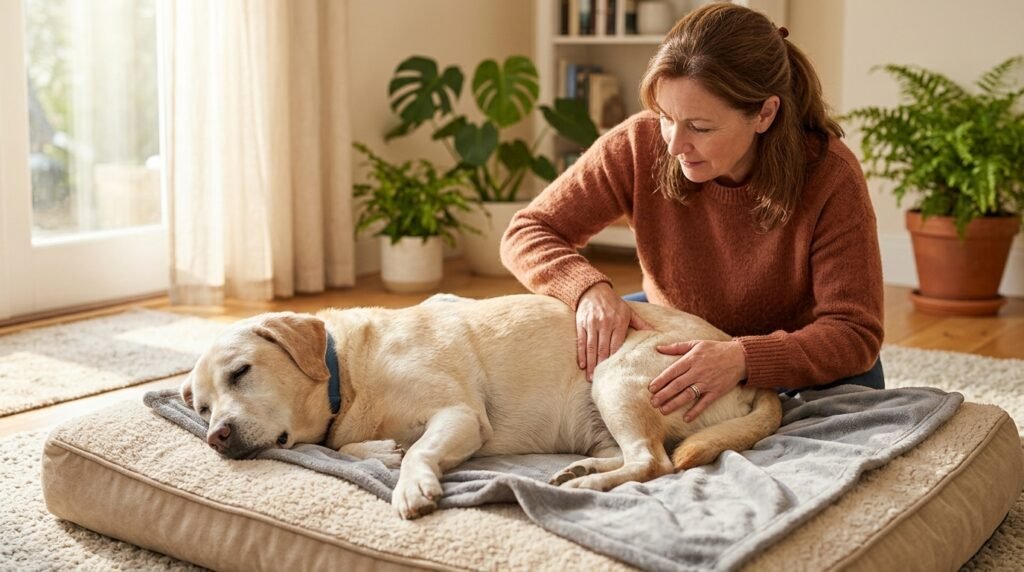
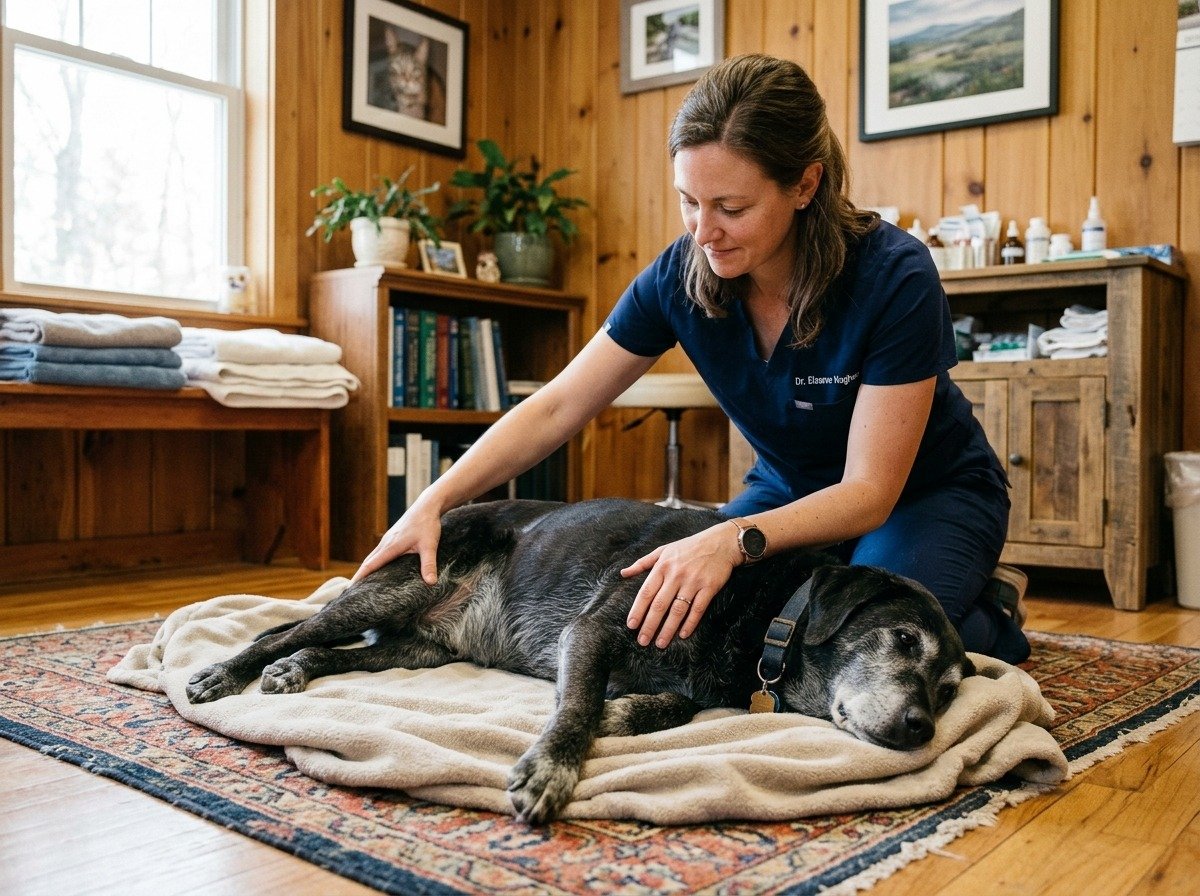
Begin by rubbing your hands together to generate palm warmth. Place your warm hands gently along your dog spine, hips, and shoulders, applying light circular pressure. This simple touch increases local capillary blood flow and signals tight muscles to relax.
Avoid pressing directly onto bony protrusions like the hip points or spinal ridges. Focus instead on the large muscle groups surrounding the joints, such as the quadriceps, hamstrings, and shoulder blades. Speak in soft, encouraging tones so your dog associates waking up with soothing relaxation.
Passive Range of Motion (PROM) Exercises
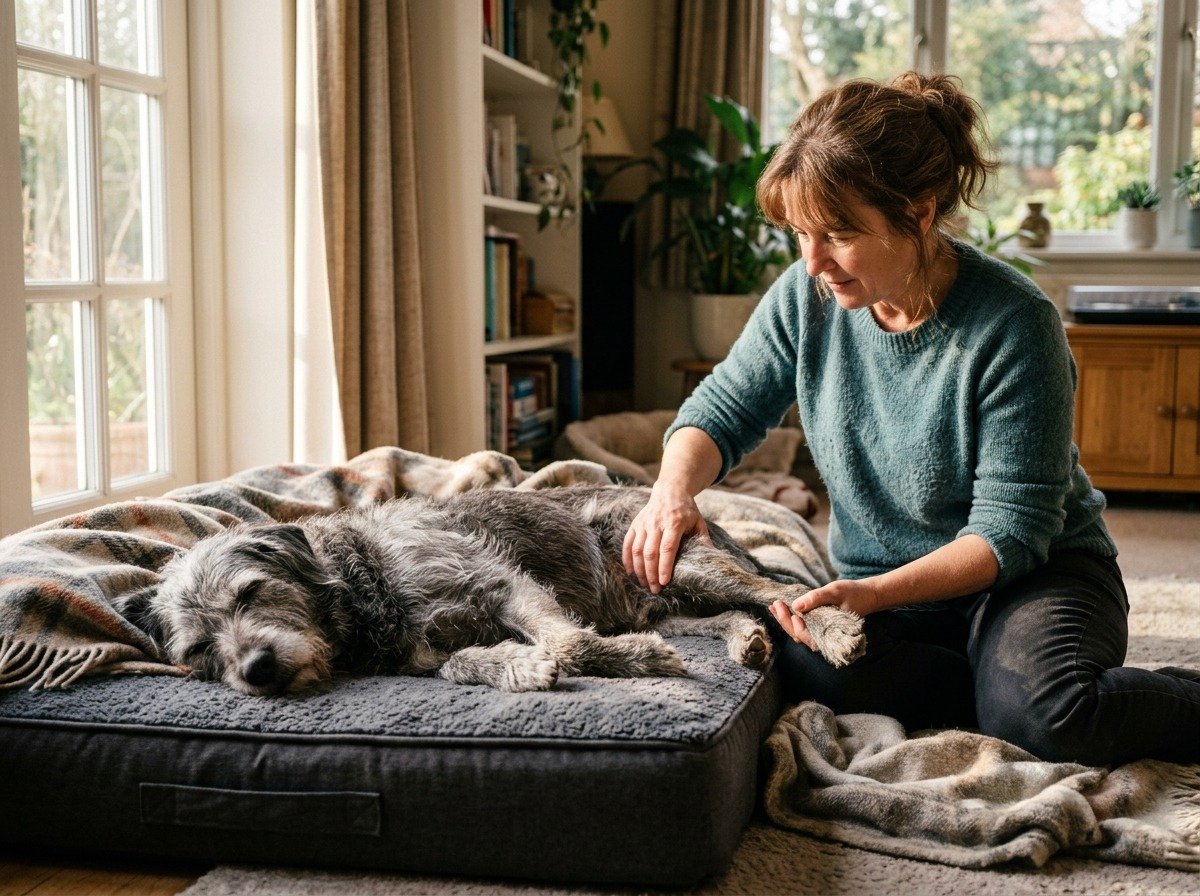
Once your companion muscles feel warm and supple, you can perform gentle passive range of motion movements. Keep your dog lying on their comfortable side. Gently cup their paw with one hand while supporting their knee or elbow with your other hand.
Slowly cycle the leg in a smooth, gentle pedaling motion, bending and extending the joint within a comfortable range. Never force a limb past natural resistance or pull suddenly. Stop immediately if your dog tenses up, pulls away, or turns their head toward your hand.
Perform five to ten gentle pedal cycles on each leg. This smooth movement stirs thickened synovial fluid, distributing lubrication across cartilage surfaces before your dog bears weight. When you finish, give your dog a minute to stretch naturally before inviting them to stand.
Helping Your Dog Rise Safely Without Slipping
The transition from lying down to standing represents the most vulnerable moment for a stiff senior dog. Weak hind legs struggle to gain purchase on slick surfaces like laminate, tile, or polished wood. A single slip during the morning rise can cause a painful groin pull or hip sprain that takes weeks to heal.
Create non-slip runways from your dog bed to their water bowl and the back door. Inexpensive washable rug runners with non-skid rubber backing give aging paws dependable grip. Interlocking yoga mats or carpet tiles also provide excellent morning traction across high-traffic zones.
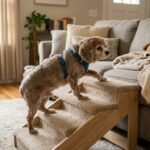
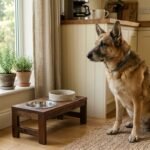
When your dog needs physical assistance standing, resist the urge to yank them upward by their collar. Using proper support techniques to help senior dogs get up, such as a padded belly sling or specialized mobility vest, takes pressure off aching hips. Exploring broader home setup tips for arthritic senior dogs helps eliminate physical obstacles throughout your living space.
Maintaining short toenails provides another vital mechanical advantage for arthritic paws. Long claws tilt the foot backward, forcing your dog weight onto the heel pads and straining already sore hock joints. Trimming nails every two weeks allows the traction pads to make direct, flat contact with the floor.
Targeted Supplements and Weight Management
What goes into your senior dog bowl directly influences the inflammation levels coursing through their joints. Maintaining a lean body condition is the single most effective non-surgical intervention for canine arthritis. Every extra pound of body fat places four times that pressure onto damaged hips and knees with every stride.
Adipose tissue also secretes systemic inflammatory chemicals that accelerate cartilage erosion. If your senior dog carries extra weight, speak with your veterinarian about a gentle caloric reduction plan. Transitioning to high-fiber, nutrient-dense senior food preserves muscle while shedding excess pounds.
High-potency joint supplements provide essential biochemical building blocks for joint health. Look for formulations containing glucosamine hydrochloride, low-molecular-weight chondroitin sulfate, and green-lipped mussel extract. Learn how to select high-grade ingredients in our guide to proven senior dog joint supplements.
Omega-3 fatty acids, specifically eicosapentaenoic acid (EPA) and docosahexaenoic acid (DHA) from wild marine fish oil, offer exceptional anti-inflammatory benefits. EPA blocks enzymes that degrade joint cartilage, helping reduce morning stiffness within six to eight weeks of daily supplementation.
Modern formulations increasingly incorporate undenatured type II collagen and sodium hyaluronate to reinforce connective tissues. Undenatured collagen helps modulate local immune responses within arthritic joints to prevent excessive cartilage degradation. Hyaluronic acid enhances fluid viscosity, restoring cushioning between bone ends during morning standing.
Veterinary Medical Treatments: NSAIDs and Modern Therapies
Home care remedies work best when paired with veterinary medical intervention. When morning stiffness causes visible limping or vocalization, supplements and massage alone cannot overcome inflammatory pain. Modern veterinary medicine offers powerful, targeted options to restore pain-free movement.
Non-steroidal anti-inflammatory drugs, or NSAIDs, represent the historical cornerstone of canine arthritis therapy. Medications such as carprofen, meloxicam, and grapiprant block the inflammatory pathways that cause joint swelling and pain. Blood screening tests are performed before starting NSAIDs to confirm healthy liver and kidney function.
In recent years, veterinary medicine introduced monoclonal antibody therapies like bedinvetmab, commercially known as Librela. Administered as a simple monthly injection at your clinic, bedinvetmab binds directly to Canine Nerve Growth Factor, neutralizing pain signals before they reach the brain. Clinical standards from the American Animal Hospital Association canine pain management guidelines emphasize combining multiple therapies for optimal comfort.
Adjunctive Therapies: Laser and Hydrotherapy
Non-pharmacological medical treatments provide tremendous complementary relief for stiff senior dogs. Photobiomodulation, commonly known as cold laser therapy, uses specific light wavelengths to stimulate cellular repair, reduce swelling, and accelerate tissue healing. Many older dogs relax completely during these painless ten-minute clinic sessions.
Underwater treadmill hydrotherapy represents another fantastic modality for stiff joints. The buoyancy of warm water supports up to sixty percent of your dog body weight, allowing them to walk without painful joint impact. Gentle water warmth relaxes tight muscles while the natural resistance rebuilds wasting hind-leg musculature.
Acupuncture and professional canine physical rehabilitation also yield noticeable improvements in morning ease. Certified veterinary rehabilitation practitioners teach owners specialized home stretches suited to their companion unique orthopedic needs.
Comparing Morning Joint Stiffness Remedies
Managing senior dog joint stiffness requires a multifaceted approach combining environmental, physical, and medical remedies. The reference guide below highlights key interventions, their physiological mechanisms, and realistic timelines for improvement.
| Remedy / Therapy | How It Relieves Stiff Joints | Application & Timing | Expected Results Timeline |
|---|---|---|---|
| Orthopedic Bedding | Distributes body weight evenly; prevents bottoming out on cold floors | Thick solid memory foam; draft-free room location | Immediate improvement in morning rising ease |
| Morning Warm-Up Massage | Increases muscle blood flow; redistributes thickened synovial fluid | Five minutes of gentle circular rubs before standing | Noticeable reduction in initial morning hesitation |
| Veterinary NSAIDs | Blocks inflammatory enzymes; reduces joint capsule swelling | Oral medication administered with morning meals | Rapid relief within two to four hours of administration |
| Anti-NGF Monoclonal Injections | Neutralizes Nerve Growth Factor; halts chronic arthritis pain signals | Subcutaneous monthly injection at veterinary clinic | Substantial mobility improvements within seven to fourteen days |
| Omega-3 Marine EPA/DHA | Suppresses systemic inflammation; protects cartilage matrix | Daily liquid fish oil mixed into food | Gradual cumulative improvements over four to eight weeks |
| Non-Slip Flooring Runners | Provides claw grip; eliminates fear of slipping and groin pulls | Placed across common pathways from bed to door | Immediate confidence and stability on hard floors |
Combining three or four of these modalities creates layered comfort. For instance, pairing a memory foam bed with morning massage and modern veterinary medications produces far greater relief than relying on any single intervention alone.
When Joint Stiffness Requires Immediate Veterinary Care
While gradual morning stiffness is expected with canine aging, sudden or severe changes indicate acute complications. Never assume that a sudden decline is simply old age catching up. Prompt veterinary evaluation is crucial if you observe any of the following warning signs.
- Sudden Non-Weight-Bearing Lameness: Completely carrying a leg off the ground often indicates a cruciate ligament tear rather than simple arthritis.
- Joint Swelling or Heat: A joint that feels noticeably warm or swollen can signal septic arthritis or an immune-mediated flare.
- Refusal to Stand: Inability to rise despite assistance warrants immediate evaluation for spinal nerve compression or systemic weakness.
- Vocalizing When Touched: Yelping, whimpering, or growling during light contact points to severe acute pain requiring prompt analgesia.
- Loss of Bladder or Bowel Control: Sudden incontinence combined with hind-limb weakness suggests degenerative myelopathy or disc herniation.
Keeping a close eye on behavioral changes helps you spot distress early. Review our guide to recognizing subtle senior dog pain signs to learn how dogs communicate joint ache without crying out.
Frequently Asked Questions
Why is my senior dog stiff in the morning but fine later?
Inactivity overnight allows joint lubrication to thicken, creating initial resistance and muscle tightness upon waking. As your dog walks around during the morning, body heat and movement redistribute synovial fluid across the joint surfaces. This natural warming effect helps stiffness loosen gradually throughout the day.
Is heat or cold better for senior dog joint stiffness?
Moist heat is generally far superior for chronic morning stiffness in older dogs. Warm compresses, heated orthopedic pads, and warm rooms relax tight tendons and boost blood circulation. Cold therapy is reserved primarily for acute injuries or sudden flare-ups with noticeable heat and swelling.
Can senior dog joint stiffness be cured?
Osteoarthritis is a progressive condition that cannot be permanently reversed, but symptoms can be managed effectively. A combination of weight control, joint supplements, morning warm-up routines, and prescription medications can keep dogs active and comfortable for years.
How long should a senior dog walk if they have stiff joints?
Multiple short walks of ten to fifteen minutes are much better than one long, exhausting walk. Frequent, gentle movement prevents joints from stiffening up without overstressing damaged cartilage. Always let your dog set the pace and avoid forced exercise on steep inclines.
What is the newest treatment for dog arthritis stiffness?
Bedinvetmab, known as Librela, represents the latest breakthrough in canine osteoarthritis management. It is a monthly injectable monoclonal antibody that targets Nerve Growth Factor to halt pain transmission without stressing internal organs. Consult your veterinarian to see if your senior companion is a good candidate.
Starting Every Day With Comfort and Dignity
Helping an older dog navigate joint stiffness is one of the most loving gifts you can give during their golden years. That slow morning wake-up is not a sign that your companion quality of life is gone. It is simply a gentle reminder that their body moves at a softer, more deliberate pace now.
By warming their muscles with gentle massage, lining your floors with secure runners, and partnering with your veterinarian for targeted pain control, you restore their joy in morning greetings. Take those few extra minutes tomorrow morning to sit beside their bed and offer that soothing touch. Your faithful companion will reward you with relaxed eyes, a gentle tail wag, and confident steps into the day ahead.