
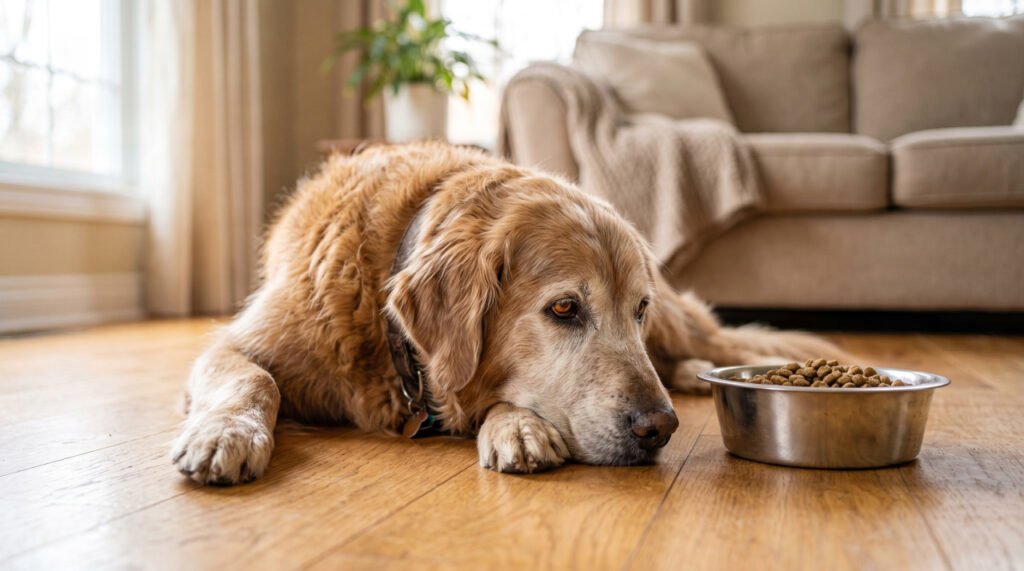
Up to 80% of dogs over age eight show signs of arthritis — and most owners have no idea it’s making mealtime painful. If your old dog won’t eat, the problem often isn’t the food. It’s everything around the food.
This guide breaks down what to feed an old dog that won’t eat, why appetite drops in senior dogs, and exactly how to tell when a skipped meal is a warning sign vs. a fixable problem. You’ll leave with a clear action plan — not a vague list of suggestions.
Why Your Senior Dog Stopped Eating
Before you change the food, you need to know why your dog’s appetite dropped. Senior dogs don’t skip meals without a reason. The most common causes fall into five clear categories.
Dental Pain Is the #1 Hidden Culprit
Dental disease affects over 80% of dogs by age three — and it gets progressively worse as they age. By the time your dog hits their senior years, there’s a strong chance they’re eating with a broken tooth, infected gums, or a painful abscess. Many dogs hide this pain so well that owners assume the dog is just “being picky.”
Watch for these clues: dropping food while chewing, chewing only on one side, or favoring soft treats over hard kibble. A dog that eats wet food eagerly but refuses dry food is almost certainly dealing with oral pain. Cornell University College of Veterinary Medicine’s dental health guide confirms that oral pain is one of the leading — and most overlooked — causes of appetite loss in senior dogs.
Arthritis Is Making the Bowl Hard to Reach
According to research published by the University of Florida’s veterinary program, up to 80% of dogs over age eight live with osteoarthritis. Bending the neck down to reach a floor-level bowl puts direct pressure on arthritic joints in the neck, spine, and shoulders. For a dog in pain, eating becomes a choice between hunger and agony — and agony often wins.
This is one of the most actionable fixes in this entire guide. A raised bowl can change everything, and we cover it in detail below.
Kidney or Liver Disease Causes Nausea
Senior dogs are far more prone to chronic kidney disease, liver disease, and pancreatitis. All three cause chronic nausea that kills the appetite. A dog with kidney disease may drink more water while eating far less — which is why “still drinking but won’t eat” is a specific red flag worth investigating.
Don’t assume your dog is fine because they’re staying hydrated. A vet blood panel can catch these conditions early and change the outcome significantly.
Canine Cognitive Dysfunction Disrupts Mealtime
Canine Cognitive Dysfunction (CCD) — sometimes called doggy dementia — affects a meaningful portion of senior dogs and often goes undiagnosed. One of its less-discussed symptoms is mealtime confusion. Your dog may walk up to their bowl and simply stand there, forget they were hungry, or become anxious in a way that kills their appetite.
If your dog seems confused at mealtimes, stares at the bowl without eating, or shows other signs like nighttime pacing or getting “lost” in familiar rooms, CCD may be the underlying issue. The Cornell University Animal Health Center’s cognitive dysfunction resource offers guidance on recognizing and supporting this condition.
Medication Side Effects Are Often Overlooked
If your dog started a new medication recently, check the side effects. Common senior dog prescriptions — including NSAIDs for arthritis and some heart medications — list reduced appetite as a known effect. A quick call to your vet can confirm whether the medication is the culprit and whether the dose needs adjusting.
The 24-Hour Rule: When to Call Your Vet Right Now
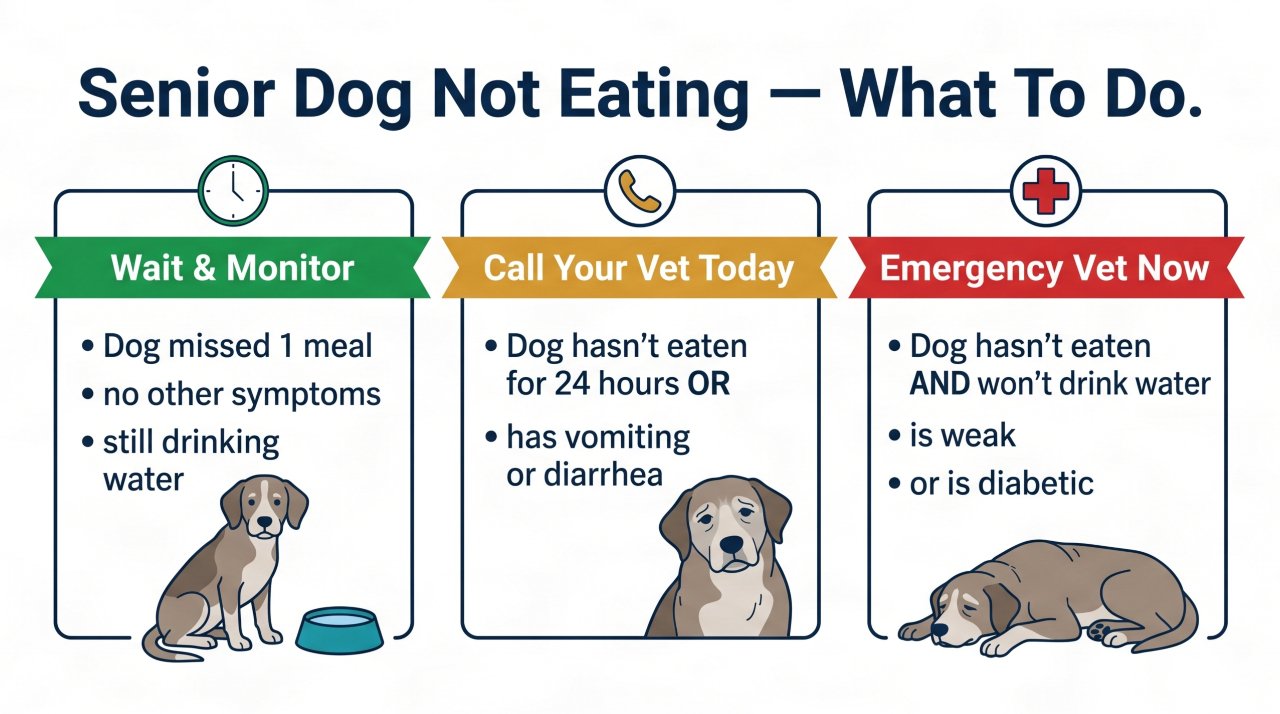
Most articles bury this information. We’re putting it here because it matters more than any food tip.
Call your vet today if your senior dog:
- Has not eaten for 24 hours
- Won’t drink water (this is urgent)
- Has vomiting or diarrhea alongside the refusal to eat
- Seems weak, collapsed, or disoriented
- Is diabetic (skipped meals affect insulin dangerously)
For healthy senior dogs with no other symptoms, missing one meal warrants monitoring. Missing two meals warrants a phone call. Missing 24+ hours of food warrants a same-day vet visit, not a Google search.
A note on realism: Some causes of appetite loss in senior dogs require medical treatment before any food trick will work. If your dog has dental disease, arthritis pain, kidney disease, or CCD, the tips below will help — but they’re not substitutes for treating the root cause.
What to Feed an Old Dog That Won’t Eat: 9 Fixes That Work
These fixes work best when you’ve ruled out (or are actively treating) the medical causes above. Try them in order — start with the simplest, then escalate.
Fix 1: Warm the Food to Unlock Aroma
Senior dogs lose their sense of smell as they age, and smell drives appetite far more than taste. Warming wet food or moistened kibble to just above room temperature — roughly 100–102°F — releases volatile aromatic compounds that make the food smell significantly more appealing.
Microwave wet food for 10–15 seconds, then stir thoroughly and test the temperature before serving. Never serve food that’s hot to the touch. Overheating destroys nutrients and risks burns inside the mouth.
Fix 2: Add Low-Sodium Bone Broth
A splash of low-sodium, onion-free, garlic-free bone broth over dry kibble adds aroma, moisture, and flavor — often enough to get a reluctant eater interested. Check the label carefully: commercial broths often contain onion powder or high sodium levels, both of which harm dogs.
Make your own by simmering plain chicken bones or beef bones in water for several hours, then straining and cooling. Skip all seasonings. Store in the fridge for up to four days.
Fix 3: Switch to Wet Food (Even Temporarily)
Dry kibble is harder to chew, has less aroma, and sits lower to the ground. Wet food is softer, more pungent, easier to eat with dental pain, and can be served in a raised bowl without the kibble spilling. Many senior dogs who “won’t eat” will eat wet food immediately.
If you’re switching, do it gradually over three to five days to avoid stomach upset — unless your vet recommends a fast switch due to urgency. Look for wet foods labeled as “senior formula” with reduced phosphorus, which supports aging kidneys. For a deeper look at what goes into a balanced senior diet, our full nutrition guide for senior dogs covers everything from macros to meal timing.
Fix 4: Raise the Food Bowl
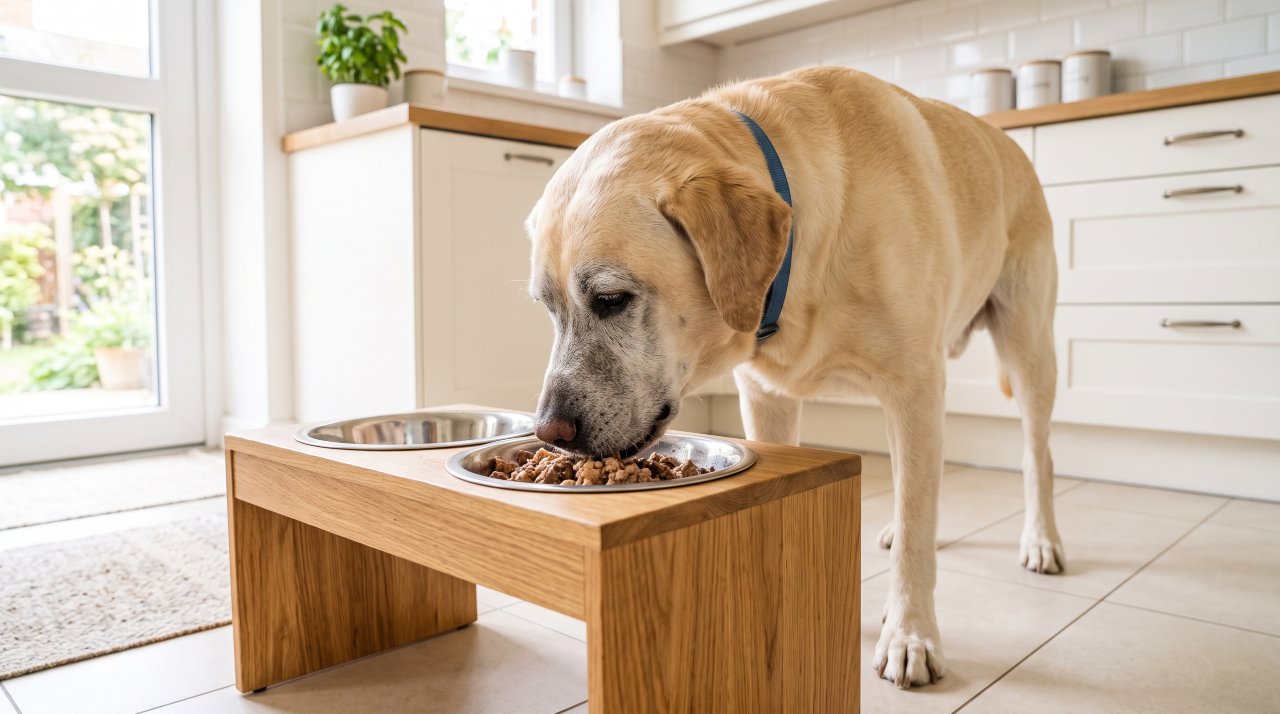
This is the fix most articles mention as an afterthought. We’re giving it its own section because it matters that much.
If your dog has any sign of arthritis, a raised bowl isn’t optional — it’s a health intervention. The bowl height should allow your dog to eat with their neck in a natural, neutral position. A rough guide: the bowl rim should sit at about chest height, roughly the same level as your dog’s lower chest when standing.
For small dogs, this might mean a 4–6-inch stand. For larger breeds, you may need a 10–12-inch stand. Many pet stores sell adjustable raised feeders. You can test the concept cheaply with a sturdy box before buying.
Fix 5: Try Boiled Chicken and White Rice
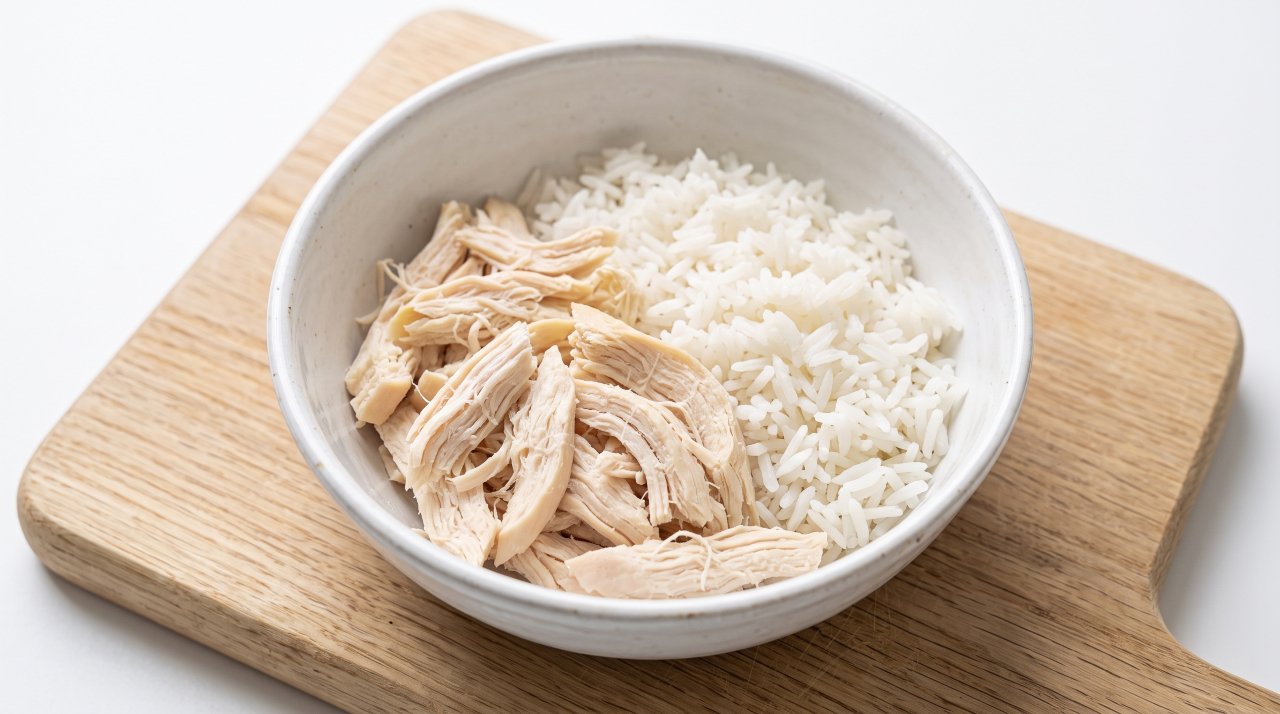
This bland diet works well for dogs with an upset stomach or nausea. Boil boneless, skinless chicken breast with no seasoning. Shred it finely. Mix with plain, cooked white rice in a roughly 1:3 ratio (one part chicken, three parts rice).
Serve small amounts every four to six hours rather than one large meal. This diet is nutritionally incomplete for long-term use — it’s a short-term reset for an irritated digestive system. If your dog responds well, transition back to a balanced senior food over five to seven days.
Fix 6: Try Small, Frequent Meals
Senior dogs often do better with three to four small meals daily instead of one or two large ones. Smaller portions are easier to digest, reduce nausea from an empty stomach, and give you more opportunities to notice what’s working. Set specific meal times and remove the bowl after 20–30 minutes whether they eat or not. This creates a routine and prevents grazing habits.
Fix 7: Hand-Feed in a Quiet Space
Some senior dogs, especially those with CCD or anxiety, need the reassurance of your presence to feel safe enough to eat. Sit with your dog in a quiet room, away from other pets and household noise. Offer food from your hand or place it directly in front of them. This isn’t spoiling your dog — for a cognitively confused or anxious senior, it’s genuine support.
Fix 8: Add a Safe Food Topper
A small amount of a palatable “topper” mixed into regular food can restart interest without creating a long-term picky eater habit. Safe options include:
- Plain canned pumpkin (not pie filling) — one to two teaspoons for digestive support
- A small amount of plain, full-fat Greek yogurt — provides probiotics if your dog tolerates dairy
- A few pieces of finely shredded plain cooked turkey or beef
- A soft scrambled egg cooked without butter or oil
Keep toppers to no more than 10% of your dog’s daily caloric intake. Exceeding this risks nutritional imbalance or weight gain in a dog whose metabolism has already slowed.
Fix 9: Ask Your Vet About Appetite Stimulants
If your dog’s appetite loss persists despite trying the fixes above, your vet may recommend a prescription appetite stimulant. Two options are commonly used:
Capromorelin (Entyce): A daily liquid medication that stimulates appetite by mimicking the hunger hormone ghrelin. It’s FDA-approved for use in dogs and generally well-tolerated.
Mirtazapine: An anti-nausea and appetite-stimulating drug sometimes prescribed for dogs with kidney disease or cancer-related appetite loss. It works differently from Entyce and your vet will choose based on your dog’s specific condition.
These are not over-the-counter products. Never attempt to use human versions of these drugs on your dog — dosing differs dramatically and can cause serious harm.
The Picky Eater Trap: A Warning
This deserves its own section because it’s a mistake well-meaning owners make constantly.
When a senior dog refuses food, the natural response is to offer something tastier — a piece of chicken, a slice of turkey, some cheese. Your dog eats it enthusiastically. You feel relieved. Then it happens again tomorrow, and the day after.
What you’ve done is teach your dog that refusing their regular food leads to something better. This creates a behavior loop where the dog holds out specifically because you’ve rewarded them for it. This is called food aversion by reinforcement.
The fix: if your vet has confirmed there’s no medical reason for the refusal, offer the meal, wait 20–30 minutes, and then remove it without alternatives. Don’t feel cruel — you’re teaching a structure that protects their nutrition.
Foods to Avoid Feeding Your Senior Dog
Not all “tempting” human foods are safe. Avoid these entirely:
- Onions and garlic (in any form, including powder) — toxic to dogs
- Grapes and raisins — cause kidney failure even in small amounts
- Xylitol (found in many sugar-free foods) — highly toxic
- Macadamia nuts — cause weakness, tremors, and fever
- Chocolate — toxic at any age, more dangerous for seniors
- High-fat foods (bacon, fatty meat scraps) — trigger pancreatitis
Also avoid high-sodium foods, which put extra strain on aging kidneys, and high-phosphorus foods (organ meats in large amounts), which worsen kidney disease.
FAQ: What Owners Ask Most
Why won’t my old dog eat but still drinks water?
Drinking while not eating is a specific pattern that points toward nausea, kidney disease, or liver disease. Dogs with kidney disease often drink more water because the kidneys lose their ability to concentrate urine, leading to constant thirst. If your dog is drinking normally but refusing food for more than 24 hours, schedule a vet visit and ask for a blood panel — it’s the fastest way to catch a metabolic issue.
How long can a senior dog go without eating?
Healthy adult dogs can survive several days without food, but senior dogs are more fragile. A senior dog that hasn’t eaten for 24 hours needs a vet call. A senior dog that hasn’t eaten for 48 hours needs a same-day appointment. Don’t wait it out — senior dogs can decline rapidly, and early intervention makes a real difference in outcomes.
Is it normal for old dogs to stop eating?
A gradual, slight decrease in appetite as dogs age can be normal — senior dogs are less active and have lower caloric needs. A sudden, significant drop in appetite is not normal at any age. If your dog ate well yesterday and won’t touch food today, treat it as a symptom, not a personality quirk.
What human food can I give my senior dog to stimulate appetite?
The safest options are plain boiled chicken (boneless, skinless, no seasoning), plain white rice, plain cooked eggs, and small amounts of plain canned pumpkin. These are gentle on the stomach and unlikely to cause problems. Avoid spiced, salted, or heavily processed human foods — the ingredients that make food taste good to you are often the exact ingredients that harm your dog.
What are the signs that my old dog is dying?
This is a hard question, and you deserve a straight answer. Signs that a senior dog may be nearing the end of life include: complete refusal of food and water for multiple days, severe weight loss, extreme lethargy, labored breathing, loss of bladder or bowel control, and withdrawal from family. If you’re seeing these signs, contact your vet for an honest quality-of-life assessment. The AVMA’s end-of-life care resources offer guidance for navigating this process with compassion.
What Actually Helps: The Full Picture
The single most important takeaway from this guide: your dog’s refusal to eat is almost always a symptom, not a preference. Fix the symptom, and the eating usually follows.
Start with the easiest wins — warm the food, raise the bowl, switch to wet food — and do them consistently for 48–72 hours. If there’s no improvement, your next step is a vet visit with a specific request for a dental exam and blood panel. These two tests catch the most common causes in one appointment.
Once your dog is eating again, it’s worth stepping back to make sure their regular diet actually meets their senior needs. Many dogs eat the same food for years without anyone checking whether it still fits their age. If you’re not sure where to start, our guide on what elderly dogs should normally eat gives you a vet-backed breakdown you can act on right away.
You know your dog better than anyone. Trust that instinct when something feels wrong. Act on it quickly, because for senior dogs, early action almost always leads to better outcomes.