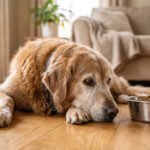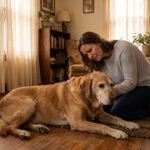

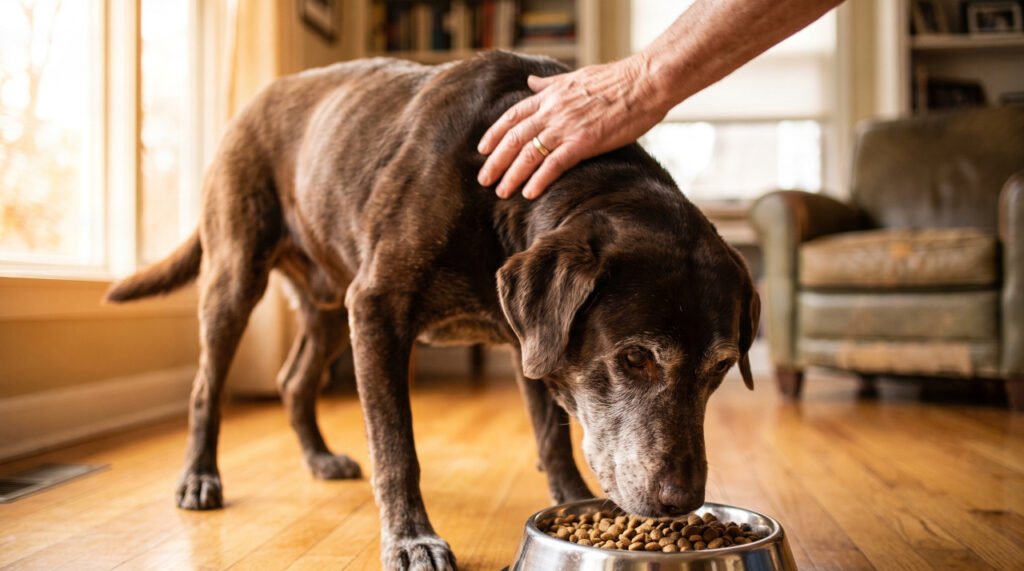
Your senior dog eats every meal — and still gets thinner. It feels wrong, because it is wrong. Weight loss in a dog that’s eating isn’t a phase. It’s a signal.
Research shows that more than half of dogs aged seven and older experience some degree of muscle loss, and many owners don’t notice until the change is significant. A senior dog losing weight but still eating isn’t being picky and isn’t just “getting old.” Something in the body is either failing to absorb nutrients, burning through muscle faster than food replaces it, or being actively stolen by disease.
This guide covers every real cause of unexplained weight loss in senior dogs that are still eating. You’ll also learn how to spot the difference between fat loss and muscle loss, what to track before your vet visit, and which conditions need urgent attention vs. scheduled care.
What “Weight Loss While Eating” Actually Means
Not all weight loss in senior dogs works the same way, and that distinction matters. There are two separate processes happening when an eating dog loses weight.
Sarcopenia is the age-related, gradual loss of muscle mass that begins as early as age seven in dogs. It’s a biological process, not a disease — but it accelerates with inactivity, chronic pain, and poor nutrition. A dog with sarcopenia loses lean muscle while fat may remain, making them look “thin in the wrong places.”
Cachexia is muscle wasting caused directly by a disease — cancer, kidney failure, heart disease, or severe infection. Cachexia burns through muscle even when the dog eats adequate calories. The body redirects energy because the disease demands it.
The most dangerous scenario is when these overlap: a dog already losing muscle to sarcopenia develops an underlying disease that accelerates the loss. You might not notice until the dog is significantly weaker or sicker than you expected. According to the Merck Veterinary Manual’s nutrition section, muscle wasting is present in approximately 35% of dogs with cancer — and many of those dogs are still eating.
The “Stable Weight, Missing Muscle” Trap
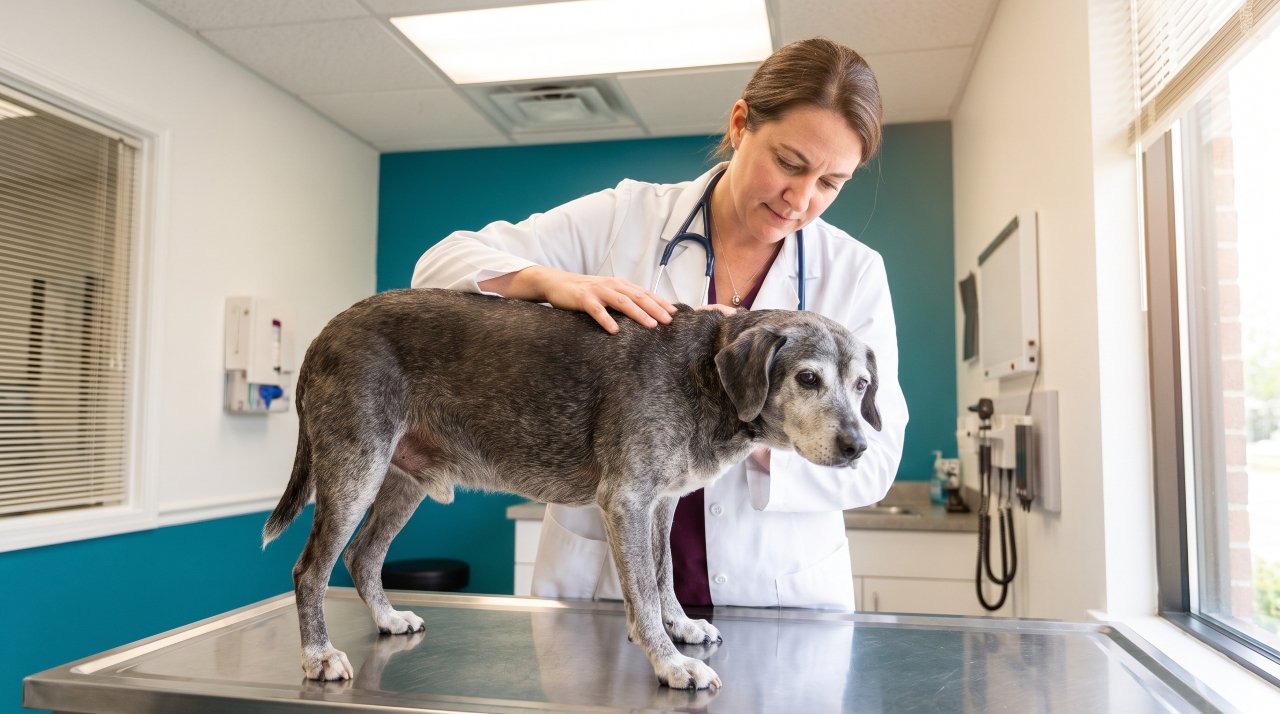
Here’s something most articles skip: your dog’s weight on the scale can look normal while they’re losing critical muscle mass.
Fat can replace muscle tissue in aging dogs, keeping total body weight roughly stable while the dog’s actual physical capacity declines. A dog who weighed 65 pounds last year and weighs 65 pounds today might have lost 8 pounds of muscle and gained 8 pounds of fat. That dog is weaker, sicker, and at higher risk — but the scale says nothing changed.
Veterinarians use two separate tools to catch this: the Body Condition Score (BCS) assesses fat, and the Muscle Condition Score (MCS) assesses lean muscle separately. You can check for muscle loss at home by running your hands along your dog’s spine, ribcage, and skull. A sharper spine, prominent hip bones, sunken temples, and visible shoulder blades all signal muscle loss — even at a “normal” weight.
If you see any of these signs on a dog who’s still eating, schedule a vet visit. Don’t wait for the scale to confirm what your hands are already telling you. For a deeper look at how weight connects to your senior dog’s overall health, our complete guide to senior dog weight problems walks through body condition scoring step-by-step.
8 Medical Reasons Your Senior Dog Loses Weight While Eating
1. Diabetes Mellitus
Diabetes is one of the most common reasons a senior dog loses weight despite eating normally — or even more than normal. When insulin deficiency prevents glucose from entering the body’s cells, the body reads this as starvation. It then breaks down fat and muscle for fuel, causing weight loss even when food intake stays the same or increases.
Watch for the “4 P’s” alongside weight loss: polyphagia (increased hunger), polydipsia (increased thirst), polyuria (frequent urination), and progressive weight loss. Cloudy eyes from cataracts are also common in diabetic dogs. Diagnosis requires a blood glucose test and urinalysis — both routine and fast at a vet clinic.
2. Exocrine Pancreatic Insufficiency (EPI)
EPI is one of the most misunderstood causes of weight loss in senior dogs, and it’s frequently missed. The pancreas fails to produce sufficient digestive enzymes, so food passes through without being absorbed. Your dog eats — sometimes ravenously — but their cells starve.
The hallmark signs are dramatic weight loss, large volumes of pale or greasy loose stool, and an almost frantic hunger. Some dogs with EPI eat feces (coprophagia) because they crave nutrients so desperately. EPI is confirmed with a simple blood test (cTLI test) and is highly manageable with lifelong enzyme supplementation. German Shepherd Dogs are the most commonly affected breed, but EPI can occur in any dog.
3. Chronic Kidney Disease
Kidney disease is extremely common in senior dogs and causes weight loss through multiple pathways. Damaged kidneys allow protein to be lost in the urine. Nausea from toxin buildup reduces appetite even when the dog tries to eat. The systemic inflammation of chronic kidney disease also increases the body’s caloric needs.
You might notice your dog drinking more water, urinating more frequently, or appearing nauseous around mealtimes. Weight loss alongside these signs points strongly toward a kidney problem. Cornell University’s College of Veterinary Medicine identifies protein loss through the kidneys as a major driver of weight decline in senior patients.
4. Cancer and Cancer Cachexia
Cancer alters metabolism at the cellular level, causing the body to burn through muscle and fat even with adequate caloric intake. This process — cachexia — is not simply “the dog isn’t eating enough.” The tumor reshapes how energy gets used throughout the entire body.
Approximately 23% of dogs with cancer lose more than 10% of their body weight in the year before diagnosis. Weight loss while eating is often one of the earliest visible signs. Other signals worth tracking include unusual lumps, rapid fatigue, reluctance to move, or changes in breathing. Cancer can be present for months before it becomes obvious, which is why unexplained weight loss always warrants a vet workup.
5. Inflammatory Bowel Disease (IBD)
IBD causes chronic inflammation of the digestive tract, damaging the intestinal lining and reducing its ability to absorb nutrients. A dog with IBD might eat a full meal and absorb only a fraction of its nutritional value. Over weeks and months, this creates a slow, persistent deficit that shows up as unexplained weight loss.
Loose stools, occasional vomiting, and a slightly gurgly stomach are common with IBD — but some dogs show none of these signs and just gradually get thinner. IBD requires intestinal biopsy for definitive diagnosis, though your vet will likely start with diet trials and blood work.
6. Cushing’s Disease (Hyperadrenocorticism)
Cushing’s disease causes the adrenal glands to overproduce cortisol, a stress hormone. Excess cortisol triggers muscle wasting throughout the body, particularly in the limbs and abdomen. The dog may appear to have a pot-bellied look despite losing muscle in their legs and face.
Dogs with Cushing’s often drink and urinate excessively, lose hair symmetrically, and develop a distinctive swollen belly. This condition primarily affects middle-aged to older dogs. Diagnosis involves specific hormonal testing (ACTH stimulation test or low-dose dexamethasone suppression test) rather than standard blood panels — so mention your suspicions to your vet explicitly.
7. Heart Disease
Advanced heart disease can cause cachexia through a combination of poor circulation, reduced oxygen delivery to muscles, chronic systemic inflammation, and secondary nausea from medication. Dogs with heart disease often tire quickly and may seem breathless after low-effort activity.
Weight loss in heart disease dogs is often gradual and easy to attribute to “old age.” Any combination of exercise intolerance, persistent cough, labored breathing, and declining weight in a senior dog needs cardiac evaluation, not just general bloodwork.
8. Intestinal Parasites
Parasites are less dramatic than the conditions above but worth including because they’re easily missed and easily treated. Intestinal parasites steal nutrients before the body can absorb them, causing weight loss in a dog that eats normally. Hookworms and whipworms are particularly effective at creating a slow nutrient drain.
A fresh fecal sample tested at the vet will confirm or rule this out quickly. Senior dogs who spend time outdoors or around other animals should have fecal testing as part of their annual wellness check.
How Much Weight Loss Is Too Much?
A general veterinary guideline: if your senior dog has lost 10% or more of their body weight, that warrants a same-week vet appointment. For a 50-pound dog, that’s 5 pounds. For a 20-pound dog, that’s 2 pounds.
Don’t wait for that threshold if you also see vomiting, diarrhea, lethargy, increased thirst or urination, or visible muscle wasting. Combine any two of those signs with weight loss and contact your vet the same day.
How to Track Your Dog’s Weight at Home
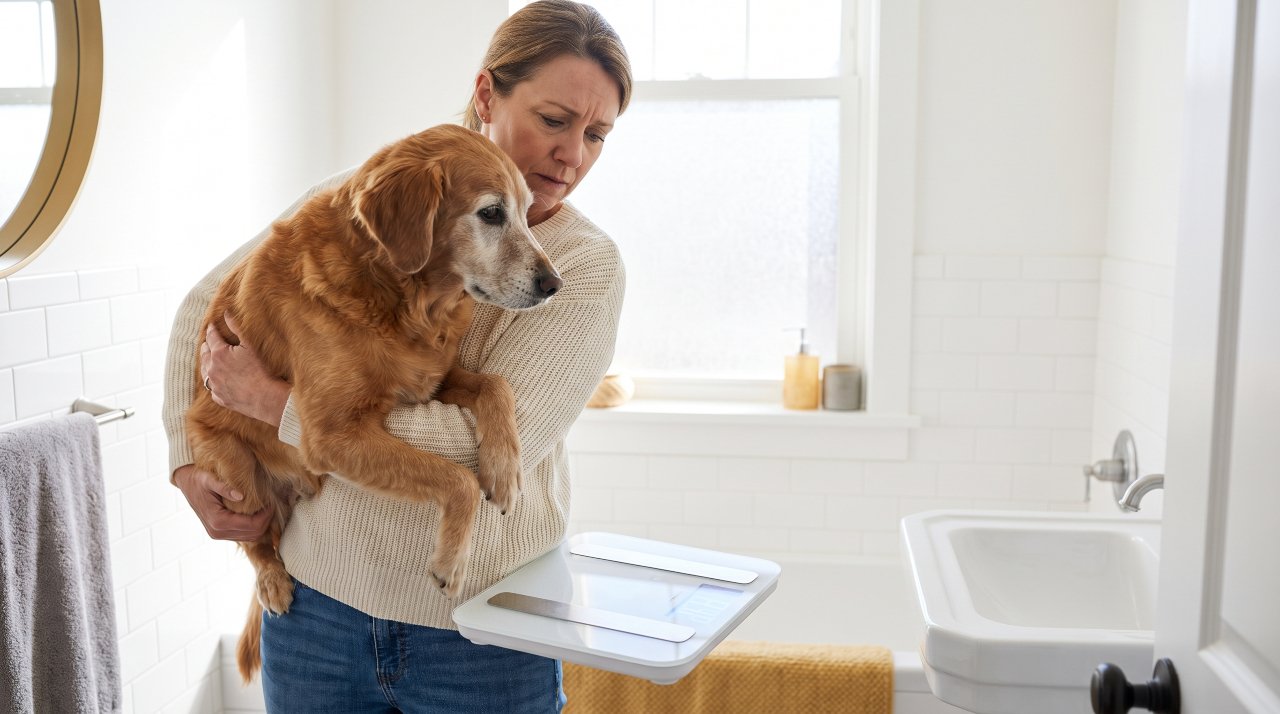
Most owners don’t weigh their senior dog monthly — and that’s how 10% of body weight disappears without anyone noticing. Here’s a simple system.
Weigh yourself on a bathroom scale. Then pick up your dog and weigh yourself again. Subtract the first number from the second. That’s your dog’s weight. Do this once a month and log it with the date. After three to four months, you’ll have a trend line your vet can actually use.
Bring this log to every vet appointment. A vet who sees your dog twice a year is working with snapshots. You’re providing the full picture.
What the Vet Will Test — And Why
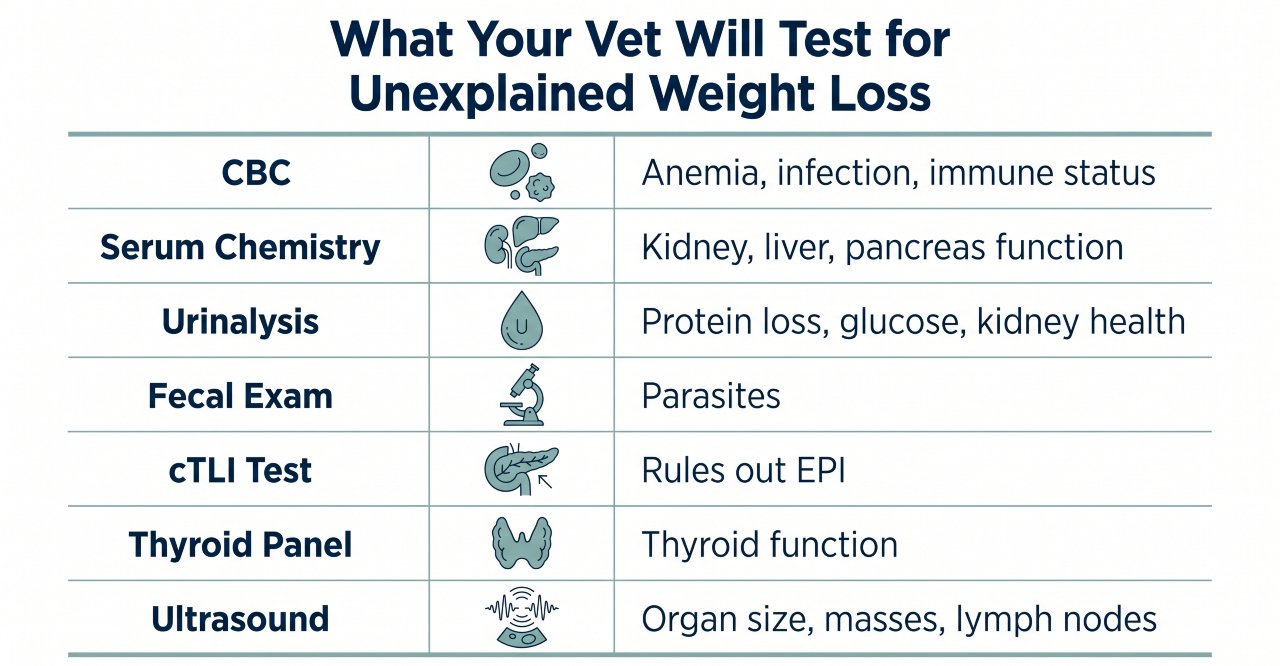
Walking into a vet appointment less prepared means slower answers. Here’s what a standard workup for unexplained weight loss typically includes:
| Test | What It Checks |
|---|---|
| Complete Blood Count (CBC) | Anemia, infection, immune status |
| Serum Chemistry Panel | Kidney, liver, pancreas function |
| Urinalysis | Kidney health, glucose, protein loss |
| Fecal exam | Parasites |
| cTLI (pancreatic enzyme test) | Rules out EPI specifically |
| Thyroid panel | Thyroid function |
| Abdominal ultrasound | Organ size, masses, lymph nodes |
Your vet may not run every test at once — they’ll prioritize based on your dog’s specific symptoms. But knowing what these tests do helps you ask better questions and understand the results.
What You Can Do Right Now
Before the diagnosis, there are a few things you can do at home that help without risking harm.
Don’t switch to a high-calorie diet yet. If your dog has kidney disease, a high-protein diet can accelerate kidney damage. If they have liver disease, the wrong nutrients worsen the condition. Wait for the vet’s guidance on nutritional changes.
Keep a symptom log. Note your dog’s daily appetite, thirst, urination frequency, energy level, and stool quality. Even three to five days of notes dramatically improves a vet’s ability to narrow down the cause.
Weigh your dog weekly until you have an appointment, so you can report whether the loss is accelerating, stable, or slowing.
Check for muscle loss manually. Run your hands along the spine, hips, and skull. Note any changes compared to six months ago — even from memory. That information matters.
FAQ
Is it normal for older dogs to lose weight as they age?
A very gradual, slight reduction in body weight as a dog ages can be normal, mainly because senior dogs are less active and have lower muscle mass maintenance. Significant or noticeable weight loss — particularly if your dog’s appetite hasn’t changed — is not a normal part of aging. Treat any unexplained loss of 10% or more of body weight as a medical concern.
My old dog is losing weight but acting totally normal — should I worry?
Yes. Several serious conditions, including diabetes, EPI, and early kidney disease, cause weight loss while the dog still acts energetic and happy. “Acting normal” doesn’t mean everything is fine internally. It means the disease hasn’t progressed far enough yet to affect behavior. Catching these conditions early, before your dog becomes visibly unwell, leads to significantly better outcomes.
What should I feed an elderly dog that’s losing weight?
Don’t change your dog’s diet until you have a diagnosis. The right nutritional approach differs dramatically depending on the cause. Dogs with kidney disease need low-phosphorus, moderate-protein food. Dogs with EPI need enzyme supplements with every meal. Dogs with diabetes need a consistent, controlled diet to stabilize blood sugar. Feeding a high-calorie diet without knowing the cause can make some conditions worse.
How quickly does a senior dog lose weight from illness?
The speed varies by condition. EPI and cancer cachexia can cause rapid, visible weight loss over weeks. Kidney disease and diabetes often cause slower, progressive loss over months. If you’re seeing noticeable change within two to three weeks, treat it as urgent and schedule a vet appointment within the week.
Do older dogs naturally lose muscle mass?
Yes — sarcopenia, the age-related loss of lean muscle, affects more than half of dogs over age seven. But “natural” doesn’t mean unmanageable. Veterinarians now recommend proactive interventions including higher-quality protein in the diet, controlled exercise, and early pain management for arthritis (which causes “disuse atrophy” — muscle loss from inactivity due to joint pain). Ask your vet about Muscle Condition Scoring at your next visit.
What to Do Next
The single most important thing you can take from this guide: weight loss in a senior dog who’s still eating is almost always a medical event, not an aging quirk. The causes range from easily managed (parasites, EPI) to serious and time-sensitive (cancer, kidney disease).
Your next step is concrete. Weigh your dog today using the bathroom scale method. Check for muscle loss along the spine and hips. Start a seven-day symptom log. Then call your vet and specifically mention “unexplained weight loss despite normal eating.” Those words will prompt the right diagnostic pathway.
Early diagnosis changes outcomes. You’ve already done the hard part by noticing something was wrong.
Also helpful: our complete guide to senior dog weight problems covers how to track body condition at home and what a healthy senior dog weight range looks like for different breeds.