

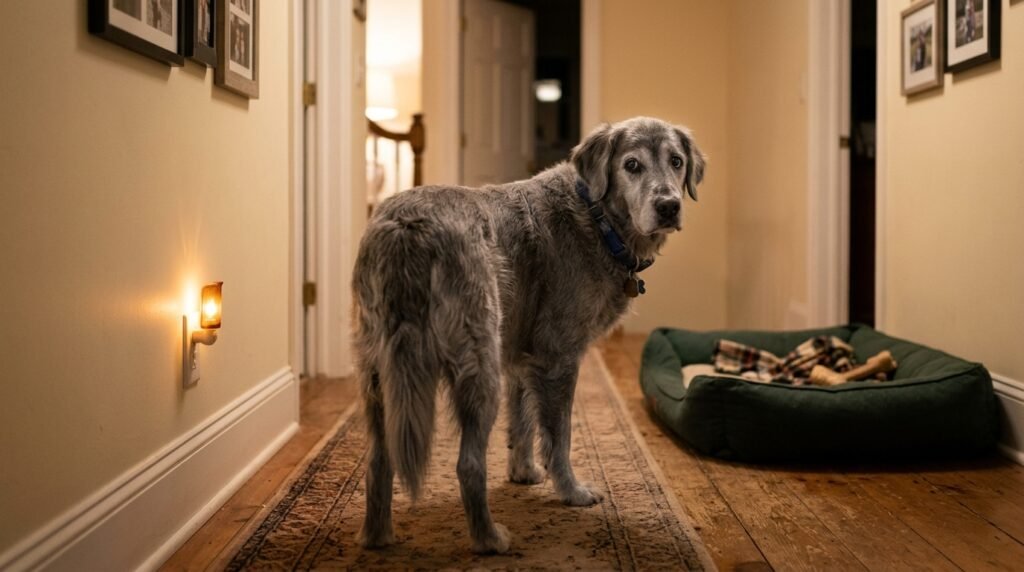
It’s 2 a.m., and you can hear it again: claws clicking across the floor, then a thin, worried cry. Your old dog walks a lap of the room, stops, whines, and starts walking again. You’re exhausted, and you can’t tell if they’re hurting, confused, or just need to go out.
A senior dog pacing at night and crying is one of the most common worries owners bring to their vet. It’s also one of the hardest to sort out from the hallway in the dark. The causes overlap, and the same cry can mean pain one night and confusion the next.
This guide is about working out which one you’re dealing with. You’ll get a quick checklist for the moment it happens and a simple night log to keep for a week. It also covers the clues that point to pain, a full bladder, failing senses, or canine dementia.
Quick Answer:
A senior dog pacing at night and crying is most often caused by pain (usually arthritis), needing to urinate, vision or hearing loss, or canine cognitive dysfunction. Check the basics in the moment, keep a one-week night log, and take it to your vet to find the cause.
Key Takeaways:
- Main Causes: Pain, a full bladder, failing sight or hearing, and canine cognitive dysfunction cause most nighttime pacing and crying in older dogs.
- What to Watch: When the crying starts, what stops it, and what your dog does next are the best clues to the cause.
- Home Action Step: Run a quick 2 a.m. checklist, then log every night for a week before your vet visit.
- When to See a Vet: Book a visit for any new nightly pattern. Go the same day for heavy breathing, a swollen belly, or collapse.
Why a Senior Dog Starts Pacing at Night and Crying
Nighttime is when small problems get louder. The house is quiet, the lights are off, and there’s nothing to distract a dog from a sore hip or a confused mind. Many older dogs also sleep a lot during the day, so they’re less tired when you go to bed.
The AKC guide to behavior changes in senior dogs describes this mix-up of day and night, along with whining, crying, and pacing. As the PetMD guide to sleep disorders explains, insomnia in dogs usually has a medical or behavioral cause underneath it.
The usual suspects are pain, toilet needs, sensory loss, cognitive decline, and anxiety. If you want the full list of causes in more detail, our guide to an old dog restless at night covers each one. This article focuses on telling them apart.
Read the Pattern: What the Crying Is Telling You
On its own, the cry rarely tells you much. The pattern around it usually does. Use this table as a starting point, not a diagnosis.
| What you notice | What it often points to |
|---|---|
| Cries when lying down or getting up, then can’t settle | Joint or back pain |
| Paces to the door, settles after going outside | Needing to urinate or pass stool |
| Stops crying when a light goes on or you speak | Vision or hearing loss, feeling lost in the dark |
| Stares at walls, gets stuck in corners, seems not to know you | Canine cognitive dysfunction (dementia) |
| Settles as soon as you’re in the room, cries when you leave | Anxiety or loneliness, sometimes with early dementia |
| Panting hard, restless, can’t lie down at all | Pain, nausea, or a breathing problem (needs a vet soon) |
Many older dogs have more than one cause at once. A dog with arthritis can also be losing their sight, and both can add to night confusion. That’s why a week of notes is far more useful than one bad night.
What You’ll Need
- A notebook or the notes app on your phone, for the night log
- A small plug-in nightlight for the room where your dog sleeps
- A fresh bowl of water within easy reach
- A supportive bed on a non-slip surface
- Your vet’s number, and the nearest emergency clinic’s number
How to Find Out Why Your Senior Dog Is Pacing and Crying
Step 1: Run the 2 a.m. Checklist
When the crying starts, go through a few quick checks before anything else. Each one rules out a simple fix.
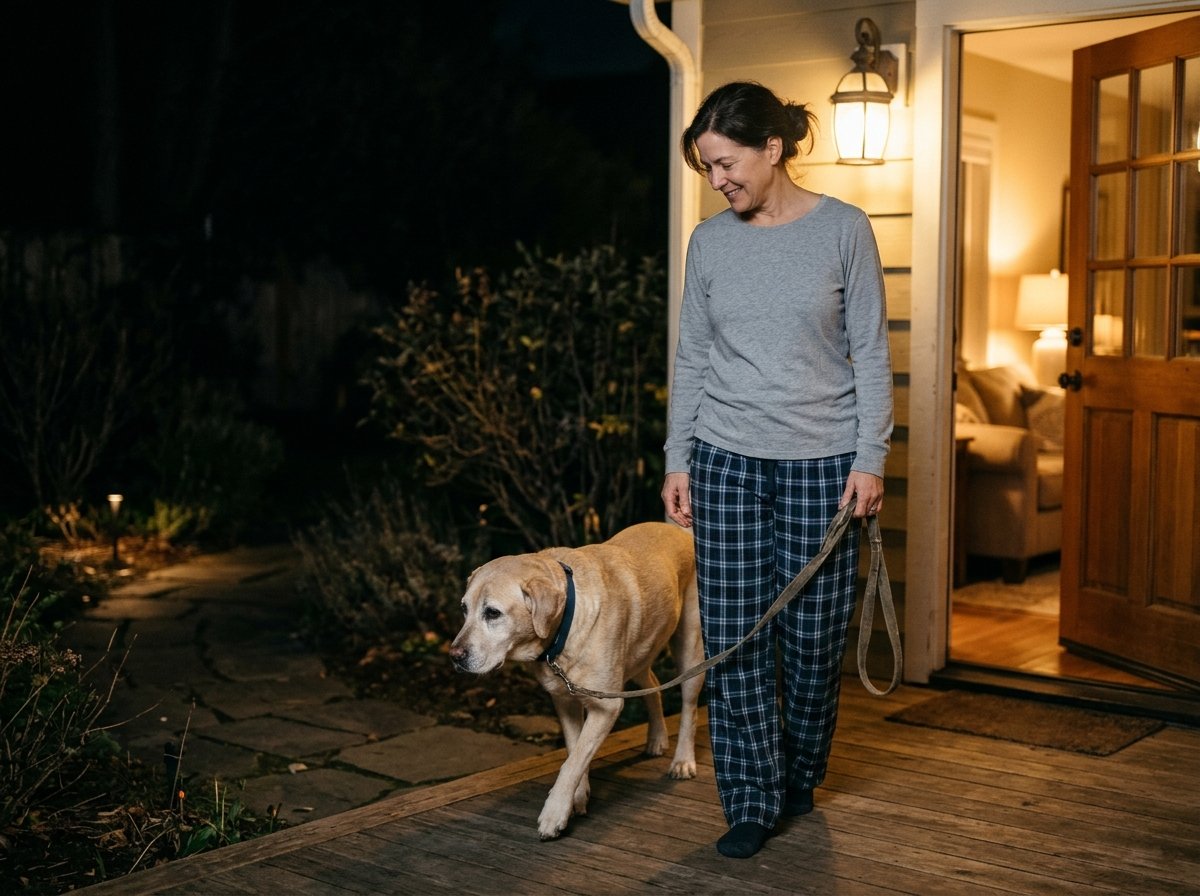
- Toilet: Take your dog outside on a lead, calmly and with little talk. Note if they pee or poop.
- Water: Check that the bowl isn’t empty or tipped over.
- Temperature: Feel if the room is too warm or too cold. Older dogs handle both less well.
- Bed and position: See if your dog is stuck, has slipped off the bed, or can’t get comfortable.
- Lost or stuck: Look for a dog trapped behind furniture or facing a wall in a corner.
The most common mistake is jumping straight to comfort and cuddles. Kindness matters, but check the basics first, or you may miss a full bladder. Doing it right means a calm, quiet routine that takes two or three minutes.
Step 2: Keep a Seven-Night Log
One bad night tells you very little. A week of notes shows patterns you’d never spot while half asleep. It also gives your vet real information instead of “they’re up a lot.”
Each morning, jot down a few short answers:
- What time the pacing or crying started, and how long it lasted
- What happened just before (lying down, getting up, lights off, you leaving the room)
- What helped, if anything (going out, a light, your voice, a change of bed)
- Any accidents, heavy panting, or unusual drinking
- How your dog was the next day: stiff, sleepy, or normal
An entry doesn’t need to be long. Here’s an example:
“Tuesday: up at 1:40 a.m., cried by the back door, peed a lot outside, settled by 2:00; stiff getting up in the morning.”
A few lines like that, night after night, quickly show a pattern.
A short phone video of an episode is worth more than a page of notes. Vets rarely see the behavior in the clinic, so footage helps a lot.

Step 3: Check for Pain in Daylight
Pain is one of the most common and most treatable causes of night pacing. Arthritis often hurts more after lying still. A dog may cry when trying to settle, or after a few hours on a hard floor.
During the day, watch how your dog gets up, lies down, and handles stairs. Stiffness, a slow “sit before standing” move, licking one joint, or flinching when touched all point to pain. Our list of senior dog pain signs covers the subtler clues.
Never give your dog human pain relievers. Several common ones are toxic to dogs, even in small doses. Your vet can prescribe safe, dog-specific pain control.
Step 4: Rule Out Toilet and Thirst Problems
A dog who needs to go out will often pace toward the door and cry. If this happens most nights, the question is why their bladder can’t last until morning.
Drinking and peeing more than usual can be a sign of kidney disease, diabetes, a urinary infection, or Cushing’s disease. Leaking urine while asleep is a separate clue worth mentioning to your vet. Our guide to senior dog incontinence explains the common causes.
A last trip outside right before bed often helps. Avoid cutting water, though. Older dogs need steady hydration, especially if their kidneys are struggling.
Step 5: Look at Sight and Hearing
A dog who can’t see well in the dark, or can’t hear you moving nearby, can feel lost in their own home. That confusion often comes out as pacing and crying, and it may stop the moment a light goes on.
Signs of vision loss include bumping into furniture, hesitating on stairs, and cloudy-looking eyes. Hearing loss shows up as not waking when you come in, or startling when touched. Our guide to senior dog vision loss has practical home changes that help.
A plug-in nightlight and keeping furniture in the same place can make a big difference. Try the nightlight for a few nights and note the change in your log.
Step 6: Consider Canine Cognitive Dysfunction
Canine cognitive dysfunction is the dog version of dementia. It often flips the sleep-wake cycle, so dogs sleep more during the day and wander and cry at night.
Vets use the acronym DISHAA to describe the signs: disorientation, changes in social interactions, sleep-wake changes, house soiling, changes in activity, and anxiety. The VCA guide to cognitive dysfunction explains each one, and our article on dementia signs in senior dogs covers how it progresses.
If the crying gets worse around dusk, read our guide to sundowners in dogs. Dementia can’t be cured, but diet, routine, and medication can ease the symptoms for many dogs.
Step 7: Take Your Log to the Vet
A new nighttime pattern in an older dog deserves a proper check, even if you think you know the cause. Bring your log and any videos.
Your vet will usually start with a physical exam, a pain assessment, and often bloodwork and a urine test. This helps rule out kidney disease, diabetes, infection, and other problems that look like dementia or anxiety. Ask about sleep aids such as melatonin only once the cause is clearer, and only at the dose your vet gives you.
The common mistake here is waiting for things to get worse. Many causes of night pacing are easier to treat early.
How to Respond in the Moment
How you react at 2 a.m. can help your dog settle, or keep the cycle going. These small habits help most dogs:
- Keep your voice low and calm, and keep the lights dim.
- Go through the checklist first, then guide your dog back to bed.
- Sit with them briefly if they’re anxious, then let them settle on their own.
- Never scold or punish crying. A confused or sore dog can’t stop on command.
- Keep daytime naps active with short walks and gentle play, so they’re more tired at night.
Look after yourself too. Weeks of broken sleep are hard, and asking your vet for help is not a failure.
Warning Signs That Need a Vet Soon
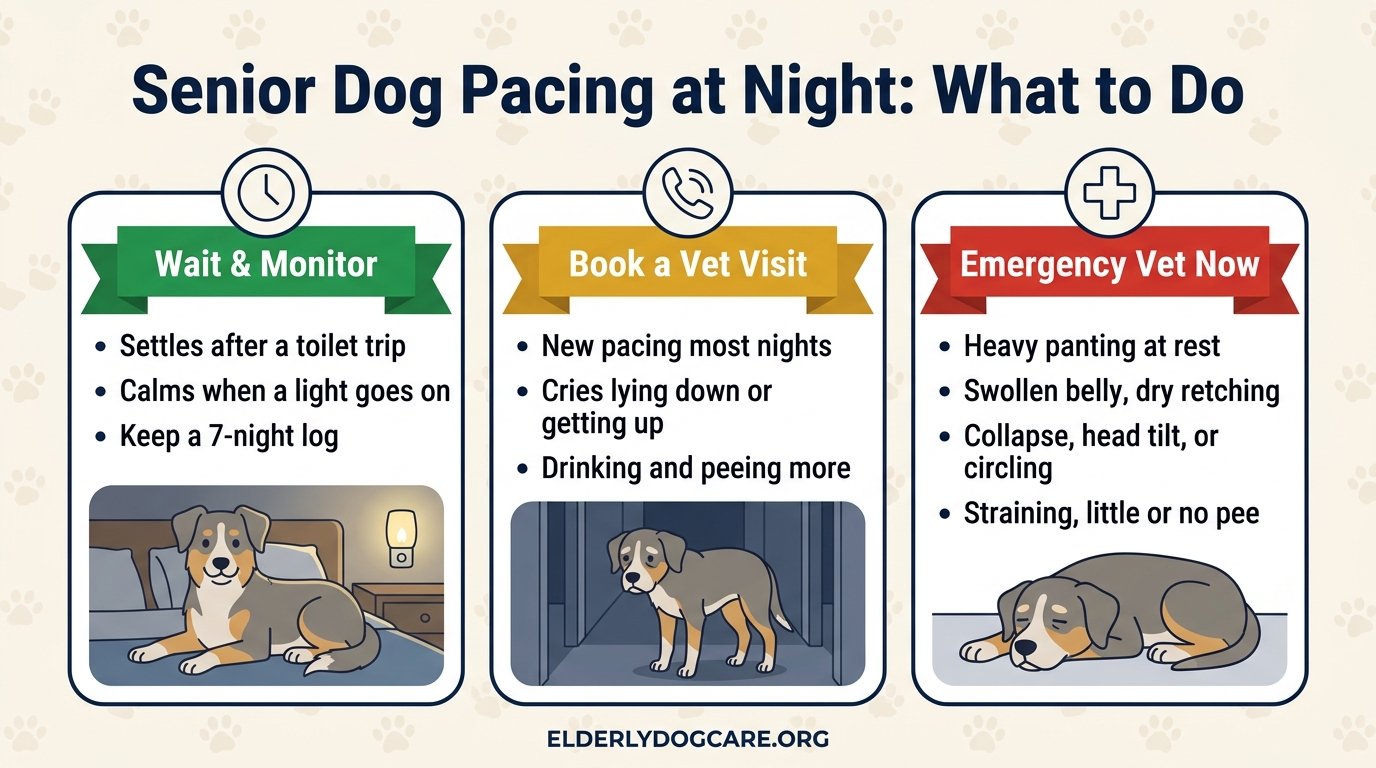
Most night pacing can wait for a regular appointment. These signs can’t. Call your vet or an emergency clinic the same day if you see any of them:
- Heavy panting or labored breathing at rest
- A swollen or tight belly, retching without bringing anything up, or drooling
- Collapse, a sudden head tilt, or circling
- Crying out when touched, or refusing to lie down at all
- Straining to pee with little or nothing coming out
A swollen belly with unproductive retching can be bloat, which is a life-threatening emergency. Don’t wait until morning.
Frequently Asked Questions
Should I ignore my old dog crying at night?
No. A young dog may learn to cry for attention, but a senior dog’s new night crying usually has a reason. Run the quick checklist each time, keep your response calm and brief, and book a vet visit if it keeps happening.
Why does my senior dog cry at night but seem fine during the day?
Pain from stiff joints often feels worse after lying still for hours. Darkness also makes vision loss and confusion more noticeable. Dogs with cognitive dysfunction often have their sleep cycle reversed, so they’re restless at night and sleepy by day.
Can I give my senior dog melatonin for night pacing?
Melatonin is sometimes used for sleep problems in older dogs, but ask your vet first. The right dose depends on your dog’s size and health. Some products made for people contain xylitol, which is toxic to dogs.
Why does my old dog pace and pant at night?
Panting with pacing often points to pain, anxiety, or feeling too warm. It can also come with heart or breathing problems, or with Cushing’s disease. Count your dog’s breaths while they rest, and see a vet soon if the panting happens at rest or keeps coming back.
Is pacing at night a sign my old dog is dying?
Not usually. Most night pacing comes from treatable problems like pain, toilet needs, or dementia. If it comes with refusing food, weakness, and labored breathing, though, talk to your vet about comfort and quality of life.
Will my dog’s night crying get worse over time?
It depends on the cause. Pain and infections often improve quickly with treatment. Cognitive dysfunction tends to progress slowly, but routine changes and vet treatment can ease the symptoms for months or longer.
Getting Both of You Back to Sleep
Night pacing and crying is your senior dog’s way of telling you something has changed. A quick checklist in the moment and a week of notes can usually narrow down the cause. They also give your vet real information to work with.
Many of the reasons behind it are treatable, especially pain and bladder problems. Even when the cause is dementia, there’s often a lot you and your vet can do to bring back quieter nights.
If this guide helped, bookmark it for the next 2 a.m. wake-up. And share it with a friend who’s up at night with an older dog too.