
Waking up to discover urine spots on your senior dog’s bed can feel overwhelming. Many owners worry that incontinence is an irreversible sign of severe decline, but the truth is far more reassuring: urinary leakage in older dogs is a manageable medical condition, not a behavioral failure.
Your dog is not leaking on purpose and feels confused when accidents happen. Never scold or punish an incontinent senior dog. With proper veterinary diagnosis, effective medications, and smart home management, you can keep your dog clean, comfortable, and dry.
This guide explains the medical causes of senior dog incontinence, veterinary treatment options, and practical daily home care tips.
Medical Causes of Incontinence in Aging Dogs
Urinary incontinence is the involuntary leakage of urine from the bladder, usually occurring while a dog is sleeping or resting. According to veterinary clinical reviews from PetMD, the primary causes include:
- Urethral Sphincter Mechanism Incompetence (USMI): Weakening of the bladder neck sphincter muscles, very common in spayed female dogs as hormone levels decline with age.
- Urinary Tract Infections (UTIs): Bacterial bladder infections cause sudden urgency and temporary leakage.
- Kidney Disease & Diabetes: Diseases that cause excessive thirst (polydipsia) and large urine volume (polyuria), overwhelming bladder capacity.
- Spinal Cord & Nerve Degeneration: Weakened nerve signals between the spinal cord and bladder sphincter impair voluntary control.
- Canine Cognitive Dysfunction (CCD): Senior dog dementia can cause dogs to forget house-training habits, though this is behavioral disorientation rather than physical sphincter leakage.
Veterinary Diagnosis and Medication Options
Your vet will perform a physical exam, urinalysis, and blood panel to pinpoint the exact cause of leakage before recommending treatment:
| Condition | Common Vet Treatment | Expected Outcome |
|---|---|---|
| Hormonal USMI (Females) | Phenylpropanolamine (PPA) or Incurin (Estriol) | Strengthens sphincter muscle tone; high success rate |
| Urinary Tract Infection | Targeted antibiotic course (7-14 days) | Clears infection and resolves leakage completely |
| Kidney Disease / Diabetes | Dietary management & fluid therapy / insulin | Controls excessive thirst and reduces bladder volume |
1. Protect Your Home with Waterproof Bedding and Pads
Managing incontinence at home starts with creating an easy-to-clean environment so accidents don’t cause stress or ruin furniture:
- Waterproof Bed Covers: Protect core memory foam beds with zippered waterproof internal liners. Read our guide on the best orthopedic beds for senior dogs.
- Washable Absorbent Pee Pads: Place reusable, rubber-backed fabric pee pads on dog beds, sofas, and car seats. Reusable pads stay in place better than disposable paper pads.
- Enzymatic Cleaners: Always clean urine spots with enzymatic spray to break down uric acid crystals and neutralize odors.
2. Using Dog Diapers and Belly Bands Safely
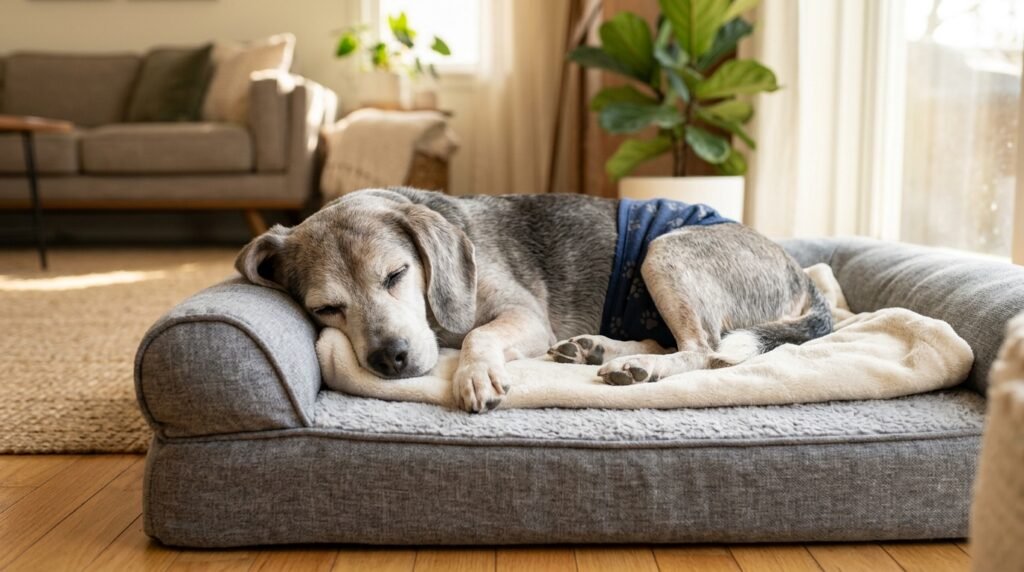
Dog diapers and male belly bands are effective tools for catching leaks while your dog moves around the house:
- Male Belly Bands: Soft fabric wraps that cover the penile sheath, ideal for male dogs with minor sleeping leaks.
- Female Full Diapers: Full-coverage diapers with tail holes designed for female dogs.
- Change Frequently: Change diapers immediately when wet to prevent skin scald and bacterial infections. Never leave a damp diaper on for hours.
3. Skin Hygiene and Preventing Urine Scald
Urine left on skin and fur causes painful redness, hair loss, and severe skin infections known as urine scald. Maintain strict daily hygiene:
- Wipe your dog’s hindquarters and belly with warm water or hypoallergenic dog wipes after every leakage episode.
- Dry the skin thoroughly with a soft towel.
- Apply a vet-approved barrier cream (such as plain zinc-free soothing ointment) to sensitive skin areas.
- Trim long fur around the groin and hind legs (sanitary trim) to prevent urine soak.
4. Never Restrict Fresh Drinking Water
It can be tempting to limit your dog’s water intake at night to stop leaks, but restricting water is dangerous for senior dogs. Aging kidneys require adequate hydration to filter metabolic waste.
Restricting water leads to rapid dehydration, kidney strain, and concentrated urine that irritates the bladder lining. Always provide fresh, clean water 24 hours a day.
Frequently Asked Questions
#### Is senior dog incontinence a sign that it’s time to put my dog down?
No. Incontinence alone is a manageable medical condition, not a reason for euthanasia. Most dogs respond exceptionally well to simple medications like PPA or estriol and live comfortable, happy lives for years with basic home management.
#### What medication stops urine leakage in old dogs?
Phenylpropanolamine (Proin) and Estriol (Incurin) are the two most commonly prescribed medications for urethral sphincter weakness, showing high success rates in stopping sleeping leaks within days.
#### How often should I change an incontinent dog’s diaper?
Change diapers or belly bands as soon as they become damp, typically every 3 to 4 hours during the day, and immediately upon waking in the morning to prevent skin irritation.
#### Can a urinary tract infection cause sudden incontinence in an old dog?
Yes. A UTI causes sudden bladder inflammation, burning, and intense urgency, leading to unexpected accidents in previously house-trained senior dogs. A simple urinalysis from your vet diagnoses a UTI quickly.
#### What is the difference between dementia accidents and incontinence?
Incontinence is involuntary physical leakage while resting or sleeping without your dog noticing. Dementia accidents occur when an awake dog walks into a corner or room and forgets where to go potty.
#### How do I keep my house from smelling like dog urine?
Use washable waterproof bed pads, clean accidents immediately with enzymatic cleaner, wash dog bedding weekly with an odor-eliminating laundry additive, and maintain daily skin hygiene.
Compassionate Daily Care
Managing senior dog incontinence requires patience, empathy, and practical setup. By working with your vet to rule out underlying infections and equipping your home with waterproof bedding and clean diapers, you can ensure your faithful companion remains comfortable, clean, and loved throughout their senior years. Bacterial bladder irritation is a frequent trigger; learn the signs of a dog UTI in senior dogs.
“@
,Description: