
Watching your gray-muzzled companion wander into the hallway looking slightly confused reminds you that aging affects the canine mind as much as the body. You remember when they took schedule disruptions in stride without blinking. Now, small changes in dinner timing or a delayed morning walk leave them pacing anxiously or staring at doorways.
Every devoted dog parent wants to give their companion a secure, stress-free life during their golden years. When eyesight blurs, hearing dulls, and memory wavers, the external world becomes unpredictable and intimidating. Establishing a consistent senior dog routine acts as an invisible safety net that restores their inner peace.
A structured daily rhythm eliminates guesswork for an aging brain while supporting fragile physical systems. Knowing exactly when food arrives, when bathroom relief happens, and when quiet rest begins provides immense comfort. Creating this predictable sanctuary helps your companion navigate each day with confidence.
Quick Answer:
A predictable senior dog routine anchors aging canines battling cognitive decline, vision impairment, and reduced bladder capacity. Establishing fixed times for gentle wake-ups, elevated meals, frequent bathroom breaks, low-impact sniffari walks, and soothing bedtime rituals minimizes anxiety and promotes deep restorative sleep.
Key Takeaways:
- Cognitive Anchor: Predictable schedules reduce cortisol surges and anxiety in dogs with dementia or sensory loss.
- Bladder Management: Provide outdoor bathroom breaks every four to five hours to prevent distressing indoor accidents.
- Exercise Adaptation: Swap long hikes for multiple short, slow sniffari walks to stimulate the brain without fatiguing joints.
- Nighttime Sanctuary: A cool, dimly lit sleeping area with orthopedic bedding prevents sundowning pacing and sleep disruption.
Why Routine Becomes Essential for Older Dogs
Canine senses undergo gradual, compounding decline as dogs enter their second decade. Cloudy lenses from nuclear sclerosis reduce low-light clarity, while degenerative nerve loss dampens auditory acuity. When a dog cannot clearly see across the living room or hear family footsteps approaching, sudden surprises trigger startle reflexes.
A dependable daily rhythm replaces failing senses with dependable expectations. Your companion internal clock steps in to tell them that morning light means a gentle greeting, followed by relief in the yard and warm breakfast. That mental blueprint eliminates fear and grounds them in familiar security.
Cognitive changes make structure even more crucial. A predictable daily routine can ease anxiety and confusion in dogs with dementia. The VCA Hospitals guide on canine cognitive dysfunction covers other ways to support a dog with cognitive decline. Predictable days reduce cortisol spikes that trigger nighttime agitation and disoriented pacing.
Scent markers provide a powerful secondary anchor when eyesight and hearing fade. Leaving familiar bedding in fixed floor positions and maintaining consistent household layouts allows your companion to create an internal olfactory map. Moving furniture abruptly disrupts this sensory blueprint, triggering unnecessary stress and disorientation.
The Morning Awakening: Gentle Starts and Meal Timing
Never rush an older dog out of bed with loud voices or abrupt leash clatter. Stiff arthritic joints require gentle warm-up time before bearing full body weight on slick floors. Spend five quiet minutes rubbing their back and hips before inviting them to stand, using a structured morning joint stiffness routine to lubricate tight muscles.
The first outdoor bathroom break should happen immediately after rising. Aging kidneys produce more dilute urine overnight, filling the bladder to capacity during long sleep hours. Lead your dog directly to a familiar grassy spot without demanding vigorous morning play.
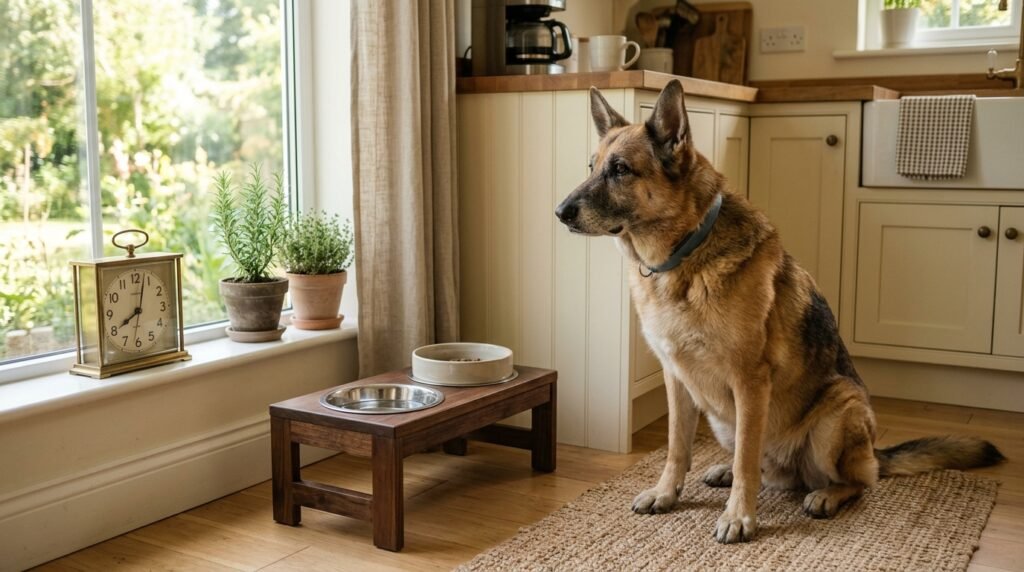
Morning nourishment should follow shortly after bathroom relief. Serve meals at the exact same hour each day to synchronize digestive rhythms and bowel movements. Position food and water dishes in an elevated stand so your companion neck and spine remain neutral while eating.

Medication Delivery and Morning Rest
Pair morning medications directly with breakfast routines. Anti-inflammatory pain relievers, joint supplements, and cardiac prescriptions absorb smoothly with food while protecting stomach linings from irritation. Using a pill pocket or small spoonful of wet food turns pill time into an eager ritual.
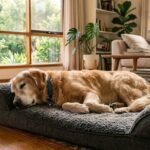
Following breakfast and medication, senior canines naturally slip into their first major rest cycle. Provide a thick orthopedic bed near a sunlit window where they can doze while absorbing gentle thermal warmth. Natural sunlight helps regulate their internal circadian clock, reinforcing daytime alertness.
Avoid scheduling loud household chores like vacuuming during this post-breakfast recovery period. Older dogs sleep lightly and startle easily when awakenings are abrupt. Allowing two to three hours of unbroken morning rest preserves vital physical stamina for midday activity.
Midday Structure: The Value of Sniffari Walks
Exercise needs change fundamentally as canines age, but the desire to explore remains vibrant. Fast-paced power walks and fetch games place excessive shear forces on worn cartilage and fragile tendons. Replacing distance walks with slow, sensory-focused sniffari strolls provides tremendous mental fulfillment without physical exhaustion.
A sniffari walk allows your dog to dictate the pace completely. If your companion spends four minutes investigating a single patch of clover, let them indulge their curiosity. Sniffing releases dopamine, lowers blood pressure, and provides healthy mental stimulation equivalent to miles of brisk trotting.
Keep these outings to ten or fifteen minutes, choosing soft natural surfaces like grass or dirt paths over hot, abrasive asphalt. Use a soft chest vest rather than a neck collar to avoid pressure on aging tracheas. Observe your companion gait closely, heading home before any sign of lagging or limping appears.
Weather conditions require seasonal adjustments to outdoor midday routines. In hot summer months, shift walks to early mornings or shady evening hours to prevent heat stress on aging cardiovascular systems. During wet winter days, towel-dry damp paws immediately upon entering to prevent slipping on indoor hard surfaces.

Preventing Bladder Distress With Midday Breaks
One of the most distressing experiences for a house-trained senior dog is having an indoor accident. Loss of urinary sphincter muscle tone and reduced kidney concentration mean older dogs cannot hold urine for eight hours like young adults. Expecting an aging companion to wait all day creates severe anxiety and guilt.
Schedule a dedicated bathroom trip every four to five hours throughout the daytime. If work keeps you away from home, hire a trusted pet sitter or neighbor to let your companion into the yard at noon. That predictable midday relief protects their dignity and keeps indoor spaces clean.
For dogs managing chronic urinary weakness, practical strategies outlined in our guide on managing senior dog incontinence at home provide protective bedding and washable diaper options. Peace of mind returns when owners view accidents as medical signs rather than behavioral flaws.
Afternoon Downtime and Gentle Enrichment
After their midday stroll and bathroom trip, senior canines spend the majority of the afternoon sleeping. Healthy older dogs sleep fourteen to eighteen hours every day as their metabolic processes slow down. Learning to distinguish peaceful sleep from medical lethargy is essential, as explained in our guide on senior dog sleeping patterns and rest needs.
When your dog wakes briefly mid-afternoon, offer low-impact mental enrichment. Snuffle mats hidden with tiny bits of dehydrated salmon or soft lick mats coated with pumpkin puree engage the brain without stressing limbs. Licking releases endorphins that promote natural relaxation and soothe minor joint ache.
Keep training games simple and pressure-free. Asking for basic cues like gentle paw touches or nose targets maintains cognitive neural pathways without requiring strenuous physical postures. Five minutes of positive mental engagement tires an older dog far more comfortably than physical exertion.
Evening Wind-Down: Preventing Sundowning Anxiety
Many older dogs experience sundowning, a state of confusion, pacing, and vocalization that begins as natural daylight fades. Decreasing light levels cast disorienting shadows, while daytime fatigue reduces cognitive coping ability. Behavioral specialists from Tufts University Cummings School clinical animal behavior resources recommend actively managing evening environments to prevent sundown distress.
Turn on warm interior lamps before dusk so your living space does not plunge into dim shadows. Keep household routines calm between five and eight in the evening. Avoid loud television volumes, boisterous visitors, or sudden schedule changes that disrupt their settling rhythm.
Serve evening dinner at a fixed time, allowing at least three hours between eating and final bedtime. This gap ensures digestion completes comfortably and gives your dog ample opportunity to empty their bowels before sleeping. Follow dinner with gentle family companionship, offering soft brushing or quiet petting on the living room rug.
A Sample Daily Schedule for a Senior Dog
Structuring your companion day does not require rigid minute-by-minute control, but establishing consistent time blocks creates valuable predictability. The reference schedule below outlines a balanced daily cadence suited for most aging canines.
| Time Block | Primary Activity | Purpose & Senior Benefit | Practical Setup Tips |
|---|---|---|---|
| 7:00 AM – 7:30 AM | Gentle wake-up & first bathroom break | Relieves overnight bladder fullness; warms cold joints | Spend 3 minutes massaging hips before standing; use non-slip rugs |
| 7:30 AM – 8:30 AM | Breakfast & morning medications | Provides balanced calories; cushions joint medications | Use raised feeder bowls; hide pills in savory food toppers |
| 8:30 AM – 11:30 AM | Sunlit morning nap | Promotes digestion; circadian light entrainment | Place supportive memory foam bed near warm, quiet window |
| 11:30 AM – 12:30 PM | Midday bathroom trip & short sniffari | Prevents daytime accidents; provides sensory enrichment | Walk on soft grass for 10-15 minutes; let dog choose sniff spots |
| 12:30 PM – 5:00 PM | Afternoon rest & snuffle mat enrichment | Deep restorative sleep; mental stimulation without joint strain | Offer a lick mat or snuffle mat; maintain cool indoor temperature |
| 5:00 PM – 6:30 PM | Evening meal, hydration & yard stroll | Allows digestion before sleep; final light physical movement | Feed three hours before bed; check fresh water availability |
| 6:30 PM – 9:30 PM | Quiet family evening & soothing touch | Prevents sundowning anxiety; deepens security feelings | Turn on warm lighting before dusk; gentle brushing or massage |
| 9:30 PM – 10:00 PM | Final outdoor relief & night sanctuary setup | Empties bladder for night; prepares restful sleeping zone | Take calm outdoor trip; turn on low nightlight; tuck in warm blanket |
Adopting this framework establishes harmony across your entire household. Reviewing our recommendations for setting up a comfortable senior dog sanctuary ensures your living environment supports this schedule seamlessly.
Creating a Safe Nighttime Sleep Sanctuary
The final element of a successful senior dog routine is an optimized nighttime sleep environment. Older dogs often awaken during the night due to pain, disorientation, or thirst. Creating a dedicated sleep zone prevents nighttime pacing and helps everyone sleep peacefully.
Keep an amber or warm-toned nightlight illuminated near your dog sleeping bed and water bowl. Complete darkness confuses dogs with cognitive decline or cataracts, causing them to bump into walls or become trapped in corners. Low-level illumination allows them to orient themselves instantly upon waking.
Place a spill-proof water bowl within easy walking distance of their bed, eliminating long journeys across dark rooms. Keep the sleeping room at a consistent temperature between sixty-six and seventy degrees, as older dogs struggle with temperature regulation. Providing a cozy blanket over their bed gives them the soothing comfort needed for uninterrupted rest.
Auditory soothing tools also improve nighttime sleep consistency for easily startled seniors. Running a low-volume white noise machine or soft fan masks sudden outdoor noises like thunder, distant sirens, or neighbor car doors. Consistent background sound creates an unbroken acoustic cocoon that prevents abrupt fear awakenings.
Frequently Asked Questions
How much sleep does a senior dog need each day?
Most healthy senior dogs sleep between fourteen and eighteen hours every twenty-four hours. This extensive rest is normal as metabolic functions slow and joints require recovery time. Contact your veterinarian if sleep is accompanied by weakness, appetite loss, or pain.
What is the best daily schedule for a dog with dementia?
Dogs with dementia thrive on rigid consistency. Wake them, feed them, walk them, and tuck them into bed at the exact same times every day. Keep feeding stations, water bowls, and bedding in fixed room locations to eliminate disorientation.
How often should an old dog go out to pee?
Older dogs generally need outdoor bathroom opportunities every four to five hours during the day. Senior canines with kidney insufficiency, diabetes, or Cushing disease may require trips every three hours. Never restrict drinking water to reduce bathroom trips.
Why does my senior dog get restless in the evening?
Evening restlessness often stems from sundowning, where fading light triggers anxiety in cognitively impaired dogs. Joint ache also peaks in the evening after daytime movement, making comfortable resting difficult. Illuminating rooms before dusk and consulting your vet about evening pain relief resolves this agitation.
Should senior dogs still go on daily walks?
Yes, daily walks remain vital for joint mobility and mental wellness as long as they are adapted to senior limitations. Short ten to fifteen-minute sniffari walks at your dog pace provide gentle exercise without causing joint fatigue. Avoid forced power walking or rough terrain.
Nurturing Peace and Purpose in the Golden Years
Building a daily routine for your aging dog is a profound expression of love and empathy. As your faithful companion world narrows, the security of predictable days gives them the freedom to relax completely. They no longer need to worry about what comes next because they trust the rhythm you have built together.
Embrace the slower pace that your senior dog brings into your home. Those quiet morning moments, peaceful sniffing strolls, and cozy evening cuddles are precious gifts. By anchoring their days with predictable care and steady affection, you ensure their golden years remain filled with dignity, comfort, and joy.