
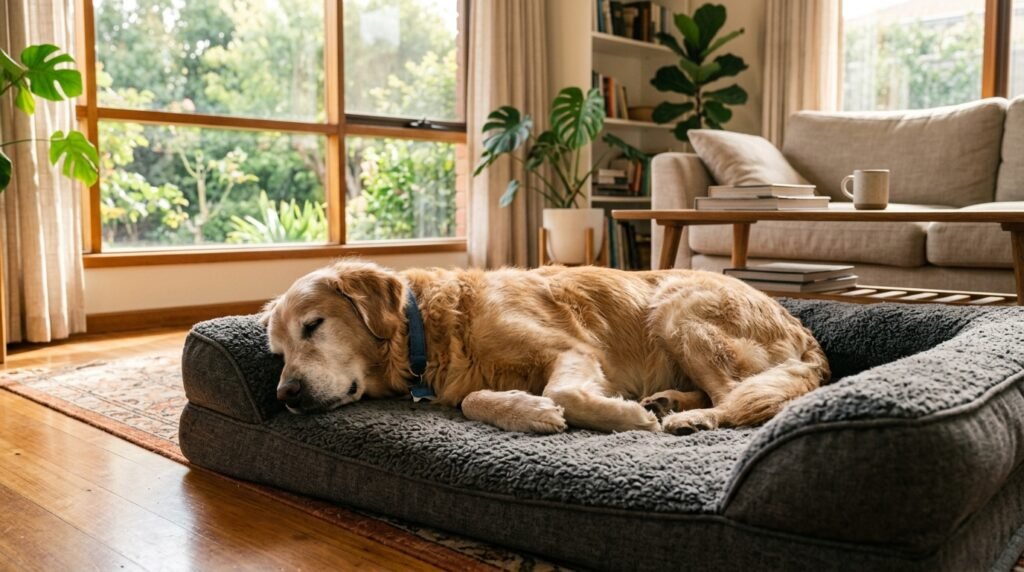
Stepping into your living room on a quiet afternoon and seeing your older companion curled up asleep in the exact same spot they occupied four hours ago is a familiar, bittersweet sight. You remember the youthful years when the slightest rustle of a treat bag would launch them to their feet, and you notice they now spend the vast majority of daylight hours dozing soundly.
You wonder whether this dramatic increase in sleep is simply a natural part of growing old, or whether your dog is feeling depressed, battling unmanaged arthritis pain, or suffering from a hidden metabolic illness.
Your concern is completely natural. Senior and geriatric dogs experience genuine physiological changes that increase their need for restorative sleep. However, there is a critical distinction between healthy, contented senior sleep and abnormal, pathological lethargy. Learning how to differentiate peaceful rest from underlying illness allows you to protect your dog’s health while ensuring their waking hours remain vibrant and joyful.
Quick Answer:
It is completely normal for healthy senior dogs to sleep 16 to 18 hours per day due to slower cellular metabolism and reduced muscle stamina. However, pathological lethargy is present if your dog cannot be roused easily, shows zero interest in favorite meals or walks, breathes heavily while asleep, or displays pale gums, fever, or disorientation, which warrants prompt veterinary bloodwork.
Key Takeaways:
- Normal Senior Sleep Quota: Senior dogs naturally sleep between 16 and 18 hours per 24-hour cycle, often rising to 20 hours in very elderly dogs.
- The “Rousability” Test: A healthy resting dog wakes up alertly for savory food, family arrivals, or leash sounds; a lethargic dog remains dull and unresponsive.
- Pain Drains Energy: Chronic osteoarthritis consumes massive metabolic stamina, causing dogs to sleep simply because standing hurts.
- Metabolic Culprits: Sudden excessive sleeping combined with weight changes often points to hypothyroidism, kidney decline, or anemia.
This guide explains why older dogs sleep more, how to tell healthy rest from pathological lethargy, medical causes of extreme fatigue, and practical ways to enrich waking hours.
Healthy Senior Rest vs. Pathological Lethargy
Evaluating your dog’s overall behavior during waking moments is the best way to determine whether excessive sleep is normal:
| Behavioral Indicator | Normal Senior Sleeping (Healthy Aging) | Pathological Lethargy (Illness / Pain) |
|---|---|---|
| Response to Stimuli | Wakes up bright-eyed for food, walks, or doorbells | Barely lifts head; glazed, dull eyes; ignores family |
| Appetite at Meals | Eats meals eagerly when presented | Refuses meals or walks away after a single bite |
| Breathing During Sleep | Calm, slow, steady (under 30 breaths per minute) | Rapid panting, wheezing, coughing, or labored chest effort |
| Mobility When Awake | Slow to rise initially, but loosens up with movement | Cannot stand, knuckling paws, or collapses quickly |
If your older dog is also restless during the night while sleeping heavily all day, explore our guide on sundowners in dogs and evening calming steps.
5 Medical Causes of Extreme Senior Lethargy
If your dog’s sleeping habits changed abruptly or are accompanied by other physical signs, schedule a veterinary diagnostic workup to screen for these conditions:
1. Chronic Osteoarthritis Pain
Living with constant joint inflammation is physically and mentally exhausting. Senior dogs with unmanaged arthritis choose to sleep because walking and standing place painful friction on bone-on-bone joints. Treating the pain often restores youthful alertness. Review our companion guide on senior dog pain signs.
2. Hypothyroidism (Underactive Thyroid)
The thyroid gland regulates whole-body metabolism. When hormone production plummets in older dogs, energy levels crash. Classic signs include sleeping all day, unexplained weight gain, chronic skin dryness, and seeking warm heat vents.
3. Chronic Kidney Disease
As kidney filtration declines, toxic metabolic wastes (blood urea nitrogen and creatinine) build up in the bloodstream. This chronic uremia causes profound fatigue, nausea, and increased thirst. Learn more in our guide on kidney failure in dogs.
4. Canine Cognitive Dysfunction (Dementia)
Cognitive decline disrupts the brain’s circadian sleep-wake cycle. Dogs with dementia frequently sleep heavily through the day, only to wander aimlessly and vocalize throughout the night.
5. Cardiac Disease or Anemia
A failing heart or low red blood cell count starves brain and muscle tissues of vital oxygen, causing dogs to collapse into deep, continuous sleep after minimal exertion.
Enriching Your Senior Dog’s Waking Hours
You can dramatically improve your dog’s quality of life by making their waking hours rewarding and physically comfortable:
- Provide High-Density Orthopedic Memory Foam: Protect aging joints from cold floor stiffness with therapeutic memory foam beds placed in sunlit rooms.
- Engage Their Senses with Scent Games: Hide tiny pieces of cooked chicken inside a snuffle mat. Mental stimulation exhausts older brains in a joyful, low-impact way.
- Keep Daily Routines Predictable: Consistent feeding, potty walks, and cuddle times provide psychological security and prevent disorientation.
For establishing a restful daily schedule, explore our guide on senior dog routine schedules.
Frequently Asked Questions
How many hours of sleep is normal for a 12-year-old dog?
A healthy 12-year-old dog naturally sleeps between 16 and 18 hours per day, dividing time between deep nighttime sleep and light daytime naps.
When should I worry about my old dog sleeping too much?
Contact your veterinarian if your dog cannot be easily roused, refuses favorite treats, exhibits pale or grey gums, vomits, or struggles to breathe while resting.
Can pain medications help my lethargic senior dog wake up?
Yes. Many owners report that starting vet-prescribed anti-inflammatories or joint medications makes their dog act years younger because chronic pain was the hidden cause of their fatigue.
Embracing the Gentle Rhythm of Senior Life
An older dog sleeping peacefully in a warm sunbeam is a beautiful picture of contentment. By staying observant, ruling out hidden medical fatigue, and keeping their waking hours full of affection, you ensure your loyal companion’s golden years are truly serene.