
Standing beside the family bathtub and watching your graying companion hesitate, tremble, or slip on wet tile makes one reality painfully clear. Grooming is no longer just a quick Sunday chore to keep fur smelling fresh. For an older canine, standard bathing, brushing, and nail trims can quickly become physically exhausting and emotionally distressing.
Aging bodies bring stiff joints, thinning skin, brittle claws, and reduced stamina. A posture your dog once held effortlessly on a grooming table now causes intense spinal aching within minutes. At the same time, neglect is never an option because unkempt coats trap moisture, harbor yeast infections, and conceal rapidly growing skin masses.
Adapting your routine with compassionate, specialized senior dog grooming tips transforms stressful grooming sessions into soothing comfort care. When you shift your mindset from high-speed styling to gentle physical therapy and proactive health monitoring, you protect your dog’s dignity while keeping their skin calm and clean.
Quick Answer:
Grooming a senior dog requires adapting your routine to accommodate arthritis, delicate paper-thin skin, and sensory decline. Use textured non-slip rubber mats inside walk-in showers, wash with lukewarm water and soap-free colloidal oatmeal shampoo, break sessions into short ten-minute intervals, and trim nails gradually while supporting limbs in natural weight-bearing positions.
Key Takeaways:
- Traction First: Slippery surfaces trigger acute panic and joint sprains; always anchor every bath and brushing station with thick non-slip rubber mats.
- Skin Vulnerability: Geriatric dogs produce fewer natural skin oils, requiring moisturizing oatmeal cleansers and ultra-soft boar-bristle brushes.
- Paced Sessions: Divide grooming into mini-sessions across several days rather than forcing an aging dog to stand through a long two-hour marathon.
- Nail Health: Overgrown senior claws distort paw anatomy, strain arthritic hocks, and drastically increase slip risks on hardwood floors.
- Mass Screening: Use every hands-on grooming session as a systematic screening opportunity to detect emerging cysts, lipomas, or skin tags early.
Why Grooming Needs Change as Dogs Grow Older
To groom an older dog effectively, you must understand the physiological shifts occurring beneath their graying fur. Canine aging alters the entire integumentary system, which includes the skin, hair follicles, sebaceous glands, and claws. What felt refreshing to a three-year-old dog can cause genuine physical discomfort to a ten-year-old senior.
One of the earliest shifts involves diminished sebum secretion. Sebaceous glands slow down production as hormone levels stabilize in later life, causing the epidermal barrier to lose essential lipids. The result is chronically dry, flaky skin that easily becomes irritated or itchy. Vigorous scrubbing with harsh degreasing shampoos strips away what little protective lipid layer remains, sparking secondary dermatitis.
Skin elasticity also drops dramatically. Much like elderly humans, aging dogs develop delicate, parchment-like skin that tears or bruises under minimal friction. Coarse metal slicker brushes that worked wonders during youth can easily scratch fragile skin folds or snag on hidden skin growths, creating painful micro-abrasions.
Arthritis and spinal spondylosis further complicate matters. Asking an arthritic dog to stand on three legs while you lift a heavy paw strains their hips and lower spine. If you already notice morning stiffness or difficulty rising from rugs, review our guide on senior dog joint stiffness remedies to help ease their daily physical discomfort.
Finally, sensory decline plays a huge emotional role. When cataracts dim their eyesight or hearing loss dampens your verbal reassurances, sudden movements or noisy blow dryers feel terrifying. Approaching your companion with slow, deliberate gestures keeps their nervous system grounded and calm.
Essential Senior Dog Grooming Supplies
Before bringing your companion into the bathroom, gather specialized supplies designed specifically for aging animals. Trying to manage an unsteady dog while hunting for a towel across the hallway creates unnecessary chaos. Having the right tools on hand ensures every session remains quiet, efficient, and relaxing.
Start with a high-traction foundation. Heavy-duty perforated rubber bath mats provide reliable grip inside slick tubs or walk-in showers. In addition, place absorbent non-slip bath rugs directly outside the wash area so your dog never steps onto slick bathroom tile with damp paws.
Choose gentle, vet-approved bathing formulas. Soap-free colloidal oatmeal shampoos, aloe cleansers, and hypoallergenic leave-in conditioners replenish lost moisture without stinging sensitive eyes or disrupting natural cutaneous pH levels. Avoid heavily perfumed commercial washes that contain artificial dyes or harsh sulfates.
Select soft grooming tools that protect delicate skin. Swap rigid metal pins for soft-tipped pin brushes, natural boar-bristle brushes, and flexible rubber grooming mitts. A wide-toothed steel comb with rounded tips works wonderfully for gently teasing out mats around the hips and tail without pulling on sensitive skin.
Invest in ergonomic paw care equipment. Sharp guillotine clippers or a quiet, low-vibration rotary nail grinder with built-in LED illumination make claw trims substantially safer. Keep a small container of styptic powder or cornstarch nearby to instantly halt minor bleeding if you graze a blood vessel.
Step 1: Setting Up a Slip-Free Bathing Environment
Preparation represents more than half the battle when bathing an elderly pet. High-sided bathtubs present significant physical barriers for dogs with stiff elbows, weak hips, or chronic disc disease. Forcing an eighty-pound retriever to leap into a deep porcelain tub invites severe muscle tears or joint subluxations.
If you have access to a walk-in shower with a low threshold, choose that space over a traditional tub every time. Walk-in showers eliminate stressful lifting and allow your companion to walk forward naturally without feeling trapped in a cramped basin. If you must use a standard bathtub, place a sturdy dog ramp alongside it or lift your dog using proper two-person body support.
Cover the entire floor of the washing area with your textured rubber traction mat. Test the mat with your own foot before introducing your dog to verify that the suction cups grip firmly against the wet porcelain. Unsteady footing triggers immediate panic, causing dogs to tense their muscles and fight to escape.
Keep a handheld shower hose extension connected and tested before bringing your dog into the room. Loud gushing water running from an overhead faucet can startle a sensory-impaired pet. Having the sprayer resting within easy reach allows you to control water flow smoothly from the very first second.
For large dogs that struggle to stand for more than two minutes, consider outfitting them with a supportive chest vest. Supporting their chest and abdomen gives them physical stability without putting pressure on their throat. To select the safest gear, consult our resource on helping a senior dog get up safely to prevent slips during grooming.
Step 2: Gentle Bathing and Temperature Control
Water temperature demands your closest attention. Older dogs lose the ability to regulate their internal body temperature efficiently, making them susceptible to rapid chilling or heat exhaustion. Water that feels pleasantly hot to your hands can scald thinning canine skin or spike their resting heart rate.
Adjust the water until it feels tepid or barely warm to the inside of your wrist. Begin by wetting your dog’s paws and hind legs first before moving toward the torso. This gradual introduction prevents thermal shock and allows your companion to adjust to the sensation of flowing water without anxiety.
Keep the water pressure on a low, gentle setting. Hold the sprayer head close to the body, almost touching the fur, so water flows directly into the coat without splashing noisily. Avoid spraying water directly into the ears, eyes, or nasal passages, as damp ear canals quickly breed painful yeast infections.
Apply shampoo down the spine and work it into a rich lather using soothing circular motions. Treat the washing process like a restorative warm massage. Take extra care around bony prominences such as the hip joints, elbows, and spine, where muscle wasting leaves bones close to the surface.
Rinse the coat thoroughly with clean, warm water. Lingering shampoo residue dries into itchy, flaky crusts that trigger intense scratching and hot spots within forty-eight hours. Continue rinsing until water running off the belly and groin appears crystal clear.
Step 3: Low-Stress Drying Without Heat Exhaustion
Once the water is turned off, the drying phase must begin immediately. Wet fur rapidly pulls heat away from an older dog’s core, inducing shivering that strains arthritic spinal muscles. Having plenty of warm towels ready keeps the post-bath chill at bay.
Wrap your dog in thick, absorbent microfiber towels right inside the shower stall before they attempt to step out. Press the towels firmly against the fur rather than rubbing back and forth vigorously. Gentle pressing soaks up gallons of moisture without tangling delicate fur or twisting fragile skin folds.
Avoid high-heat commercial blow dryers under all circumstances. High-velocity dryers emit loud, high-pitched motor whines that cause genuine terror in dogs suffering from cognitive dysfunction or partial deafness. In addition, intense heat can burn thinning skin before your dog has time to pull away.
If you choose to use a home hair dryer, switch the temperature setting to cool or low-warm. Keep the nozzle moving continuously at least twelve inches away from the coat. Place your own hand directly in the airflow path so you feel the exact temperature touching your dog’s skin at every moment.
Ensure your dog rests in a warm, draft-free room until their undercoat is completely dry. Lay down fresh dry blankets over their bed so damp fur does not press against cold flooring. Keeping the environment cozy promotes deep, restorative post-bath slumber.
Step 4: Daily Coat Brushing and Gentle Dematting
Regular brushing represents the foundation of senior coat health. Brushing removes shed hair, distributes natural cutaneous oils down the hair shaft, and gently stimulates peripheral blood circulation. Performing quick daily brushing sessions prevents dense mats from forming around high-friction zones.
Pay close attention to friction spots where older dogs lie down. The backs of the rear thighs, behind the ears, under the armpits, and around the tail base are prime locations for dense pelted mats. As dogs spend more hours sleeping on their sides, pressure compacts loose hair into tight tangles that pinch the skin with every step.
Never tug or pull on a mat with a standard comb. Pulling lifts delicate skin into the teeth of the tool, causing severe bruising or painful skin tears. Instead, apply a small drop of canine detangling spray or coconut oil directly to the knot, work it in with your fingers, and gently tease the fibers apart from the outer tips inward.
According to the American Kennel Club senior dog grooming recommendations, short and frequent brushing sessions reduce joint fatigue while preventing painful matting that restricts blood flow. Five minutes of brushing every evening proves far more therapeutic than an exhausting one-hour ordeal once a month.
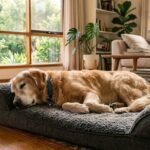
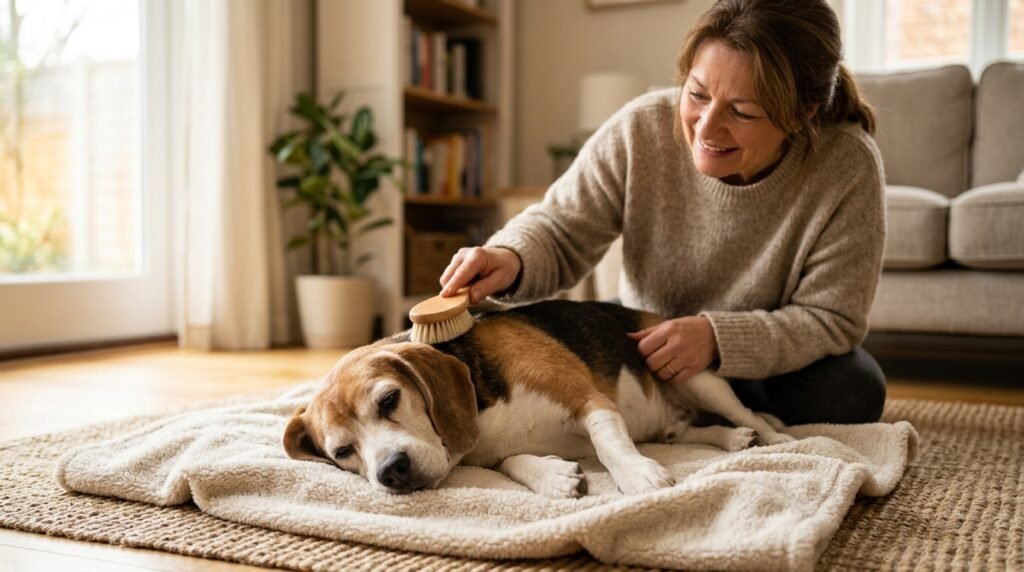
Let your dog remain in whatever posture feels most comfortable during brushing. If your companion prefers lying flat on their orthopedic memory foam bed, sit beside them on the rug and groom the exposed side. Allow them to rest quietly, then groom the opposite side later in the day after they turn over naturally.
Step 5: Systematic Skin and Lump Inspections
Every grooming session doubles as an invaluable head-to-toe health screening. Because you run your fingers across every square inch of your dog’s body, you serve as the first line of defense in detecting emerging health issues before they become life-threatening emergencies.
As dogs pass their eighth or tenth year, benign skin growths become commonplace. Sebaceous adenomas, viral warts, skin tags, and fatty lipomas develop frequently across the trunk, chest, and limbs. If you discover a new bump during a session, read our veterinary guide on identifying old dog skin bumps and warts to learn which growths require veterinary testing.
Document every lump you locate. Record its precise location, approximate size using common coins as reference points, firmness, and note if it moves freely beneath the skin or feels anchored to underlying bone. Share these measurements with your veterinarian during biannual checkups.
Inspect the skin folds carefully, especially around the face in brachycephalic breeds or around the vulva in overweight spayed females. Trapped moisture inside skin folds creates fertile breeding grounds for bacterial intertrigo and Malassezia yeast infections, marked by greasy redness, hair loss, and sweet, musty odors.
Check the sanitary area around the anus and perineum. Incontinence or soft stools frequently soil hindquarters, causing painful urine scald that burns raw skin. Keeping this area clean with warm water and damp washcloths prevents secondary infections and keeps your dog smelling fresh.
Step 6: Pain-Free Nail Trimming for Arthritic Paws
Claw maintenance is critical for geriatric canine mobility. When older dogs reduce their daily walking mileage, they stop grinding down their claws naturally against concrete sidewalks. Claws grow longer, thicker, and curl inward toward delicate paw pads.
Overgrown claws alter your dog’s entire skeletal alignment. Long nails force the toes upward and backward, shifting weight onto the fragile heel pads. This abnormal angle twists the carpal and hock joints, exacerbating arthritic pain in the hips and lower back with every step.
Long claws also eliminate traction on indoor flooring. When an older dog walks across wood, laminate, or tile, extended nails click against the surface, acting like slick skates that prevent rubbery paw pads from making firm contact. This lack of traction leads to terrifying slip-and-fall accidents.
Trim claws while your dog rests comfortably on their side. Never twist their leg outward or pull a rear limb backward into unnatural positions, as doing so puts intense torque on arthritic knees and hips. Instead, support the paw gently beneath the wrist, keeping the leg tucked naturally close to the torso.
Clinical guidance from the VCA Animal Hospitals geriatric dog grooming advice emphasizes trimming tiny slivers weekly rather than attempting large cuts. Cutting small increments allows the blood quick to recede gradually without causing pain or sudden bleeding.
Step 7: Ear Hygiene, Facial Folds, and Oral Checks
Grooming involves caring for the head and face with equal gentleness. Older dogs frequently produce excess cerumen or suffer from chronic ear canal inflammation linked to allergies, hypothyroidism, or immune system shifts.
Inspect the inside of each ear flap weekly. A healthy canine ear canal looks pale pink, clean, and odorless. If you notice dark brown coffee-ground debris, thick yellow discharge, heat radiating from the canal, or a sour odor, your companion likely has an active ear infection requiring veterinary ear drops.
Clean ears using a vet-approved liquid cleaner formulated without alcohol. Moisten a cotton pad or soft gauze square with the solution and wipe away visible debris from the outer ear flap and upper canal opening. Never insert cotton swabs deep into the ear canal, as doing so packs wax against the eardrum and risks rupturing delicate hearing structures.
Wipe facial folds and tear stains gently with warm water. As tear ducts narrow with age, overflow stains fur beneath the inner corners of the eyes. Keeping these fur tracts clean and dry prevents bacterial growth and painful corneal irritation.
Take a quick look inside the mouth during facial grooming. Check for loose teeth, heavy tartar buildup, bleeding gums, or suspicious growths along the gumline. Good oral awareness pairs naturally with your regular grooming habits to protect systemic organ health.
Common Grooming Mistakes That Hurt Senior Dogs
Well-meaning owners often cause unintended pain simply by clinging to habits developed during their dog’s youth. Recognizing these common missteps allows you to adjust your technique and protect your dog’s physical wellbeing.
The most common mistake is forcing an aging pet to stand for an entire grooming session. In a professional salon or home bath, an older dog may struggle bravely to stay upright until their hind legs give out from sheer muscle fatigue. Always encourage your dog to sit or lie down whenever they feel weary.
Another frequent error is pulling clippers or brushes across bony joints too aggressively. Senior dogs often experience muscle wasting along the spine, hips, and shoulders. Passing firm grooming tools over these exposed bony contours causes sharp discomfort that makes dogs fearful of future sessions.
Using cold water or letting dogs air-dry in drafty rooms is equally detrimental. Chilling stiffens arthritic joints, making walking painful for hours afterward. Always keep the bathwater pleasantly warm and the drying phase prompt and cozy.
Finally, rushing through grooming creates unnecessary stress. Senior dogs operate on slower timelines. Rushing causes abrupt movements that startle sensory-impaired pets, turning a bonding opportunity into an adversarial struggle.
When Grooming Uncovers Red Flags That Need a Vet
While regular grooming solves many minor hygiene challenges, it also uncovers medical issues that require professional veterinary intervention. Knowing when to stop grooming and pick up the phone prevents complications and ensures timely diagnosis.
Stop grooming immediately if your dog displays sudden aggression, sharp vocalization, or trembling when you touch a specific area. These behavioral shifts signal acute localized pain, such as an undiagnosed joint infection, herniated disc, or hidden abscess, rather than simple stubbornness.
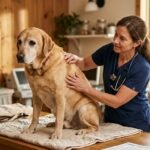
Schedule a veterinary exam if you discover open sores, bleeding growths, or masses that feel hard and firmly anchored to deep muscle tissue. Any new or changing skin lump on a senior dog should be checked by your vet, usually with a fine-needle aspirate, to rule out cancer early. The AVMA senior pet care guidance covers what to expect at senior checkups.
Severe matting that forms a tight felted pelt across the skin also warrants professional help. Attempting to cut dense pelts away with household scissors carries extreme risks of slicing through thin senior skin. Professional groomers and veterinary technicians have specialized equipment to safely remove severe mats under controlled conditions.
If hygiene challenges stem from urinary accidents or mobility decline, combining grooming care with a structured daily routine provides lasting relief. Integrating gentle grooming into your household schedule alongside our tips for establishing a calm daily senior dog routine brings predictable security to your companion’s golden years.
Frequently Asked Questions About Senior Dog Grooming
How often should an older dog take a full bath?
Most senior dogs only need a full bath every four to eight weeks, unless they suffer from urinary accidents or roll in mud. Because aging skin dries out quickly, frequent bathing with water and shampoo strips essential protective oils. For spot messes, use warm damp towels or unscented water wipes between scheduled baths.
What is the best shampoo for aging dogs with dry skin?
Choose soap-free, hypoallergenic shampoos enriched with colloidal oatmeal, aloe vera, and omega fatty acids. These ingredients calm inflammation, hydrate itchy skin, and repair the damaged epidermal lipid barrier. Avoid clarifying, medicated, or perfumed shampoos unless your veterinarian prescribes them for specific fungal or bacterial conditions.
Can I still take my senior dog to a commercial groomer?
Yes, but you should select a groomer who specializes in geriatric care or offers one-on-one express appointments. Traditional salon environments with loud barking, cage dryers, and long waiting periods overwhelm older pets. Ask for a table-free or floor-level session where two handlers work together to keep the experience calm and brief.
How can I safely trim nails on a dog with severe arthritis?
Trim nails while your dog rests naturally on their side on a soft bed. Rather than lifting the paw high in the air, support it gently near the ground. Trim just one or two nails per day using a low-noise rotary grinder so your dog never experiences joint fatigue or prolonged stress.
Why does my senior dog suddenly smell bad even after bathing?
Persistent foul odors in clean senior dogs usually stem from underlying medical problems rather than dirty fur. Advanced periodontal dental disease, deep ear canal yeast infections, impacted anal glands, or metabolic disorders like kidney disease produce distinct, strong odors that require veterinary treatment rather than another bath.
Comfort, Patience, and Dignity in the Golden Years
Grooming your senior companion is an act of deep empathy and love. While their gray muzzle and slow steps remind you of the passage of time, the gentle touch of your hands provides comfort that words cannot convey. Every stroke of the brush reassures your dog that they remain cherished, protected, and safe.
Adjust your expectations to match your companion’s current pace. Celebrate small victories, like trimming four nails before breakfast or brushing out one hip during an afternoon cuddle. When you prioritize physical comfort and emotional security over perfection, grooming becomes one of the most rewarding rituals of your dog’s golden years.