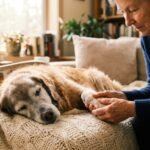

Running your hands along your senior dog’s back during an evening cuddle and suddenly feeling a new lump, raised wart, or soft squishy bump beneath their fur is a moment that instantly stops every pet parent in their tracks. Your heart pounds, and your mind immediately races to the frightening word that every dog lover fears: cancer.
You wonder whether this new growth appeared overnight or had been silently growing for weeks. You worry whether you should rush to the emergency clinic, whether the bump is painful, and what veterinary tests are needed to know for certain.
Take a deep, reassuring breath. While discovering any new mass warrants a veterinary checkup, the vast majority of skin lumps and bumps on senior dogs are completely benign, harmless growths of aging skin. Understanding the differences between fatty lipomas, sebaceous warts, and concerning masses replaces anxiety with clear, actionable knowledge.
Quick Answer:
The vast majority of skin bumps on senior dogs are benign, including soft moveable fatty lipomas, cauliflower-like sebaceous warts (adenomas), and small skin tags. However, any bump that grows rapidly, feels firmly fixed to underlying muscle, ulcerates or bleeds, or changes color must be evaluated by a veterinarian using a simple, painless Fine Needle Aspirate (FNA) to definitively rule out mast cell tumors or sarcomas.
Key Takeaways:
- Most Bumps Are Benign: Over 80% of canine skin masses diagnosed in general veterinary practice are non-cancerous lipomas or sebaceous adenomas.
- You Cannot Diagnose by Feel Alone: Even experienced veterinarians cannot identify a tumor solely by touching it; a Fine Needle Aspirate (FNA) is essential.
- The Red Flag Rules: Rapid growth (doubling in size over weeks), firm adherence to deeper tissues, ulceration, or chronic bleeding require prompt testing.
- Home Monitoring Strategy: Measure and record bump sizes monthly using a ruler and camera on your phone to track changes accurately.
This guide explains the most common benign skin growths on older dogs, malignant warning signs, what to expect during a veterinary aspirate exam, and home monitoring protocols.
Common Types of Senior Dog Skin Bumps
Veterinary dermatologists classify canine skin growths into several distinct categories based on tissue origin:
| Growth Type | Typical Physical Appearance | Malignancy Risk & Action |
|---|---|---|
| Lipoma (Fatty Tumor) | Soft, squishy, freely moveable dome beneath the skin; painless | Benign. Monitor size; surgery only needed if impairing movement |
| Sebaceous Adenoma (“Old Dog Wart”) | Small, raised, pinkish cauliflower-like nodule on skin surface | Benign. Harmless unless irritated by grooming brushes or chewing |
| Skin Tag (Acrochordon) | Small, fleshy, pedunculated stalk dangling from the skin | Benign. Completely harmless; common in friction areas like armpits |
| Mast Cell Tumor (MCT) | “The Great Imposter”: Can look soft, firm, red, or ulcerated | Potentially Malignant. Requires prompt veterinary biopsy or excision |
For distinguishing benign skin nodules from systemic lumps, review our detailed guide on tumor signs in dogs: lumps and early detection.
When to Worry: The “Hard, Fast, Fixed” Warning Rule
While most lumps are harmless, veterinarians rely on clear clinical criteria to identify concerning growths that demand immediate diagnostic attention:
- Fast Growth: A bump that doubles in size over two to four weeks.
- Hard and Firm Consistency: A stone-like mass with irregular, poorly defined edges.
- Fixed to Underlying Tissue: When you gently pinch the bump, it does not slide freely beneath the skin, but feels anchored to deeper bone or muscle.
- Surface Ulceration or Bleeding: The skin over the bump breaks open, oozes bloody serum, or refuses to heal.
- Fluctuating Size: Mast cell tumors often release histamine, causing the bump to swell dramatically one day and shrink the next.
How Veterinarians Diagnose Skin Bumps: The Fine Needle Aspirate
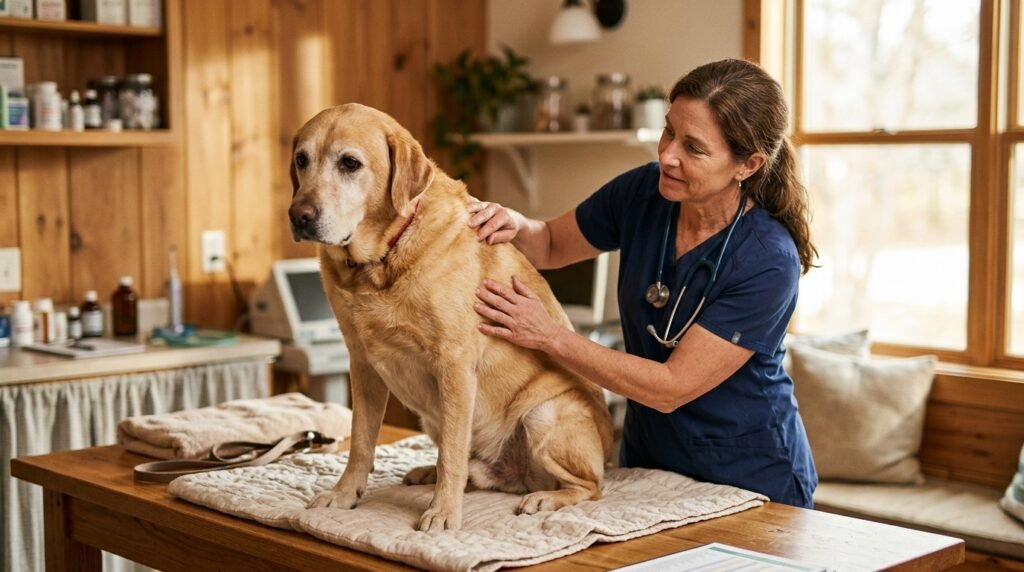
Many pet owners dread bringing a bump to the clinic, fearing expensive, traumatic surgery. In reality, veterinary diagnosis is fast, gentle, and non-invasive:
1. Fine Needle Aspirate (FNA)
The veterinarian gently inserts a tiny sterile needle (smaller than a vaccine needle) into the lump, collecting a microscopic sample of cells without requiring sedation. The cells are placed on a glass slide, stained, and examined under a microscope.
In most cases, the vet can identify clear fat droplets (confirming a benign lipoma) within ten minutes while you wait in the exam room.
2. Biopsy or Histopathology
If the needle aspirate shows ambiguous or suspicious cells, a small tissue biopsy will be sent to a veterinary pathologist for definitive grading and staging.
Practical Home Monitoring: The “Lump Map” Protocol
Because older dogs often accumulate multiple benign bumps over time, keeping track of them prevents unnecessary panic and ensures new growths are noticed promptly:
- Create a Monthly Calendar Reminder: Choose the first day of every month for a gentle nose-to-tail petting exam.
- Draw a Body Outline (Lump Map): Sketch a simple outline of your dog’s body and mark the location of each identified bump.
- Measure with a Clear Ruler: Note the diameter in millimeters or compare to common coins (dime, nickel, quarter).
- Photograph Next to a Ruler: Snap a quick smartphone photo with date tags to monitor subtle shape changes over time.
For grooming techniques that protect skin nodules, read our guide on senior dog grooming tips.
Frequently Asked Questions
Can a benign lipoma turn into malignant cancer?
No. Benign lipomas do not transform into malignant liposarcomas. However, new distinct tumors can develop nearby, which is why having every new lump examined by your vet is essential.
Should I have my senior dog’s benign warts removed?
If a sebaceous wart does not bleed, itch, or get snagged by grooming brushes, veterinarians generally advise leaving it alone to spare an older dog the risks of general anesthesia.
Does a fine needle aspirate hurt my dog?
No. The needle used for an aspirate is smaller than a routine vaccination needle. Most dogs tolerate the five-second procedure comfortably with gentle petting or a spoonful of peanut butter.
Peace of Mind in Caring for Your Old Companion
Discovering a skin bump is always jarring, but remember that growing old comes with harmless skin changes. By partnering with your veterinarian for quick needle tests and maintaining a monthly home lump map, you ensure your loyal friend stays safe, comfortable, and cherished.