
Finding your senior dog lying on the floor, scrambling with their back legs and unable to stand up without your help, is one of the most emotional moments for an owner. Hind leg weakness is common in aging dogs, but it doesn’t mean your companion’s mobility is completely lost.
Helping a senior dog get up requires the right combination of physical assistance, non-slip home modifications, and vet-backed support techniques. Using proper lifting mechanics protects your dog’s joints and spine while preventing strain on your own back.
This guide gives you practical, step-by-step assistance methods to help your senior dog rise safely and build leg stability at home.
Why Senior Dogs Struggle to Get Up from the Floor
Hind leg weakness in older dogs develops from several underlying physical and neurological changes. According to veterinary mobility research from VCA Animal Hospitals, the most common causes include:
- Osteoarthritis & Hip Dysplasia: Cartilage erosion causes pain when pushing off the floor, leading dogs to hesitate or slip.
- Sarcopenia (Muscle Atrophy): Age-related loss of thigh and gluteal muscle mass leaves hind legs without the power needed to lift body weight.
- Degenerative Myelopathy (DM): A progressive neurological condition affecting spinal cord signaling, causing uncoordinated rear leg movement.
- Slippery Flooring: Smooth hardwood, tile, and laminate offer zero paw traction, turning simple rising into a stressful struggle.
1. Use Proper Ergonomic Lifting Techniques
Lifting a senior dog incorrectly can strain their spine or cause sudden pain responses. Never lift a dog by their tail, hind legs, or under their armpits alone.
Follow these safe lifting steps:
- Support Both Ends: Place one hand or arm underneath your dog’s chest and the other under their pelvis or lower abdomen.
- Lift with Your Legs: Keep your back straight and bend at the knees to absorb the weight.
- Match Your Dog’s Timing: Gently encourage your dog to push with their front legs first before applying upward lift to their rear quarters.
2. Immediate Assistance Harnesses and Slings
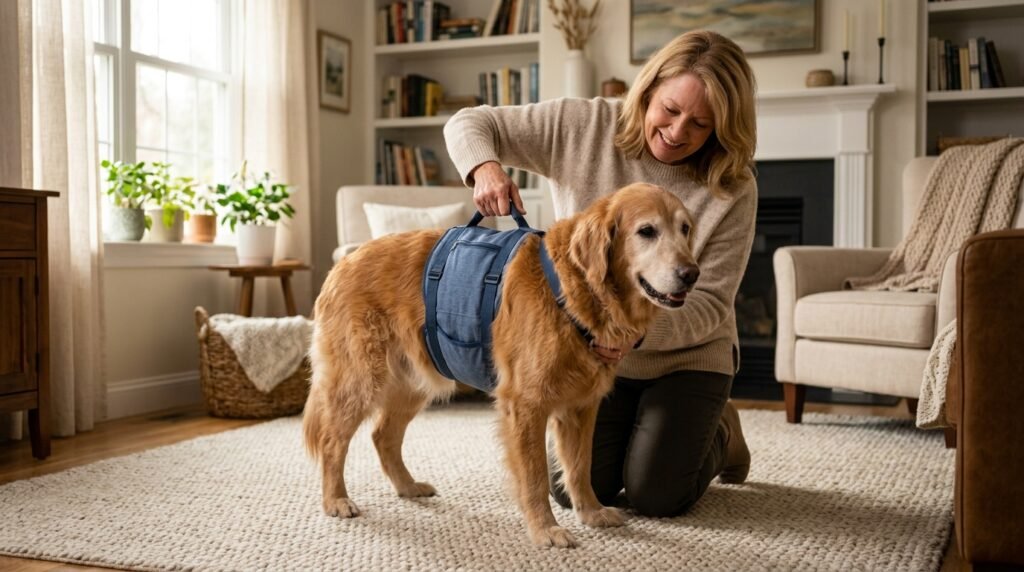
Relying solely on your arms can be difficult for larger dogs. Dedicated mobility harnesses provide secure handles that make lifting effortless and safe:
- Padded Belly Slings: A wide, padded fabric band placed under the abdomen in front of the hind legs. Gives instant upward support for quick potty trips.
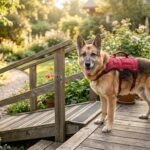
- Full-Body Lift Harnesses: Dual-handle harnesses (such as the Help ‘Em Up harness) stay on your dog throughout the day, allowing balanced front and rear support whenever they need to stand. Learn more in our guide on mobility aids for senior dogs.
- DIY Towel Sling: In an emergency, fold a soft bath towel lengthwise, pass it under your dog’s belly, and hold both ends together over their back.
3. Create Non-Slip Safety Pathways Indoors
Slippery floors are the single biggest obstacle for a weak senior dog. Installing traction turns your home into a safe environment where your dog can stand with confidence.
| Traction Fix | Where to Use | Key Advantage |
|---|---|---|
| Rubber Toe Grips | Middle toenails | Provides natural mechanical grip on tile and hardwood |
| Rubber-Backed Rugs | Hallways & bed sides | Creates non-slip walking corridors between rooms |
| Traction Socks / Booties | Hind paws | Cushions paw pads and prevents rear feet from splaying |
4. Daily Passive Range of Motion (PROM) Exercises
While your senior dog is resting comfortably on their side, perform gentle passive range of motion exercises to maintain joint flexibility and circulate joint fluid:
- Gently hold your dog’s hind leg above the ankle joint.
- Slowly flex the knee and hip upward toward the belly in a bicycle motion.
- Gently extend the leg back out, stopping immediately if your dog shows stiffness or tension.
- Repeat 10 times per leg twice daily. Combine PROM with daily senior dog joint supplements for optimal joint lubrication.
5. When Hind Leg Weakness Is a Medical Emergency
While gradual hind leg weakness is common in aging, sudden loss of mobility requires urgent veterinary evaluation. Seek emergency vet care if you observe:
- Sudden inability to stand or walk developing over a few hours
- Dragging both hind legs completely (paralysis)
- Loss of bowel or bladder control (incontinence)
- Severe vocalization or signs of acute spinal pain when touched
Sudden weakness can indicate intervertebral disc disease (IVDD), spinal stroke (FCE), or acute nerve compression that requires prompt medical intervention.
Frequently Asked Questions
#### What is the best way to help a large senior dog stand up?
Use a full-body support harness with front and rear handles. Position yourself alongside your dog, hold the rear handle, and apply gentle upward lift as your dog attempts to stand, keeping your back straight.
#### Can hind leg weakness in senior dogs be reversed?
Reversibility depends on the cause. Weakness from muscle disuse or joint pain often improves significantly with targeted pain management, physical therapy, omega-3 supplementation, and gentle exercise. Neurological conditions like DM are managed rather than cured.
#### Why do my senior dog’s back legs shake when trying to stand?
Leg shaking indicates muscle fatigue and nerve signals struggling to maintain weight support against arthritic joint pain. Short rest periods, traction rugs, and vet-prescribed anti-inflammatory care help reduce shaking.
#### How can I prevent my old dog’s legs from sliding out on wood floors?
Place non-slip rubber-backed carpet runners along main indoor pathways and apply rubber toe grips to your dog’s middle nails for instant grip.
#### Should I let my senior dog try to get up on their own?
Allow your dog a gentle attempt on non-slip surfaces, but assist immediately if they struggle for more than a few seconds to prevent joint strain, groin tears, or emotional panic.
#### What bed is best for a dog with hind leg weakness?
Choose a firm, high-density memory foam bed with low entry edges so your dog doesn’t have to step over high bolsters when standing. Read our recommendations for the best orthopedic beds for senior dogs.
Restoring Confidence and Comfort
Helping your senior dog stand up safely is about preserving their dignity and independence. By using supportive harnesses, adding indoor traction, and practicing gentle physical exercises, you give your aging companion the security they need to enjoy every day by your side.