

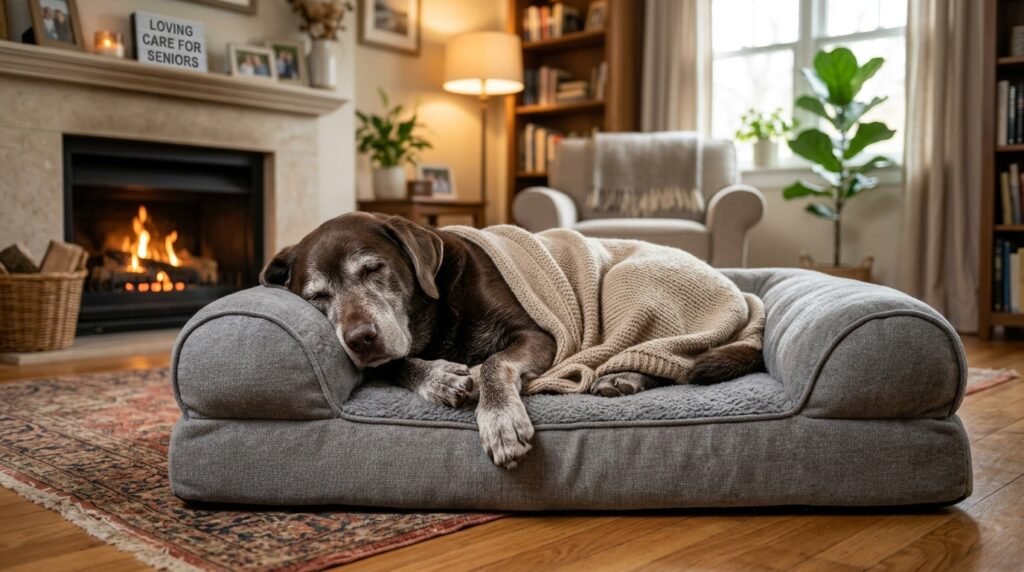
Watching your aging dog struggle to rise from a cold floor or shift uncomfortably on a thin mat is a clear sign that their bedding needs an upgrade. As dogs enter their senior years, joint stiffness, arthritis, and muscle loss make proper sleep support essential for daily comfort.
A high-quality orthopedic dog bed is not a luxury item; it is a vital therapeutic tool. Proper memory foam support relieves pressure on sore hips, shoulders, and elbows, allowing senior dogs to rest deeply and wake up with less morning stiffness.
In this guide, you will discover why orthopedic foam matters, how to evaluate bed features, and how to choose the perfect bed for your aging companion.
Why Standard Dog Beds Fail Senior Pets
Polyfill and thin fiber cushions flatten under body weight, leaving your dog’s joints resting directly on hard flooring. This creates painful pressure points that worsen joint inflammation and disrupt sleep.
True orthopedic beds use high-density, open-cell memory foam engineered to contour around your dog’s body. The foam distributes weight evenly, reducing joint stress and promoting healthy spinal alignment.
Key Features of a Great Orthopedic Senior Dog Bed
When shopping for a senior dog bed, evaluate these critical design elements:
- High-Density Memory Foam: Minimum 4-inch depth of solid memory foam that does not bottom out under your dog’s weight.
- Supportive Bolster Edges: Raised side bolsters provide a comfortable neck rest and create a secure, enclosed feeling.
- Waterproof Internal Liner: Protects memory foam core from liquid spills, drool, or accidental incontinence.
- Low Entry Height: Low-profile front edge allows stiff dogs to step onto the bed easily without tripping.
- Machine-Washable Cover: Durable, removable cover for easy cleaning and hygiene maintenance.
Matching Bed Style to Your Dog’s Sleeping Position
Observe how your senior dog sleeps to pick the right bed shape:
- Curled Sleepers: Prefer round or oval bolster beds that enclose the body and hold warmth.
- Sprawlers and Side Sleepers: Need large rectangular mattress-style beds with open sides to stretch legs fully.
- Leaners: Benefit from L-shaped sofa bolster beds that offer back support while allowing leg extension.
Complementing Sleep Comfort with Daily Mobility Care
A supportive bed works best alongside comprehensive joint care. Combining orthopedic sleep support with daily joint supplements and gentle routines helps senior dogs stay mobile.
For additional mobility guidance, check our reviews of senior dog joint supplements and learn about arthritis pain relief methods for dogs.
Veterinary guidance from PetMD highlights that high-density orthopedic foam is one of the most effective non-medical interventions for canine arthritis management.
Frequently Asked Questions
How thick should an orthopedic bed be for a large senior dog?
Large senior dogs (over 50 lbs) need at least 4 to 6 inches of solid, high-density memory foam to prevent joint pressure against the floor.
Are heated beds safe for senior dogs with arthritis?
Gentle low-voltage therapeutic heating pads can ease joint stiffness, but ensure the bed has automatic shut-off safety controls and allows your dog to move off the heat independently.
How often should I clean a senior dog bed cover?
Wash removable covers every two to three weeks, or immediately after accidents, using mild, fragrance-free detergent to prevent skin irritation.
Conclusion
Investing in a high-density orthopedic memory foam bed provides immediate, daily relief for your senior dog’s sore joints. By selecting the right size, shape, and foam density, you give your loyal friend the gift of restorative, painful-pressure-free sleep throughout their golden years.
The Orthopedic Science of Pressure Point Relief in Aging Dogs
Understanding how memory foam protects your senior dog’s joints requires a look at canine anatomy and sleep mechanics.
When a dog lies on a hard floor or thin fiber mat, body weight concentrates on prominent bone structures: hips, shoulders, elbows, and ankles. These high-pressure contact points restrict local blood flow, leading to tissue soreness and morning stiffness.
High-density memory foam responds to body heat and weight, contouring around your dog’s frame to distribute mass across a wide surface area. This open-cell foam cushioning eliminates localized pressure peaks, allowing blood circulation to remain unhindered while your dog rests.
Memory Foam Density vs. Standard Polyfill Cushioning
Not all foam beds sold as “orthopedic” provide genuine joint support for heavy senior pets.
Cheap beds use low-density polyurethane foam or chopped polyfill stuffing that crushes completely within weeks, leaving your dog sleeping directly on hard flooring. Authentic therapeutic beds utilize solid medical-grade memory foam with a minimum density rating of 3 to 4 pounds per cubic foot.
Testing Memory Foam Quality at Home
- Press and Release Test: Press your hand firmly into the foam. Quality memory foam should slowly contour to your hand print and gently return to flat shape over 3 to 5 seconds.
- Weight Compression Test: Place a 10-pound weight on the bed center. The foam should sink no more than 25 percent of its total height.
Matching Bed Styles to Senior Dog Health Conditions
Different health challenges require specific bed designs for optimal relief:
- Severe Hip Dysplasia: High-density mattress beds with 3-sided bolsters offer head support and secure back cradling.
- Cognitive Disorientation & Dementia: Low-profile flat mattresses with non-skid rubber bases prevent tripping when waking disoriented.
- Incontinence Concerns: Beds with full waterproof internal zippered casings protect core foam from liquid damage.
- Hind Limb Weakness: Open front sofa beds allow easy entry without requiring your dog to step over high edges.
Frequently Asked Questions
#### How thick should an orthopedic bed be for a large senior dog?
Large senior dogs (over 50 lbs) need at least 4 to 6 inches of solid, high-density memory foam to prevent joint pressure against the floor.
#### Are heated beds safe for senior dogs with arthritis?
Gentle low-voltage therapeutic heating pads can ease joint stiffness, but ensure the bed has automatic shut-off safety controls and allows your dog to move off the heat independently.
#### How often should I clean a senior dog bed cover?
Wash removable covers every two to three weeks, or immediately after accidents, using mild, fragrance-free detergent to prevent skin irritation.
#### Can an orthopedic bed help prevent calluses on old dog elbows?
Yes. Pressure-relieving memory foam cushions bony elbow joints, preventing hard skin friction calluses and painful elbow bursitis.
#### What size bed should I choose for a dog that stretches out?
Measure your dog from snout to tail tip while lying extended, then add 8 to 12 inches to both length and width dimensions for full stretch comfort.
#### How long does a quality orthopedic senior dog bed last?
High-density solid memory foam beds maintain their supportive shape and cushioning for 3 to 5 years under normal daily use.