
You step into the kitchen in the morning and your foot lands in a cold puddle. Your dog has been house-trained for ten years. Now there’s an older dog peeing in the house, and you can’t work out what changed.
That sinking feeling is normal, and so is the quiet worry that comes with it. Most owners wonder if this is “just age” or the start of something worse. A sudden change in a reliable dog almost always has a reason behind it, and many of those reasons can be treated or managed.
This guide takes a slightly different route from most. Instead of starting with a long list of diseases, it starts with the puddle itself: where it happens, when, and how your dog behaves while it happens. Those three clues, written down for one week, will tell your vet more than any guess, and they point you to the right fixes at home while you wait for answers.
Quick Answer:
An older dog peeing in the house is usually a sign of a medical, mobility, or cognitive change, not bad behavior. Common causes are urinary tract infections, kidney disease, diabetes, Cushing’s disease, arthritis, and dog dementia. Log every accident for a week, book a vet check with urine and blood tests, and shorten the gaps between potty breaks in the meantime.
Key Takeaways:
- Primary Cause: Most senior accidents come from a health change such as an infection, extra thirst, joint pain, or confusion.
- Observable Signs: Squatting on purpose points away from leaking incontinence, while wet bedding after sleep points toward it.
- Home Action Step: Take your dog out every few hours, including first thing, after meals, and before bed.
- When to See a Vet: Straining with little or no urine, blood in the urine, or vomiting needs a same-day call.
Is It Peeing or Leaking? The First Thing to Check
Before anything else, watch how the accidents happen. A dog who walks to a spot, squats or lifts a leg, and empties the bladder is peeing. A dog who wakes up in a wet bed, or dribbles while walking, is leaking.
The difference matters because the two problems have different causes and different fixes. Leaking is true urinary incontinence, and the Washington State veterinary hospital guide notes that a dog with it is likely not aware it’s happening. It’s more common in middle-aged to senior dogs and in females.
If leaking sounds like your dog, our full guide to senior dog incontinence and treatments covers the medications, diapers, and bedding that help. The rest of this article focuses on the other picture: a dog who knows they’re peeing, but is doing it indoors.
Why Older Dogs Start Peeing in the House
A dog who has been reliable for years rarely forgets training overnight. Usually one of a handful of changes is at work. Here’s how each one tends to look at home.
| What you notice | What it may point to |
|---|---|
| Small puddles in several spots, frequent squatting | Urinary tract infection or bladder stones |
| Big puddles, water bowl empty far more often | Kidney disease, diabetes, or Cushing’s disease |
| Accidents close to the bed or near the back door | Arthritis or pain making the trip outside hard |
| Peeing right after coming inside, staring, night pacing | Canine cognitive dysfunction (dog dementia) |
| Accidents began after a move, new pet, or schedule change | Stress or anxiety |
| Accidents started soon after a new medication | Drug side effect, such as long-term steroids |
A urinary tract infection creates a strong, sudden urge. Dogs with one usually know they’re urinating, which is one way vets tell it apart from true incontinence. You can read more in our senior dog UTI guide.
Diseases that raise thirst push more urine through the bladder than an old dog can hold between walks. Kidney disease and diabetes are the usual suspects. The FDA overview of Cushing’s disease lists increased thirst and increased urination among its signs, and notes it typically occurs in middle-aged to older dogs.
Pain and confusion are the quieter causes. A dog with sore hips may simply give up on the long walk to the door. A dog with dementia may stand in the yard, forget why they’re there, then come in and pee on the rug.
What You’ll Need
- A notebook, or a notes app on your phone, for a seven-day accident log
- An enzymatic urine cleaner (plain soap leaves scent behind)
- Washable rugs or runner mats for slippery floors
- A leash and a small pouch of soft treats
- Washable pee pads or a waterproof bed cover for overnight backup
- A clean jar if your vet asks you to bring a urine sample
How to Stop an Older Dog Peeing in the House
Step 1: Log Every Accident for 7 Days
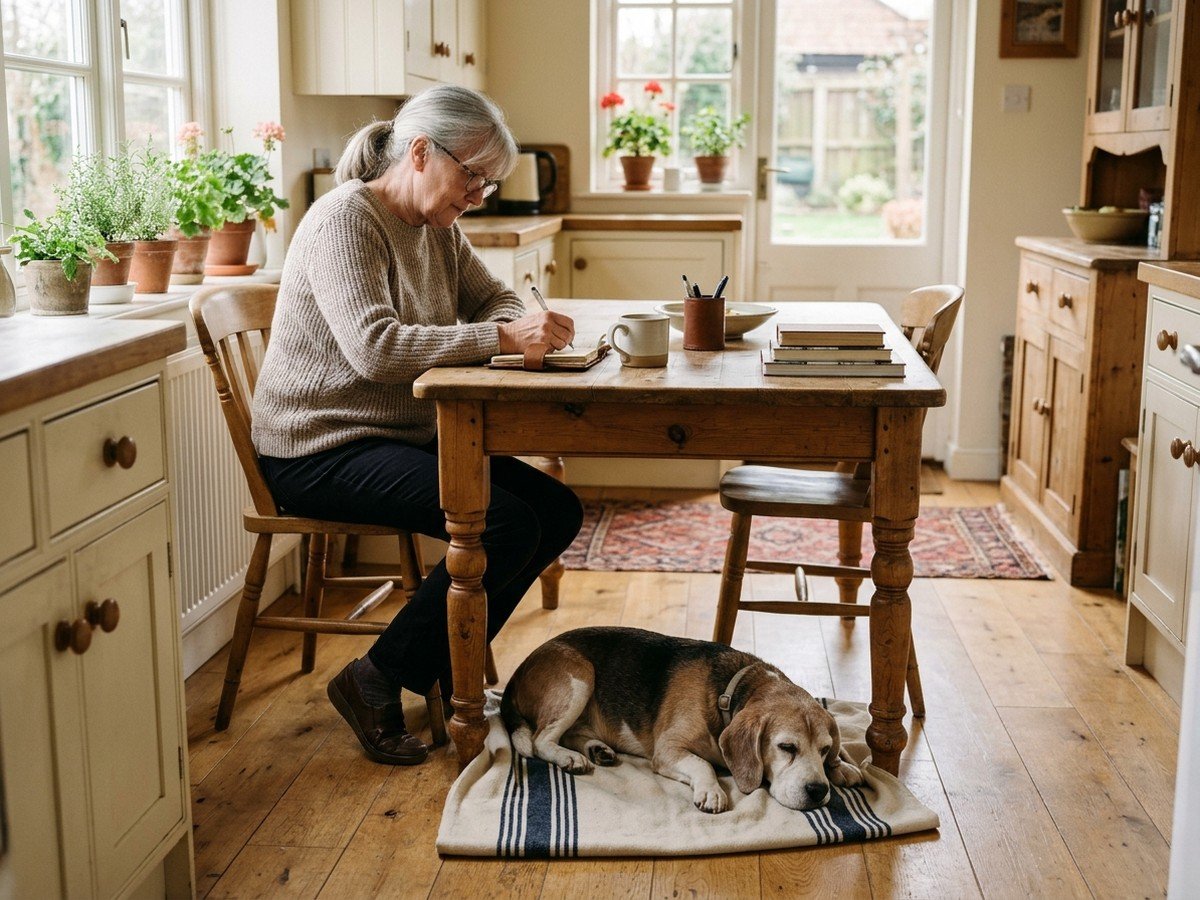
This step turns a vague worry into evidence. Vets are often handed “he’s been peeing everywhere,” which tells them very little. A written log shows the pattern in seconds.
For each accident, note the date, time, place, rough puddle size, and what happened just before. Add how many times your dog drank and went outside that day. Also note anything unusual, like straining, licking, or a strong smell.
A single line might read: “Tuesday, 2:10 p.m., hallway rug, large puddle, drank a full bowl at lunch, last trip out at 11:30.” After a few days, patterns jump out. You might see that every accident follows a big drink, or that they all happen in the same room.
The common mistake is logging only the accidents and not the successful trips outside. Without both, you can’t see the gaps. Doing it right means one line per event, good or bad, kept for a full week.
Step 2: Book a Vet Check and Bring the Log
Most causes on this list can only be confirmed with tests. A urinalysis checks for infection, crystals, and how concentrated the urine is. Bloodwork looks at kidney function, blood sugar, and other markers.
Ask your vet if they want a fresh morning sample. Collect it in a clean jar, keep it cool, and bring it within a few hours. Also bring a list of every medication and supplement your dog takes, since some drugs increase urination.
A frequent mistake is waiting for the annual check-up. New accidents in a senior dog are worth their own visit. Doing it right means calling within a few days, or the same day if you see any warning sign listed later in this guide.
Step 3: Shorten the Gaps Between Potty Trips
An aging bladder holds less and signals later. Gaps that worked at age five may be too long at twelve. Shrinking those gaps cuts accidents fast, even before you have a diagnosis.
Start with a trip outside every few hours while you’re home. Add trips first thing in the morning, after every meal, after naps, after play, and last thing at night. Use your log to spot when accidents cluster, then schedule a trip 30 minutes before that time.
The mistake here is cutting back water to “fix” the problem. Many causes, especially kidney disease, make dogs need more water, and restricting it can be dangerous. Keep fresh water available and work on more trips out instead.
Accidents when your dog is left alone need their own plan. A midday visit from a neighbor or dog walker can break up a long workday. If that isn’t possible, set up a washable pad in a quiet corner and note in your log how long your dog was alone before each accident.
Step 4: Make the Route to the Door Easier
If accidents happen on the way to the door, the route may be the problem. Slick floors, steps, and a long hallway feel very different on arthritic joints. Many older dogs start the trip, decide it hurts, and stop.
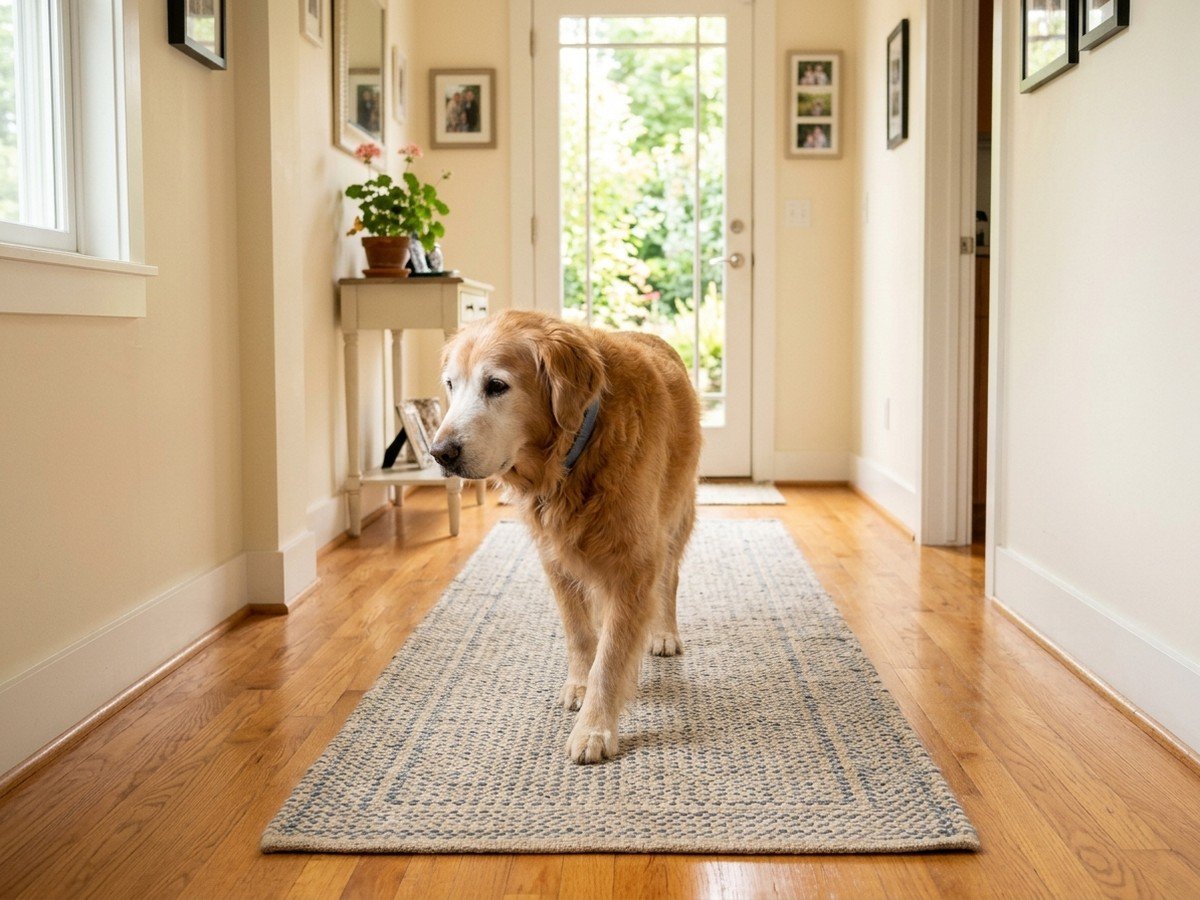
Lay grippy runner rugs from your dog’s bed to the door. Add a ramp over outside steps, and keep the path clear of clutter. If your dog sleeps upstairs, try moving the bed downstairs near the exit.
The common mistake is assuming your dog “won’t” go out when they actually can’t do it comfortably. Fixing the route is often faster than any training. Doing it right looks like a dog who walks to the door without hesitating.
Step 5: Handle Night-Time Accidents
Night accidents are one of the most searched versions of this problem. Long hours without a trip outside are hard on an older bladder. Dogs with dementia also tend to wake, wander, and lose track of where they are in the dark.
Give a last trip right before you go to bed, not two hours earlier. Leave a dim night light along the route to the door. If your dog wakes and paces, a quiet trip out at that point is often enough.
Avoid shutting an anxious senior in a crate they’re not used to just to prevent accidents. That can raise stress and make things worse. A washable pee pad by the bed is a kinder backup while you work on the cause.
Step 6: Clean Every Spot With an Enzymatic Cleaner
Dogs return to places that smell like urine. Regular cleaners, and anything with ammonia, can leave a scent that says “this is the spot.” That keeps the cycle going even after the cause is treated.
Blot up as much liquid as you can first. Soak the area with an enzymatic cleaner, following the label for how long to leave it. On carpets, the cleaner needs to reach the pad underneath, not just the surface.
The mistake is cleaning only what you can see. A blacklight torch can reveal old spots you missed. Doing it right means your dog stops sniffing and circling the same patch of rug.
Step 7: Re-Teach Outdoor Rewards, and Never Punish
Scolding an older dog for an accident does real harm. Most of these dogs can’t help it, and fear can make them hide to pee, which creates more accidents. Punishment also damages trust at a stage when your dog needs you most.
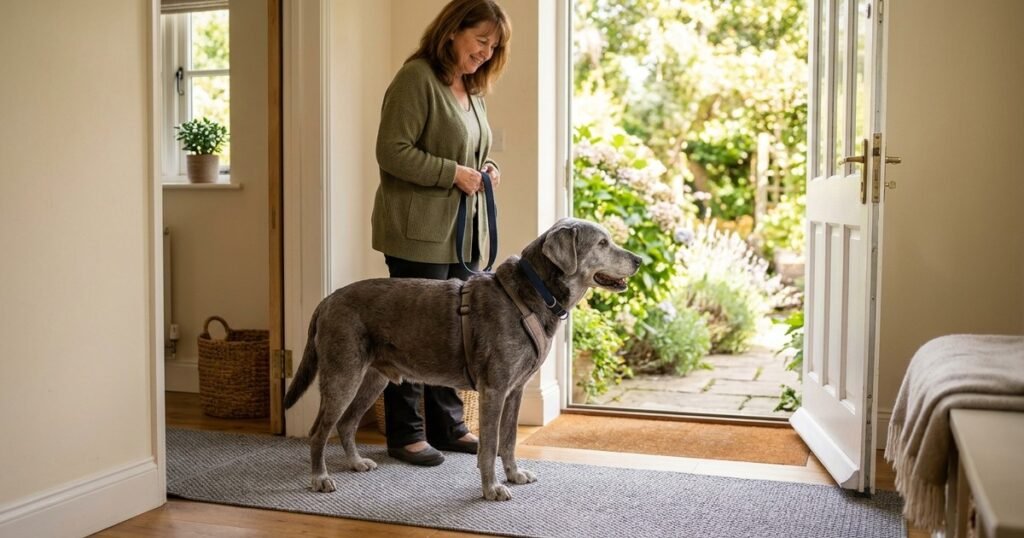
Instead, go back to puppy basics. Walk your dog out on a leash to the same spot, stay with them, and give a soft treat and calm praise the moment they finish. Many seniors respond within days because they remember the routine once someone guides them through it.
If you find an accident, clean it quietly and move on. A dog with stress-related accidents needs a steady routine, not a reaction. Doing it right looks like a dog who heads for the yard spot on their own again.
Warning Signs to Watch For
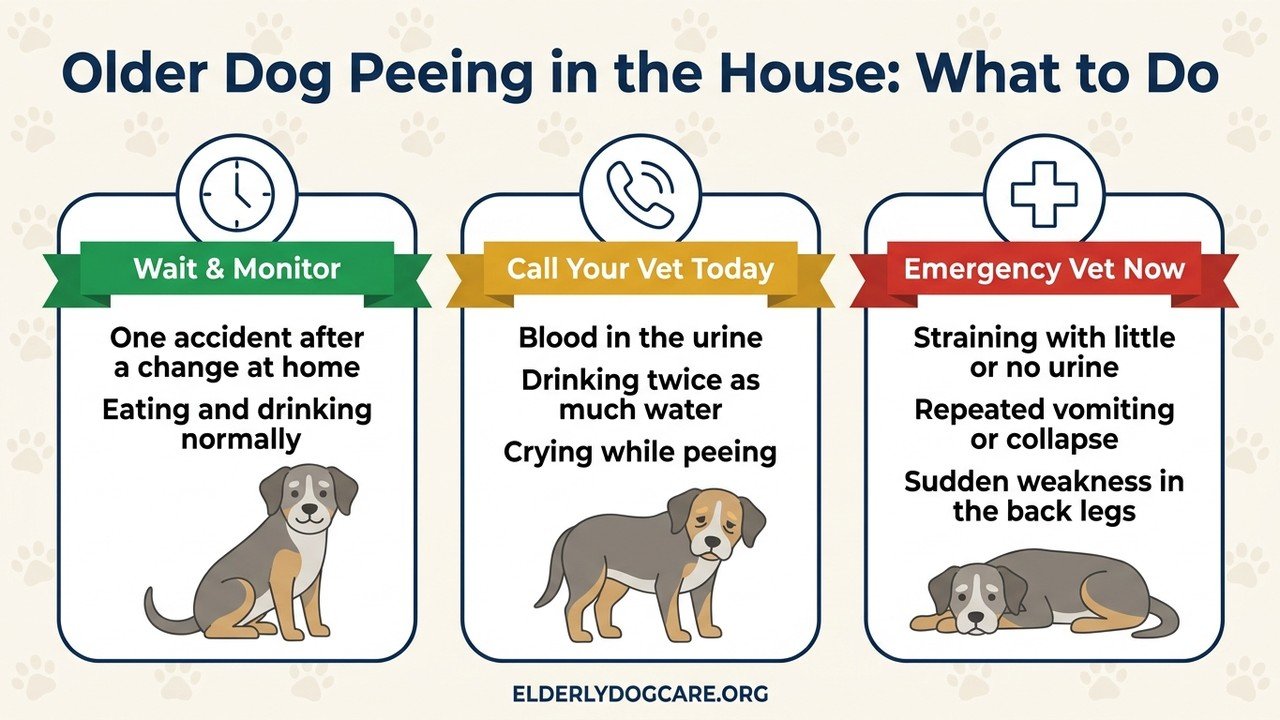
Most accidents can wait a few days for a vet appointment. Some can’t. Use this table to sort what you’re seeing, and trust your instincts if something feels off.
| Wait and monitor | Call your vet today | Emergency vet now |
|---|---|---|
| One accident after a change at home | Blood in the urine | Straining with little or no urine |
| Eating and drinking normally | Drinking twice as much water | Repeated vomiting or collapse |
| Bright and acting like themselves | Crying while peeing | Sudden weakness in the back legs |
Straining with little or nothing coming out can mean a blocked urethra, which stops urine leaving the body. That’s an emergency at any hour. Sudden back leg weakness alongside accidents can point to a spine problem, and it needs to be seen fast too.
Watch for a slow build as well. Accidents that grow more frequent, plus weight loss, a dull coat, or low energy, deserve a proper workup even if no single sign looks urgent.
Frequently Asked Questions
How do I stop my elderly dog from peeing in the house?
Start with a vet visit to find the cause, since many causes are treatable. At home, take your dog out more often, clean accidents with an enzymatic cleaner, make the path to the door easy, and reward every trip outside. Never punish accidents.
Should I put my senior dog down for incontinence?
Accidents alone are rarely a reason on their own. Many causes respond well to treatment, and diapers or belly bands can manage the rest. The question to ask is about your dog’s whole comfort, and our quality of life checklist can help you talk it through with your vet.
Why is my old dog peeing in the house at night?
Long gaps overnight, a weaker bladder, extra thirst from illness, and dementia are the usual reasons. Move the last trip out closer to bedtime, add a night light, and mention the timing to your vet.
Should I limit my old dog’s water to stop accidents?
No, not without your vet’s advice. Several causes of senior accidents, including kidney disease, make dogs need more water. Cutting it back can lead to dehydration, so add more potty trips instead.
Why does my old dog pee inside right after coming in?
Your dog may not have finished outside, or may have forgotten to go at all. This is common with dementia and with dogs who get distracted or cold. Stay outside with them on a leash until they finish, then reward right away.
Can medication make an old dog pee in the house?
Yes. Some drugs, such as long-term steroids, increase thirst and urination. If accidents started after a new prescription, tell your vet, but don’t stop any medicine without their guidance.
Getting Back to Dry Floors
An older dog peeing in the house is a message, not misbehavior. Write down what you see for a week, get the vet check, and make the trip outside shorter, easier, and more frequent. Most dogs improve once the cause is found and the routine fits their age.
Be patient with yourself too. Cleaning up after a dog you love can wear you down, and that’s normal. If this guide helped, bookmark it for the next vet visit and share it with someone else caring for an older dog.