
Watching your once-energetic companion slow down on walks can be tough. Maybe they pause longer at the end of the driveway, struggle on hard pavement, or seem stiff the morning after a normal stroll. But stopping exercise altogether is one of the worst things for an aging dog’s joints and mental health.
The secret to keeping an aging dog comfortable is shifting from high-intensity cardio to controlled, low-impact exercise. Low-impact walks maintain muscle mass around stiff joints, lubricate cartilage, control weight, and keep your dog mentally engaged with their environment.
This guide shares practical, vet-backed walking tips and low-impact routines designed to keep your senior dog moving happily without causing soreness or joint strain.
Why Controlled Movement Matters for Arthritic Joints
Joints stay healthy through movement. According to veterinary orthopedic guidelines from the American Kennel Club, synovial fluid—the natural lubricant inside joint capsules—is circulated and refreshed through gentle weight-bearing motion.
When a senior dog becomes completely sedentary due to mild stiffness, joint fluid thickens, cartilage dries out, and supporting leg muscles atrophy rapidly. This creates a vicious cycle where less movement leads to stiffer joints and weaker muscles, making future walks even more painful.
Short, controlled daily walks interrupt this cycle, keeping joints lubricated and preserving the quadriceps and hamstring muscle tissue that protects aging hips and knees.
1. Choose Soft, Shock-Absorbing Surfaces
Pavement and concrete offer zero shock absorption, transmitting every footfall impact directly up through your dog’s paws into stiff carpal, elbow, and hip joints. Walking on hard surfaces accelerates joint inflammation.
Whenever possible, seek out soft walking surfaces:
- Grass lawns and park trails
- Packed dirt paths
- Sand beaches (firm wet sand near water line)
- Woodchip garden paths
If you must walk on sidewalk pavement to reach a park, fit your dog with rubberized booties or thick toe grips to cushion impact and prevent slipping on smooth concrete.
2. Take Multiple Short Walks Instead of One Long Trek
One 40-minute walk is far more taxing on a senior dog’s body than three 10-minute walks spread throughout the day. Long continuous walks exhaust supporting muscles, forcing arthritic joint surfaces to bear heavy impact without muscle cushioning.
Structure your senior walking routine into short, frequent outings:
- Morning (10-15 minutes): Gentle warm-up walk to loosen overnight stiffness.
- Midday (5-10 minutes): Quick sniff walk for mental stimulation and light movement.
- Early Evening (10-15 minutes): Relaxed stroll on soft grass before dinner.
3. Prioritise Sniffing over Pace and Distance
For a senior dog, a walk isn’t about physical conditioning; it’s about sensory enrichment. Sniffing releases dopamine in a dog’s brain, lowering heart rate and reducing stress hormones without physical strain.
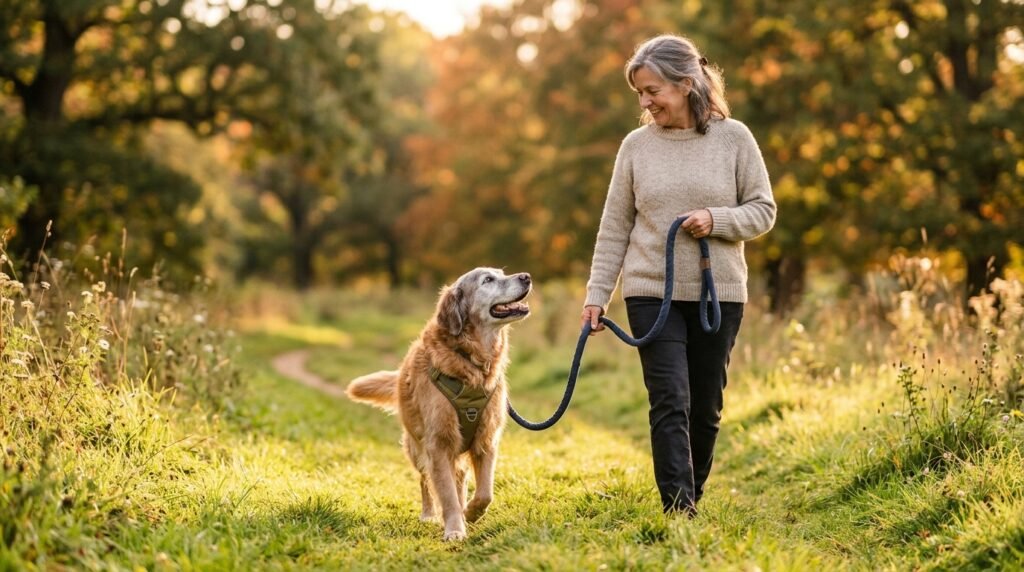
Allow your dog to lead the pace. If they want to spend three minutes sniffing a single lamp post, let them. A 15-minute “sniffari” where your dog covers only 200 yards provides tremendous mental satisfaction while keeping physical impact low.
4. Warm Up and Cool Down Routines
| Phase | Duration | What to Do | Why It Helps |
|---|---|---|---|
| Warm-Up | 2-3 minutes | Slow indoors pacing, gentle leg stroking | Increases blood flow to stiff joint capsules |
| Main Walk | 10-15 minutes | Controlled soft-surface walking with sniff breaks | Circulates synovial fluid without muscle fatigue |
| Cool-Down | 2-3 minutes | Gentle petting, warm moist towel compress on hips | Relaxes tight muscles and prevents post-walk spasm |
5. Gear Up for Mobility and Safety
Ditch traditional neck collars for senior walks. A neck collar concentrates force on the cervical spine when a dog hesitates or stumbles. Switch to a padded chest harness with a top handle, allowing you to assist your dog over curbs gently without pulling on their neck.
For dogs with noticeable hind leg weakness, consider a support harness or mobility sling. Learn about choosing the right equipment in our guide on mobility aids for senior dogs.
Alternative Low-Impact Exercises for Senior Dogs
Beyond daily walking, these low-impact activities maintain muscle strength with minimal joint strain:
- Hydrotherapy & Swimming: Water buoyancy supports up to 90% of your dog’s body weight while providing gentle muscular resistance. Swimming is ideal for dogs with severe hip dysplasia or arthritis.
- Underwater Treadmill: Offered at veterinary rehabilitation centers, underwater treadmills allow precise speed and water depth control to rebuild leg strength safely.
- Targeted Home Exercises: Slow sit-to-stand repetitions (doggy squats) and slow figure-8 walking around living room cones build stability. Combine exercise with senior dog joint supplements for optimal joint repair support.
Signs Your Senior Dog Has Done Too Much
Learn to spot overexertion early so you can adjust distance before joint damage occurs:
- Limping or lagging behind during the walk
- Excessive panting or drooling not related to heat
- Trembling or shaking in hind legs when standing still
- Difficulty rising or severe morning stiffness the day after a walk
- Refusal to go outside for the next scheduled walk
If you notice any of these signs, cut the duration of your next walk in half and give your dog a rest day with gentle massage and warm compresses. Explore additional comfort options in our guide on best orthopedic beds for senior dogs.
Frequently Asked Questions
#### Should I walk my senior dog every day if they have arthritis?
Yes. Gentle daily walking is far better for arthritic joints than intermittent long walks. Short 10-minute walks keep joint fluid circulating and prevent muscle atrophy without causing joint breakdown.
#### What is the best weather for walking a senior dog?
Mild, dry weather between 15°C and 22°C (60°F–72°F) is ideal. Cold, damp weather increases joint stiffness, while high heat and humidity risk rapid overheating in senior dogs with compromised respiratory or cardiac systems.
#### How far should a 12-year-old dog walk?
Distance depends on breed, health status, and conditioning rather than age alone. For a typical 12-year-old dog with mild stiffness, aim for 10 to 15 minutes per walk (roughly a quarter to half a mile) rather than aiming for long mileage.
#### Are dog booties helpful for senior dog walks?
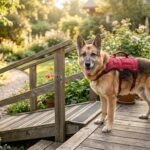
Yes. Rubberized dog booties or non-slip traction socks cushion paw impact on hard surfaces and prevent slipping, giving senior dogs confidence on smooth pavement or wooden boardwalks.
#### Can low-impact walks help a senior dog lose weight?
Yes. Short daily low-impact walks burn excess calories and increase resting metabolism gently. Pair daily walks with a calorie-controlled diet plan for effective weight control.
#### What should I do if my senior dog sits down and refuses to walk?
Never pull or force a senior dog to move if they sit down. Sitting usually indicates sudden joint pain, fatigue, or overheating. Rest quietly for a few minutes, offer water, and assist them home gently using a padded harness or carry them if feasible.
Keeping Your Companion Moving Safely
Adjusting your walking routine to suit your senior dog’s changing body is one of the kindest things you can do. By prioritizing short durations, soft surfaces, sensory sniffing, and low-impact hydrotherapy, you protect their joints while preserving the outdoor joy that makes dog ownership so special.
“@