
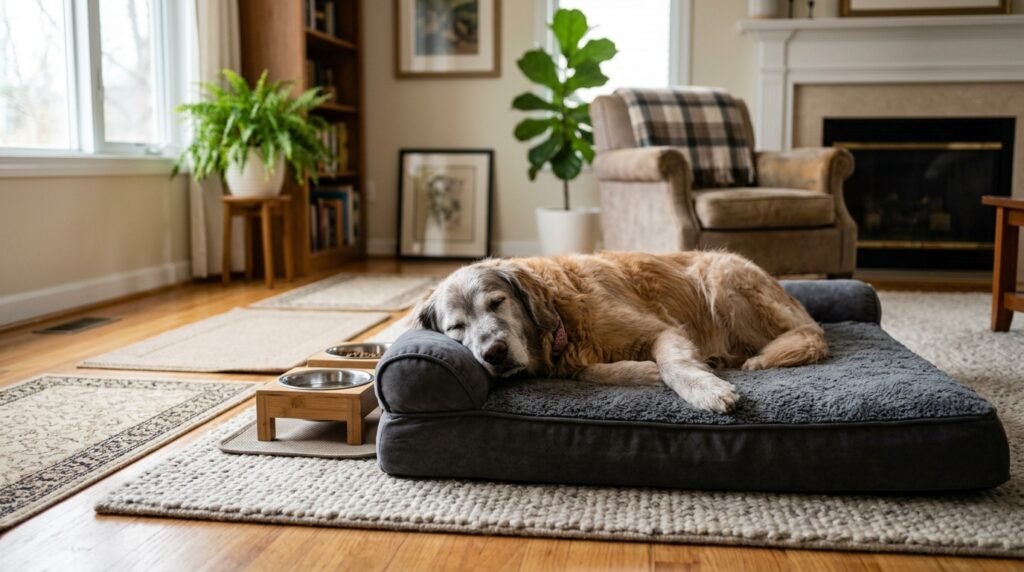
Watching your dog grow older is a tender, heartwarming experience. But as joint stiffness, sensory decline, and lower energy set in, your home can suddenly feel full of physical obstacles for an aging pet. Smooth floors become slick ice rinks, steps feel like steep mountains, and cold winter drafts make sore hips ache.
Keeping a senior dog comfortable doesn’t require a total home renovation. Simple, thoughtful adjustments to your living space, sleeping setup, and daily routine can dramatically reduce physical strain and restore your dog’s confidence.
This guide gives you a practical, step-by-step room-by-room blueprint for transforming your home into a safe, cozy sanctuary for your senior dog.
Understanding Why Home Environment Matters to Senior Dogs
Aging dogs experience multiple biological shifts simultaneously. According to veterinary mobility research from the American Kennel Club, over 80 percent of dogs past age eight suffer from some degree of osteoarthritis.
Compounding this joint wear is sarcopenia (muscle loss), thinning paw pads, and declining eyesight. When a senior dog slips on a hardwood floor or struggles to rise from a thin mat, their body releases stress hormones that worsen joint pain and trigger anxiety.
Creating a senior-friendly home environment removes these daily physical stressors, allowing your dog to rest deeply and move safely.
1. Transform Flooring with Traction Corridors
Smooth surfaces like tile, hardwood, and laminate offer zero paw grip. When an arthritic dog tries to stand or turn on slick floors, their legs splay, risking painful groin tears or hip subluxation.
Create non-slip “highways” throughout your home:
- Rubber-Backed Rug Runners: Place washable, non-skid runners along high-traffic paths between beds, food bowls, and back doors.
- Yoga Mats: Inexpensive yoga mats cut into custom shapes offer incredible paw grip in kitchens and entryways.
- Toenail Rubber Grips: Slide soft rubber toe grips onto your dog’s middle nails for natural mechanical traction on slick floors.
2. Upgrade Sleeping Comfort with Memory Foam
Standard fiber-fill dog beds collapse under weight, leaving your dog’s hips and elbows resting directly against hard flooring. High-density medical memory foam contours around your dog’s body, eliminating pressure point friction.
| Bed Feature | Why It Helps Senior Dogs | Key Specification |
|---|---|---|
| Solid Memory Foam | Supports sore joints and prevents floor contact | Minimum 4-6 inches thick; 3lb+ density |
| Low Entry Edge | Allows easy stepping without lifting legs high | Open-front or low bolster profile |
| Waterproof Internal Cover | Protects foam core from accidental urine leaks | Zippered fluid-resistant inner casing |
Place beds in warm, draft-free corners away from busy doorways. For full details on bed selection, read our guide on the best orthopedic beds for senior dogs.
3. Raise Food and Water Bowls
Bending down to floor-level bowls puts severe mechanical strain on a senior dog’s neck, shoulders, and front elbows. For dogs with spinal arthritis or laryngeal issues, lowering the head while swallowing increases choking risk.
Elevate food and water bowls to roughly your dog’s elbow height using a sturdy raised bowl stand. Eating at a comfortable height makes mealtime relaxed and painless.
4. Eliminate Need for Jumping with Ramps
Jumping on or off couches, beds, or vehicle trunks subjects front and rear joints to heavy impact. Even if your senior dog still attempts to jump, the cumulative shock accelerates cartilage breakdown.
Introduce sturdy, carpeted pet ramps with gentle slope angles (under 20 degrees). Learn how to choose between ramps and stairs in our guide on mobility aids for senior dogs.
5. Temperature Control and Warmth Management
Cold, damp environments tighten stiff muscles and worsen arthritic joint pain. Keep your senior dog’s sleeping areas warm during winter months:
- Keep beds off cold basement floors using raised wooden frames or extra rug layering.
- Use low-voltage therapeutic self-heating dog mats that reflect body heat safely.
- Dress short-haired senior dogs in soft fleece sweaters during chilly morning walks.
Frequently Asked Questions
#### How can I make my house easier for a blind or visually impaired senior dog?
Keep furniture layouts completely fixed, place scented oils (like lavender) near doorframes at nose height, and use distinct rug textures near doorways so your dog knows where rooms transition.
#### Is a heated bed safe for an old dog with arthritis?
Yes, provided you use low-voltage therapeutic pet heating pads with automatic shut-off safety controls and ensure your dog can easily move off the heat source if they become too warm.
#### How do I keep my senior dog from getting cold at night?
Place their orthopedic bed in a draft-free corner away from exterior doors, layer a soft fleece blanket over them, and maintain indoor temperatures around 20°C to 22°C (68°F–72°F).
#### Should I raise my senior dog’s water bowl?
Yes. Raising water and food bowls to elbow height reduces neck and spinal flexion, making drinking comfortable for dogs with neck arthritis or stiffness.
#### What is the best flooring for senior dogs?
Low-pile carpet and non-slip rubber mats are the safest flooring options for senior dogs, offering maximum paw traction and cushioning against falls.
#### How do I help my senior dog sleep comfortably through the night?
Establish a predictable bedtime routine, provide an orthopedic memory foam bed, ensure pain is managed with vet guidance, and use warm nightlights. Read our guide on senior dog dementia sleep solutions.
Small Changes, Lasting Joy
Transforming your home into a comfortable senior dog sanctuary doesn’t require grand gestures. By adding traction rugs, elevating bowls, providing supportive memory foam, and eliminating jumps, you give your faithful companion a safe, peaceful home where their golden years can be spent in true comfort.
“@
,Description: