
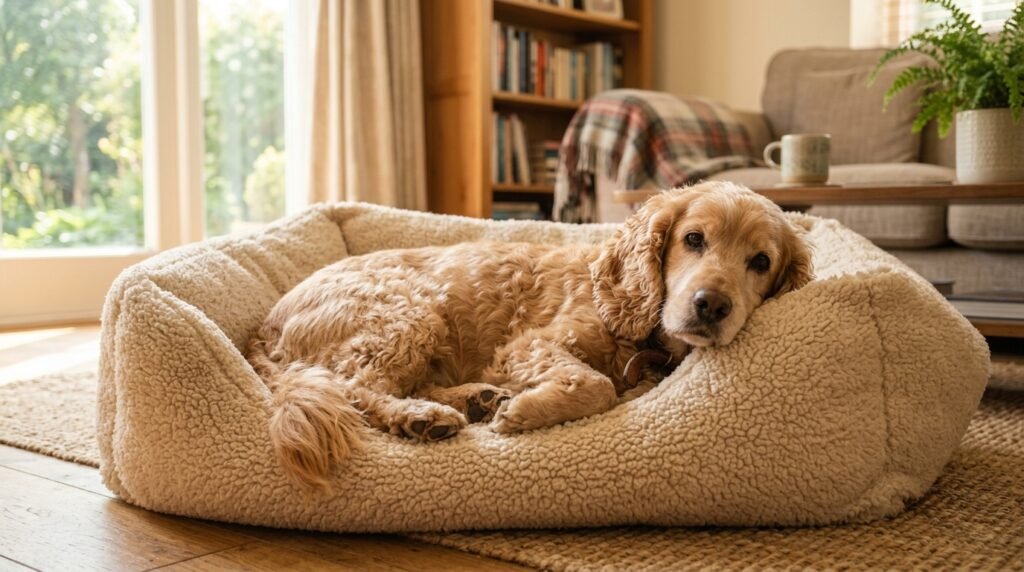
You greet your gray-muzzled companion in the morning, only to notice sticky gunk sealing the corners of their eyes. As they blink against the daylight, they rub their face along the living room carpet.
Every loving pet owner notices small changes in their older companion’s face. While a tiny crust in the morning can be harmless, abnormal dog eye discharge in a senior dog often indicates an uncomfortable ocular condition that requires medical attention.
Aging eyes produce less natural tear film, making delicate corneas vulnerable to friction and infection. Decoding the color and consistency of ocular drainage helps you protect your faithful friend’s sight and comfort.
Quick Answer:
Dog eye discharge in senior dogs ranges from harmless morning sleep crusts to serious ocular conditions like dry eye (keratoconjunctivitis sicca), corneal ulcers, and glaucoma. While clear tears often signal blocked tear ducts or mild allergies, thick grayish-white mucus points to dry eye, and yellow or green pus indicates active bacterial infection. Prompt veterinary testing with fluorescein stain and Schirmer tear strips prevents permanent vision loss.
Key Takeaways:
- Color Matters: Clear watery fluid indicates tear overflow, stringy gray mucus signals dry eye, and thick yellow-green pus reveals bacterial infection.
- Aging Tear Glands: Immune-mediated destruction of tear glands causes dry eye in over fifteen percent of geriatric canines.
- Steroid Danger: Never administer leftover human or pet eye drops containing hydrocortisone without veterinary testing, as steroids can rupture scratched corneas.
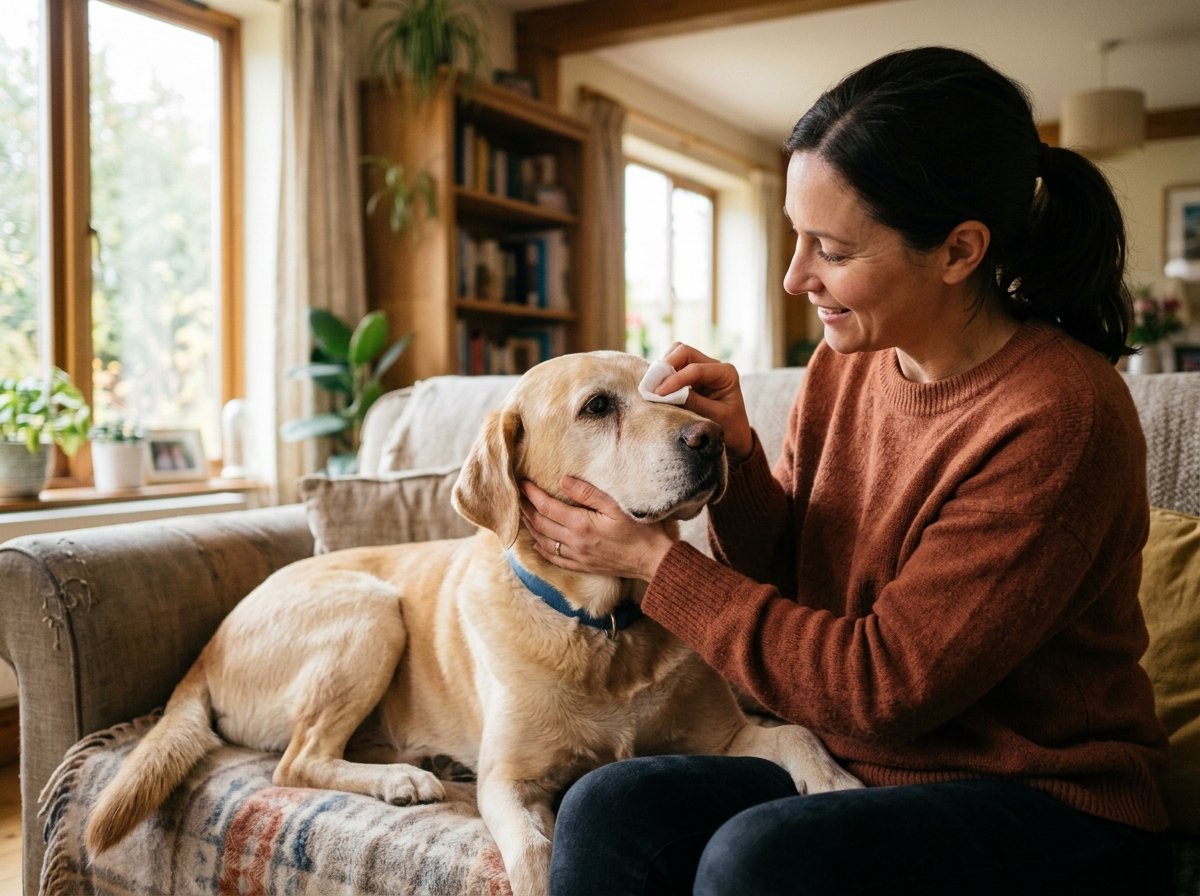
- Gentle Home Hygiene: Soften dried periocular crusts using warm sterile saline soaked into clean cotton pads, wiping gently outward.
Why Senior Dogs Produce Abnormal Eye Discharge
A healthy canine eye relies on a continuous, multi-layered tear film to nourish the clear cornea, wash away dust, and fight airborne pathogens. This tear film contains an inner mucus layer, a middle watery layer, and an outer oily lipid seal.
As canines reach their golden years, aging takes a toll on this delicate ocular ecosystem. Lacrimal glands produce less aqueous fluid, while tiny meibomian glands along the eyelid margins become plugged with waxy oils.
When the watery layer dries up, the eye attempts to protect itself by pumping out excess mucus. This sticky mucus clings to dry corneas and traps microscopic dust, creating thick strings of discharge.
Additionally, facial muscles loosen over time, causing lower eyelids to droop slightly (ectropion) or roll inward (entropion). Both conditions expose vulnerable eye tissue to constant irritants, producing chronic inflammation.
Breed Anatomy and Flat-Faced Senior Vulnerabilities
While any older dog can develop ocular drainage, brachycephalic breeds face unique physical challenges. Pugs, French Bulldogs, Boston Terriers, and Shih Tzus have shallow eye sockets that leave their globes exposed.
Many flat-faced seniors suffer from lagophthalmos, which is the inability to close their eyelids completely while sleeping. The central cornea remains dry throughout the night, leading to chronic morning crusts and dark corneal pigmentation.
Deep facial skin folds around the nose also trap leaking tears against warm skin. If not cleaned daily, this constant dampness breeds painful yeast and bacterial skin fold dermatitis.
Long-haired breeds like Cocker Spaniels and Poodles also develop distichiasis, where rogue eyelashes sprout from inner eyelid margins, scraping the cornea with every blink.
Decoding the Color: What Your Dog’s Eye Discharge Means
The visual appearance of ocular fluid offers immediate diagnostic clues regarding underlying disease. Inspect your dog’s eyes in bright natural light to evaluate color and texture.
| Discharge Appearance | Primary Underlying Cause | Key Warning Signs | Clinical Urgency |
|---|---|---|---|
| Clear, Watery Tears | Epiphora, blocked tear duct, wind, mild allergy | Wet cheeks, brown facial staining, squinting in wind | Low to moderate; monitor for corneal cloudiness |
| Grayish-White Stringy Mucus | Dry Eye (Keratoconjunctivitis Sicca) | Dull dry cornea, frequent blinking, red blood vessels | High; requires lifelong prescription tear stimulants |
| Thick Yellow or Green Pus | Bacterial conjunctivitis, infected corneal ulcer | Swollen pink conjunctiva, glued eyelids, severe pawing | High; schedule veterinary exam within 24 hours |
| Reddish-Brown Rust Stains | Porphyrin oxidation from chronic tearing | Dark streaks in fur beneath eyes, mild dampness | Low; cosmetic hygiene and eyelid anatomy check |
| Foamy / Frothy White Bubbles | Blepharitis, meibomian gland inflammation | Crusted eyelid margins, hair loss around lids | Moderate; warm compresses and eyelid hygiene |
Top 5 Causes of Eye Drainage in Older Dogs
Investigating the root trigger of ocular fluid requires distinguishing between surface irritations and deeper systemic disorders.
1. Keratoconjunctivitis Sicca (KCS or Dry Eye)
Dry eye is the single most prevalent cause of chronic sticky discharge in senior canines. In most cases, your dog’s own immune system slowly attacks the lacrimal glands, destroying their ability to manufacture watery tears.
According to the Merck Veterinary Manual canine keratoconjunctivitis guidelines, untreated KCS leads to painful corneal scarring, dark pigment deposits, and permanent blindness.
Dogs with KCS produce thick, ropey ropes of grayish mucus that dry into hard crusts on the eyelids. Prescribed immunosuppressive drops like cyclosporine or tacrolimus stimulate natural tear production and keep corneas clear.
KCS often coincides with other surface drying issues in older canines. If you also notice a dry muzzle, explore our guide on dog nose dry, crusty, and cracked for helpful moisture routines.
2. Corneal Ulcers and Scratches
Older dogs often suffer from reduced corneal sensitivity, meaning they may not blink as quickly when walking near low branches or stiff grass. A minor scratch on the surface can quickly develop into an open corneal ulcer.
Bacteria can rapidly invade the scratch, releasing collagenase enzymes that melt the corneal stroma. The eye reacts by pouring out copious yellow-green pus while your dog keeps their eye clamped tightly shut.
Older dogs are prone to indolent ulcers, slow-healing corneal ulcers that often need a vet to treat the surface before they heal. The Merck Veterinary Manual on corneal ulcers explains corneal ulcers in more detail.
3. Bacterial and Allergic Conjunctivitis
Conjunctivitis is an inflammation of the moist pink tissue lining the inner eyelids and eyeball. In senior dogs, conjunctivitis rarely occurs as an isolated infection; it usually develops secondary to dry eye, airborne dust, or environmental allergies.
Allergic flare-ups produce pink, puffy conjunctiva with watery drainage. When opportunistic bacteria colonize the inflamed tissue, the fluid turns into thick, sticky yellow pus.
For an in-depth look at managing pink, inflamed ocular tissues, review our complete clinical guide on dog pink eye in senior dogs.
4. Blocked Nasolacrimal Ducts (Tear Duct Obstruction)
Tears normally drain from the inner eye corner through tiny puncta and down the nasolacrimal duct into the nasal cavity. When these ducts become blocked by dried mucus, scar tissue, or facial inflammation, tears spill over the eyelids.
This continuous overflow (epiphora) saturates the fur beneath the eyes. Natural iron-containing molecules in tears called porphyrins oxidize when exposed to air, dying the fur deep reddish-brown.
If tear drainage issues are accompanied by upper respiratory symptoms, read our advice on dog sneezing in senior dogs to rule out nasal polyps or tooth root abscesses.
5. Glaucoma and Anterior Uveitis
Glaucoma is an excruciating condition where fluid pressure inside the eyeball spikes dangerously high. While acute glaucoma often causes eye tearing, the accompanying redness, dilated pupil, and corneal haziness represent an immediate emergency.
Similarly, anterior uveitis involves inflammation inside the eye chamber, frequently triggered by systemic infections, tick-borne diseases, or metabolic disorders like diabetes.
Both conditions cause intense deep ocular pain. Dogs often press their heads against walls, show sudden lethargy, and refuse food when intraocular pressure rises.
Cloudy Eyes vs Eye Discharge: Recognizing Nuclear Sclerosis
Many senior dog owners confuse internal lens cloudiness with surface eye discharge. As dogs pass age eight, fibers inside the lens become compressed, creating a hazy bluish-gray tint.
This normal aging change is called nuclear sclerosis. It develops symmetrically in both eyes and does not cause pain, redness, or discharge.
Cataracts, on the other hand, represent true opacity of the lens fibers that blocks light transmission and leads to blindness. While cataracts themselves do not cause discharge, leaking lens proteins can spark secondary uveitis and tearing.
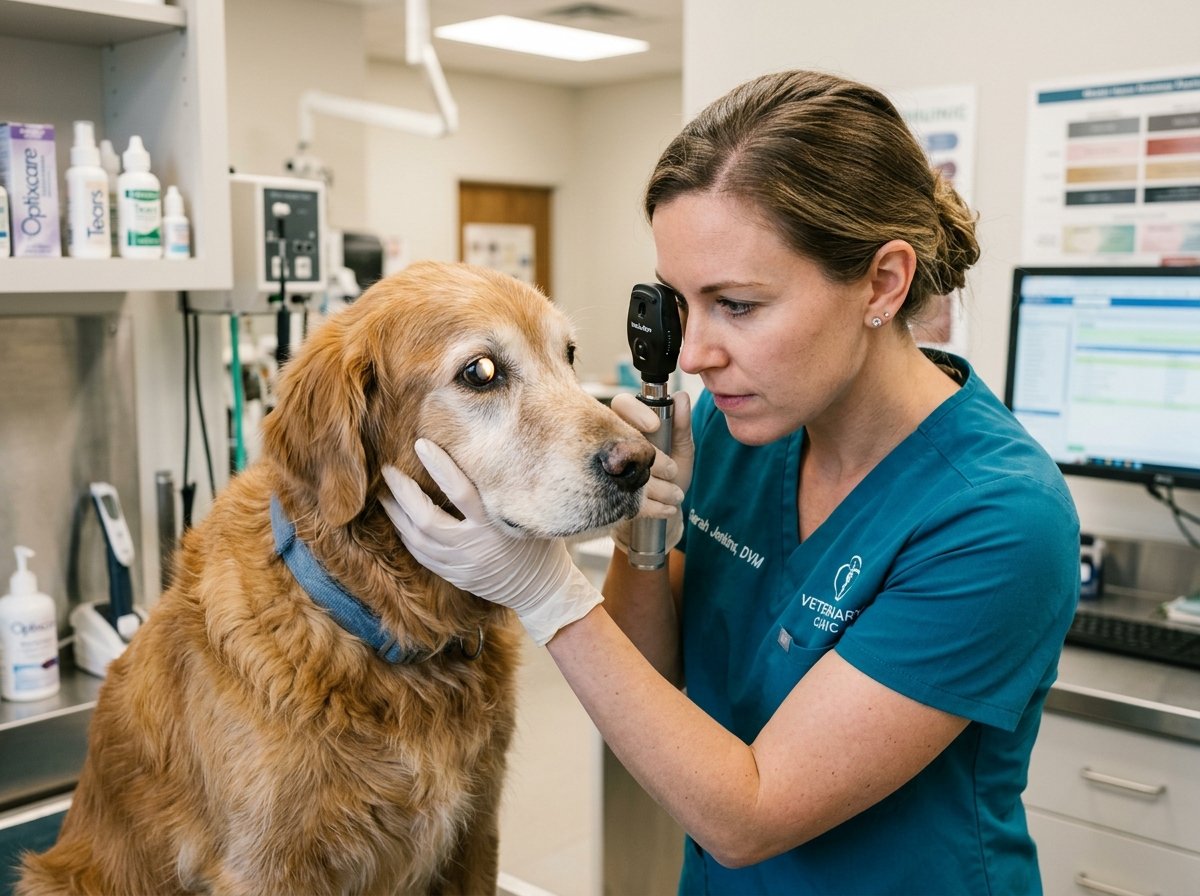
A veterinarian uses a direct ophthalmoscope to inspect the lens and differentiate harmless nuclear sclerosis from cataracts and surface infections.
Veterinary Diagnostic Tests: What to Expect
Never attempt to treat cloudy or goopy eyes with leftover medications from your medicine cabinet. An accurate veterinary diagnosis requires three standard bedside tests performed in minutes.
Clinical resources from the American College of Veterinary Ophthalmologists common conditions registry stress that specific diagnostic testing must always precede topical medications.
1. Schirmer Tear Test (STT)
The veterinarian inserts a tiny calibrated paper strip inside your dog’s lower eyelid for exactly sixty seconds. Natural tears wick down the paper, measuring fluid output in millimeters per minute.
A normal dog produces fifteen millimeters or more of moisture per minute. Readings under ten millimeters confirm dry eye, identifying why thick mucus is forming.
2. Fluorescein Eye Stain
The doctor places a drop of harmless, non-toxic orange dye onto the eye surface and rinses it with sterile saline. Under a cobalt blue light, the dye glows bright neon green wherever corneal cells are scratched or ulcerated.
This test is critical. Applying steroid eye drops to an eye with a glowing corneal ulcer can cause the eyeball to rupture, resulting in surgical removal.
3. Tonometry (Intraocular Pressure Check)
Using a gentle pen-like instrument called a tonometer, the vet lightly taps the cornea to measure pressure within the eye. Normal canine ocular pressure ranges between ten and twenty-five millimeters of mercury.
Low pressure suggests internal inflammation (uveitis), while high pressure confirms glaucoma, requiring immediate pressure-lowering drops to save the retina.
Safe At-Home Cleaning and Hygiene Protocol
While waiting for your veterinary appointment, keeping the periocular skin clean relieves discomfort and prevents bacterial dermatitis beneath the eyes.
Step-by-Step Eye Cleaning Instructions:
- Gather Sterile Supplies: Use pure sterile saline solution (such as human contact lens saline with zero preservatives) and flat cosmetic cotton pads. Avoid paper towels, which can scratch corneas, and avoid loose cotton balls that leave fuzzy threads.
- Moisten the Pad: Soak a cotton pad thoroughly in warm saline. Test the temperature on your inner wrist to ensure it is comfortably lukewarm.
- Soften Hard Crusts First: Hold the damp pad gently over your dog’s closed eye for thirty seconds. This softens rock-hard crusts so you do not pull on delicate eyelid skin.
- Wipe from Inner to Outer Corner: Gently wipe downward and outward away from the nose. Never drag debris across the surface of the eyeball.
- Use a Fresh Pad for Each Eye: Always discard the pad and use a completely clean one for the other eye to prevent cross-contaminating bacteria.
Frequently Asked Questions
Can I use human eye drops for my dog’s goopy eyes?
No, you should never use human over-the-counter redness relief drops on dogs. These products contain vasoconstrictors that can damage canine eyes and trigger severe systemic reactions.
Is green eye discharge always an emergency in older dogs?
Thick green or yellow pus indicates an active bacterial infection or an infected ulcer. While not always an immediate emergency, your dog should be examined by a veterinarian within twenty-four hours to begin targeted antibiotic drops.
Why does my senior dog get brown eye crusts every morning?
Small reddish-brown crusts that appear after sleeping are usually normal debris and dried porphyrin tear pigments. Explore our dedicated guide on dog eye boogers in senior dogs to distinguish normal morning sleep crusts from dry eye or infection.
Can diet help reduce senior dog eye drainage?
Diets rich in marine omega-3 fatty acids like EPA and DHA support healthy tear film lipids and reduce ocular surface inflammation. High-quality animal proteins also support immune defenses against secondary bacterial infections.
What should I do if my dog is squinting and holding their eye shut?
Squinting and holding an eye shut indicates acute corneal pain. This is an urgent sign that requires immediate veterinary care, as corneal scratches can worsen into deep melting ulcers within hours.
Can dry eye in older dogs be cured completely?
Most cases of canine dry eye are caused by immune-mediated destruction of tear glands, which requires lifelong daily management. While not curable, daily cyclosporine drops successfully restore natural moisture and prevent blindness.
Cherishing Your Companion’s Vision and Comfort
Watching your loyal friend grow older brings a deep desire to keep them comfortable in every season of life. Healthy, pain-free eyes allow your senior dog to continue walking around the house safely, watching squirrels from the window, and gazing at you with affection.
By learning what different discharge colors mean, you can catch ocular issues before they cause lasting harm. With prompt veterinary care and gentle daily hygiene, you can ensure your dog’s golden years remain bright, clear, and full of comfort.
Authority and Research Reference Map
Internal Clinical Guides:
- Dog Pink Eye in Senior Dogs: Managing allergic and bacterial conjunctivitis in older canines.
- Dog Nose Dry, Crusty, and Cracked: Restoring hydration to aging canine facial tissues.
- Dog Sneezing in Senior Dogs: Recognizing nasolacrimal obstructions and tooth root abscesses.
External Veterinary Citations:
- American College of Veterinary Ophthalmologists: Common canine eye diseases and diagnostic benchmarks.
- Merck Veterinary Manual: Canine keratoconjunctivitis sicca pathology and tear stimulation protocols.
- Merck Veterinary Manual on corneal ulcers: corneal ulcers and other disorders of the cornea in dogs.