

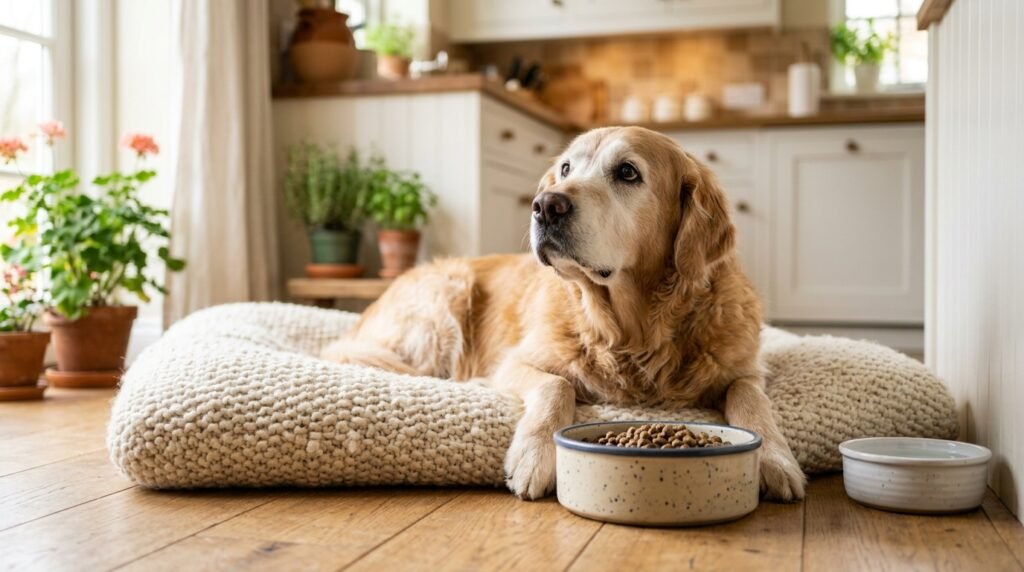
Your dog has walked up to the bowl, sniffed, and walked away again.
When a dog who used to inhale breakfast suddenly leaves half of it behind, the worry sets in fast. Is this just old age, or is something wrong?
Senior dog loss of appetite causes range from the simple (stale food, a fading nose) to the serious (kidney disease, dental pain, cancer). Most guides hand you a long list and leave you guessing. This one starts with a single question vets use to narrow things down, then walks through the 12 most common reasons older dogs stop eating.
That question is this: does your dog want to eat but struggle, or has the interest in food gone? Watching for that one difference tells you a surprising amount before you ever reach the clinic.
Quick Answer:
The most common senior dog loss of appetite causes are dental pain, arthritis, nausea, kidney or liver disease, medication side effects, a weaker sense of smell, and cognitive decline. A gradual dip can be normal aging, but a sudden drop or a full day without food deserves a call to your vet.
Key Takeaways:
- Primary Cause: In older dogs, poor appetite is usually a symptom of pain, illness, or a sensory change, not a quirk of personality.
- Observable Signs: A dog who approaches the bowl but drops food or chews on one side is likely in pain, not simply uninterested.
- Home Action Step: Warm the food slightly, raise the bowl, and keep a three-day log of what and how much your dog eats.
- When to See a Vet: Call if your senior skips food for 24 hours, or sooner with vomiting, diarrhea, heavy thirst, or lethargy.
First, Ask: Can’t Eat or Won’t Eat?
Veterinarians split appetite loss into two types. VCA’s veterinary guide to anorexia calls them true anorexia and pseudo-anorexia. In true anorexia, the dog has no desire for food.
Pseudo-anorexia is different: the dog is hungry, but something physical gets in the way.
Sorting your dog into one of these groups is the most useful thing you can do at home. Spend two or three meals just watching, without coaxing.
| “Wants to eat but can’t” | “Doesn’t want to eat” |
|---|---|
| Goes to the bowl eagerly, then hesitates | Ignores the bowl or turns the head away |
| Drops kibble or chews on one side | Licks lips, drools, or swallows often (nausea) |
| Eats soft food but refuses hard food or chews | Refuses favorite treats too |
| Struggles to lower the head to a floor bowl | Seems tired, withdrawn, or sleeps more |
| Likely causes: teeth, mouth, neck or joint pain | Likely causes: illness, nausea, medication, stress |
Write down what you see. Those notes will help your vet far more than “he’s just off his food.” With that in mind, here are the causes, grouped roughly from the “can’t eat” side to the “won’t eat” side.
1. Dental Disease and Mouth Pain
Dental problems top the list for older dogs, and they hide well. A dog with a cracked tooth or an abscess still feels hungry. Chewing simply hurts, so meals get shorter and pickier.
The Merck Veterinary Manual on dental disorders describes periodontal disease as one of the most common health problems in adult dogs. Signs include bad breath, red or bleeding gums, pawing at the face, and dropping food mid-chew.
Try this simple test: offer something soft, like a spoonful of plain cooked chicken. If your dog takes it happily but refuses kibble, suspect the mouth first. Our guide to bad breath and senior dental health explains what to look for when you lift the lip.
2. Arthritis, Neck Pain, and Back Pain
Eating from a floor bowl means lowering the head and holding a stance. For a dog with a sore neck, stiff spine, or arthritic front legs, that posture can be uncomfortable enough to cut a meal short. VCA notes that chronic pain can interfere with a dog’s ability to reach food and water bowls on the floor.
Watch for a dog who eats a few bites, then walks away and lies down. Shifting weight between the front legs while eating is another clue. Many owners mistake this for fussiness.
Raising the bowl to roughly elbow height often helps right away. A non-slip mat under the dog’s front feet adds stability on hard floors. Pain can be subtle, so our list of senior dog pain signs can help you spot them.
3. A Fading Sense of Smell
Dogs judge food mostly by scent. As they age, that sense can dull, and the same kibble that once smelled irresistible starts smelling like nothing at all. VCA lists scent as an important contributor to how appealing food is.
This cause usually looks like slow, steady pickiness rather than a sudden stop. Your dog is otherwise bright, drinks normally, and still enjoys walks.
Warming wet food to just above room temperature releases more aroma. Test it on your wrist first, the way you’d check a baby bottle.
A spoon of low-sodium broth or a vet-approved topper can also help. Our guide to the best food toppers for senior dogs covers safe options.
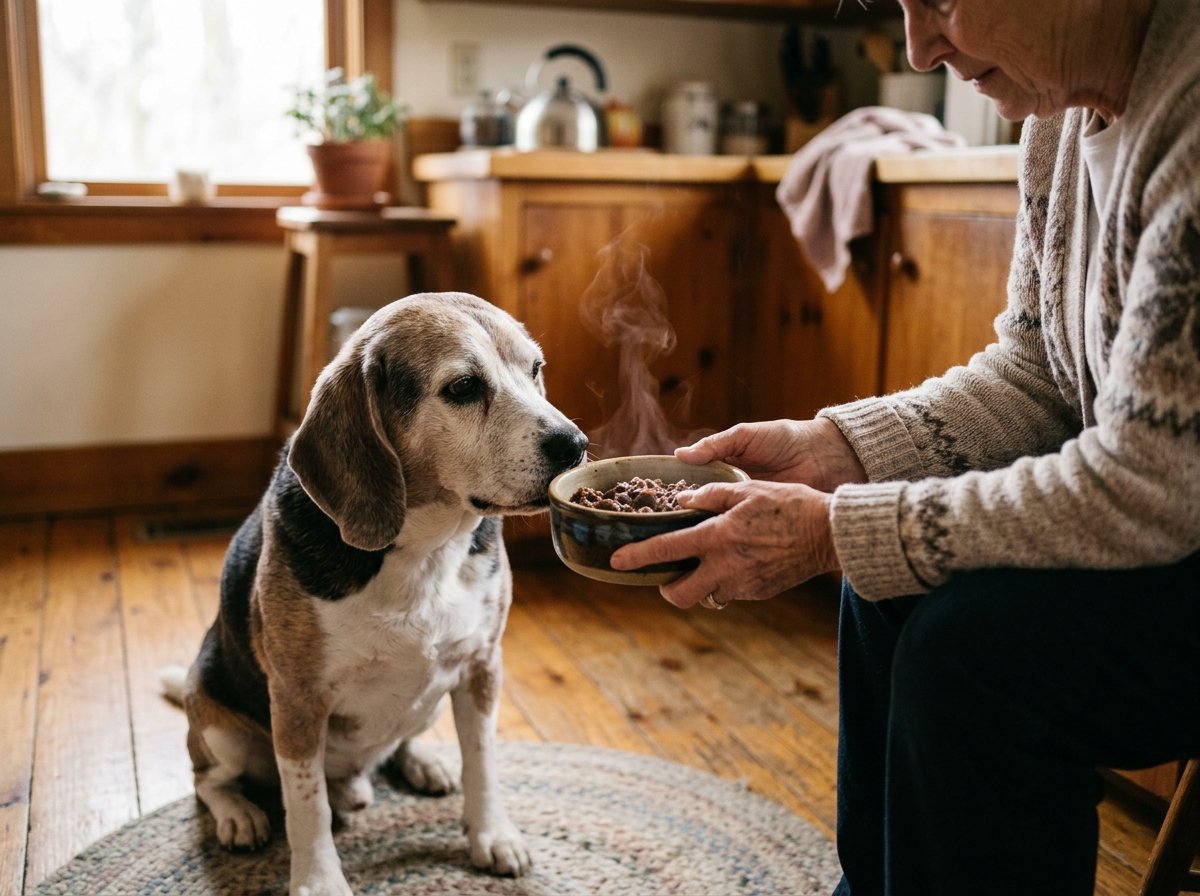
4. Nausea and Digestive Upset
Nausea is one of the most overlooked senior dog loss of appetite causes. Dogs can’t tell you their stomach is churning, but they show it. Lip licking, drooling, gulping, eating grass, and turning away from the bowl with a “not now” look are all classic signs.
Many things can trigger it in an older dog. Gastritis, inflammatory bowel disease, constipation, and swallowed objects all play a part. Pancreatitis is a particular concern in middle-aged and older dogs, especially after a fatty meal or table scraps.
Mild, one-off tummy trouble often settles within a day. Repeated vomiting, a painful belly, a hunched “praying” posture, or bloody diarrhea need a vet the same day. Pancreatitis can become serious quickly.
5. Kidney Disease
Chronic kidney disease is very common in older dogs, and a fading appetite is often one of the first things owners notice. As the kidneys lose function, waste products build up in the blood. That buildup causes nausea, mouth ulcers, and a sour, ammonia-like breath.
The classic pattern is a dog who drinks and pees more but eats less. Weight loss, especially over the back and hips, often follows. This is why the “not eating but drinking water” combination worries vets.
Kidney disease can’t be reversed, but early diagnosis makes a real difference to comfort and lifespan. Diet changes, fluids, and anti-nausea medication can bring appetite back for many dogs. Our senior guide to kidney disease explains the stages and what treatment looks like.
6. Liver Disease
The liver handles digestion, toxin removal, and energy storage. When it struggles, appetite usually suffers. Liver problems in older dogs can come from inflammation, infection, certain medications, or tumors.
Signs to watch for include vomiting, increased thirst, and weight loss. A yellow tinge to the gums, eye whites, or inner ears (jaundice) is a more specific warning. Some dogs also become confused or wobbly as toxins build up.
A routine blood panel picks up most liver changes early, often before you see symptoms. That’s one reason senior wellness bloodwork matters so much.
7. Cancer
This is the cause every owner fears, so here is the honest picture. Cancer becomes more common as dogs age, and appetite loss is one of its most frequent signs. Tumors can cause pain, nausea, and changes in how the body uses energy.
A poor appetite alone does not mean cancer. Most dogs who stop eating have something far more treatable. Still, appetite loss paired with weight loss, new lumps, a swollen belly, pale gums, or a cough deserves a prompt exam.
If cancer is the cause, appetite support is still possible. Vets can prescribe appetite stimulants and anti-nausea drugs that help many dogs eat comfortably again. Our article on why an old dog gets skinny covers related weight-loss causes.
8. Medication Side Effects
Older dogs often take more medications, and several can dull appetite. Anti-inflammatory pain relievers (NSAIDs), antibiotics, heart medications, and chemotherapy drugs can all upset the stomach. A new supplement can do the same.
Check the timing. If the appetite dip started within days of a new prescription or dose change, tell your vet. Don’t stop a medication on your own, since some drugs, like steroids and heart medications, can be dangerous to halt suddenly.
Small fixes can help. Giving certain pills with food instead of on an empty stomach often settles things, but ask your vet which ones are safe to give that way.
9. Canine Cognitive Dysfunction
Canine cognitive dysfunction is the dog version of dementia. Affected dogs can forget they’ve eaten, forget they haven’t, or seem confused about where the bowl is. Some stand at the bowl staring, then wander off.
Other signs include night pacing, getting stuck in corners, staring at walls, and changes in how your dog greets you. Appetite changes rarely appear alone with this condition.
Routine helps a confused dog. Feed at the same time and place every day, and stay nearby during meals as a gentle cue. Our guide to dementia signs in senior dogs walks through the full picture.
10. Stress, Grief, and Changes at Home
Senior dogs depend on routine more than younger ones. A house move, a new pet, or building work can put a dog off food for days. So can a new baby or a family member leaving.
Losing a companion animal hits some older dogs especially hard.
Stress-related appetite loss usually comes with other behavior changes. You may see clinginess, restlessness, hiding, or more sleeping than usual.
Keep meals calm and predictable, in a quiet spot away from household traffic. If a few days pass without improvement, a vet visit is still wise. Stress can mask a medical problem that started at the same time.
11. The Food Itself
Sometimes the problem is in the bowl, not the dog. Kibble goes stale and loses aroma once a bag has been open for several weeks, especially in warm kitchens. Fats in dry food can also turn rancid, which dogs notice long before we do.
A sudden diet switch is another common trigger. Older stomachs handle change less gracefully, so new food should be mixed in gradually over about a week.
Check the bag date, store food in a sealed container, and smell it yourself. If your dog eats eagerly from a freshly opened bag, you’ve found your answer.
12. Normal Age-Related Slowdown
Not every drop in appetite is a problem. As dogs age and slow down, many need fewer calories. A gradual decrease in how much your senior eats, with stable weight, good energy, and normal thirst, can simply reflect a quieter lifestyle.
The key words are gradual and stable. Weigh your dog every two weeks, using the same scale each time. If the weight holds steady, the smaller meals are likely fine.
If the weight starts falling, that changes things. Steady weight loss in an older dog always deserves a vet check, even when the dog seems happy. Our guide on helping a senior dog gain weight safely can help once the cause is known.
When to Call Your Vet
Older dogs have fewer reserves than young ones, so waiting it out is riskier. The AVMA’s senior pet care advice recommends more frequent checkups for aging pets, since problems are easier to treat when caught early. Contact your vet promptly if you notice any of these:
- No food at all for 24 hours, or eating far less for two or three days
- Vomiting, diarrhea, or a painful, swollen, or tight belly
- Drinking or peeing much more than usual
- Pale, yellow, or very red gums
- Weakness, collapse, confusion, or hiding
- Visible weight loss or new lumps
- Refusing water as well as food
Bring your notes from the “can’t eat or won’t eat” check. Expect your vet to examine the mouth and belly, and to suggest bloodwork, a urine test, and possibly X-rays or an ultrasound.
Frequently Asked Questions
How long can a senior dog go without eating?
A healthy adult dog may cope for a few days, but seniors have less margin. Most vets want to hear from you if an older dog has eaten nothing for 24 hours. Call sooner if your dog also has other symptoms or an existing condition like diabetes.
Is it normal for old dogs to eat less?
A small, gradual decrease can be normal because older dogs often need fewer calories. It should come with steady weight and normal energy. A sudden drop, or any weight loss, is not normal aging and needs checking.
Why is my senior dog not eating but drinking water?
This combination often points to kidney disease, liver disease, diabetes, or nausea. Increased thirst with a poor appetite is a pattern vets take seriously. Book an appointment and ask about bloodwork and a urine test.
What can I give my old dog to stimulate appetite?
Warming wet food, adding low-sodium broth, or using a vet-approved topper can make meals more tempting. Your vet can also prescribe appetite stimulants such as capromorelin or mirtazapine. Rule out a medical cause before relying on tricks.
Should I hand-feed my senior dog if he won’t eat?
Hand-feeding can help a nervous, confused, or sore dog eat a little more. It’s a reasonable short-term comfort measure. If your dog only eats when hand-fed, mention it to your vet, since it can hide how much the appetite has really dropped.
Helping Your Old Friend Find Their Appetite Again
A senior dog who stops eating is telling you something, even if the message isn’t clear yet. Start with the simple “can’t eat or won’t eat” check and keep a short food log. Then make the easy fixes: warmer food, a raised bowl, fresh kibble.
Then trust your instincts. If the change is sudden, lasts more than a day, or comes with any other symptom, call your vet. Many of the causes above are very treatable, especially when caught early.
If this guide helped, bookmark it for the next time your dog seems off, and share it with a friend caring for an older dog too.