
Nearly one in three senior dogs is clinically underweight — yet most owners don’t realise there’s a difference between helping a dog gain fat and helping them rebuild muscle. That distinction changes everything about how you approach the problem.
If you’re watching your aging dog look thinner month by month, you’re not alone. Weight loss in senior dogs is one of the most common concerns pet owners bring to the vet. The good news? With the right plan, you can absolutely help your senior dog gain weight safely. The important part is doing it in the right order.
This guide walks you through a practical, vet-backed approach: how to check whether your dog is actually underweight, when a medical issue is driving the problem, which foods and feeding strategies work best, and how fast healthy weight gain should happen. You’ll also learn what to avoid — because some well-meaning shortcuts can cause serious harm.
Is Your Senior Dog Actually Underweight?
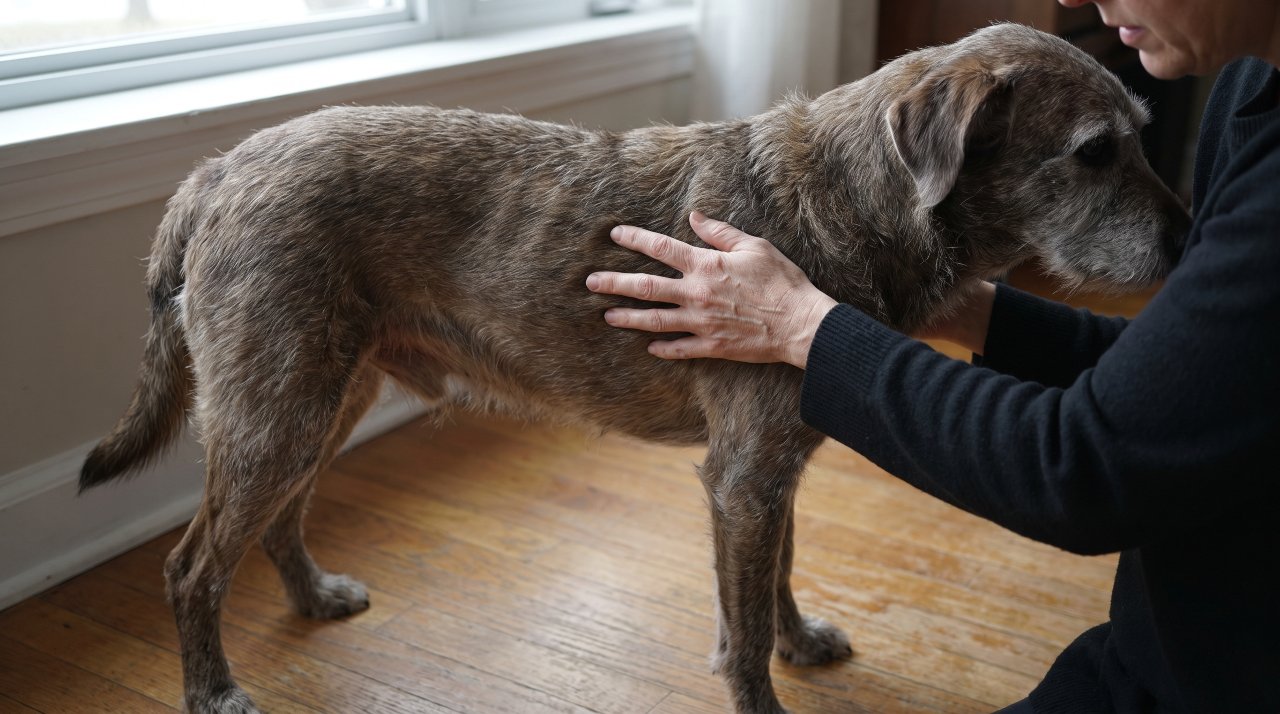
Before you change a single thing in your dog’s bowl, confirm they’re truly underweight. You don’t need a vet visit to do this first check — just your eyes and your hands.
The rib test: Place both hands on your dog’s rib cage with light pressure. You should feel the ribs easily, but they shouldn’t stick out visibly. If you can see individual ribs clearly without touching, your dog is underweight.
The spine and hip check: Run your fingers along the spine. On a dog at a healthy weight, you’ll feel the vertebrae with gentle pressure but they won’t protrude sharply. Visible hip bones or a spine that looks like a row of ridges both signal a problem.
The overhead view: Look down at your dog while they’re standing. There should be a gentle waist behind the rib cage — not a straight-sided rectangle, and not a gaunt, severe tuck.
Vets use a 9-point Body Condition Score (BCS) to rate body fat. A score of 4–5 is ideal. A score of 1–3 means your dog needs help. Scores 1–2 are a medical emergency — call your vet today.
For senior dog weight problems, there’s also a second assessment tool most pet owners have never heard of: the Muscle Condition Score (MCS). Where BCS measures fat coverage, MCS measures muscle mass — specifically over the spine, ribs, and hips. Vets now use both tools together, because a dog can have normal body fat but still be losing dangerous amounts of muscle. Ask your vet to score both at your next visit.
Step 1: Rule Out a Medical Cause First
This step isn’t optional. Weight loss in a senior dog is often a symptom, not the root problem. You can change the diet all you want, but if a disease is driving the weight loss, the food won’t fix it.
A weight loss of more than 5% in a year — or 10% at any point — warrants a vet check-up, according to clinical veterinary guidelines. That’s just 1 pound in a 10-pound dog.
The most common medical causes include:
- Dental disease: Painful teeth make eating hurt. Many dogs stop eating enough rather than show obvious signs of pain.
- Kidney disease: Often causes nausea, reduced appetite, and increased urination.
- Exocrine Pancreatic Insufficiency (EPI): The dog eats well but can’t absorb nutrients properly. They may have loose, greasy stools and still lose weight fast.
- Diabetes: Disrupts how the body uses calories even when food intake looks normal.
- Cancer: Can cause rapid, unexplained weight loss at any stage.
- Arthritis: Joint pain sometimes makes it physically difficult to reach the food bowl or stand comfortably while eating.
If you notice your dog eating normally but still losing weight, read more about why your dog is losing weight — because the cause matters more than the solution.
Your vet will likely run blood work, a urinalysis, and a physical exam. Only after medical causes are ruled out — or treated — should you move to the dietary strategies below.
The Protein Myth You Need to Unlearn
Here’s something that surprises most senior dog owners: your aging dog probably needs more protein, not less.
For years, vets advised reducing protein in senior diets to protect kidney function. That advice has been largely overturned by current research. Modern veterinary nutritionists now recommend that healthy senior dogs eat diets with 25–30% protein on a dry matter basis — and some active seniors benefit from up to 35%.
Why? It comes down to a condition called sarcopenia — age-related muscle loss. Senior dogs experience what researchers call “anabolic resistance,” meaning their muscles become less efficient at using dietary protein. To compensate, they need more of it, not less.
You can’t fix sarcopenia by adding fat. Adding empty calories just puts fat on a dog that’s already losing muscle. The goal isn’t a rounder-looking dog — it’s a stronger one.
The exception: if your vet has specifically diagnosed kidney disease, protein management becomes more nuanced. Don’t restrict protein without a direct instruction from your vet. But don’t restrict it “just to be safe” either.
What to Feed an Underweight Senior Dog
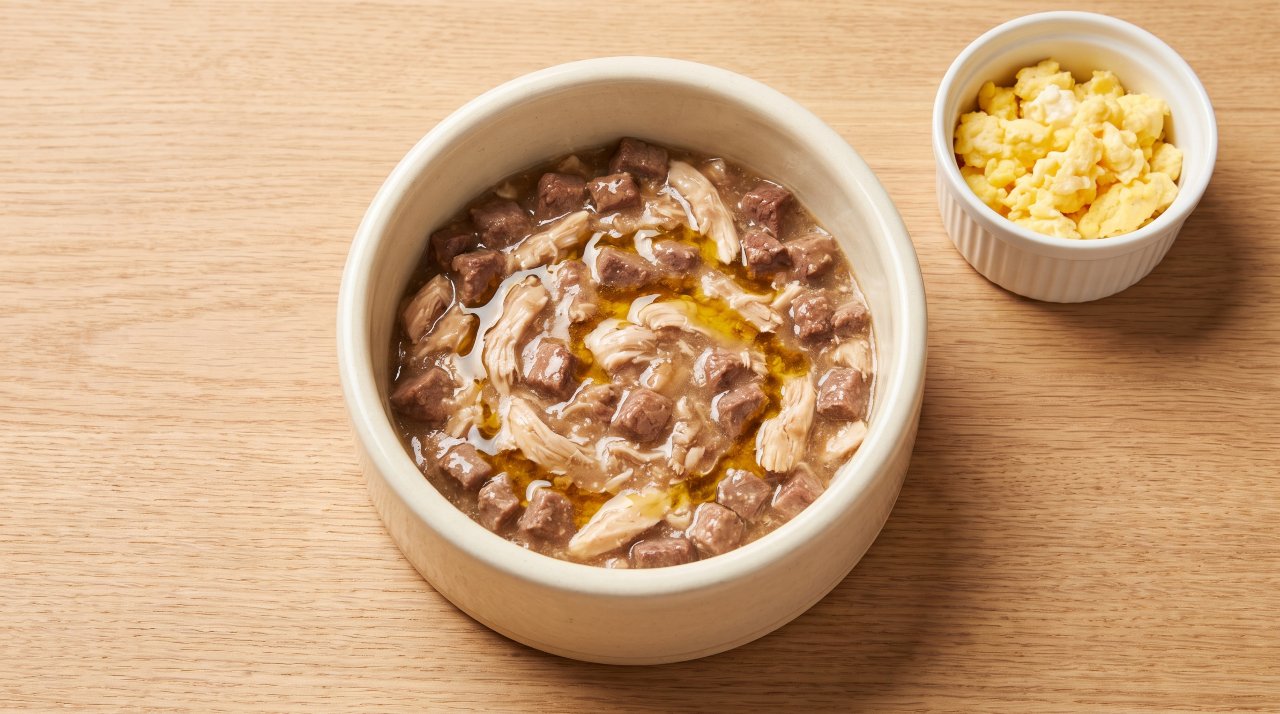
Once your vet gives the green light, these are the most effective food strategies:
Switch to wet food or add wet food toppers. Wet food is calorie-dense, higher in protein, and much easier to chew — critical if your dog has any dental sensitivity. It’s also more aromatic, which matters because senior dogs often lose some of their sense of smell with age.
Look for high-quality animal protein as the first ingredient. Chicken, beef, turkey, lamb, or salmon — listed by name, not as “meat meal” or “by-products.” Real, named protein sources are more digestible for aging digestive systems.
Warm the food slightly before serving. A few seconds in the microwave (never hot — just warm) releases aromas and makes food far more enticing for dogs with a reduced sense of smell.
Try smaller, more frequent meals. Instead of one or two large meals, split the same daily amount into three or four smaller servings. Senior dogs often have reduced stomach capacity and digest smaller portions more efficiently.
Add a healthy fat source. A small amount of cooked egg, a teaspoon of plain canned pumpkin (not the spiced pie kind), or a drizzle of fish oil adds digestible calories and supports coat and joint health.
For a full breakdown of what works by breed size and health condition, see the best diet to support healthy weight for senior dogs, which covers vet-approved options in detail.
What NOT to Feed (This Part Is Often Skipped)
Most articles tell you what to add. Few tell you what to avoid — and the risks are real.
Don’t feed puppy food long-term without vet approval. Puppy formulas are calorie-dense, but they contain calcium and mineral ratios that can be inappropriate for senior dogs, especially those with kidney concerns.
Don’t add cooking oil or butter as a calorie boost. High-fat additions can trigger pancreatitis — a painful, sometimes life-threatening inflammation of the pancreas that sends more senior dogs to emergency vets than most owners realise.
Don’t use random human supplements. Iron, zinc, and some vitamins can reach toxic levels in dogs far faster than in humans. Only use supplements your vet specifically approves.
Don’t overfeed in a rush. A dog’s digestive system can’t handle sudden large increases in food volume. Adding too many calories too fast causes vomiting, diarrhea, and discomfort — and doesn’t actually speed up healthy weight gain.
How Fast Should Your Senior Dog Gain Weight?
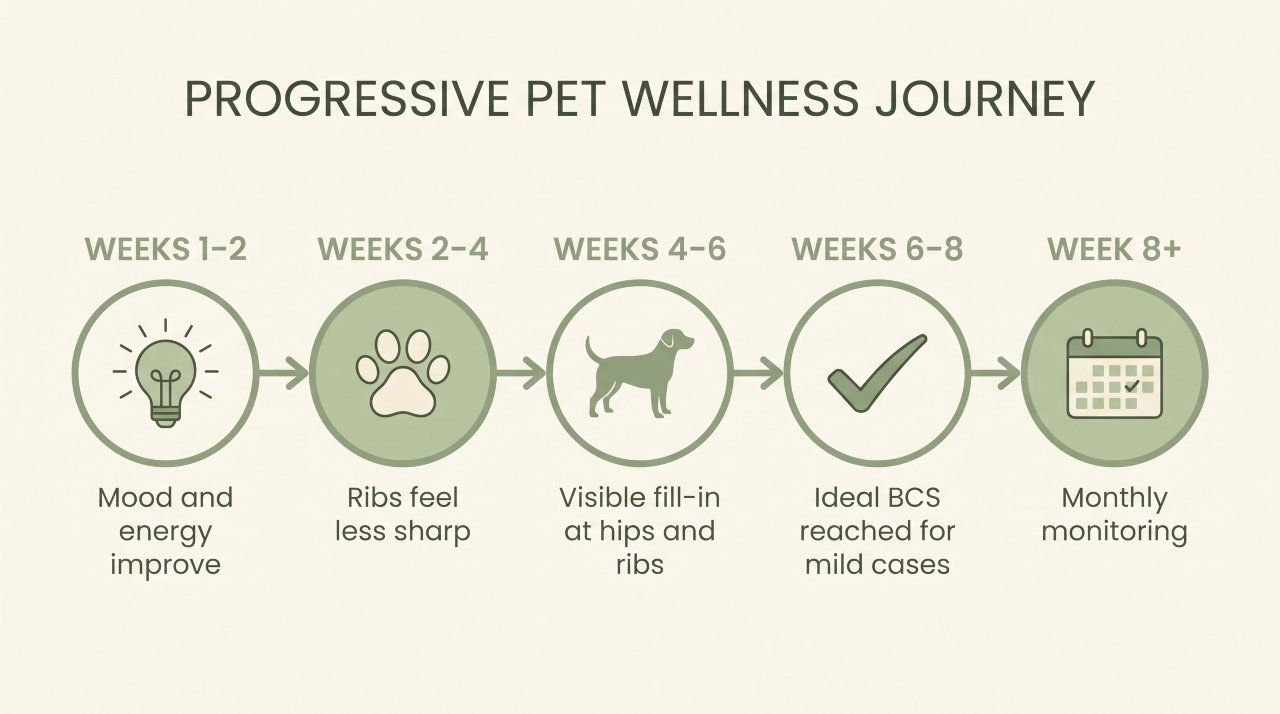
This is the question most articles ignore entirely — and it’s the one you actually need answered.
A safe, healthy rate of weight gain for a senior dog is approximately 1–2% of their body weight per week. For a 30-pound dog, that’s roughly 0.3–0.6 pounds per week. For a 60-pound dog, about 0.6–1.2 pounds per week.
Going faster than this stresses the digestive system and risks fat accumulation without muscle rebuilding. Here’s a realistic week-by-week timeline:
| Timeframe | What to Expect |
|---|---|
| Week 1–2 | No visible change yet, but energy and mood may improve as nutrition improves |
| Week 2–4 | Ribs begin to feel less sharp; coat may start to look healthier |
| Week 4–6 | Visible fill-in around ribs and hips; dog looks more robust |
| Week 6–8 | Mild underweight dogs often reach an ideal BCS by this point |
| Week 8+ | Maintain current diet; continue monthly weigh-ins to monitor |
Weigh your dog every 1–2 weeks, ideally at the same time of day. Keep a written log to share with your vet. If your dog isn’t gaining by week 4, schedule a follow-up appointment — the plan may need adjusting.
Supplements That Can Help (With Vet Approval)
Some supplements genuinely support weight gain and muscle health in senior dogs. None of them replace a good diet — they work alongside it.
Digestive enzymes and probiotics: Particularly useful if your dog has EPI or other absorption issues. These help the body actually use the nutrients in the food rather than passing them through.
Omega-3 fatty acids (fish oil): Support muscle inflammation reduction, coat health, and joint comfort — which matters because a dog in pain doesn’t eat well. Look for EPA and DHA specifically, not just generic “fish oil.”
High-calorie gels or pastes (e.g., Ready Cal): These vet-grade products work well for dogs with very low appetites who won’t eat enough volume to gain weight on food alone. Don’t use over-the-counter weight gain products marketed for cats — they’re formulated differently.
Always confirm any supplement with your vet before starting. Dosage matters, and some supplements interact with medications common in older dogs.
When to Go Back to the Vet
You’ve changed the diet, added supplements, and waited four weeks — but your dog still isn’t gaining. Don’t wait longer. Return to the vet if:
- Weight loss continues despite dietary changes
- Your dog refuses food for more than 24 hours
- You notice new symptoms: vomiting, diarrhea, increased thirst, or changes in urination
- The dog seems uncomfortable eating or swallows oddly
- Energy levels keep dropping despite better nutrition
These signs point to an underlying issue that diet alone can’t fix. According to VCA Animal Hospitals, unexplained ongoing weight loss in dogs warrants diagnostic investigation — including imaging, blood panels, and specialist referral if needed.
Creating a Supportive Feeding Environment
This section sounds small, but it matters more than most owners expect.
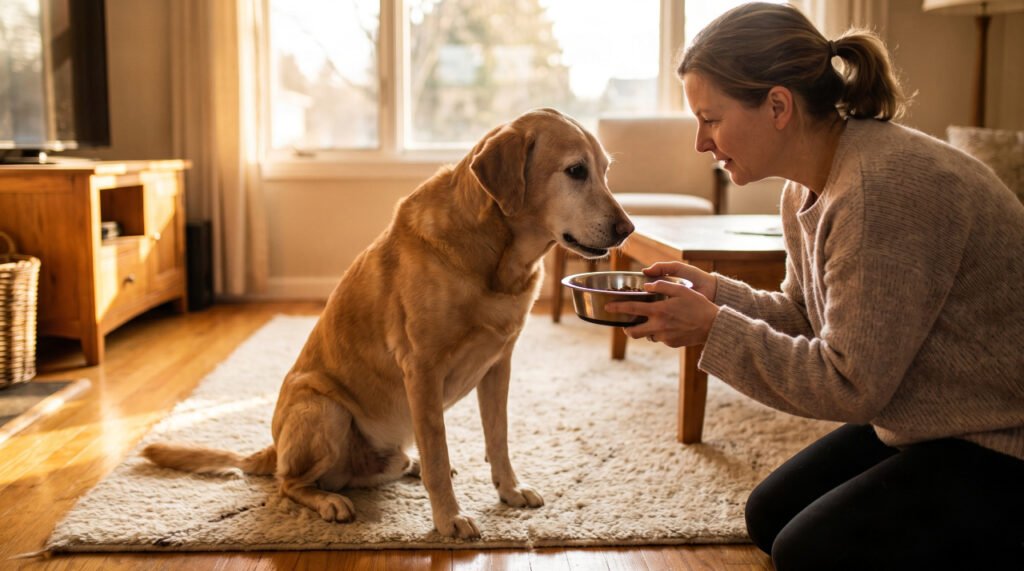
A dog eating in a high-traffic area — near loud appliances, other pets competing for food, or children running past — often eats less than they should. Stress directly reduces appetite in dogs. Give your senior dog a quiet, consistent spot to eat with no competition.
If your dog has arthritis or other joint issues, raise the food bowl to elbow height. Bending all the way to the floor to eat is painful for a dog with neck or shoulder joint disease — and they’ll eat less because of it. An elevated feeder costs less than $20 and makes a measurable difference for many seniors.
FAQs
What can I feed my senior dog to gain weight?
Focus on high-protein wet food with a named animal protein as the first ingredient. Add small amounts of digestible healthy fats — like a teaspoon of fish oil or a scrambled egg — as toppers. Warm the food slightly before serving to improve palatability. Always get vet clearance first to rule out a medical cause for the weight loss.
Why is my senior dog losing weight but still eating?
Eating normally but still losing weight usually points to a nutrient absorption problem. Conditions like Exocrine Pancreatic Insufficiency (EPI), inflammatory bowel disease, or diabetes cause the body to lose calories even when food intake looks fine. See your vet for diagnostics — this isn’t something diet alone will fix.
Is it normal for senior dogs to lose weight as they age?
Some muscle loss is a natural part of aging (sarcopenia), but significant weight loss is not normal and should never go uninvestigated. A loss of more than 5% body weight in a year is a clinical flag. Don’t assume it’s “just old age” — early diagnosis of treatable conditions makes a major difference in outcome.
How do I know if my dog is too thin?
Run your hands along the rib cage. If you can see the ribs without touching, or feel them with no fat cushion at all, your dog is underweight. Visible spinal vertebrae, protruding hip bones, and a severe abdominal tuck are also clear signs. Use the 9-point Body Condition Score — a score of 1–3 needs immediate attention.
Should I feed my senior dog wet or dry food to gain weight?
Wet food is generally better for underweight seniors. It’s more calorie-dense per mouthful, softer on sore gums, more aromatic for dogs with reduced smell, and higher in moisture — which supports kidney and urinary health. You can also add wet food as a topper over kibble if you prefer a mixed approach.
Can I give my senior dog puppy food to gain weight?
Only with direct vet approval. Puppy food is calorie-dense, but it’s formulated with higher calcium and phosphorus levels that aren’t appropriate for many senior dogs — especially those with kidney concerns. Your vet can advise whether a short-term trial is appropriate for your specific dog.
What to Do Today
The single most important takeaway from this guide: don’t treat your senior dog’s weight loss as a food problem until you know it isn’t a health problem. A vet visit comes first — every time.
Once you get medical clearance, the path forward is straightforward. Switch to a high-protein, highly digestible diet. Feed smaller meals more often. Warm the food. Create a calm eating space. Add vet-approved supplements if needed. Track weight every two weeks, and expect realistic, gradual progress — around 1–2% of body weight per week.
Your dog doesn’t need to gain weight fast. They need to gain the right kind of weight. Give them that, and you’ll be giving them something much more valuable than extra pounds — you’ll be giving them back their strength.