
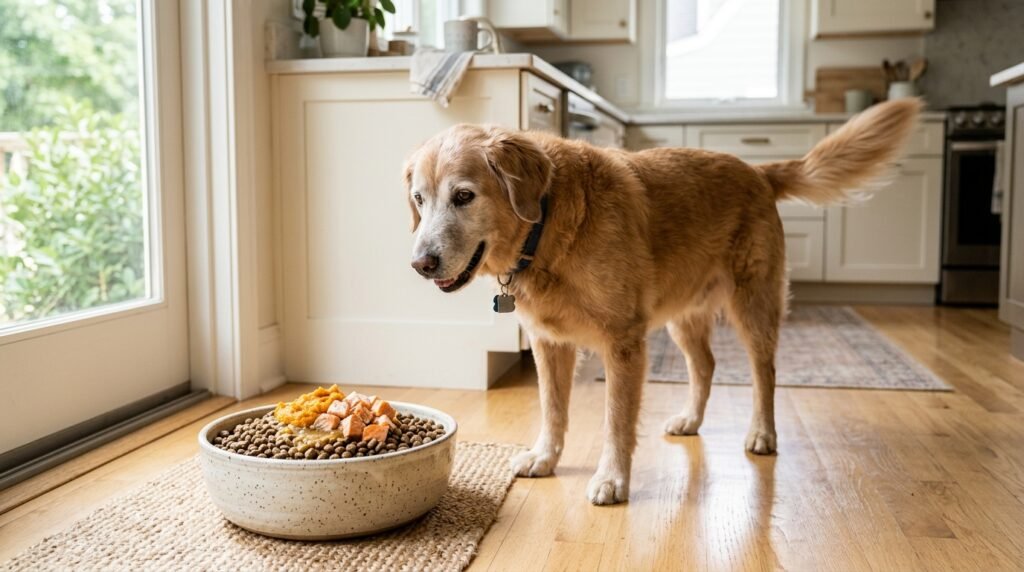
Standing in your kitchen at mealtime, watching your older companion walk over to their dinner bowl, take a single indifferent sniff, and slowly walk away without eating a single bite is a quiet ache that every senior dog parent understands. You remember the youthful years when they would eagerly polish off their kibble in seconds, and you find yourself worrying about their declining energy, sudden weight loss, and fading enthusiasm for life.
You wonder whether your dog has simply become finicky in their golden years, or whether their dulling sense of smell and sore, aging gums make dry crunchy kibble unappealing and difficult to chew and you worry about meeting their daily nutritional needs, and you search for a wholesome, safe way to reignite their appetite without causing digestive upset or diarrhea.
Your concern is rooted in deep love. As dogs enter their senior and geriatric years, biological changes naturally blunt their olfactory senses and dental comfort. A targeted, nutrient-rich dog food topper can transform a dry, boring bowl into an irresistible aromatic feast. Whether providing natural collagen for creaky joints, vital moisture for aging kidneys, or savory aromas that stimulate the brain’s feeding center, the right meal topper restores mealtime joy and vitality to your faithful companion.
Quick Answer:
The best dog food topper for senior dogs depends on their specific health challenge: warm, low-sodium bone broth softens hard kibble and hydrates kidneys; freeze-dried raw organ toppers (such as beef liver or green tripe) re-engage dull scent receptors; and pure pumpkin or goat’s milk provides digestive enzymes and gut support. Toppers should never exceed 10% of total daily calories and must be warmed to roughly 100°F to unlock volatile aromas that stimulate an older dog’s appetite.
Key Takeaways:
- Scent Drives Canine Appetite: Dogs experience over 80% of flavor through smell; aging diminishes olfactory nerves, making warm, aromatic liquid toppers essential.
- The 10% Calorie Rule: Meal mixers and toppers should make up no more than 10% of daily caloric intake to prevent diluting the balanced nutrition of the primary diet.
- Hydration Protects Senior Kidneys: Liquid toppers like unsalted bone broth counteract the blunted thirst drive common in geriatric pets.
- Strict Sodium & Phosphorus Caution: Never use human grocery broths containing toxic onions, garlic, or high sodium, and avoid high-phosphorus organ meats in dogs with kidney disease.
This comprehensive veterinary guide explores why older dogs lose interest in plain kibble, top functional topper formats, how to choose the right mixer for specific senior ailments, and safe home preparation protocols.
Why Senior Dogs Benefit from a Dog Food Topper
A dog food topper is not just an indulgent treat. For a senior dog, it serves as a therapeutic bridge addressing several common age-related biological shifts:
1. Age-Related Olfactory Decline (Loss of Smell)
Canine taste buds are relatively modest (around 1,700 compared to a human’s 9,000). Dogs rely primarily on their 300 million olfactory receptors to evaluate food. As dogs age past age eight or nine, sensory epithelial cells in the nasal cavity atrophy.
Cold, dry kibble emits very few volatile aroma molecules. When a dog cannot smell their dinner, their brain does not trigger the salivation and gastrin release needed to stimulate hunger.
2. Periodontal Disease and Dental Discomfort
According to veterinary dental studies, over 80% of senior dogs suffer from some degree of periodontal disease, gum recession, or loose teeth. Biting down on hard, extruded kibble can cause sharp pain, prompting dogs to spit out food or avoid eating altogether. Liquid and gravy toppers soften kibble into an easy-to-lap savory stew.
3. Chronic Sub-Clinical Dehydration
Geriatric dogs frequently experience a weakened thirst drive. Coupled with age-related decline in renal concentrating ability, older dogs live in a state of mild, chronic dehydration. Adding hydrating liquid toppers delivers vital fluids directly into the digestive tract, easing the filtration burden on aging kidneys.
If your older companion is drinking water but persistently refusing hard food, explore our diagnostic guide on senior dog not eating but drinking water.
Top 4 Types of Dog Food Toppers for Older Dogs
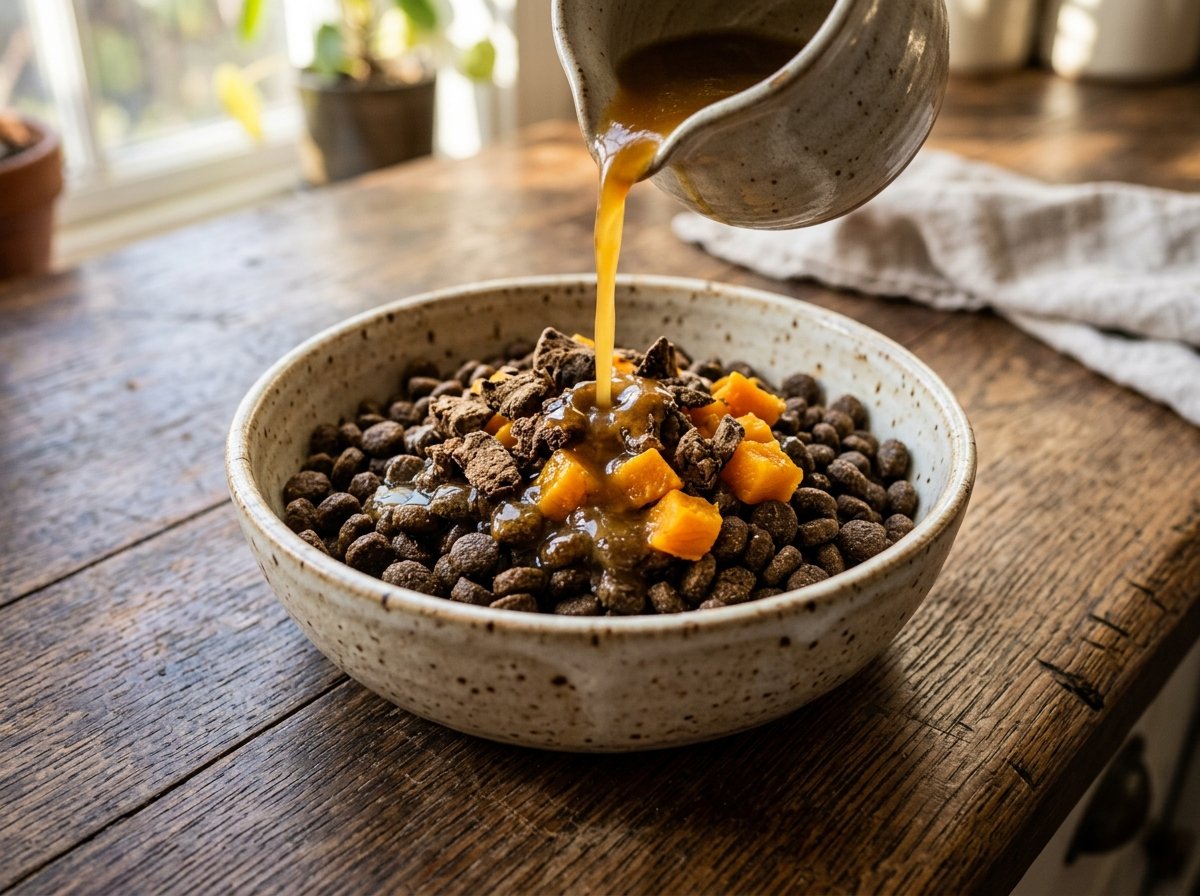
Modern pet nutrition offers several distinct topper formats, each tailored to specific physical needs:
| Topper Format | Key Nutritional Benefits | Best Suited For |
|---|---|---|
| Pet-Specific Bone Broths | Rich in natural collagen, gelatin, glycine, and joint-nourishing amino acids; zero fat and ultra-hydrating | Seniors needing kidney hydration, dogs with painful teeth, and dogs needing joint lubrication |
| Freeze-Dried Raw / Meat Mixers | Concentrated animal protein and nutrient-dense organ meats (heart, liver); intense natural scent | Extremely finicky eaters, dogs suffering from muscle wasting (sarcopenia), and underweight dogs |
| Savory Wet Gravies & Stews | Moisture-rich shreds of meat in savory broths; easily coats every kibble piece to prevent picking out treats | Dogs who pick out dry kibble and leave the rest; gentle daily palatability boost |
| Functional Purees & Fermented Milks | Soluble pumpkin fiber, active probiotics from goat’s milk or kefir, digestive enzymes | Dogs with chronic sensitive stomachs, irregular stool, or post-antibiotic microbiome imbalance |
For finicky senior dogs needing higher caloric intake to prevent frailty, review our companion guide on high calorie dog food for senior dogs.
Matching the Right Topper to Your Senior Dog’s Health
Every aging dog has unique health requirements. Use this clinical cheat sheet to select the most beneficial topper for your companion:
1. For Creaky Joints, Stiff Hips & Arthritis
Look for bone broths slow-simmered with cartilage-rich beef knuckles or chicken feet. These broths release bioavailable type II collagen, glucosamine, and chondroitin sulfate into the liquid.
Pairing bone broth with a spoonful of wild-caught Alaskan salmon oil provides anti-inflammatory marine Omega-3s (EPA and DHA) that cool down joint friction. For overall comfort strategies, read our guide on old dog comfort care and wellness.
2. For Chronic Kidney Disease (CKD)
Older dogs with elevated blood urea nitrogen (BUN) and creatinine require strict phosphorus and sodium restriction. Avoid organ-heavy freeze-dried toppers (such as pure liver or kidneys), which are packed with phosphorus.
Instead, choose homemade, zero-sodium chicken breast broth or pureed egg whites. The high-biological-value protein in egg white generates minimal toxic metabolic nitrogen while providing clean amino acids.
3. For Sensitive Stomachs and Irregular Bowels
If your older companion experiences alternating bouts of loose stool and constipation, a spoonful of 100% pure canned pumpkin puree (not sugary pumpkin pie mix) works wonders. Pumpkin provides soluble fiber that absorbs excess water in loose stools while lubricating the colon during sluggish bowel movements.
For dogs prone to food allergies or itchy skin, consult our veterinary review of the best dog food for skin allergies in senior dogs.
Another soothing digestive option is adding a spoonful of plain unsweetened Greek yogurt as a meal topper to deliver live active probiotic cultures that help restore a sensitive senior dog’s gut flora.
The Secret Veterinary Technique: The “100°F Warmth Rule”
Many pet owners pull a can of wet food or a pouch of bone broth straight out of the refrigerator and spoon it cold onto their dog’s kibble. A chilled topper often backfires because cold temperatures lock in fats and mute aroma molecules.
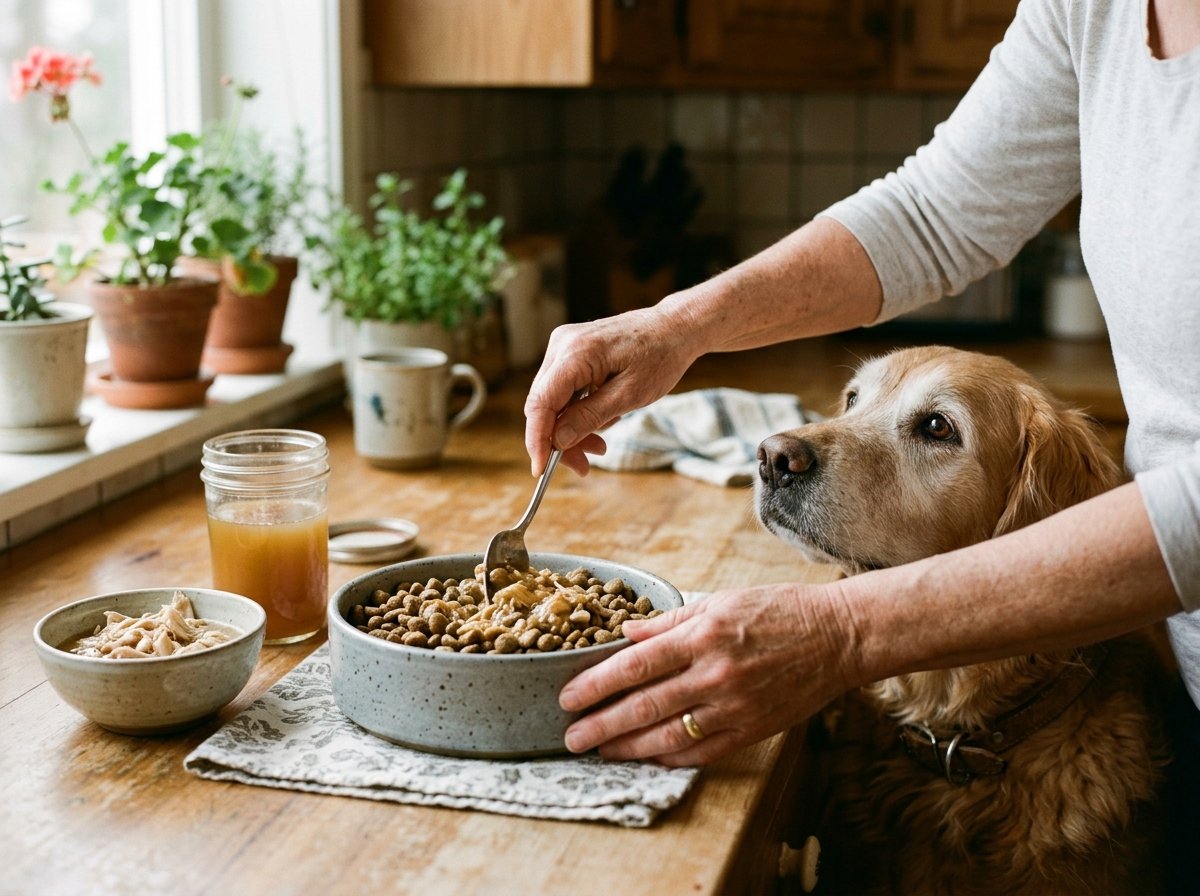
How to Prepare the Perfect Aromatic Meal:
- Measure the Portion: Place your dog’s measured base kibble into a clean ceramic or stainless steel bowl. If you are re-evaluating your base dry biscuit diet, explore our complete guide on kibble dog food for senior dogs for optimal protein and phosphorus targets.
- Add the Topper: Pour two to three tablespoons of bone broth or a half-packet of savory gravy over the top.
- Warm to 100°F (Body Temperature): Heat the mixture gently in a microwave for 8 to 12 seconds until it reaches roughly 98°F to 100°F (warm to the inside of your wrist, never steaming hot).
- Stir and Rest: Stir thoroughly with a fork and let it sit for two minutes. The warm broth soaks into the kibble pores, softening hard edges and releasing a cloud of savory roasted aromas that instantly triggers your dog’s appetite.
According to veterinary nutrition guidelines published by the Tufts Clinical Nutrition Service, warming pet food to body temperature mimics the heat of natural prey, producing an immediate sensory response in reluctant geriatric eaters.
Dangerous Ingredients to Avoid in Dog Food Toppers
While food toppers are incredibly beneficial, pet parents must read ingredient labels vigilantly:
- Onion and Garlic (Allium Species): Never feed human grocery store broths or bouillon cubes. Most human stocks contain concentrated onion and garlic powder, which causes irreversible oxidative damage to canine red blood cells (Heinz body hemolytic anemia).
- Excess Sodium: High salt intake causes fluid retention, placing dangerous strain on dogs with underlying heart murmurs, high blood pressure, or kidney decline. Always verify that sodium levels are zero or strictly labeled as low-sodium pet broth.
- Artificial Sweeteners (Xylitol / Birch Bark Extract): Found in some human peanut butters and purees, xylitol triggers an acute, life-threatening insulin surge and acute hepatic necrosis in dogs.
- Excess Fat in Pancreatitis-Prone Dogs: Avoid greasy bacon drippings or fatty meat trimmings. A sudden surge of dietary fat can trigger acute, excruciating pancreatitis in senior dogs.
For more insights on safe dietary management, explore the AVMA senior pet care guidelines.
The 10% Calorie Rule: Keeping Diets Balanced
Complete commercial dog foods are meticulously formulated to meet strict AAFCO nutritional standards for vitamins, minerals, calcium, and phosphorus. When you add unbalanced toppers (like pure shredded chicken or bone broth), you dilute those vital micronutrients.
Veterinary nutritionists recommend adhering to the 10% Calorie Rule: treats and toppers should comprise no more than 10% of your dog’s total daily calorie budget. The remaining 90% must come from their complete and balanced core senior diet.
For example, if your 50-pound senior dog needs 800 calories per day, their food topper should provide no more than 80 calories (equivalent to approximately two cups of light bone broth or two tablespoons of freeze-dried raw meat mixers).
Additional advice on maintaining weight is available through Cornell University senior dog nutrition resources.
Frequently Asked Questions
Can I give my senior dog bone broth every day?
Yes. As long as the bone broth is pet-safe, free of added sodium, and contains no onion or garlic, it is an outstanding daily supplement providing hydration and joint support.
Will a dog food topper make my dog even pickier?
If you constantly swap toppers when your dog hesitates, you may inadvertently teach them to hold out for better treats. Stick to one or two consistent, healthy toppers mixed thoroughly into their kibble so they cannot simply lick the good stuff off the top.
Can I use canned pumpkin as a dog food topper?
Yes. One to two tablespoons of plain canned pumpkin (100% pure pumpkin, not pie filling) adds moisture, beta-carotene, and gentle dietary fiber that stabilizes digestion.
Is freeze-dried raw topper safe for older dogs?
High-quality commercial freeze-dried raw mixers that undergo high-pressure pasteurization (HPP) are generally safe for healthy senior dogs. However, consult your vet if your dog is severely immunocompromised or undergoing chemotherapy.
Restoring Joy to Every Mealtime
Watching your gray-muzzled companion lick their bowl completely clean, look up at you with satisfied eyes, and give a contented post-dinner stretch is one of the sweetest everyday joys of pet parenthood. A thoughtfully chosen dog food topper is not about spoiling your companion; it is about honoring their aging senses, protecting their joints, and ensuring their golden years remain nourished, vibrant, and full of flavor.