
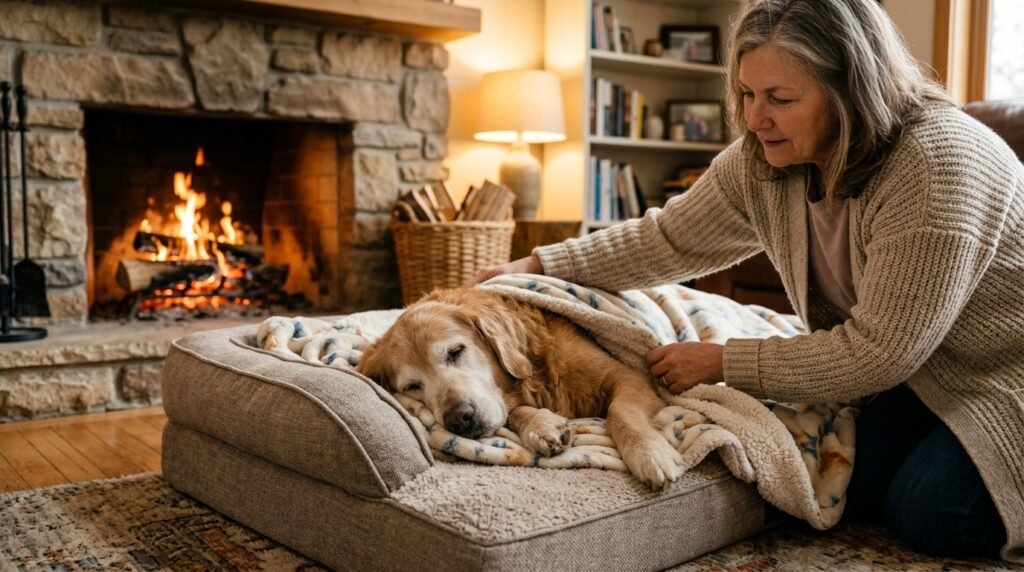
Watching your once-boisterous companion slow down, hesitate before stepping off a rug, or sleep heavily through family conversations is a tender, poignant experience. You look down at your loyal senior dog, whose face has turned a soft silver, and you realize their everyday needs have quietly shifted.
You wonder whether their stiff morning walk is just normal aging or unmanaged arthritis pain. You worry whether your home environment is safe and easy for them to navigate, and how you can preserve their joy, comfort, and independence in their golden years.
Your concern comes from a place of deep love. As dogs enter their double-digit years, care changes from high-energy activities toward dedicated, proactive comfort care. By making thoughtful modifications to flooring, bedding, temperature, and daily routines, you create a supportive environment where your senior companion can thrive with dignity and peace.
Quick Answer:
Old dog comfort care combines multi-modal pain relief (vet-prescribed NSAIDs, joint supplements, laser therapy), environmental home safety (non-slip yoga runners, orthopedic memory foam beds, ramps), and emotional reassurance. Supporting senior wellness requires adapting exercise to short, gentle strolls, warming meals to stimulate appetite, and maintaining predictable daily routines to prevent cognitive anxiety.
Key Takeaways:
- Traction is Everything: Slippery hardwood and tile floors cause painful muscle strains; cover main walkways with interlocking foam tiles or yoga runners.
- Orthopedic Support: Provide high-density orthopedic memory foam beds with bolster edges to keep joints off cold, hard subfloors.
- Multi-Modal Pain Control: Combine veterinary anti-inflammatories with Omega-3 fatty acids, glucosamine, and gentle warmth.
- Gentle Routine Consistency: Predictable feeding, bathroom breaks, and bedtime routines reduce anxiety and cognitive confusion.
This comprehensive guide details the five pillars of senior dog comfort care: orthopedic environmental setup, mobility assistance, multi-modal pain management, grooming adaptations, and emotional reassurance.
Pillar 1: Creating a Non-Slip, Accessible Home Environment
For an older dog with weakened hind legs or stiff hips, slick flooring is terrifying. A single slip can cause severe tendon sprains or hip dislocations.
1. Cover High-Traffic Hardwood and Tile Runways
Place inexpensive, washable runner rugs or textured yoga mats along the routes your dog walks most often: from their bed to the food station and out to the back door. Ensure all rugs have non-skid rubber backings so they do not slide underfoot.
2. Invest in True High-Density Orthopedic Bedding
Thin polyester-filled dog beds flatten completely under body weight, leaving sore joints resting against the hard floor. Look for medical-grade orthopedic memory foam at least four to five inches thick.
Bolster edges provide a comfortable chin rest that keeps the neck aligned and prevents congested breathing. For specific bedroom setups, explore our guide on keeping senior dogs comfortable.
3. Replace Steps with Gentle Pet Ramps
Jumping into cars or climbing steep porch stairs places jarring impact on aging spines. Introduce wide, gradual pet ramps with carpeted grip to preserve joints. For a complete comparison, read our guide on dog stairs vs ramps for old dogs.
Pillar 2: Multi-Modal Senior Pain Management
Veterinary research confirms that managing senior canine arthritis requires a multi-modal strategy rather than relying on a single pill.
| Treatment Pillar | How It Helps Older Dogs | Veterinary Safety Rule |
|---|---|---|
| Prescription NSAIDs (Carprofen, Meloxicam) | Directly targets joint inflammation and reduces chronic pain | Requires regular blood panels every 6 months to monitor liver and kidneys |
| Monoclonal Antibodies (Librela) | Monthly injection neutralizing Nerve Growth Factor (NGF) pain signals | Administered strictly by veterinary staff; ideal for NSAID-sensitive pets |
| Marine Omega-3s (EPA/DHA Fish Oil) | Natural cellular anti-inflammatory preserving joint cartilage | Use purified veterinary fish oil to ensure proper dosage and purity |
| Photobiomodulation (Cold Laser Therapy) | Stimulates cellular ATP production and accelerates tissue healing | Completely painless, drug-free therapy performed in veterinary clinics |
Never give human pain medications like ibuprofen, aspirin, or Tylenol to a dog. Even a small dose can cause fatal stomach ulcers and acute kidney collapse.
Pillar 3: Mobility Support and Gentle Exercise
Rest is important, but complete inactivity speeds up muscle wasting (sarcopenia). Maintaining lean muscle is vital for supporting weakened skeletal joints.
1. Switch to “Sniffari” Strolls
Trade long, exhausting fitness walks for multiple short, slow 10-minute strolls. Allow your senior dog to stop and sniff trees, grass, and fence posts. Olfactory exploration provides rich mental stimulation that tires them out pleasantly without physical exhaustion.
2. Use Supportive Lifting Harnesses
When getting up from slick floors or navigating porch steps, rear support harnesses (like the Help ‘Em Up harness) allow you to gently take 30% of your dog’s weight without straining your back. For detailed harness reviews, explore helping a senior dog get up.
Pillar 4: Nutrition, Digestion, and Temperature Control
Older dogs have slower metabolisms and struggle to regulate their internal body temperature in shifting weather.
- Elevate Food and Water Dishes: Raising bowls to mid-chest level eliminates painful neck bending and prevents choking during meals.
- Keep Them Warm in Winter: Senior dogs lose insulating subcutaneous fat and muscle. Provide soft fleece dog sweaters on chilly mornings and keep beds away from drafty exterior doors.
- Manage Summer Heat: Senior dogs with heart conditions or laryngeal weakness overheat quickly. Keep them indoors during peak afternoon hours with gentle air conditioning and fresh, cool water.
If your older companion has a fading appetite, review our comprehensive guide on dog food for picky eaters.
Pillar 5: Emotional Comfort and Cognitive Care
Sensory loss from fading vision and hearing can make an older dog feel vulnerable and anxious. Emotional comfort is just as vital as physical pain relief.
1. Keep Furniture Arrangements Consistent
Dogs with cataracts or nuclear sclerosis navigate your home using mental spatial maps. Rearranging living room furniture can cause them to bump into sharp table corners and trigger panic.
2. Nighttime Reassurance and Low Ambient Lighting
Senior dogs often experience disorientation as daylight fades (sundowning). Placing gentle, warm plug-in nightlights near their bed, water bowl, and hallway provides visual orientation and prevents midnight pacing. For evening calming tips, explore sundowners in dogs.
According to veterinary wellness guidelines published on AVMA’s senior pet care FAQ, semi-annual veterinary wellness exams allow early intervention for chronic conditions, keeping your companion comfortable for years to come.
Frequently Asked Questions
How do I know if my old dog is in pain?
Subtle signs of canine pain include hesitating before standing, restlessness at night, licking front wrists or paws, reluctance to jump, panting while resting, and social withdrawal.
What is the best bed for an arthritic senior dog?
A true orthopedic bed made from four or more inches of high-density therapeutic memory foam with supportive bolster sides provides maximum pressure relief for sore hips and elbows.
Can massage help an older dog with stiff joints?
Yes. Gentle circular petting and light muscle effleurage warm cold muscles, stimulate blood circulation, and release calming endorphins. Never apply deep, hard pressure over bony joints.
How often should a senior dog have a vet checkup?
Veterinarians recommend comprehensive wellness exams every six months for dogs past age eight. Regular blood and urine screens detect organ changes long before outward symptoms appear.
Cherishing Every Day of Your Dog’s Golden Years
Providing comfort care to your senior dog is a profound way to thank them for a lifetime of unconditional loyalty. By cushioning their steps, managing their aches, and offering quiet, reassuring presence, you fill their golden years with peace, joy, and supreme comfort. Rewarding an older dog requires soft textures; explore our top picks for the best senior dog treats.