
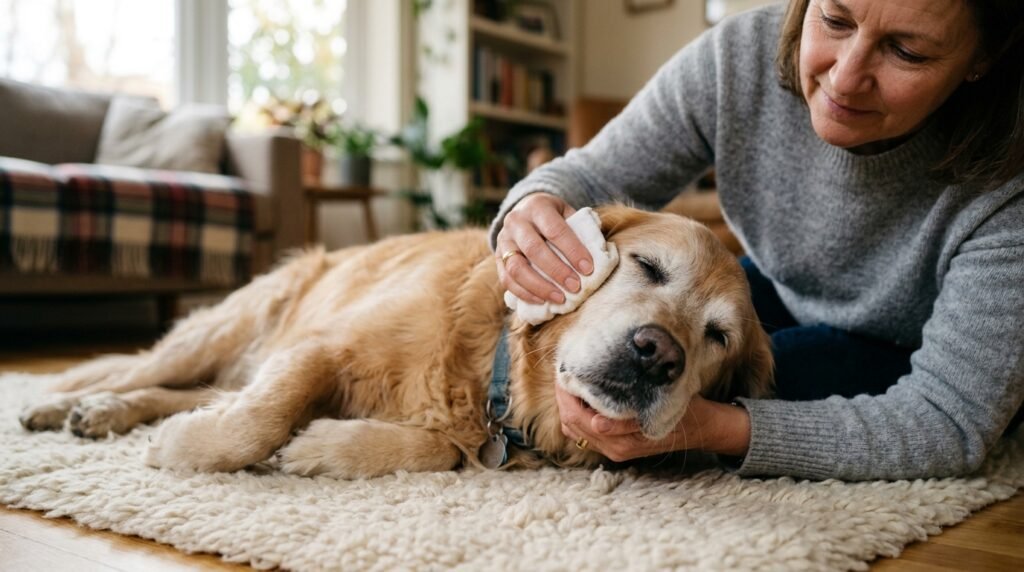
Walking into the living room on a quiet morning and noticing that your older companion is holding one eye clamped shut, or looking closely and discovering that the white of their eye has turned fiery crimson, is an unsettling moment. You kneel beside your loyal friend, gently tilting their chin upward to see better, and your heart sinks as you realize they are in obvious discomfort.
You wonder whether your dog simply scratched their eye while exploring the backyard bushes, or whether a serious underlying medical emergency is unfolding and you worry whether their red eyes mean permanent vision loss, how to tell an ordinary eye infection apart from blinding conditions like glaucoma or dry eye, and what steps you can take right now to safely comfort them.
Your concern is entirely justified. An older dog’s red eyes are never something to ignore or treat casually. Canine ocular tissues are delicate, and in senior dogs, sudden ocular redness often signals advanced age-related shifts such as Keratoconjunctivitis Sicca (dry eye), corneal ulcers, or acute glaucoma, which can cause permanent blindness within twenty-four to forty-eight hours. Learning how to decode these visual warning signs empowers you to act quickly, protect your dog’s sight, and relieve their pain.
Quick Answer:
A dog’s red eyes in senior dogs are caused by five primary conditions: dry eye (Keratoconjunctivitis Sicca / KCS), acute or chronic glaucoma (elevated eye pressure), corneal ulcers (surface scratches), uveitis (internal eye inflammation linked to systemic illness), and bacterial conjunctivitis. Any red eye accompanied by a cloudy bluish cornea, dilated fixed pupil, bulging eyeball, or tight squinting is a medical emergency requiring urgent veterinary care to prevent irreversible blindness.
Key Takeaways:
- Glaucoma is an Emergency: Sudden high intraocular pressure can destroy optic nerve fibers and cause permanent blindness in 24 to 48 hours.
- Dry Eye (KCS) is Common in Seniors: Immune-mediated tear gland failure causes thick mucus discharge, dull corneas, and painful chronic inflammation.
- Never Use Leftover Steroid Drops: Applying steroid eye drops (hydrocortisone or dexamethasone) to an undiagnosed corneal ulcer can melt the cornea and rupture the eyeball.
- Professional Eye Stains are Essential: Only a veterinarian using a fluorescein stain test and a tonometer can accurately diagnose the exact cause of ocular redness.
This comprehensive veterinary guide covers the common causes of red eyes in senior dogs, how to recognize an ocular emergency, standard diagnostic tests, and gentle home care while preparing for your vet visit.
The Anatomy of a Red Eye: What is Actually Inflamed?
When you see redness in your dog’s eye, the color can originate from three distinct anatomical areas:
- Conjunctival Redness: The thin, transparent membrane lining the eyelids and covering the white of the eye (the sclera). Swollen, bright pink conjunctiva usually indicates surface allergies, foreign irritants, or bacterial conjunctivitis.
- Episcleral Injection (Deep Scleral Redness): Large, engorged blood vessels branching outward like spiderwebs across the fibrous white coat of the eyeball. This deep, dark redness indicates elevated internal pressure (glaucoma) or internal inflammation (uveitis).
- Corneal Neovascularization: Tiny red blood vessels actively growing across the normally crystal-clear cornea. The cornea has no blood vessels of its own; when it is deprived of oxygen or fighting a chronic ulcer, vessels sprout inward in an effort to heal the tissue.
Top 5 Causes of a Dog’s Red Eyes in Senior Dogs
Senior dogs develop distinct ocular conditions that younger dogs rarely face:
| Condition | Hallmark Physical Signs | Urgency Level |
|---|---|---|
| Acute Glaucoma | Cloudy blue/gray cornea, engorged episcleral vessels, dilated non-reactive pupil, severe head pain | Critical Emergency: Blindness can occur within 24 to 48 hours |
| Dry Eye (KCS) | Thick, gummy, yellowish-green mucus discharge; dry, lusterless cornea; chronic bloodshot sclera | High: Requires lifelong tear-stimulating topical medications |
| Corneal Ulcer | Blepharospasm (tight squinting), excessive watery tearing, pawing at eye, focal hazy spot on surface | Urgent: Unchecked ulcers can progress to deep stromal melts and rupture |
| Anterior Uveitis | Constricted (tiny) pupil, cloudy cornea, dark red ring around iris; linked to systemic illness or diabetes | Urgent: Can cause secondary glaucoma or retinal detachment |
| Bacterial Conjunctivitis | Swollen pink conjunctiva, mild watery or mucoid discharge, normal pupil size, clear cornea | Moderate: Readily clears with topical veterinary antibiotic ointments |
If your older companion is also showing nasal discharge or frequent sneezing alongside eye irritation, review our companion guide on dog runny nose in senior dogs.
1. Keratoconjunctivitis Sicca (Dry Eye): The Silent Senior Threat
Dry eye (known medically as Keratoconjunctivitis Sicca or KCS) is one of the most underdiagnosed conditions in aging canines. The tear film protects the cornea with three layers: mucus, water, and oil. In senior dogs, immune-mediated destruction or age-related atrophy gradually shuts down the lacrimal tear glands.
Without natural aqueous tears to wash away debris and supply oxygen, the surface of the eye dries out like cracked leather. The body tries to compensate by producing excessive amounts of thick mucus, resulting in the classic “gummy, goopy eye” that many owners mistake for a simple bacterial infection.
Left untreated, chronic dry eye leads to painful friction ulcers, extensive corneal scarring, and dark brown pigment deposition (pigmentary keratitis) that blocks light and causes permanent blindness.
Fortunately, KCS is highly manageable when caught early with lifelong prescription eye drops such as cyclosporine (Optimmune) or tacrolimus, combined with frequent lubricating artificial tears.
For more on bacterial and fungal eye problems, explore our detailed analysis of dog eye infection signs and causes.
2. Glaucoma: The True Sight-Threatening Emergency
Glaucoma occurs when the fluid inside the eye (aqueous humor) cannot drain properly through the microscopic drainage angles. Fluid accumulates, causing intraocular pressure (IOP) to skyrocket.
Normal canine eye pressure ranges between 10 and 25 mmHg. In an acute glaucoma attack, pressure frequently spikes above 45 to 70 mmHg. This intense physical pressure crushes the delicate fibers of the optic nerve and starves the retina of blood.
How to Recognize Acute Glaucoma Immediately:
- Cloudy Steely-Blue Cornea: High fluid pressure forces fluid into the corneal layers, causing diffuse corneal edema that looks like frosted glass.
- Dilated, Sluggish Pupil: The pupil in the affected eye remains wide open and does not constrict when you shine a penlight into it.
- Engorged Episcleral Blood Vessels: The whites of the eye turn deep violet-red.
- Severe Head Pain: Dogs cannot verbalize headaches, but they will become quiet, press their head against furniture (head pressing), avoid being petted around the face, or refuse to eat.
If you observe these signs, take your dog to an emergency veterinary hospital immediately. Starting pressure-reducing medications (such as topical latanoprost or dorzolamide) within hours can save their vision.
 If redness is accompanied by swollen eyelid linings and crusty morning mucus, read our focused guide on managing dog pink eye in senior dogs.
The 3 Critical Eye Tests Every Veterinarian Must Perform
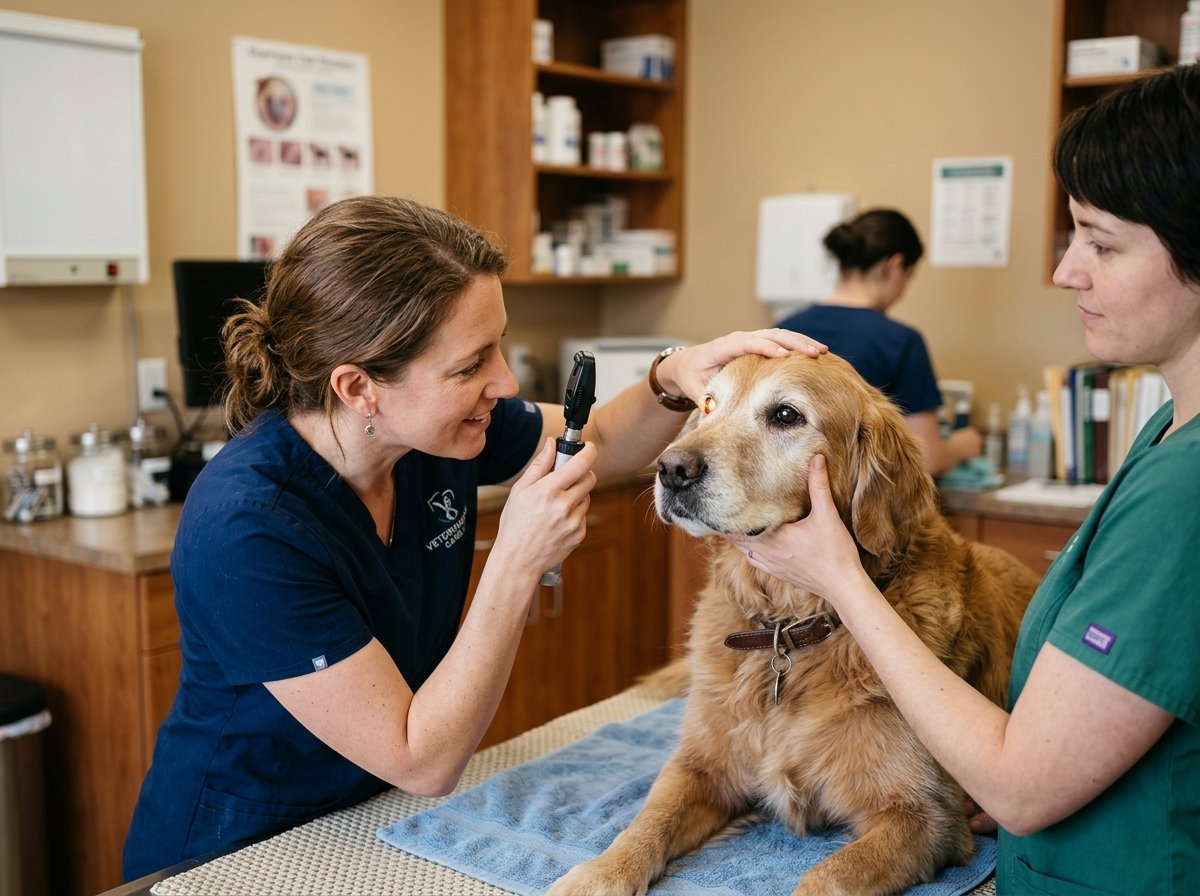
You should never allow anyone to prescribe eye drops for your dog based purely on a visual glance. A veterinarian must perform three quick, painless diagnostic tests to determine the exact cause of redness:
| Diagnostic Test | How It Works | Normal vs. Abnormal Result |
|---|---|---|
| Schirmer Tear Test (STT) | A tiny paper strip is placed inside the lower eyelid for 60 seconds to measure natural tear production | Normal: >15 mm/min Dry Eye (KCS): <10 mm/min (Severe: <5 mm/min) |
| Fluorescein Stain Test | A harmless orange dye is placed in the eye and examined under cobalt blue light | Healthy cornea: Dye rolls right off Corneal Ulcer: Dye binds to exposed stroma, glowing bright green |
| Tonometry (IOP Measurement) | A gentle pen-like instrument (TonoVet) lightly taps the cornea to measure internal pressure | Normal: 10–25 mmHg Uveitis: <10 mmHg Glaucoma: >25 mmHg (Emergency: >40 mmHg) |
According to clinical veterinary ophthalmologists on Cornell University College of Veterinary Medicine, performing a fluorescein stain before administering any eye medication is the golden rule of veterinary ophthalmology.
The Deadly Danger of Leftover Steroid Drops
One of the most dangerous mistakes pet parents make is reaching into their medicine cabinet for a tube of leftover eye ointment from a previous infection or a human prescription.
Many combination eye drops (such as NeoPolyDex or Tobradex) contain potent corticosteroids like dexamethasone or hydrocortisone. While steroids effectively calm inflammation in non-ulcerated allergic eyes, applying steroids to a corneal ulcer halts cell regeneration and activates collagenase enzymes. These enzymes dissolve corneal layers, turning a superficial scratch into a melting “descemetocele” that can rupture the eyeball within forty-eight hours.
Rule of thumb: Never put any medicated drop into your dog’s eye unless a veterinarian has stained the eye that very day to confirm the cornea is completely intact.
For safe general wellness routines, explore our guide on old dog comfort care and wellness.
Gentle Home Care While Waiting for the Vet
While you arrange for a prompt veterinary appointment, take these safe steps to minimize your dog’s discomfort:
1. Apply an Elizabethan Collar (Cone of Shame)
If your dog is rubbing their eye against carpets or pawing at their face with dewclaws, place an E-collar on them immediately. A single scratch from a sharp claw can turn a mild irritation into a catastrophic corneal perforation.
2. Flush with Plain Sterile Saline Only
You may gently flush away sticky mucus crusts using over-the-counter sterile saline eye wash (saline solution with zero preservatives or redness relievers). Never use human redness-relieving drops (like Visine), which contain vasoconstrictors that can severely damage canine eyes.
3. Apply a Warm, Moist Compress
Moisten a soft, clean cotton washcloth with warm water and gently hold it against your dog’s closed eyelids for two to three minutes. This softens hardened crusts and provides soothing relief to tired, inflamed tissues.
4. Dim Ambient Household Lighting
Dogs with inflamed eyes (especially uveitis or corneal ulcers) suffer from photophobia (painful sensitivity to bright light). Lower the blinds, turn off harsh overhead lighting, and let your companion rest in a soft, dim environment.
Frequently Asked Questions
Can I use human eye drops on my dog’s red eyes?
Only plain, preservative-free artificial lubricating tears (such as carboxymethylcellulose) are safe to use temporarily. Never use medicated drops, contact lens solutions, or human redness relievers without specific veterinary authorization.
Why is my older dog’s eye cloudy and red?
A cloudy and red eye usually signals either corneal edema from acute glaucoma (a medical emergency), a deep corneal ulcer, or severe uveitis. Immediate veterinary evaluation is required.
What is the difference between nuclear sclerosis and red eye problems?
Nuclear sclerosis is a normal, painless aging change where the center of the lens turns bluish-gray, but the eye remains clear, moist, and free of redness or discharge. A red, painful eye is never normal aging and always indicates active disease.
How quickly should my dog see a vet for a red eye?
If your dog is squinting, tearing heavily, has a cloudy cornea, or shows a dilated pupil, they must see a vet within hours. For mild redness with no squinting or discharge, schedule a visit within twenty-four hours.
Protecting Your Companion’s Precious Sight
Your senior dog relies on you to interpret their subtle signals of discomfort. While discovering a red eye can feel alarming, prompt veterinary care, accurate diagnostic testing, and targeted therapies can relieve their pain and preserve their vision for years to come.
Give your faithful friend the prompt medical attention they deserve, and help them enjoy their golden years with bright, comfortable, and pain-free eyes.