
Gently stroking your older companion’s head during a quiet evening cuddle and running your fingers over their nose, only to feel rough, sandpaper-like ridges or thick, rock-hard crusts where a soft, cool snout used to be, is a concerning discovery. You look closely in the lamplight, noticing that the smooth black leather has turned into a cracked, cobblestone surface, and you wonder whether your faithful friend is in pain.
You wonder why your dog’s nose has become so dry and overgrown in their golden years, and whether it is simply a harmless sign of growing old or a warning of hidden dehydration, autoimmune disease, or nutritional deficiency and you worry about whether the deep cracks might bleed or become infected, and you want to know which soothing treatments can safely restore comfort without causing harm if licked off.
Your concern is rooted in profound love. A senior dog’s nose is far more than a cute facial feature; it is their primary window into the world, housing hundreds of millions of delicate olfactory receptors. In older dogs, changes in cellular turnover frequently cause nasal hyperkeratosis, where tough keratin protein accumulates into dry, uncomfortable crusts. By understanding the underlying medical causes, avoiding common home-care mistakes, and using gentle, dog-safe moisturizing protocols, you can soothe your companion’s snout and restore their joyful scenting adventures.
Quick Answer:
A dry, crusty, or cracked dog nose in senior canines is most commonly caused by age-related nasal hyperkeratosis, where excess keratin protein accumulates across the top ridge of the snout. Other triggers include systemic dehydration, dry winter heating, and autoimmune conditions like discoid lupus erythematosus (DLE). Safe relief involves applying warm, moist compresses to soften hardened crusts followed by lick-safe organic nose balms (shea butter, coconut oil, vitamin E); never forcefully pick off dry crusts, which tears delicate capillaries.
Key Takeaways:
- Nasal Hyperkeratosis: An overproduction of keratin causes hard, frond-like crusts that cannot be naturally shed by older, less active dogs.
- Dry Nose Affects Appetite: Dogs must have a moist, cool nose to dissolve airborne scent particles; a dry crusty nose severely blunts smell, leading to finicky eating.
- Never Pick or Peel Crusts: Forcibly removing dry crusts tears live dermal tissue, causing severe pain, profuse bleeding, and secondary bacterial infections.
- Lick-Safe Ingredients Only: Avoid human ointments containing zinc oxide, petroleum jelly, or toxic essential oils (tea tree, wintergreen), which cause poisoning when licked.
This comprehensive veterinary guide examines why senior dogs develop dry, crusty noses, how to differentiate normal aging from autoimmune conditions, safe home softening steps, and when to seek veterinary care.
Why a Moist Dog Nose Matters for Senior Health
A dog’s nose (the nasal planum) is a marvel of biological engineering. Under normal conditions, specialized lateral nasal glands produce a thin, clear fluid that keeps the surface cool and damp.
This thin layer of moisture acts like a chemical net. Airborne scent molecules (volatile organic compounds) stick to the moisture film and dissolve, allowing sensory cilia to transport them directly to the olfactory bulb in the brain. When an older dog’s nose becomes dry, cracked, and covered in thick keratin crusts, this scent-capturing mechanism fails.
Because dogs experience roughly 80% of flavor through their sense of smell, senior dogs with severely crusty noses often lose interest in their food. If your companion has recently started turning their nose up at dinner, a dry, clogged nose may be the hidden culprit.
To help entice an older dog struggling with blunted scent acuity, explore our practical guide on choosing the best dog food topper for senior dogs.
Top 4 Causes of a Dry, Crusty Dog Nose in Older Dogs
Veterinary dermatologists recognize several distinct underlying reasons why an older dog develops an abnormal nasal surface:
| Condition | Hallmark Visual Signs | Urgency & Action |
|---|---|---|
| Idiopathic Nasal Hyperkeratosis | Thick, hard, jagged, frond-like crusts concentrated across the top ridge of the nose; cobblestone texture overgrowth | Manageable at Home: Daily warm compresses and organic moisturizing balms |
| Chronic Dehydration / Kidney Strain | Uniformly dry, warm, dull nose accompanied by sticky gums, sunken eyes, and increased water consumption | Veterinary Evaluation: Requires blood panels to check BUN and creatinine organ levels |
| Autoimmune Disease (Discoid Lupus / DLE) | Loss of normal “pebbled” cobblestone pattern; nose turns smooth, shiny, slate-gray or pink; ulceration, scabs, and bleeding | High Medical Urgency: Requires veterinary biopsy and immunosuppressive topical therapy |
| Normal Sleep & Ambient Winter Heat | Mildly dry or warm nose immediately after waking from sleep or resting near floor heating vents; no crusting or cracks | Completely Benign: Resolves naturally within 15 minutes of waking and drinking water |
According to veterinary dermatologists referenced in the Merck Veterinary Manual nasal dermatoses guide, idiopathic senile hyperkeratosis is among the most frequent benign dermatological complaints in geriatric canines.
If your older companion is also exhibiting unusual nasal discharge, bleeding from one nostril, or frequent sneezing, review our clinical guide on dog runny nose in senior dogs.
1. Nasal Hyperkeratosis: The “Crusty Overgrowth” of Aging
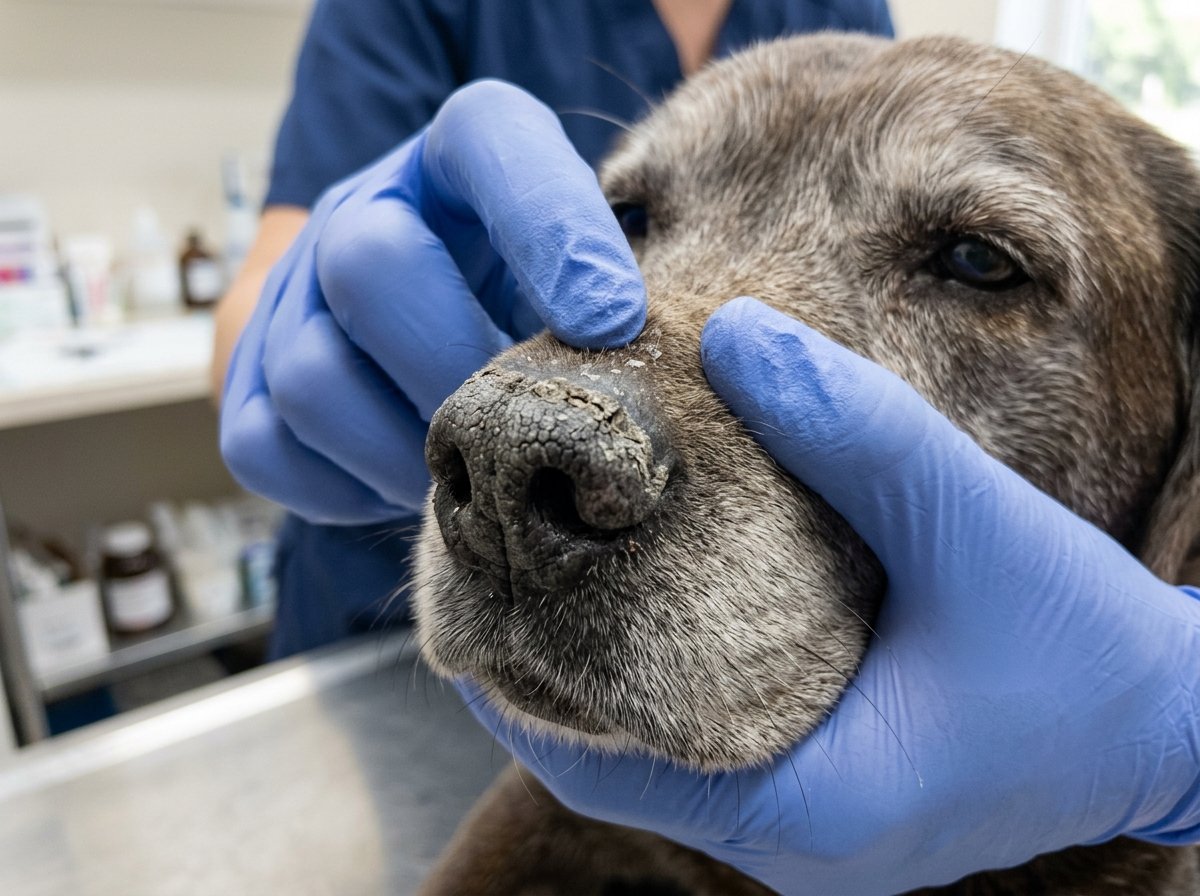
Keratin is the fibrous, protective structural protein that makes up canine hair, nails, and the outer epidermal layer of the skin. Under normal circumstances, new keratin cells are produced at the base of the nose, migrate outward, and naturally slough off as the dog rubs against grass, licks their snout, and explores their environment.
In senior dogs, two factors disrupt this balance:
- Cellular Turnover Disregulation: Aging basal cells produce excess keratin faster than the surface can shed it.
- Reduced Mechanical Friction: Older dogs spend more hours sleeping and resting, meaning they no longer rub off excess dead cells through vigorous digging or outdoor foraging.
As a result, keratin stacks upon itself, creating hard, dried-out, jagged projections that look like dried coral or a rough cobblestone pavement. When the crusts become too thick and brittle, normal facial movements cause deep, painful fissures that can bleed and invite bacterial skin infections.
2. Autoimmune Conditions: When It Is Not Just Old Age
Not all dry noses are simple hyperkeratosis. Older dogs can develop autoimmune skin diseases that require prescription medical treatment:
Discoid Lupus Erythematosus (DLE)
Often called “collie nose,” DLE is an immune-mediated disease where antibodies attack the basal layer of the nasal planum. The hallmark symptom is the complete loss of the normal “pebbled” cobblestone architecture. The nose becomes slick, smooth, and shiny, often losing its dark pigment (depigmentation) to turn bluish-gray or raw pink. Exposure to ultraviolet sunlight severely worsens the condition, leading to bleeding ulcers and scabs.
Pemphigus Foliaceus
Pemphigus is another autoimmune disorder where immune complexes attack cellular adhesion proteins, creating pustules and yellow crusts across the bridge of the nose, ear tips, and footpads.
If you observe raw bleeding, pigment loss, or swelling that spreads up the bridge of the muzzle, consult your veterinarian promptly. Learn more through Cornell University senior dog wellness research.
Step-by-Step Home Softening Protocol for a Crusty Dog Nose
Never attempt to peel, chip, or pick dry crusts off your dog’s nose. Dried keratin is firmly anchored to living dermal tissue underneath; pulling it off causes severe pain, profuse bleeding, and scarring. Instead, follow this gentle, three-step softening routine:
Step 1: The Warm Compress Soak (3 to 5 Minutes)
Soak a clean, soft cotton washcloth in warm (not hot) water. Gently hold the damp cloth against your dog’s nose for three to five minutes. The warm moisture hydrates the rock-hard keratin, expanding the cellular bonds and transforming rigid crusts into soft, pliable tissue.
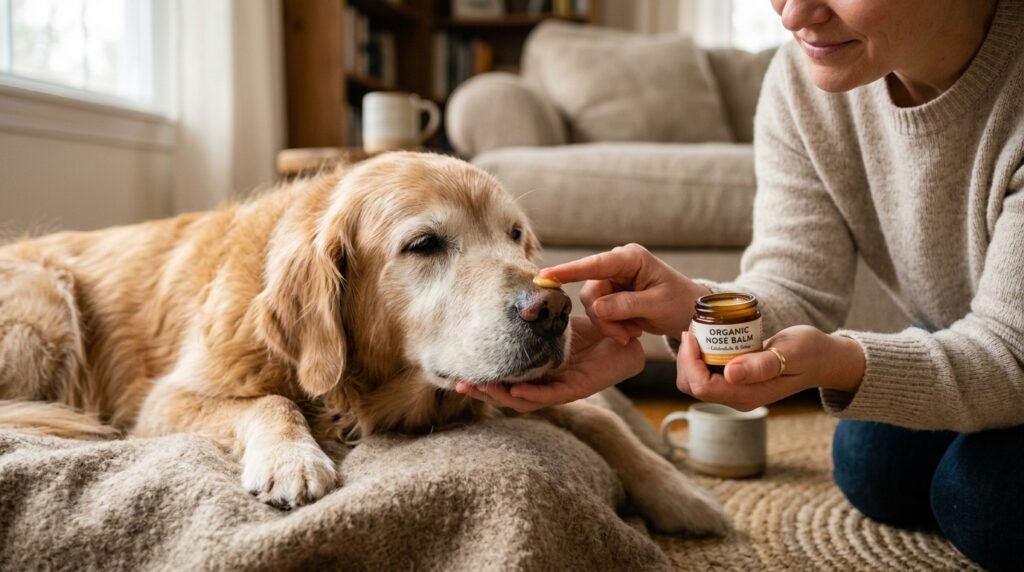
Step 2: Apply a Lick-Safe Organic Nose Balm
Gently massage a generous dab of natural, pet-safe balm into the softened crusts. Nourishing plant butters penetrate deep into the fissures, trapping moisture and lubricating the tissue so dead keratin can slough off naturally over the coming days.
Step 3: The 5-Minute “Lick Distraction” Technique
Dogs instinctively want to lick their nose the second you apply any ointment. If your dog immediately licks off the balm, it cannot absorb into the deeper layers.
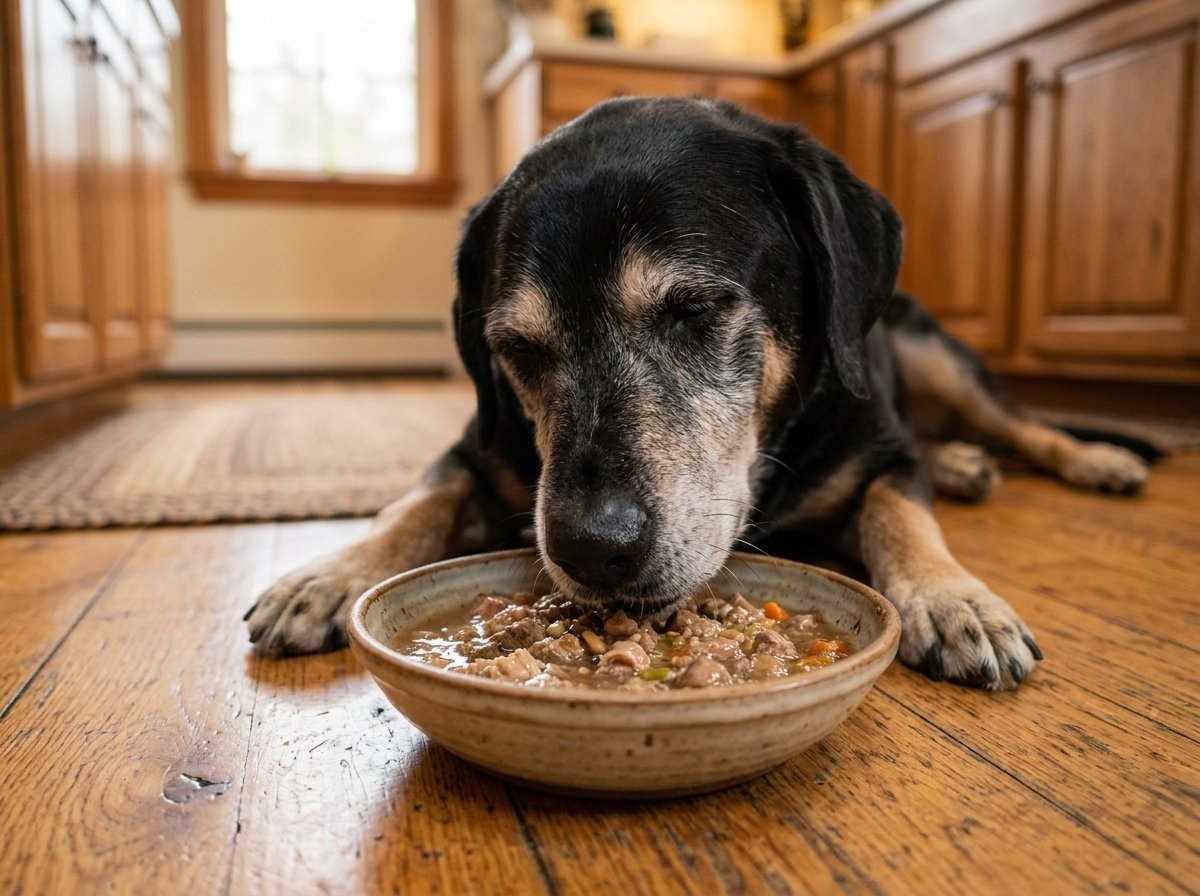
Directly after applying the balm, hand your companion a prepared lick mat smeared with a spoonful of plain canned pumpkin, unsweetened peanut butter, or low-sodium wet food. While they are happily occupied for five to ten minutes, the balm absorbs thoroughly into the nose leather.
Safe vs. Dangerous Nose Balms for Dogs
Because whatever goes on your dog’s nose will inevitably be ingested, ingredient safety is paramount:
| Balm Ingredient | Safety Status for Canines | Why It Matters |
|---|---|---|
| Organic Shea Butter & Coconut Oil | 100% Safe & Recommended | Rich in natural fatty acids that nourish lipid barriers; completely harmless if ingested in small amounts |
| Pure Vitamin E & Jojoba Oil | 100% Safe & Recommended | Deeply moisturizing antioxidants that accelerate cellular tissue healing and elasticity |
| Zinc Oxide (Human Sunscreens/Diaper Creams) | Highly Toxic | Ingested zinc damages canine red blood cells, causing severe hemolytic anemia and organ failure |
| Essential Oils (Tea Tree, Wintergreen, Pennyroyal) | Highly Toxic | Canine livers cannot metabolize concentrated terpenes; causes central nervous system depression and liver toxicity |
| Petroleum Jelly (Vaseline) | Use Caution | While non-toxic in microscopic amounts, large licked quantities act as a laxative, causing diarrhea and intestinal cramping |
For more home care advice, explore our comprehensive guide on old dog comfort care and wellness.
When to See a Veterinarian
While benign hyperkeratosis responds well to daily home balms, schedule a veterinary examination if you notice any of these red flags:
- Loss of Nasal Texture or Pigment: The nose loses its cobblestone bumps and turns smooth, shiny, pink, or pale gray.
- Persistent Bleeding or Deep Fissures: Cracks that ooze blood or clear serum and fail to close within a week.
- Asymmetrical Crusting: Swelling or crusting concentrated on only one side of the nose or nostril.
- Yellow or Green Discharge: Mucus oozing from the nostrils, which signals secondary bacterial rhinitis or dental root abscesses.
- Crusting Around Eyes or Paws: Spreading lesions often point to zinc deficiency, pemphigus, or systemic illness.
The AVMA senior pet care FAQ outlines general senior health standards.
Frequently Asked Questions
Is a warm or dry nose a sign of fever in older dogs?
Not necessarily. A dog’s nose naturally fluctuates between wet, dry, cool, and warm throughout the day. The only reliable way to diagnose a fever is to take a rectal temperature with a digital thermometer (normal is 100.5°F to 102.5°F).
Can I put coconut oil on my senior dog’s crusty nose?
Yes. Virgin organic coconut oil is safe, edible, and has mild natural antimicrobial properties. However, because dogs love the taste, pair application with a lick mat so it has time to absorb.
How long does it take for a crusty dog nose to heal?
With consistent twice-daily warm compresses and natural balm applications, hardened keratin crusts typically soften and slough away naturally within seven to fourteen days.
Can severe nasal hyperkeratosis be cured permanently?
In senior dogs, hyperkeratosis is usually a chronic, lifelong condition driven by aging cellular processes. While it cannot be permanently cured, it’s easy to manage with routine weekly balm maintenance.
Restoring Comfort to Your Companion’s Sensitive Snout
Your senior dog’s nose has guided them through countless joyful walks, greeting rituals, and backyard explorations over a long, devoted life. While watching their nose become rough and cracked can be concerning, a few minutes of gentle daily care with warm compresses and soothing natural balms will keep their snout supple, comfortable, and ready to enjoy every pleasant scent their golden years have to offer.