
It is deeply worrying to look down and see your old dog shaking and trembling. You might notice their hind legs quivering after a short walk, or feel their entire body shivering while they lie quietly on their bed. Seeing an aging companion shake leaves every pet parent feeling anxious and looking for fast answers.
You wonder if your dog is simply feeling cold on a chilly morning. You worry whether that tremor points to hidden arthritis pain, nausea, or a serious neurological condition.
Your concern is completely understandable. Trembling in senior dogs is a non-specific symptom, meaning it can stem from harmless age-related changes or require medical attention. Paying close attention to when and where the shaking occurs helps you protect your dog’s comfort.
Quick Answer:
An old dog shaking and trembling is most frequently caused by age-related muscle weakness, chronic arthritis pain, cold sensitivity, or metabolic nausea. While mild quivering after exercise can be managed with rest and warmth, sudden or persistent shaking requires a veterinary evaluation to rule out nerve issues or systemic illness. If involuntary trembling progresses into full loss of consciousness, consult our guide on dog seizure in senior dogs.
Key Takeaways:
- Primary Causes: Hind leg muscle atrophy, joint arthritis pain, reduced body heat regulation, or metabolic nausea.
- Observable Pattern: Leg trembling when standing indicates muscle fatigue; full-body shivering suggests cold or severe pain.
- Immediate Home Step: Provide a thick orthopedic bed, a warm fleece coat, and warm non-slip floor coverage.
- When to See a Vet: Seek veterinary evaluation if trembling is continuous, sudden, or accompanied by appetite loss or weakness.
This guide walks you through the seven most common reasons an older dog trembles. You will learn how to tell shivers from tremors, the warning signs that need a vet, and practical home adjustments to keep your old friend comfortable.
Why Senior Dogs Tremble More Than Younger Dogs
Trembling is far more common in senior dogs than in young puppies. As dogs pass age eight or ten, their bodies undergo natural physical shifts that lower their tolerance for physical strain and temperature changes.
Senior dogs naturally lose lean muscle mass, a process known as sarcopenia. Thinner muscle tissue tires rapidly when standing or walking. Additionally, aging dogs possess thinner body fat layers, making them far more sensitive to cool drafts.
| Tremor Location / Pattern | Likely Primary Cause |
|---|---|
| Rear leg quivering while standing | Muscle fatigue, hind leg atrophy, or hip arthritis |
| Full body shivering when resting | Cold sensitivity, low body fat, or generalized pain |
| Rhythmic head bobbing or tremor | Idiopathic head tremors or cerebellar neurological issue |
| Shaking paired with heavy panting | Acute pain flare-up, anxiety, or stress reaction |
| Trembling accompanied by drooling | Nausea, kidney strain, or gastrointestinal upset |
Identifying whether the shaking affects only the back legs or their whole body provides valuable clues. Let us examine the seven main causes behind senior dog trembling.
7 Causes of an Old Dog Shaking and Trembling
1. Age-Related Muscle Weakness and Atrophy
Loss of muscle strength is the single most frequent reason behind rear leg trembling in senior dogs. As dogs age, the large muscle groups supporting the hips and thighs gradually thin out.
When your dog stands up or stays on their feet for several minutes, weakened muscles must work twice as hard to maintain balance. This intense effort creates fine muscular quivering, very similar to a human holding a heavy squat.
The trembling usually stops as soon as your dog lies down to rest. Providing supportive non-slip rugs helps reduce the muscle strain required to stay balanced.
2. Chronic Arthritis and Joint Pain
Arthritis affects millions of aging dogs. When protective cartilage wears thin inside hip, knee, or spinal joints, bone surfaces rub together during movement.
Trembling is a classic, subtle manifestation of joint pain. Your dog may shake their back legs when standing because weight bearing causes physical ache. They may also shiver while resting if an inflamed joint is throbbing.
If you notice your dog moving stiffly in the morning, review our guide on senior dog joint stiffness remedies for gentle morning relief ideas.
3. Cold Sensitivity and Reduced Heat Retention
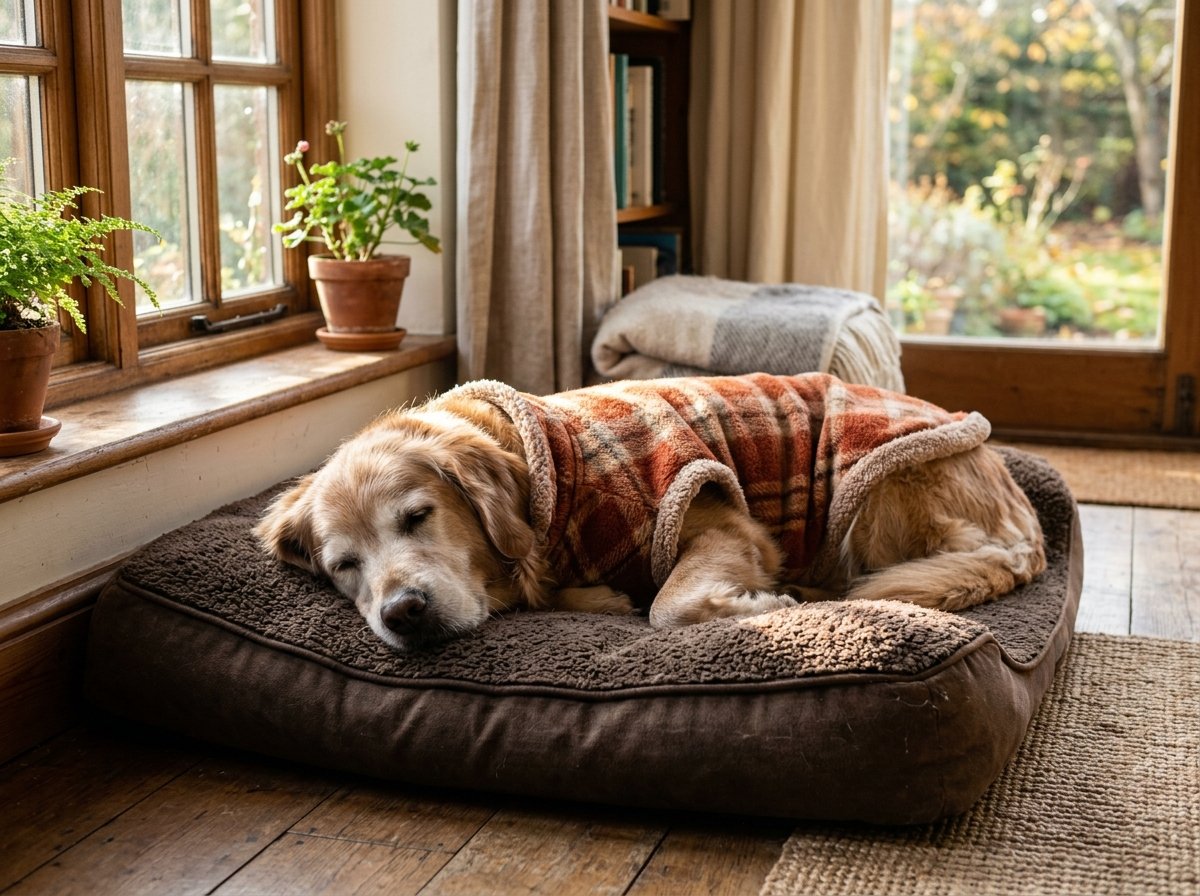
Older dogs have a much harder time regulating internal body temperature. Reduced muscle mass and thinner skin mean your dog loses body heat quickly on chilly days or under air conditioning drafts.
Shivering is an automatic physiological response to generate internal heat through rapid muscle contractions. An old dog may shiver in temperatures that feel completely comfortable to you.
Dressing your dog in a soft fleece jacket and placing their bed away from cold floor drafts often stops temperature shivers immediately.
4. Nausea, Kidney Strain, or Metabolic Illness
Systemic medical conditions like chronic kidney disease, liver dysfunction, or pancreatitis cause internal nausea. When a dog feels nauseous, they often tremble, drool slightly, and turn away from food.
Kidney disease allows waste products to build up in the bloodstream, triggering mild, persistent nausea. Shaking paired with lip licking or appetite changes is a strong sign of digestive or organ strain.
To learn more about subtle pain signals, read our complete overview on senior dog pain signs and symptoms.
5. Neurological Conditions and Idiopathic Tremors
Involuntary tremors can originate in the nervous system. Conditions affecting the brain, spinal cord, or peripheral nerves can cause rhythmic shaking that occurs even when your dog is lying down relaxed.
Idiopathic head tremors, often seen in older dogs, cause harmless vertical or horizontal head bobbing while the dog remains alert and responsive. Nerve degeneration in the spine can also cause intermittent leg twitching.
According to veterinary neurological research published on VCA Hospitals guidelines on tremors in dogs, true neurological tremors persist regardless of whether the muscle is resting or active.
6. Cognitive Anxiety and Emotional Stress
Senior dogs with cognitive decline or failing eyesight experience heightened anxiety. When darkness falls or routine changes occur, stress hormones surge into the bloodstream.
Anxiety causes physiological shaking, rapid panting, and pacing. Your dog may shake during thunderstorms, fireworks, or when left alone in dark rooms.
Providing steady companionship, gentle reassurance, and predictable daily routines helps lower anxiety related shaking.
7. Low Blood Sugar or Electrolyte Imbalances
Metabolic fluctuations like low blood sugar (hypoglycemia) or abnormal calcium levels can cause sudden muscular weakness and trembling.
Diabetic senior dogs on insulin are especially vulnerable to low blood sugar if they skip a meal. A sudden drop in glucose causes sudden shaking, weakness, and confusion.
If your diabetic dog shakes after skipping food, contact your emergency veterinarian right away.
When to Call Your Vet: Urgent Tremor Red Flags
While mild leg quivering from fatigue can be managed with rest, sudden or severe shaking warrants a professional veterinary exam. Never ignore new or worsening tremors in an aging pet.
| Tremor Symptom Combination | Required Veterinary Action |
|---|---|
| Trembling + Refusing food or water | Schedule vet check within 24 hours |
| Trembling + Weakness or stumbling | Same-day veterinary evaluation |
| Trembling + Vomiting or pale gums | Immediate emergency clinic visit |
| Sudden full-body seizure activity | Immediate emergency veterinary care |
Schedule a non-emergency vet check if:
- Rear leg shaking has developed gradually over recent weeks.
- Your dog hesitates when standing up from their bed.
- The shaking occurs consistently after light exercise.
Seek immediate emergency care if you notice:
- Sudden onset of severe, uncontrollable full-body shaking.
- Shaking accompanied by vomiting, diarrhea, or pale gums.
- Loss of consciousness, rigid limbs, or involuntary twitching.
According to veterinary care resources on PetMD’s guide on dog shaking causes, taking a quick smartphone video of the trembling episode helps your vet make an accurate diagnosis during your visit.
5 Safe Steps to Relieve Senior Dog Shaking at Home
While awaiting your veterinary appointment, you can implement five practical home adjustments to soothe muscle quivering and keep your old friend comfortable.
1: Keep Your Senior Dog Warm and Cozy
Eliminate cold drafts around your dog’s resting area. Place their bed in a warm room away from exterior doors and air vents.
Dress your dog in a soft, non-restrictive fleece sweater during cold seasons. Cover them with a light, warm blanket when they settle down for a nap.
Ensuring your dog stays warm conserves body heat, preventing cold-induced shivering immediately.
2: Provide Non-Slip Flooring and Supportive Bedding
Slipping on hardwood or tile floors forces weak leg muscles to work overtime, triggering tremors.
Lay down yoga mats or rubber-backed runners along your dog’s primary walking paths. Non-slip surfaces allow your dog to walk securely without overexerting weak muscles.
Upgrade to a thick memory foam orthopedic bed that cushions sore joints. For complete home setup tips, explore our guide on keeping senior dogs comfortable.
3: Practice Gentle Muscle Massage and Warm Therapy
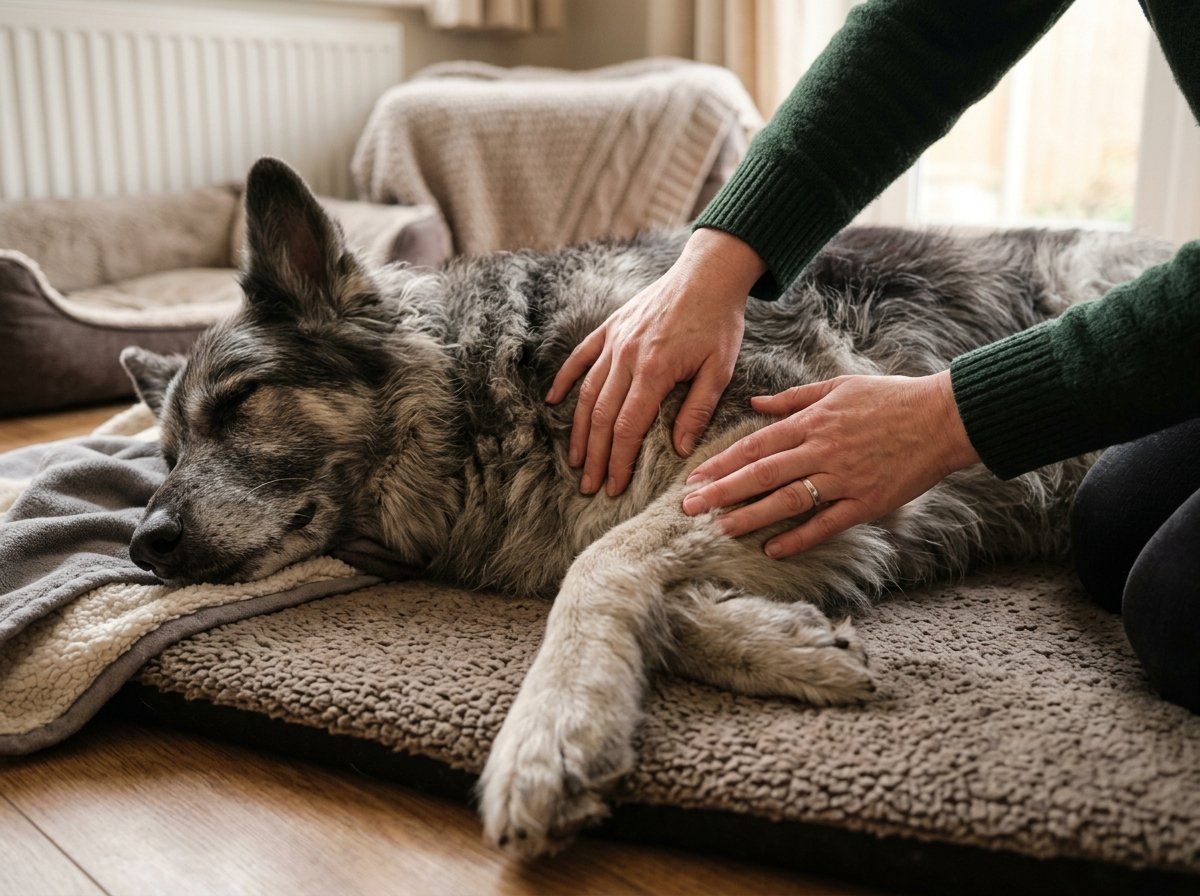
Gentle massage improves blood circulation and relaxes tense, overworked leg muscles.
Use smooth, flat-handed strokes along your dog’s back, hips, and thighs for five to ten minutes each evening. Never press hard directly over bone or swollen joints.
You can also place a warm (not hot) towel over sore hips to soothe tight muscles after walks.
4: Adjust Exercise to Low-Impact Sniffari Walks
Strenuous walks can overfatigue aging muscles, causing noticeable tremors later in the day.
Replace long walks with multiple short, slow strolls on soft grass. Allow your dog to sniff around at their own pace.
Low-impact movement maintains joint flexibility without exhausting weak muscle groups.
5: Discuss Vet-Approved Pain Relief and Supplements
Never administer human pain relievers such as aspirin, ibuprofen, or Tylenol to your dog. Human medications can cause fatal stomach ulcers and kidney failure in dogs.
Your veterinarian can prescribe safe, highly effective dog-specific pain medications, such as NSAIDs or Gabapentin, to manage arthritis pain.
Veterinary joint supplements containing glucosamine, chondroitin, and Omega-3 fatty acids also support joint health over time.
What Not to Do When Your Senior Dog Trembles
When trying to help your aging dog, avoid these common mistakes:
- Never Force Exercise: Forcing an old dog with shaking legs to keep walking causes severe muscle tears and joint strain.
- Do Not Use Human Heating Pads: Electric heating pads designed for humans can easily overheat or burn sensitive senior dog skin.
- Do Not Ignore Gradual Worsening: Assuming shaking is just old age delays effective treatment for treatable arthritis or kidney issues.
Frequently Asked Questions
Why do my old dog’s back legs shake when standing?
Back leg shaking in senior dogs is usually caused by age-related muscle weakness (atrophy) or hip arthritis. Weakened leg muscles tire quickly when bearing weight, causing fine quivering that subsides when resting.
Is shaking in older dogs a sign of pain?
Yes. Trembling is a very common, subtle indicator of chronic pain in dogs, particularly pain caused by spinal stiffness or joint arthritis. If shaking is paired with panting or reluctance to move, pain is likely.
What is the difference between shivering and a seizure?
Shivering or trembling involves minor muscular quivering while your dog remains fully conscious, alert, and responsive to your voice. Seizures involve loss of consciousness, rigid limbs, involuntary paddling, or drooling.
Can kidney disease cause a dog to shake?
Yes. Kidney disease causes metabolic toxins to build up in the blood, creating nausea and weakness that manifests as trembling, lip licking, and food refusal.
Should I take my old dog to the vet for leg shaking?
If leg shaking is a new symptom, worsening, or affecting your dog’s mobility, you should schedule a veterinary exam. Your vet can diagnose joint pain or nerve issues and prescribe safe relief.
Keeping Your Golden Companion Comfortable
Seeing your old dog shake and tremble can be stressful, but understanding the cause allows you to take supportive action. Whether your dog needs a warmer sweater, non-slip rugs, or vet-guided pain relief, simple changes make a world of difference.
Always consult your veterinarian to rule out medical issues and create a safe comfort plan. Check official recommendations from the American Veterinary Medical Association senior care FAQ to keep your senior dog happy and comfortable in their golden years.