

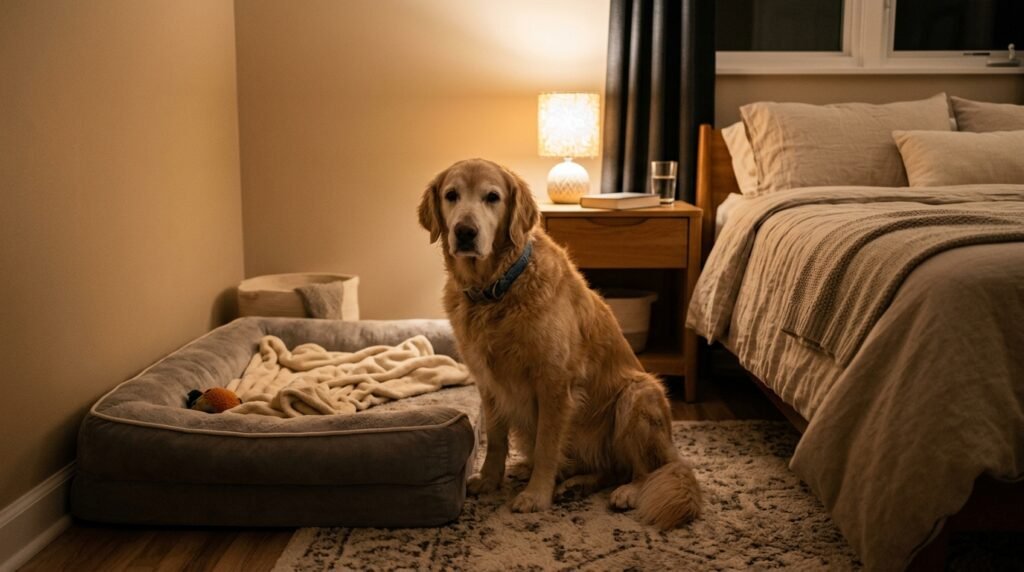
It is exhausting and heartbreaking when your old dog is restless at night. You finally settle into bed for a good night of sleep, only to hear the rhythmic clicking of nails on hardwood floors. Your senior dog paces back and forth across the bedroom, panting softly, or standing confused in dark hallways.
You get out of bed to check on them. You offer fresh water, lead them back to their cozy bed, and stroke their coat until they settle. Ten minutes later, they are back on their feet pacing again.
If you are experiencing sleepless nights alongside your aging companion, know that you are not alone. Nighttime pacing and anxiety are very common in senior dogs. More importantly, this behavior is a sign of discomfort, not a simple personality change.
Your dog wants to sleep just as much as you do. When an old dog remains restless throughout the night, their body or mind is struggling to find peace. This guide covers the six main causes of nighttime restlessness, key signs that need vet attention, and five practical home steps to help your dog rest comfortably.
Why Senior Dogs Become Restless When the Sun Goes Down
Nighttime creates unique challenges for an aging dog. During the day, household activity, natural sunlight, and familiar sounds provide constant sensory cues. When darkness falls, those cues fade away.
An older dog with failing eyesight or hearing can feel disoriented in a quiet, dark room. Furthermore, physical stiffness and metabolic nausea often peak after hours of inactivity.
| Nighttime Behavior | Primary Underlying Cause |
|---|---|
| Pacing in circles, staring at walls | Canine Cognitive Dysfunction (Dog Dementia) |
| Frequent position changes, groaning | Arthritis and joint pressure point pain |
| Whining at bedroom door, heavy panting | Urinary urge, kidney strain, or acute anxiety |
| Startling at minor shadows or sounds | Cataracts, vision loss, or hearing decline |
| Restlessness after taking evening medication | Pharmaceutical side effects or stomach acid upset |
Recognising the exact pattern of your dog’s nighttime behaviour helps pinpoint the right solution. Let us examine the six most frequent causes.
6 Causes of an Old Dog Restless at Night
1. Canine Cognitive Dysfunction (Sundowner Syndrome)
Canine Cognitive Dysfunction, often called dog dementia, is one of the leading drivers of nighttime pacing. Similar to Alzheimer’s in humans, this condition affects memory, spatial awareness, and sleep cycles.
Dogs with cognitive decline experience confusion as natural daylight fades. Vets refer to this as sundowning. Their internal biological clock flips, causing them to sleep all day deeply and wake up anxious at midnight.
If your dog wanders into corners, gets stuck behind furniture, or stares blankly into space, cognitive changes are very likely present. To explore specialized evening care routines, see our dedicated guide on senior dog dementia sleep solutions.
2. Arthritis and Pressure Point Joint Pain
Joint pain and spinal stiffness tend to intensify during cold nights and quiet hours. When your dog lies in one position for an hour, inflamed joints grow cold and stiff.
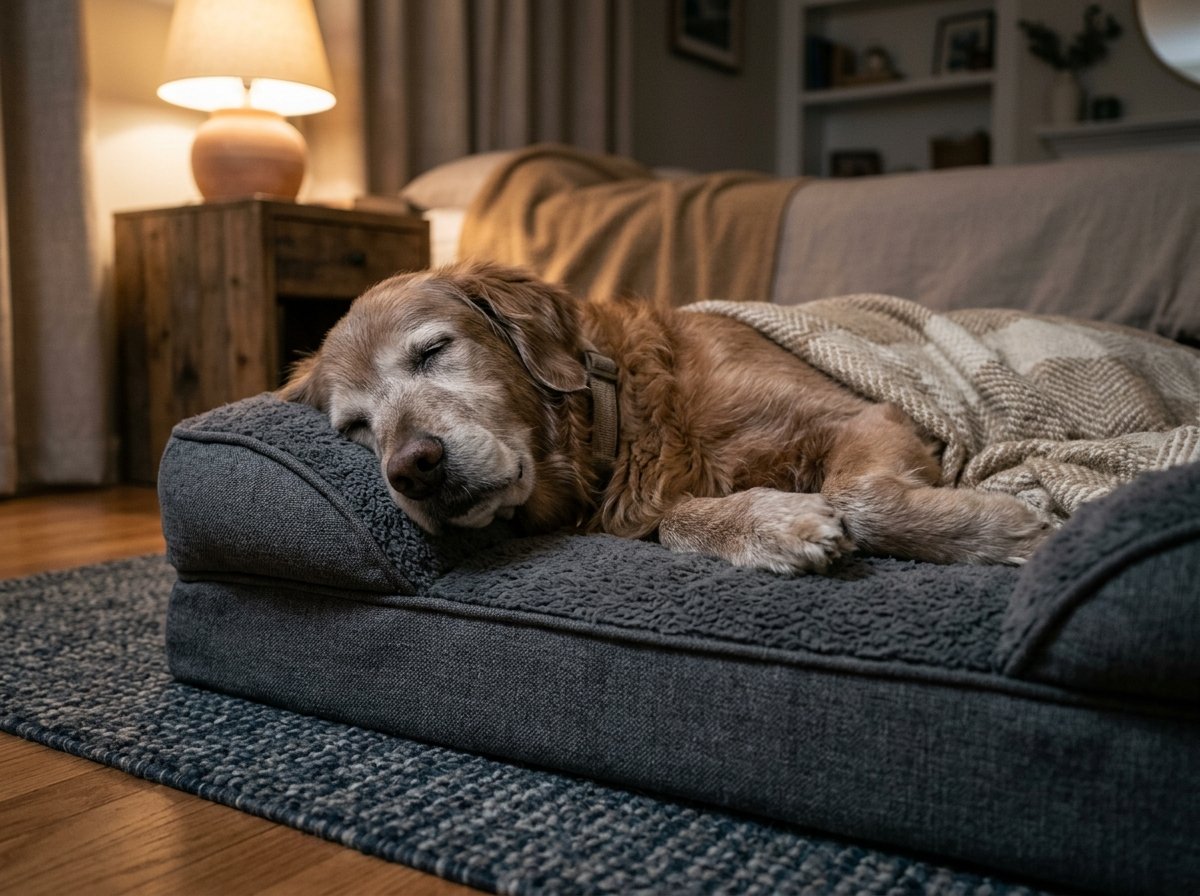
Your dog wakes up feeling an intense ache. They stand up to pace, attempting to warm up their stiff limbs. Thin or worn out dog beds press directly against hips and elbows, worsening pressure pain.
If your dog shifts positions constantly, groans when settling down, or struggles to stand on slick floors, joint pain is a primary suspect. Read our guide on keeping senior dogs comfortable for proven bedding setups.
3. Increased Urination Urge and Kidney Strain
As dogs age, metabolic conditions like chronic kidney disease, diabetes, and urinary tract infections become far more common. These conditions increase thirst and bladder volume.
A senior dog who could comfortably sleep eight hours in their youth may now need to relieve their bladder every three to four hours. They pace near doors or whine at your bedside because they are trying hard not to have an accident indoors.
Never punish an older dog for waking you up to go outside. Their restlessness is a responsible effort to maintain house training despite physical strain.
4. Vision Loss and Sensory Deprivation Stress
Cataracts and nuclear sclerosis gradually cloud the lens of an aging dog’s eyes. While a senior dog navigates familiar rooms well during the day, night vision drops significantly.
In a dark room, shadows look unfamiliar and frightening. A dog with failing vision may bump into doorway frames or hesitate at dark stairs. That loss of visual orientation creates immediate anxiety and continuous pacing.
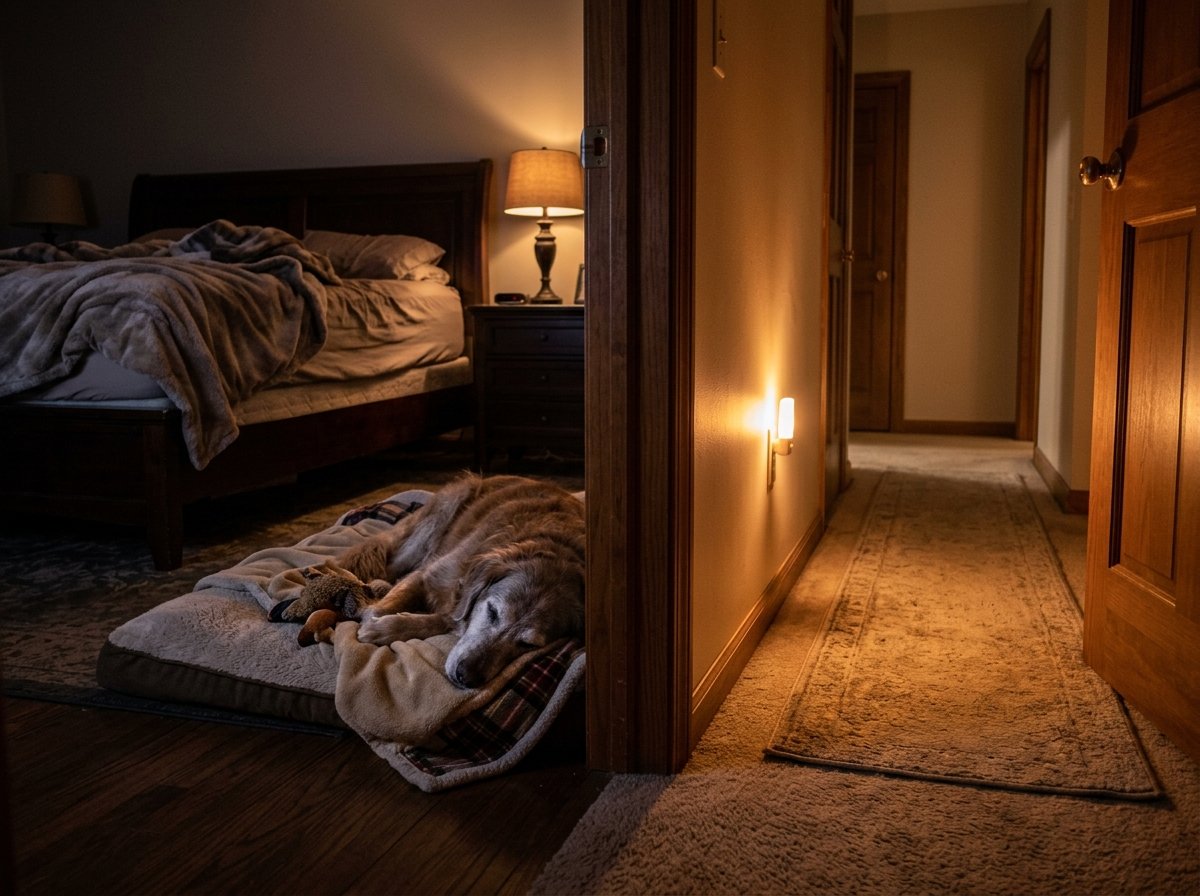
Placing soft nightlights along hallways creates visual anchor points that guide vision-impaired dogs safely.
5. High Blood Pressure and Internal Medical Conditions
Systemic medical problems like hypertension, Cushing’s disease, or heart conditions can cause internal restlessness. High blood pressure creates a feeling of pounding head pressure and restlessness that makes lying still uncomfortable.
Similarly, heart conditions can make breathing feel restrictive when a dog lies flat on their side. They may stand up repeatedly to catch their breath.
A routine veterinary wellness checkup with blood pressure screening can quickly catch these hidden medical triggers.
6. Age-Related Separation Anxiety
Senior dogs often become far more attached to their owners as their physical senses decline. You represent safety, direction, and comfort in a world that feels increasingly unfamiliar.
If your dog sleeps in a separate room or downstairs, nighttime isolation can trigger acute separation anxiety. They may pace, scratch at bedroom doors, or bark softly until they are near you.
Moving your dog’s bed into your bedroom often resolves separation distress immediately.
When to Call Your Vet: Nighttime Red Flags
While home adjustments help immensely, sudden or severe nighttime restlessness requires a veterinary evaluation. Do not assume pacing is simply an inevitable part of aging.
| Symptom Combination | Recommended Action |
|---|---|
| Pacing + Heavy panting while cool | Schedule vet visit to assess acute pain |
| Pacing + Frequent nighttime accidents | Check urine for UTI or kidney issues |
| Pacing + Whining when touched | Prompt veterinary exam for spinal or joint pain |
| Sudden onset of severe confusion | Same-day vet evaluation for neurological issues |
Schedule a vet visit within a few days if:
- Nighttime pacing has persisted for more than three consecutive nights.
- Your dog appears stiff, limps in the morning, or hesitates on stairs.
- Your dog is drinking noticeably more water during the day and night.
Seek immediate emergency care if you notice:
- Panting accompanied by pale gums, blue tongue, or collapse.
- Rhythmic muscle tremors, facial twitching, or seizure activity.
- A hard, bloated abdomen with unproductive retching.
Medical causes should always be ruled out before restlessness is treated as purely behavioral. The American Kennel Club senior dog health guide covers common health problems in older dogs.
5 Calming Steps to Help Your Old Dog Sleep at Night
While working with your veterinarian to diagnose any underlying conditions, you can implement five gentle steps to restore nighttime peace.
1: Upgrade to a Thick Memory Foam Orthopedic Bed
A thin standard dog bed flattens under weight, placing hard floor pressure against sore hips and shoulder joints.
Invest in a high-density, multi-layer memory foam orthopedic bed at least four inches thick. Select a bed with low entry sides so your dog does not have to step over high bolsters with stiff legs.
Place non-slip rug grippers beneath the bed. If the bed slides when your dog tries to stand, it creates anxiety and physical strain.
2: Install Warm Plug-in Nightlights and Soft White Noise
Eliminate dark sensory voids by plugging in soft LED nightlights along hallways, near water bowls, and next to your dog’s bed.
Nightlights provide visual reassurance for dogs with cataracts. Additionally, run a quiet fan or white noise machine in the bedroom.
White noise masks sudden outside sounds, such as wind or distant traffic, preventing your dog from startling awake in alarm.
3: Establish a Predictable Evening Wind-Down Routine
Senior dogs feel safest when their daily rhythm is consistent. Create a calm bedtime routine that signals it is time to sleep.
Take your dog on a short, gentle sniffari walk 30 minutes before bed. Let them sniff grass at their own pace without rushing. Sniffing lowers heart rate and releases natural calming hormones.
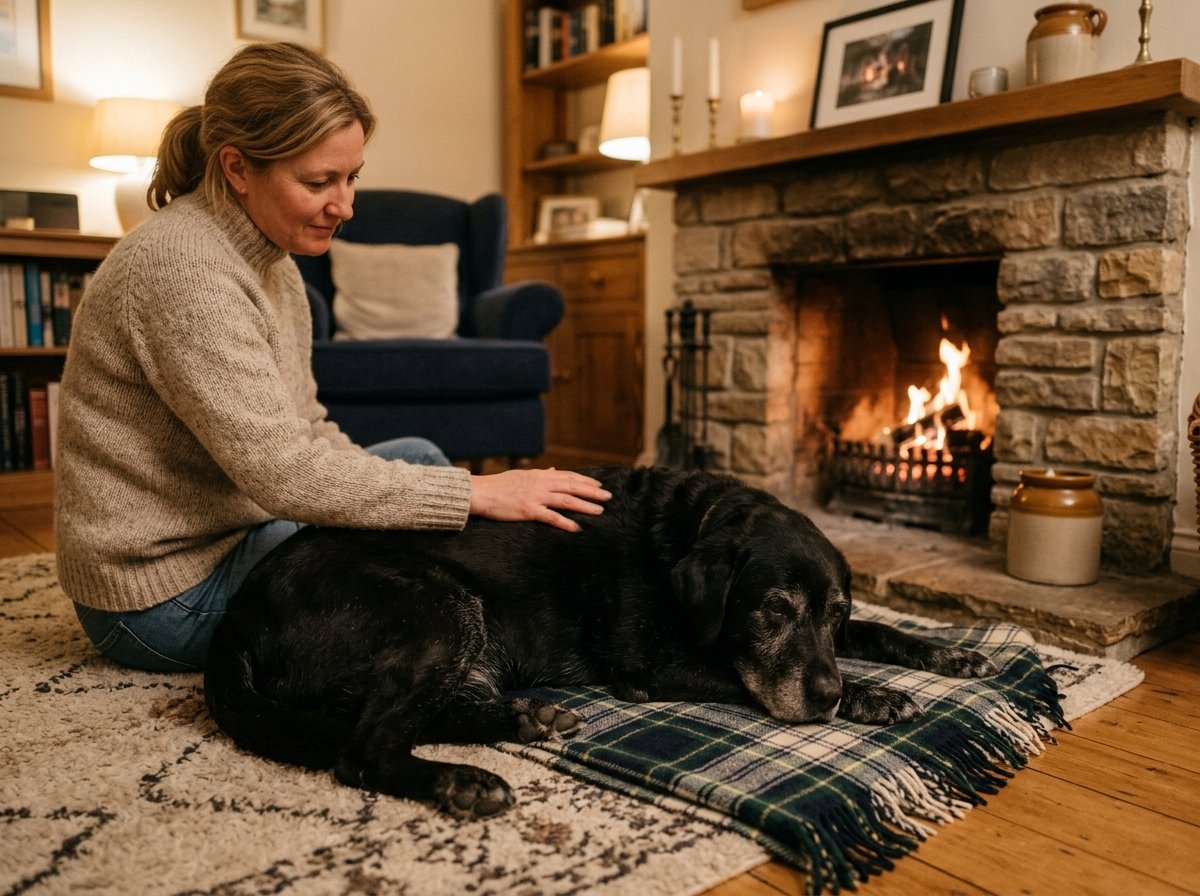
Follow the walk with a final bathroom break, a warm drink of water, and five minutes of gentle massage. For scheduling inspiration, check our guide on establishing a healthy senior dog routine.
4: Move Bedding into Your Bedroom
If your senior dog currently sleeps in a hallway or downstairs living room, move their bed into your bedroom near your bed.
Hearing your regular breathing and smelling your presence provides powerful emotional security. Many anxious senior dogs settle immediately once they know their human companion is right beside them.
If your dog tries to climb into your bed but struggles with joint pain, place a low-height dog ramp next to your mattress.
5: Discuss Vet-Approved Medications and Calming Aids
Never give human sleep aids, melatonin, or pain relievers to your dog without explicit veterinary approval. Many human medications are toxic to dogs.
Your veterinarian can recommend safe, targeted solutions. For joint pain, prescription NSAIDs or nerve pain medications like Gabapentin provide dramatic relief.
For cognitive decline, veterinary prescriptions such as Selegiline or specialized brain health supplements can restore normal sleep-wake cycles. Pheromone diffusers like Adaptil also provide gentle environmental calm.
According to VCA Hospitals veterinary advice on cognitive dysfunction, early intervention with vet-guided therapy offers the best results for senior dogs.
What Not to Do When Your Old Dog Paces at Night
Sleepless nights can drain your patience. Avoid these three common mistakes that can worsen your dog’s anxiety:
- Never Scold or Yell: Scolding an anxious or confused senior dog increases stress hormones, making pacing worse.
- Do Not Confine to a Small Crate: Locking a confused senior dog in a tight crate can cause panic, clawing, and severe tooth or joint injury.
- Do Not Restrict Evening Water: Restricting water to prevent accidents can cause dangerous kidney dehydration. Always allow free access to fresh water.
Frequently Asked Questions
Why is my old dog suddenly pacing and restless at night?
Sudden nighttime pacing usually indicates acute physical discomfort, such as an arthritis flare-up, a urinary tract infection, or emerging cognitive confusion. A veterinary exam is recommended to identify the underlying cause.
Can I give my senior dog melatonin for sleep?
You should only give melatonin under direct veterinary guidance. While melatonin can help some senior dogs, incorrect dosages or products containing xylitol sweetener can be fatal to dogs. Always consult your vet first.
What is sundowning in older dogs?
Sundowning refers to increased confusion, anxiety, and pacing that occurs in senior dogs as daylight fades. It is a classic sign of Canine Cognitive Dysfunction (dog dementia) caused by changes in brain chemistry.
How can I tell if my old dog is in pain at night?
Signs of nighttime pain include frequent position changes, groaning when lying down, rapid shallow panting while cool, licking at joints, and difficulty standing up on slick floors.
Is nighttime pacing a sign it is time to put my dog down?
Not necessarily. Nighttime pacing is a manageable symptom. In many cases, targeted pain relief, cognitive supplements, or simple environment changes successfully restore peaceful sleep. Consult your vet to evaluate quality of life.
Restoring Peace to Your Senior Dog’s Nights
Helping an old dog who is restless at night takes patience, observation, and warmth. Remember that your dog’s pacing is an appeal for help, not bad behaviour.
By upgrading their bed, setting up nightlights, establishing a calm routine, and consulting your veterinarian, you can help your golden companion enjoy deep, restful sleep again.
Always work closely with your veterinarian to diagnose medical causes and tailor a safe care plan. Review official guidance from the American Veterinary Medical Association senior pet care FAQ to keep your senior dog thriving.
Evening agitation is often a hallmark of canine cognitive decline known as sundowners in dogs. An older dog reversing their day-night rhythm may also suffer from old dog sleeping all day lethargy.