
Waking up at two in the morning to the sound of pacing paws or soft whines is a familiar experience for owners of aging dogs. Canine Cognitive Dysfunction (CCD), often called dog dementia, affects up to 60 percent of dogs aged 11 and older, according to veterinary neurology studies.
One of the earliest and most distressing signs of dog dementia is a flipped sleep schedule. Your dog may sleep peacefully all afternoon, only to become restless, disoriented, and anxious as soon as the sun goes down.
You want your dog to feel safe and relaxed at night, and you need a good night’s rest yourself. In this guide, you will discover why dog dementia disrupts sleep, how to adjust evening routines, and what vet-tested solutions help senior dogs sleep peacefully until morning.
Why Dog Dementia Causes Nighttime Pacing and Restlessness
To fix nighttime restlessness, you first need to understand what is happening inside your aging dog’s brain.
Canine cognitive decline alters the brain’s internal clock, known as the circadian rhythm. The biological machinery that tells your dog when it is day and when it is night slowly breaks down. As a result, melatonin production drops, leaving your dog awake and confused when the house turns dark.
This phenomenon is closely related to “sundowning” in humans. As daylight fades, shadows lengthen and ambient noise drops. Decreased light causes vision loss issues to stand out, making a familiar living room look strange and frightening to a confused dog.
Additionally, senior dogs often experience secondary discomforts like stiff joints or increased bladder urgency at night, which triggers anxiety and relentless pacing.
1. Establish a Strict Evening Wind-Down Routine
Dogs thrive on predictable habits, and senior dogs with cognitive decline depend on routine to feel secure.
Create a consistent 90-minute evening schedule before bedtime. Feed your dog their final meal at the same time each evening, followed by a gentle, slow-paced potty walk. Keep lighting warm and dim during the final hour before bed to signal that sleep is approaching.
Avoid high-energy play, noisy visitors, or sudden changes to the living room layout in the evening. Predictable patterns reduce anxiety spikes that trigger sundowning behavior.
2. Increase Morning and Early Afternoon Activity
If your senior dog sleeps twelve hours during the day, they will naturally be wide awake at midnight.
Help your dog reset their internal clock by increasing physical and mental stimulation during daylight hours. Take short, gentle ten-minute walks in bright morning sunlight. Exposure to natural sunlight boosts daytime serotonin and encourages natural melatonin production later at night.
For dogs with joint stiffness who cannot walk far, provide low-impact mental stimulation. Sniffing mats, gentle lick pads coated with plain pumpkin, or short scent-finding games in the yard tire out an aging brain without straining sore legs.
3. Use Soft Nightlights to Eliminate Dark Shadows
Complete darkness causes panic in dogs with cognitive dysfunction or declining eyesight due to cataracts.
When the room goes dark, confused dogs lose their visual landmarks. They wander, bump into furniture, and become trapped in corners, which leads to distressed barking or pacing.
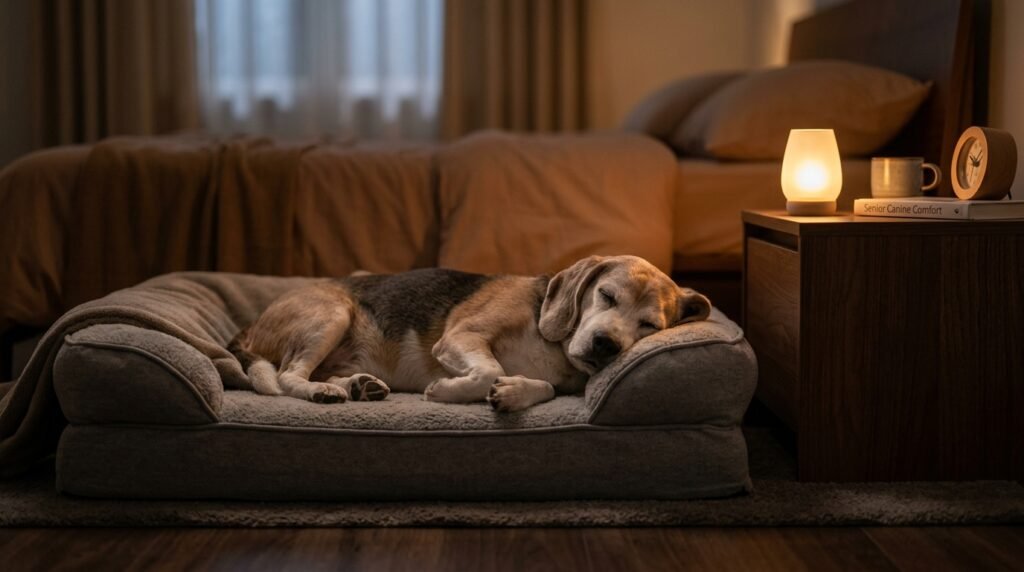
Install warm, low-glare LED nightlights in your dog’s sleeping area, along hallways, and near the backdoor potty path. Soft illumination allows your dog to recognize familiar surroundings if they wake up during the night.
4. Provide a Comforting, Orthopedic Sleeping Area
Unmanaged joint pain is a major cause of nighttime waking in senior dogs. A dog who cannot find a comfortable position will pace continuously trying to relieve hip or spinal pressure.
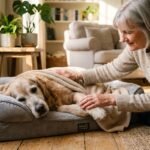
Invest in a supportive orthopedic memory foam dog bed with raised bolster edges. The bolster provides a secure headrest and helps dogs with dementia feel enclosed and safe.
Place the bed in a quiet corner away from cold floor drafts or noisy heating vents. Lay a soft, washable blanket over the bed, as the scent of familiar bedding provides immediate emotional reassurance.
Veterinary research from PetMD highlights that relieving physical pain is often the fastest way to resolve nighttime pacing in aging pets.
5. Ask Your Vet About Melatonin and Calming Supplements
When behavioral routines are not enough, natural supplements can help restore a healthy sleep cycle.
Melatonin is a hormone that regulates sleep-wake cycles. Many veterinarians recommend oral melatonin for senior dogs with CCD to encourage continuous nighttime sleep. Typical dosages range from 1 mg for small dogs up to 3 mg to 6 mg for large dogs, given 30 minutes before bedtime.
Other vet-approved calming ingredients include:
- L-Theanine: An amino acid found in green tea that promotes calm without sedation.
- Chamomile and Valerian Root: Gentle herbs that soothe mild nighttime anxiety.
- CBD Oil: Full-spectrum hemp oil formulated specifically for dogs can ease joint discomfort and nighttime nervousness.
Always consult your veterinarian before starting melatonin or any new supplement to ensure correct dosage and check for interactions with current medications.
6. Prevent Late-Night Bathroom Accidents
A full bladder is a guaranteed wake-up trigger for senior dogs. Aging kidneys produce more urine, and cognitive decline makes it harder for dogs to hold their bladder overnight.
Take your dog out for a final potty break immediately before you turn off the lights. Stand outside with them for a few extra minutes to make sure they empty their bladder completely.
Limit large bowls of water during the final hour before bedtime, but never restrict access to water during the day. If nighttime accidents continue, consider placing absorbable puppy pads near their sleeping area or using senior dog diapers to prevent midnight stress.
To better understand your dog’s overall hydration and digestion needs, review our complete guide on senior dog feeding schedules and portion timing and check recommendations for the best food for senior dogs.
7. Keep Your Own Responses Calm and Reassuring
When your dog wakes you up at three in the morning, it is easy to feel frustrated and exhausted. However, reacting with annoyance or loud commands will increase your dog’s fear and worsen pacing.
If your dog wakes up confused, guide them back to their bed with a calm, gentle voice. Offer a small sip of water, give them a slow stroke along their back, and sit with them for a few moments until their breathing slows.
Avoid making dramatic changes to where your dog sleeps at night. Moving a confused dog to a new room late at night increases disorientation.
Nighttime Sleep Solutions Comparison
| Solution | Target Issue | Implementation Time | Expected Result |
|---|---|---|---|
| Morning Sunlight & Walk | Disrupted internal clock | Daily (Morning) | Increases night melatonin |
| Soft LED Nightlights | Darkness panic & vision loss | Immediate | Prevents disorientation |
| Orthopedic Bolster Bed | Joint pain & feeling unsafe | Immediate | Reduces physical discomfort |
| Melatonin Supplement | Low natural sleep hormone | 30 mins before bed | Promotes deeper sleep |
| Late Potty Break | Bladder pressure waking | Right before bed | Prevents midnight accidents |
Veterinary Prescription Options for Severe Sundowning
If natural routines and over-the-counter supplements do not ease your dog’s nighttime anxiety, schedule a comprehensive senior wellness exam.
Your veterinarian may evaluate prescription options designed specifically for canine cognitive dysfunction:
- Selegiline (Anipryl): An FDA-approved medication for CCD that helps break down dopamine metabolites and improves cognitive function in aging dogs.
- Gabapentin: A medication commonly prescribed to manage both nerve pain and mild nighttime anxiety in senior pets.
- Anti-Anxiety Medications: Short-term use of vet-prescribed calming treatments during acute sundowning phases.
According to senior care guidelines from VCA Hospitals, combining medical therapy with environmental management yields the highest success rate for improving sleep quality.
If your dog is also showing unexplained weight loss alongside night pacing, read our guide on why your old dog is getting skinny to rule out metabolic conditions.
Frequently Asked Questions
Why is my senior dog with dementia pacing more at night than during the day?
Nighttime pacing is caused by “sundowning,” a classic symptom of Canine Cognitive Dysfunction. Declining vision, lower natural melatonin levels, and fading daylight cause confusion and anxiety when lights go out, prompting restless wandering.
What is the safest dosage of melatonin for a dog with dementia?
Melatonin dosages typically range from 1 mg for small dogs (under 30 lbs) to 3 mg–6 mg for medium and large dogs, administered 30 to 60 minutes before bedtime. Always check with your vet first and use pure melatonin without added xylitol.
Should I crate my senior dog with dementia at night?
Crating is generally not recommended for senior dogs with dementia unless they have been comfortably crated their entire lives. A confused dog may feel trapped in a crate, leading to severe panic, barking, and potential self-injury. A padded dog playpen or baby-gated room is safer.
How do I know if my old dog is in pain or just confused?
Pain usually presents with physical signs like panting, stiffness, difficulty rising, or vocalizing when moving. Confusion presents as staring at walls, getting stuck behind doors, or forgetting routine commands. Many senior dogs experience both simultaneously.
Restoring Peace to Your Senior Dog’s Nights
Caring for a senior dog with cognitive decline requires patience, empathy, and gentle adjustments to your home environment. By establishing a calm evening routine, providing supportive bedding, using nightlights, and consulting your vet about melatonin or joint support, you can help your dog feel safe and sleep through the night again.
Take the first step tonight: place a soft nightlight near your dog’s bed, ensure their late-night potty break is unhurried, and enjoy the quiet moments with your loyal companion.
Neurological Mechanisms of Canine Cognitive Decline
Understanding the neurological roots of Canine Cognitive Dysfunction (CCD) helps owners manage night pacing with empathy and structure.
Canine cognitive decline shares strong pathological similarities with Alzheimer’s disease in humans. As dogs age, toxic beta-amyloid protein plaques deposit within brain tissue, particularly in the cerebral cortex and hippocampus. These protein deposits disrupt neural signaling, impair memory processing, and damage the suprachiasmatic nucleus, the brain’s master circadian clock.
As circadian signaling weakens, the brain loses its natural ability to distinguish day from night. Melatonin secretion drops significantly, leading to nocturnal wakefulness, pacing, and anxiety.
Creating a Safe Nighttime Sleep Sanctuary
Designing a dedicated, low-stress sleeping area prevents midnight panic and wandering accidents:
- Use Enclosed Bolster Bedding: Raised bolster edges give confused senior dogs a physical boundary, providing emotional security. Check our recommendations for the best orthopedic beds for senior dogs.
- Install Low-Glare Nightlights: Position warm LED nightlights near water bowls, doorways, and hallways to prevent darkness-induced panic.
- Play Soft White Noise or Calming Music: Continuous low-volume white noise masks sudden outdoor sounds that trigger midnight barking.
- Use Non-Slip Flooring Runners: Place rubber-backed rugs along night paths to give secure footing for disoriented legs.
Prescription Options for Advanced Sundowning
When behavioral routines and over-the-counter melatonin are insufficient, veterinarians may evaluate prescription medications:
- Selegiline (Anipryl): An FDA-approved monoamine oxidase inhibitor (MAOI) that prolongs dopamine activity in the brain, improving cognitive clarity.
- Gabapentin: Calms central nervous system hyperexcitability, managing both nighttime anxiety and chronic joint pain.
- Trazodone: A serotonin antagonist and reuptake inhibitor (SARI) prescribed for acute nighttime restlessness.
Frequently Asked Questions
#### Why is my senior dog with dementia pacing more at night than during the day?
Nighttime pacing is caused by “sundowning,” a classic symptom of Canine Cognitive Dysfunction. Declining vision, lower natural melatonin levels, and fading daylight cause confusion and anxiety when lights go out, prompting restless wandering.
#### What is the safest dosage of melatonin for a dog with dementia?
Melatonin dosages typically range from 1 mg for small dogs (under 30 lbs) to 3 mg–6 mg for medium and large dogs, administered 30 to 60 minutes before bedtime. Always check with your vet first and use pure melatonin without added xylitol.
#### Should I crate my senior dog with dementia at night?
Crating is generally not recommended for senior dogs with dementia unless they have been comfortably crated their entire lives. A confused dog may feel trapped in a crate, leading to severe panic, barking, and potential self-injury. A padded dog playpen or baby-gated room is safer.
#### How do I know if my old dog is in pain or just confused?
Pain usually presents with physical signs like panting, stiffness, difficulty rising, or vocalizing when moving. Confusion presents as staring at walls, getting stuck behind doors, or forgetting routine commands. Many senior dogs experience both simultaneously.
#### Can anxiety supplements be given every night?
Natural calming supplements containing L-theanine, chamomile, or melatonin can be administered daily under veterinary guidance to maintain consistent sleep patterns.
#### What should I do if my dog wakes up barking at 3 AM?
Approach calmly without speaking loudly. Offer a small sip of water, gently lead your dog back to their bed, sit quietly until their breathing slows, and avoid dramatic light changes.