

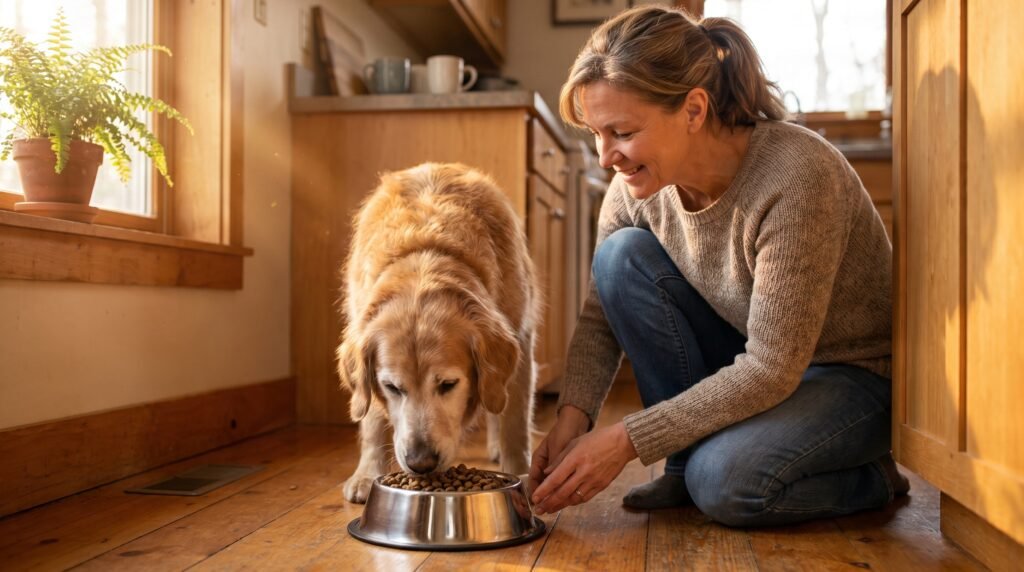
Did you know that nearly 40% of dogs in the US are now classified as overweight, and senior dogs face the highest risk? One of the biggest reasons is an outdated feeding schedule that no longer fits their aging body.
Your dog’s needs change as they get older — and what worked at age 3 won’t cut it at age 10. A proper senior dog feeding schedule helps you manage their weight, support digestion, and keep their energy steady. By the end of this guide, you’ll know exactly when to feed your senior dog, how much to give them, and what warning signs to watch for. Let’s get into it.
When Is a Dog Officially a Senior?
Most dogs enter their senior years between ages 7 and 10, but breed size plays a big role. Large and giant breeds age faster — a Great Dane may be considered senior at 6, while a Chihuahua doesn’t hit that stage until around 10 or 11.
According to the American Veterinary Medical Association’s senior pet guidelines, the general rule is that dogs over 7 years old benefit from age-specific care, including adjusted feeding routines.
You’ll want to make this shift before you see major health problems, not after. Early adjustment protects their joints, kidneys, and digestive system long-term.
How Often Should You Feed a Senior Dog?
Most vets recommend two meals per day for senior dogs — one in the morning and one in the evening. Splitting meals helps regulate blood sugar, reduces the risk of bloating (especially in larger breeds), and keeps hunger manageable throughout the day.
Some senior dogs with smaller appetites or digestive sensitivities actually do better with three smaller meals daily. If your dog seems restless before meals, gulps food too fast, or has a sensitive stomach, three meals may suit them better.
Stick with consistent timing. Dogs thrive on routine, and regular mealtimes support healthy digestion and better sleep patterns.
Sample Senior Dog Feeding Schedule
Here’s a practical daily schedule you can start using right away. Adjust the times to fit your own routine — the gaps between meals matter more than the exact hours.
| Meal | Suggested Time | What to Include |
|---|---|---|
| Morning Meal | 7:00 – 8:00 AM | 50% of daily portion, fresh water |
| Midday Meal (optional) | 12:00 – 1:00 PM | Small portion if doing 3 meals |
| Evening Meal | 5:00 – 6:00 PM | Remaining daily portion, fresh water |
| Last Water Check | 8:00 – 9:00 PM | Encourage hydration before bed |
Keep at least 4–5 hours between meals so digestion completes properly. Avoid feeding within 2 hours of exercise or play, which matters especially for large breeds prone to bloat.
How Much Should a Senior Dog Eat?
Portion size depends on your dog’s weight, activity level, and health status. Senior dogs typically need 20–30% fewer calories than they did in adulthood, according to research published by Tufts Veterinary Nutrition.
Here’s a general starting point based on body weight:
- Under 10 lbs: ¼ to ½ cup of dry food per day
- 10–25 lbs: ½ to 1 cup per day
- 26–50 lbs: 1 to 2 cups per day
- 51–75 lbs: 2 to 2½ cups per day
- Over 75 lbs: 2½ to 3+ cups per day (check with your vet)
These are estimates for dry kibble. Wet food portions differ significantly — usually around one 3.5 oz can per 3–3.5 lbs of body weight daily. Always check the feeding guide on your specific dog food label and adjust based on your vet’s recommendation.
If your dog is overweight, don’t cut their food drastically all at once. A 10–15% reduction over several weeks is safer and easier for them to adjust to.
Transitioning to a Senior Feeding Schedule
Switching your dog’s feeding routine too fast can upset their stomach. Use this gentle transition over 2–3 weeks:
Week 1: Keep the same food, but split portions into two equal meals if you haven’t already. Add fresh water with every meal.
Week 2: Start mixing 25% senior formula with 75% of the current food. Watch for soft stools or gas — these signal you’re moving too fast.
Week 3: Shift to 50% senior food, then gradually work up to 100% over the following week.
Should Senior Dogs Eat Wet or Dry Food?
Both options work well, and many owners use a mix of both. Wet food has higher moisture content, which helps senior dogs stay hydrated — particularly important if yours doesn’t drink enough water on their own.
Dry kibble supports dental health through the mild abrasion of chewing. If your senior dog has dental pain or missing teeth, wet food becomes the better primary choice.
A good middle-ground strategy: feed mainly dry kibble with a small spoonful of wet food mixed in. This adds moisture, makes meals more appealing for picky eaters, and keeps costs manageable.
The Association of American Feed Control Officials (AAFCO) recommends looking for foods labeled “complete and balanced” for all life stages or specifically for senior/mature dogs. That label means the food meets minimum nutritional standards.
Key Nutrients Your Senior Dog Needs
Age changes what your dog’s body prioritizes. Here’s what to look for on the food label:
Protein: Senior dogs actually need more protein than younger adults, not less. Muscle mass declines with age, and adequate protein helps slow that process. Look for a named meat source (chicken, beef, salmon) as the first ingredient.
Fiber: Supports digestive regularity, which slows as dogs age. Sweet potato, pumpkin, and beet pulp are good sources in senior formulas.
Omega-3 fatty acids: Help manage joint inflammation, which affects most senior dogs to some degree. Fish oil supplements or food with salmon as an ingredient work well.
Reduced phosphorus: Important if your vet has flagged early kidney concerns, which are common in aging dogs.
Check out our guide on the best supplements for senior dogs to go deeper on what to add to your dog’s bowl.
Warning Signs Your Schedule Isn’t Working
Even a well-planned senior dog feeding schedule needs adjusting sometimes. Watch for these red flags:
- Eating less than usual for 2+ days — could signal dental pain, nausea, or illness
- Rapid weight gain or loss — means portions need adjusting, possibly with vet guidance
- Vomiting after meals — may indicate eating too fast, food sensitivity, or a GI issue
- Increased thirst alongside reduced appetite — a common early sign of kidney or diabetes issues in seniors
- Begging constantly between meals — may signal the food isn’t nutrient-dense enough, or anxiety
If you notice any of these signs lasting more than 2–3 days, contact your vet. Don’t wait and hope it resolves on its own — senior dogs can decline quickly when something’s off.
Hydration: The Forgotten Part of the Schedule
Most feeding guides skip this, but hydration is just as important as food timing for senior dogs. Older dogs lose kidney efficiency, which makes water intake critical.
Place fresh water next to every feeding station, and refresh it at every mealtime. Some dogs drink more when you use a pet water fountain — the moving water is more appealing to them.
If your senior dog consistently avoids water, ask your vet about adding low-sodium broth to meals. Even a few tablespoons can meaningfully increase daily fluid intake.
The American Kennel Club’s senior dog care resources note that dehydration in older dogs can worsen kidney disease, cause confusion, and affect mobility — so don’t treat this as optional.
FAQ: Senior Dog Feeding Schedule
How many times a day should I feed my senior dog?
Most senior dogs do best with two meals per day — morning and evening. Dogs with digestive issues or very small appetites may benefit from three smaller meals. Consistency in timing matters most.
At what age is a dog considered a senior?
Generally, dogs are considered senior between ages 7 and 10. Large breeds like Labradors and German Shepherds enter senior status closer to 6–7, while small breeds like Yorkies may not reach that stage until 10–12.
Can I feed my senior dog 3 times a day?
Yes, and for some dogs it’s actually better. Three smaller meals reduce the risk of blood sugar dips, help dogs with low appetite eat more overall, and are easier on sensitive stomachs. Just divide the daily portion across all three meals rather than increasing total food.
Should senior dogs eat wet or dry food?
Both work — it depends on your dog’s health and preferences. Wet food helps with hydration and suits dogs with dental problems. Dry food supports dental hygiene. Many owners mix both for the best of both options.
How much should a senior dog eat per day?
It varies by weight and activity level, but most senior dogs need 20–30% fewer calories than they did in adulthood. A 50 lb senior dog typically needs around 1 to 2 cups of dry food per day. Always check the label and confirm with your vet.
What is the best food for a senior dog?
Look for food labeled “complete and balanced” by AAFCO, with a named meat as the first ingredient, added omega-3s, and moderate fat content. Your vet can recommend a formula based on your dog’s specific health conditions.
The One Thing That Matters Most
The single most important step you can take today is this: split your senior dog’s food into two consistent daily meals and keep the timing the same every day. Everything else — portion size, food type, supplements — builds on that foundation.
Start with the sample schedule in this guide, track your dog’s weight monthly, and book a vet check-up if you haven’t had one in the past 6 months. Senior dogs do best when small problems get caught early, and a feeding schedule is one of the most powerful tools you have to stay on top of their health.
You’re doing the right thing by reading this. Your dog is lucky to have you paying attention.