
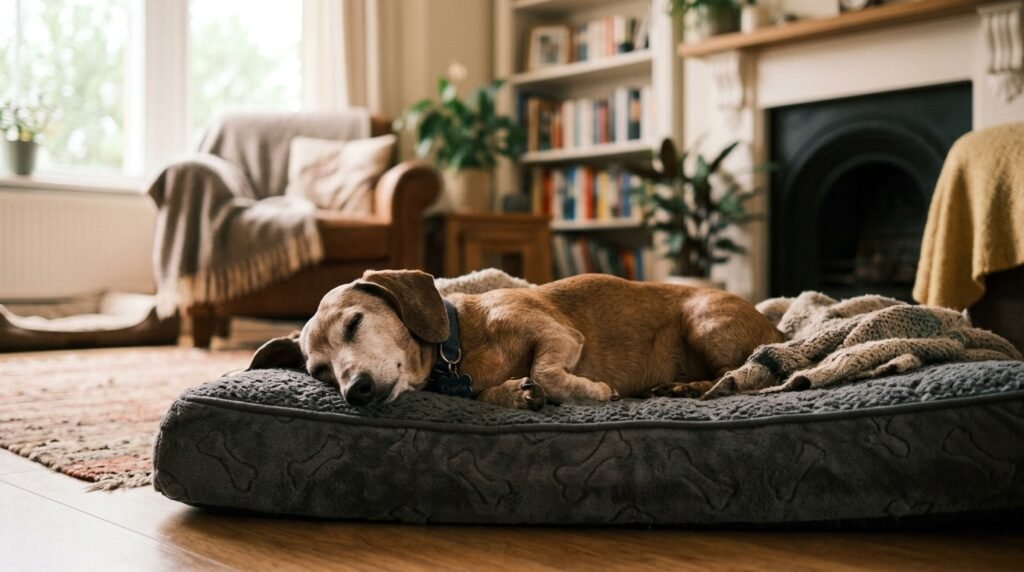
Seeing your beloved pet suddenly struggle to walk or cry out in pain from IVDD in dogs is an overwhelming experience. One morning your dog might happily greet you at the door, and just a few hours later, they are walking with a hunched back, shivering in silence, or dragging their back paws across the living room carpet.
You wonder what caused this sudden spinal change. You worry whether your companion will ever walk normally again, and what steps you must take immediately to protect their spine from permanent nerve damage.
Your concern is completely justified. Intervertebral Disc Disease is one of the most common and urgent spinal conditions affecting dogs, particularly chondrodystrophic breeds with long backs and short legs, as well as aging senior pets. However, an IVDD diagnosis does not mean your dog cannot recover. With prompt veterinary assessment, strict conservative crate rest, or timely decompression surgery, a vast majority of dogs regain their comfort and mobility.
Quick Answer:
IVDD in dogs (Intervertebral Disc Disease) occurs when the cushioning discs between the spinal vertebrae bulge or rupture into the spinal canal, placing direct pressure on the spinal cord. Symptoms range from mild back stiffness (Stage 1) to hind limb paralysis and loss of deep pain sensation (Stage 5). Mild cases often recover with 6 to 8 weeks of strict crate rest and anti-inflammatory medications, while severe cases require emergency spinal surgery.
Key Takeaways:
- Primary Triggers: Disc calcification (Hansen Type I) or chronic age-related disc degeneration (Hansen Type II) causing spinal nerve compression.
- Recognizable Signs: Hunched back, yelping when picked up, wobbly rear gait (ataxia), paw knuckling, or inability to stand.
- Immediate Home Action: Restrict all movement immediately. Confine your dog to a crate or small recovery pen and avoid all stairs and jumping.
- Emergency Threshold: Inability to walk or loss of bladder control requires an emergency veterinary hospital visit within 24 hours.
This guide walks you through the mechanics of IVDD, the five clinical grades of disc herniation, how to choose between conservative crate rest and surgery, and practical home care steps to help your dog heal.
What Is IVDD in Dogs and How Does It Happen?
Your dog’s spine is made up of individual bony vertebrae that protect the delicate spinal cord running down their back. Between each vertebra lies an intervertebral disc. These discs act like tiny shock-absorbing cushions, consisting of a tough outer fibrous layer (annulus fibrosus) and a soft, jelly-like inner center (nucleus pulposus).
In dogs affected by IVDD, these shock absorbers lose their elasticity and moisture. The inner jelly hardens or calcifies, eventually herniating upward into the spinal canal. This puts physical pressure on the spinal cord, pinching nerves and cutting off communication between the brain and the legs.
| Clinical Stage (Grade) | Physical Symptoms & Mobility | Standard Veterinary Recommendation |
|---|---|---|
| Stage 1 (Mild Pain) | Spinal stiffness, reluctance to jump, arched back; walks normally | Conservative management: strict crate rest & pain medication |
| Stage 2 (Mild Ataxia) | Wobbly back legs, subtle toe knuckling, but able to stand and walk | Strict crate rest, anti-inflammatories, close monitoring |
| Stage 3 (Non-Ambulatory) | Can move rear legs when supported, but unable to stand or walk alone | Neurological evaluation; surgery recommended if no rapid progress |
| Stage 4 (Paralysis with Pain) | No voluntary movement in back legs; still feels deep toe pinch | Emergency spinal surgery (hemilaminectomy) within 24–48 hours |
| Stage 5 (Paralysis No Pain) | Complete paralysis; no response to deep pain toe clamp | Immediate emergency surgery (highest urgency window: under 24 hrs) |
Veterinarians classify IVDD into two primary biological types based on how the disc degrades. Understanding your dog’s breed and risk factors helps you take proactive steps.
Hansen Type I vs. Hansen Type II: What Is the Difference?
Hansen Type I (Acute Disc Rupture)
Type I involves an explosive, sudden extrusion of calcified disc material directly into the spinal canal. This type is most common in young-to-middle-aged chondrodystrophic breeds such as Dachshunds, Corgis, French Bulldogs, Basset Hounds, and Beagles.
Symptoms often appear within seconds or minutes after a dog jumps off a sofa or chases a ball. It produces acute, intense spinal pain and rapid weakness.
Hansen Type II (Chronic Disc Bulging)
Hansen Type II involves a slow, progressive bulging of the outer disc fibrous ring over months or years. This type is most commonly seen in older, non-chondrodystrophic breeds past age eight, such as German Shepherds, Labrador Retrievers, and Dobermans.
Because the nerve compression builds up slowly, symptoms mimic arthritis or muscle fatigue. If your dog exhibits progressive hind limb weakness, review our guide on old dog back legs giving out to distinguish nerve compression from joint decay.
7 Common Symptoms of IVDD in Dogs
1. Arched Back and Tense Abdomen
When a spinal disc bulges, surrounding muscles contract into a tight protective spasm to prevent the back from bending. Your dog may stand with a hunched or roached spine, tucking their tail tightly between their legs.
Their belly muscles may feel unusually rigid or board-like to the touch, which can sometimes be mistaken for an upset stomach.
2. Crying Out When Picked Up or Touched
Spinal disc herniation causes acute nerve root pain. Your dog may yelp, whimper, or snap defensively when you try to lift them under their chest or belly.
If you notice subtle pain cues, read our detailed article on senior dog pain signs and symptoms to recognize early discomfort signals.
3. Reluctance to Move, Jump, or Turn Their Head
A dog experiencing disc pain avoids any movement that twists or flexes the spine. They may refuse to look up at you, lower their head toward their paws, or hesitate at the bottom of a single doorway step.
They may stand completely still in one spot, looking anxious and unwilling to walk over to their food bowl.
4. Wobbly Gait and Incoordination (Ataxia)
As disc pressure compresses motor and sensory nerves in the spinal cord, your dog loses proprioception, which is the brain’s subconscious awareness of paw placement.
Your dog’s rear end will sway drunkenly from side to side. Their hind legs may cross over each other while walking, causing them to stumble or trip.
5. Paw Knuckling and Foot Dragging
Knuckling occurs when a dog walks on the tops of their toes rather than their bottom paw pads. When nerve signals are delayed, the dog does not realize their paw is flipped upside down.
You may hear their toenails scraping loudly against the sidewalk or wood floors during movement.
6. Shivering and Muscle Tremors
Intense nerve pain and muscle spasms frequently cause whole-body shivering or localized leg tremors, even in a warm room.
If your dog is trembling while resting, explore our dedicated guide on old dog shaking and trembling to assess pain vs. muscle fatigue.
7. Urinary and Fecal Incontinence
Severe disc herniations compress the autonomic nerves that control bladder and bowel sphincters. A paralyzed dog may leak urine continuously or lose the ability to empty their bladder voluntarily.
According to veterinary neurology guidelines published on VCA Hospitals spinal health guides, loss of bladder control is an urgent sign requiring immediate medical intervention.
When to See a Vet: Emergency Red Flags
IVDD can progress rapidly from mild discomfort to full paralysis within hours. Knowing when to rush to an emergency clinic is vital.
| Symptom Combination | Required Action |
|---|---|
| Mild spinal stiffness + Able to walk normally | Strict crate rest; vet appointment within 24 hours |
| Wobbly rear legs + Stumbling or knuckling | Same-day veterinary evaluation |
| Complete inability to stand or move back legs | Immediate emergency animal hospital visit |
| Paralysis + Inability to urinate or leaking urine | Immediate emergency surgical consultation |
Schedule a prompt veterinary exam if:
- Your dog shows an arched back and refuses to climb one or two steps.
- Your dog whimpers softly when turning their head or sitting down.
- You notice occasional nail scraping on the floor during walks.
Seek immediate emergency surgical care if:
- Your dog suddenly loses the ability to walk and is dragging their back legs.
- Your dog has lost feeling in their toes when pinched firmly.
- Your dog is unable to urinate on their own.
According to neurological treatment standards on PetMD’s guide on IVDD treatment in dogs, surgical decompression within 24 hours of losing mobility yields recovery rates over 85 to 90 percent.
Treatment Options: Conservative Crate Rest vs. Surgery
Conservative Medical Management (Stages 1–2)
For dogs in Stage 1 or mild Stage 2 who can still walk, conservative management is highly successful. The foundation of conservative care is strict crate rest for 6 to 8 weeks.
Crate rest allows the torn outer disc ring to form scar tissue and heal over, preventing further disc material from entering the spinal canal. Your vet will prescribe anti-inflammatory medications (NSAIDs or corticosteroids), muscle relaxants (like methocarbamol), and nerve pain medications (like gabapentin).
Crucial Rule: Even if your dog feels better after a few days of medication, do not end crate rest early. Pain meds mask discomfort, and unrestricted jumping can cause a catastrophic full disc rupture.
Spinal Decompression Surgery (Stages 3–5)
For dogs in Stages 3, 4, or 5, or dogs whose pain does not resolve with conservative care, spinal surgery (hemilaminectomy) is the gold standard.
A board-certified veterinary surgeon opens a small window in the vertebra to relieve pressure and physically remove the herniated disc material. Following surgery, dogs undergo structured rehabilitation to rebuild nerve signals and muscle strength.
5 Safe Home Steps to Support a Dog with IVDD
Whether your dog is undergoing conservative crate rest or recovering from spinal surgery, these home care steps protect their back from reinjury.
Step 1: Set Up an Enriching Crate Rest Recovery Zone
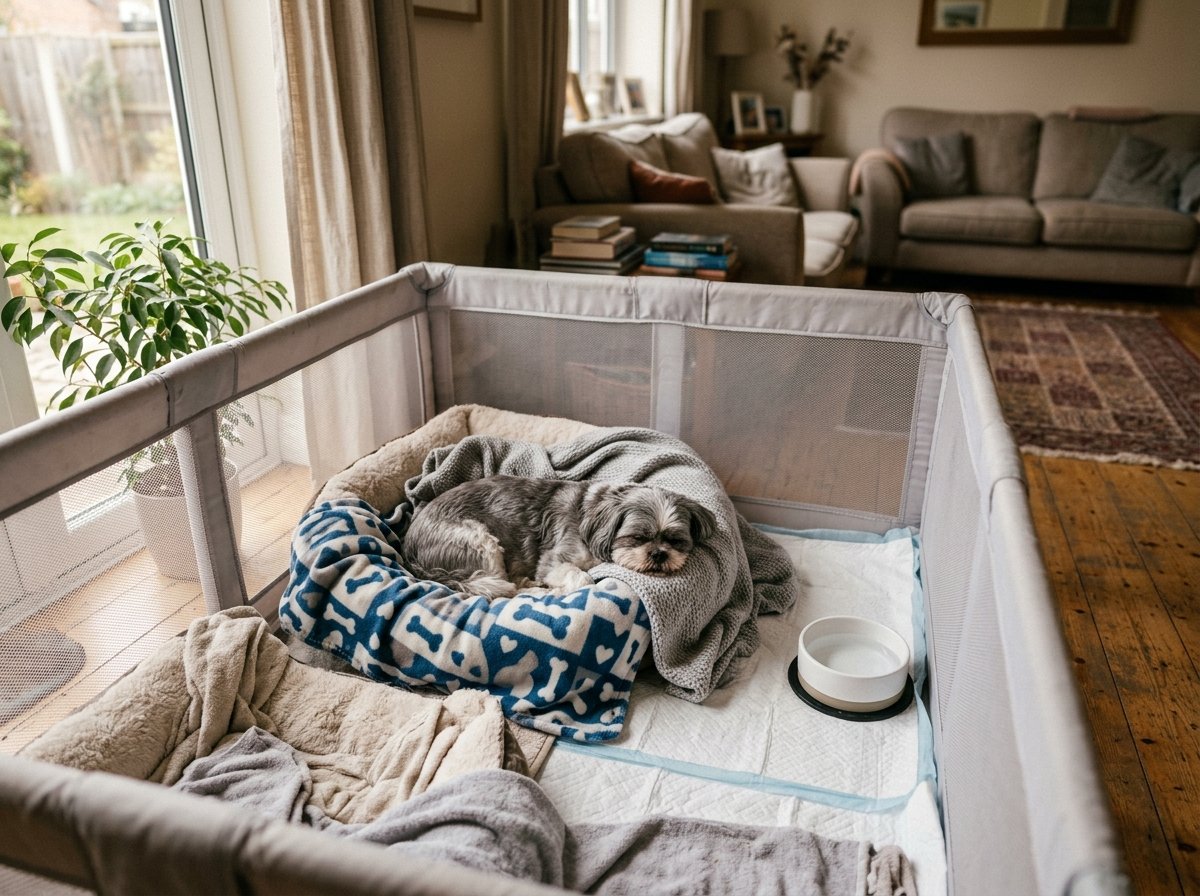
Crate rest does not mean your dog must feel isolated. Set up a spacious crate, playpen, or gated recovery area in the main living room where the family spends time.
Equip the recovery pen with a thick orthopedic memory foam bed, soft washable fleece blankets, and easy-access water bowls. Provide safe lick mats or puzzle toys to keep their mind engaged while their body rests.
Step 2: Carry and Support Your Dog Correctly
Improper lifting twists the spine and worsens disc compression. Never lift your dog under the armpits while letting their hind legs dangle.
Always lift with both hands simultaneously: place one hand securely under their chest and the other hand supporting their rear end and pelvis, keeping their spine completely straight and horizontal.
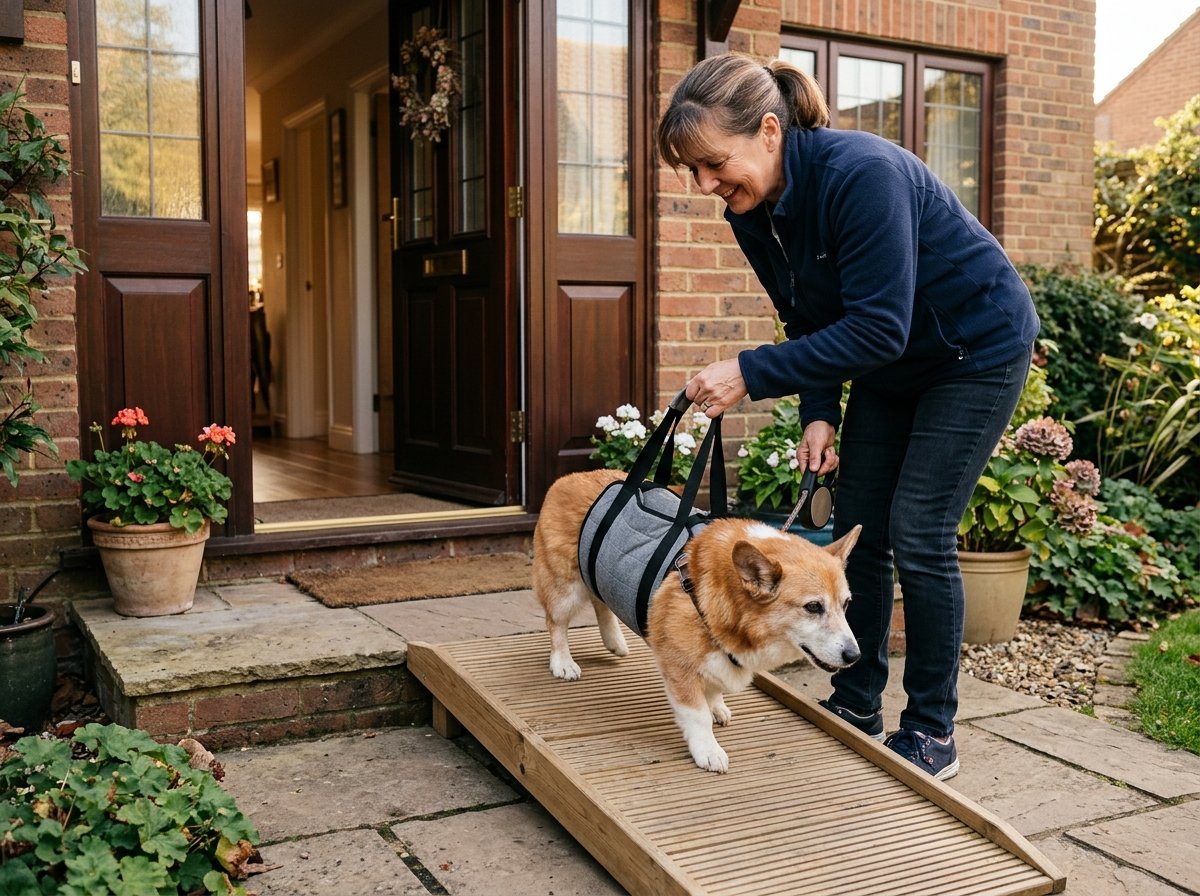
Use a soft belly sling or harness to support their weight during brief 3-minute outdoor potty breaks. Learn more about assistive gear in our guide on mobility aids for senior dogs.
Step 3: Eliminate All Jumping with Permanent Ramps
Jumping on or off furniture is the single greatest cause of secondary disc herniation.
Install low-incline padded ramps leading up to couches or beds if your dog is allowed on furniture after recovery. Place baby gates at the top and bottom of all staircases to prevent unassisted stair climbing.
Step 4: Explore Gentle Cold Laser Therapy and Acupuncture
Non-invasive complementary therapies can significantly accelerate spinal healing and reduce chronic inflammation.
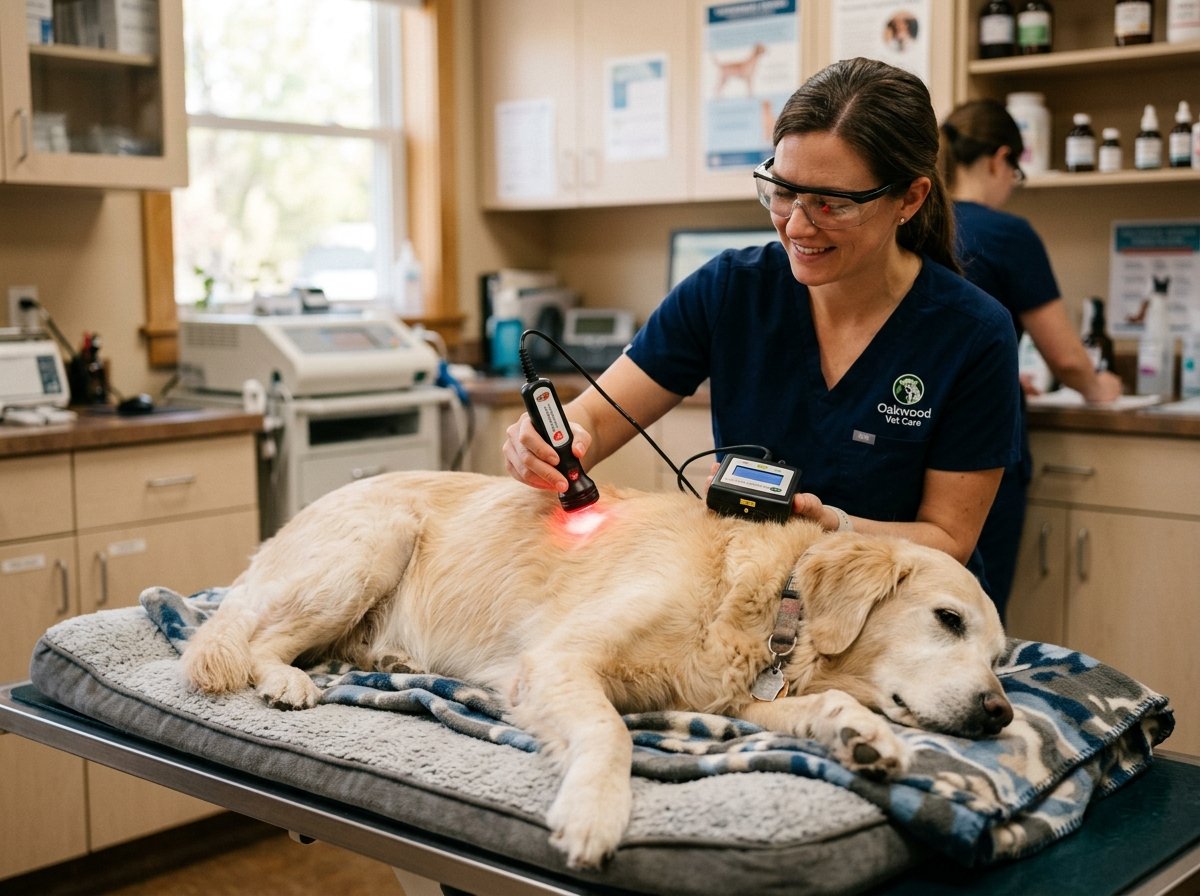
Class IV cold laser therapy uses light wavelengths to stimulate cellular repair and boost blood flow to damaged spinal nerves. Veterinary acupuncture also helps relieve severe muscle spasms along the back.
Step 5: Maintain a Lean Body Weight and Anti-Inflammatory Diet
Excess body weight places continuous mechanical stress on spinal discs. Keeping your dog at an ideal lean body condition reduces strain on their back.
Feed a high-quality senior dog food enriched with Omega-3 fatty acids (EPA/DHA), which naturally suppress systemic inflammation. Measure daily food portions carefully to prevent weight gain during crate rest inactivity.
What Not to Do When Caring for an IVDD Dog
Avoid these critical mistakes when managing spinal disc disease:
- Never Allow Free Roaming Because They Look Better: Pain medications make dogs feel active before their disc has scarred over. Stick strictly to 6–8 weeks of rest.
- Never Use Collars for Walking: Neck pressure strains cervical spinal discs. Always use a padded chest harness instead.
- Never Give Human Pain Relievers: Ibuprofen, Tylenol, and aspirin are toxic to dogs and prevent veterinarians from prescribing vital canine anti-inflammatories.
Frequently Asked Questions
Can a dog recover from IVDD without surgery?
Yes. Many dogs with Stage 1 and Stage 2 IVDD recover fully with conservative treatment, including 6 to 8 weeks of strict crate rest, anti-inflammatory medications, and pain relief.
How long does an IVDD flare-up last?
Acute pain often subsides within 7 to 14 days with proper medication. However, full disc healing and scar tissue formation require 6 to 8 weeks of strict movement restriction.
What breeds are most prone to IVDD in dogs?
Chondrodystrophic breeds with long backs and short legs are most susceptible, including Dachshunds, Corgis, French Bulldogs, Basset Hounds, and Beagles. Large older dogs like German Shepherds are also at risk for chronic disc bulging.
How can I tell if my dog’s back pain is an emergency?
If your dog is dragging their legs, cannot stand, is knuckling their paws, or has lost bladder control, it is a critical neurological emergency requiring immediate veterinary attention.
Can dogs live a happy life after IVDD?
Absolutely. Most dogs return to happy, active lives following recovery or surgery. Even dogs with permanent rear limb weakness thrive with support carts, ramps, and dedicated family care.
Supporting Your Dog Through Spinal Recovery
Managing IVDD in dogs requires patience, consistency, and compassionate care, but your dedication directly supports your dog’s healing process. By enforcing crate rest, providing non-slip home traction, and working closely with your veterinary team, you give your dog the best opportunity to enjoy a pain-free life.
Always follow your veterinarian’s tailored diagnostic and recovery instructions. Review official guidance from the American Veterinary Medical Association senior pet care FAQ to keep your companion safe throughout their golden years.