
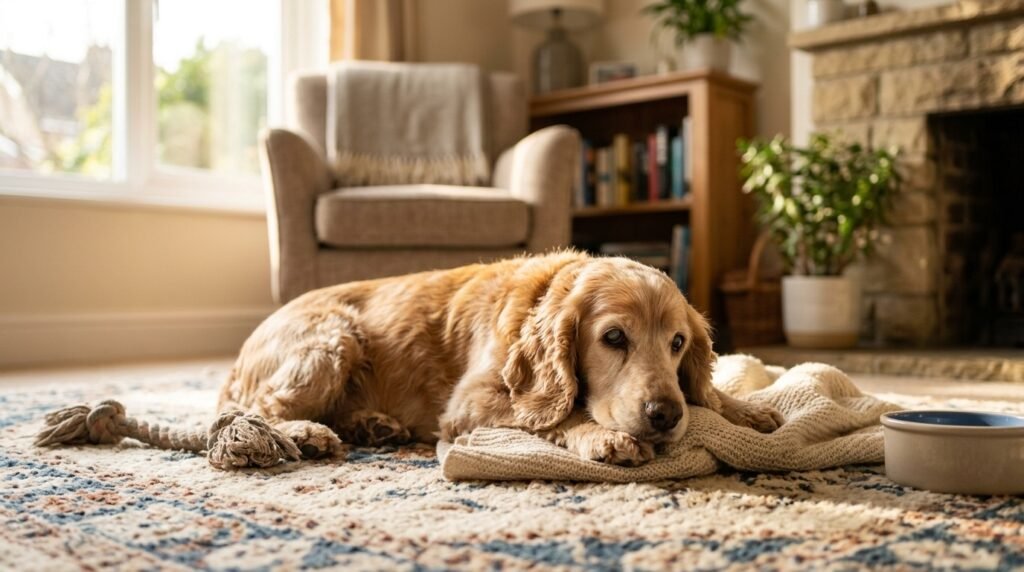
You bend down to greet your older dog in the morning, and you immediately spot crusty residue clinging to the inner corners of their eyelids. You wipe it away with a tissue, only to find another sticky blob waiting by afternoon.
Every dog owner encounters eye crust from time to time. However, when an aging companion suddenly develops constant, goopy dog eye boogers, it is natural to feel uneasy about failing eyesight, infections, or underlying pain.
Senior dogs experience significant structural changes in their eyes as they grow older. Learning to read what the color, texture, and amount of ocular discharge tell you ensures you can maintain their daily comfort and protect their vision.
Quick Answer:
Dog eye boogers in senior canines range from harmless morning sleep crusts (dried tears and shed epithelial cells) to clinical warning signs of dry eye (keratoconjunctivitis sicca), corneal ulcers, or bacterial conjunctivitis. Clear or light brown crusts that wipe away easily are normal. Thick gray, yellow, or greenish mucus, squinting, or redness requires a veterinary Schirmer tear test and fluorescein stain to prevent permanent corneal damage.
Key Takeaways:
- Color Matters: Dried clear or brownish crusts are normal morning rheum, while cloudy gray, yellow, or green discharge signals inflammation or infection.
- Senior Tear Decline: Aging tear glands frequently lose aqueous production, turning natural lubrication into thick, stringy mucus known as dry eye.
- Safe Hygiene: Clean crusts only with sterile veterinary saline or boiled water on flat cotton rounds, wiping strictly from inner corner outward.
- Avoid Human Medications: Never apply leftover human eye drops or steroid ointments without a vet rule-out for corneal scratches.
What Are Dog Eye Boogers? Normal Rheum vs Ocular Illness
The technical term for everyday eye crust is rheum. During normal daytime hours, your dog’s lacrimal glands produce a continuous three-layer tear film made of mucus, water, and lipids to flush out dirt and lubricate the cornea.
When your dog sleeps, tear production naturally drops and blinking stops. Airborne dust particles, shed cells, and dried mucus migrate toward the inner canthus of the eye, forming small crusty nuggets by morning.
In a healthy older dog, this material is dry, minimal, and either clear or reddish-brown. The reddish tint comes from porphyrin, an iron-rich waste pigment naturally present in canine tears and saliva that oxidizes when exposed to air.
For an expanded clinical review of various fluid consistencies, check our detailed guide on senior dog eye discharge types.
Decoding the Colors of Dog Eye Boogers
Examining the exact color and consistency of the discharge on your wipe provides immediate clues regarding what is happening on the ocular surface.
| Discharge Color | Texture & Consistency | Likely Cause | Action Required |
|---|---|---|---|
| Clear or Pale Brown | Dry, crumbly morning crust | Normal sleep accumulation (rheum) | Gentle daily wiping with warm saline |
| Grayish-White Mucus | Thick, sticky, stringy strands | Keratoconjunctivitis Sicca (Dry Eye) | Prompt vet Schirmer tear test |
| Yellow or Greenish Pus | Heavy, sticky, crusts lids shut | Bacterial infection or corneal ulcer | Same-day veterinary medical exam |
| Watery Overflow | Wet fur, rust-colored facial staining | Blocked tear ducts or eyelid irritation | Vet duct flush and eyelid evaluation |
Why Older Dogs Develop Excessive Eye Boogers
Aging bodies undergo subtle physical shifts that alter how eyes function. Recognizing these age-related factors helps you separate normal aging from medical emergencies.
1. Age-Related Tear Gland Atrophy (Dry Eye / KCS)
The single most common culprit behind chronic goop in senior dogs is Keratoconjunctivitis Sicca, commonly called dry eye. In older pets, the immune system often attacks the tear-producing lacrimal glands, or the glands simply atrophy from age.
When the watery part of the tear film dries up, the body attempts to compensate by overproducing thick mucus. This leaves the cornea scratchy, dry, and coated in sticky gray or yellowish goo that clings like glue.
Clinical data from the American College of Veterinary Ophthalmologists confirms that untreated dry eye leads to painful corneal scarring, dark pigmentation, and permanent vision impairment.
If you notice inflamed pink tissue alongside heavy discharge, consult our guide on dog pink eye and conjunctivitis in older dogs.
2. Slack Eyelids and Ectropion
As dogs pass their eighth or tenth year, the delicate muscles around their eye sockets lose tone and firmness. In breeds like Bassets, Bloodhounds, Cocker Spaniels, and older Golden Retrievers, the lower eyelid droops outward.
This drooping creates an exposed pocket called a conjunctival pouch. Airborne pollen, household dust, and grass seeds fall directly into this pocket, prompting constant mucus production to wash away the irritants.
3. Blocked Nasolacrimal Ducts
Tears normally drain from the surface of the eye through microscopic puncture holes into the nasal passages. In older dogs, chronic mild inflammation or mineral debris can narrow or plug these drainage channels.
Unable to drain through the nose, tears spill over the lower eyelids onto the cheeks. The wet fur attracts bacteria and yeasts, which turn tears into dark brown, sticky crusts that irritate the surrounding skin.
4. Eyelid Growths and Meibomian Gland Cysts
Senior dogs frequently sprout tiny benign growths along their eyelid margins called meibomian gland adenomas. Every time your dog blinks, this small bump brushes directly across the sensitive cornea.
This constant friction acts like a speck of sand trapped under a contact lens. The eye reacts with defense mucus, tearing, and redness. If you see bloodshot sclera, read our reference on dog’s red eyes in senior dogs.
Diagnostic Tests Your Veterinarian Will Perform
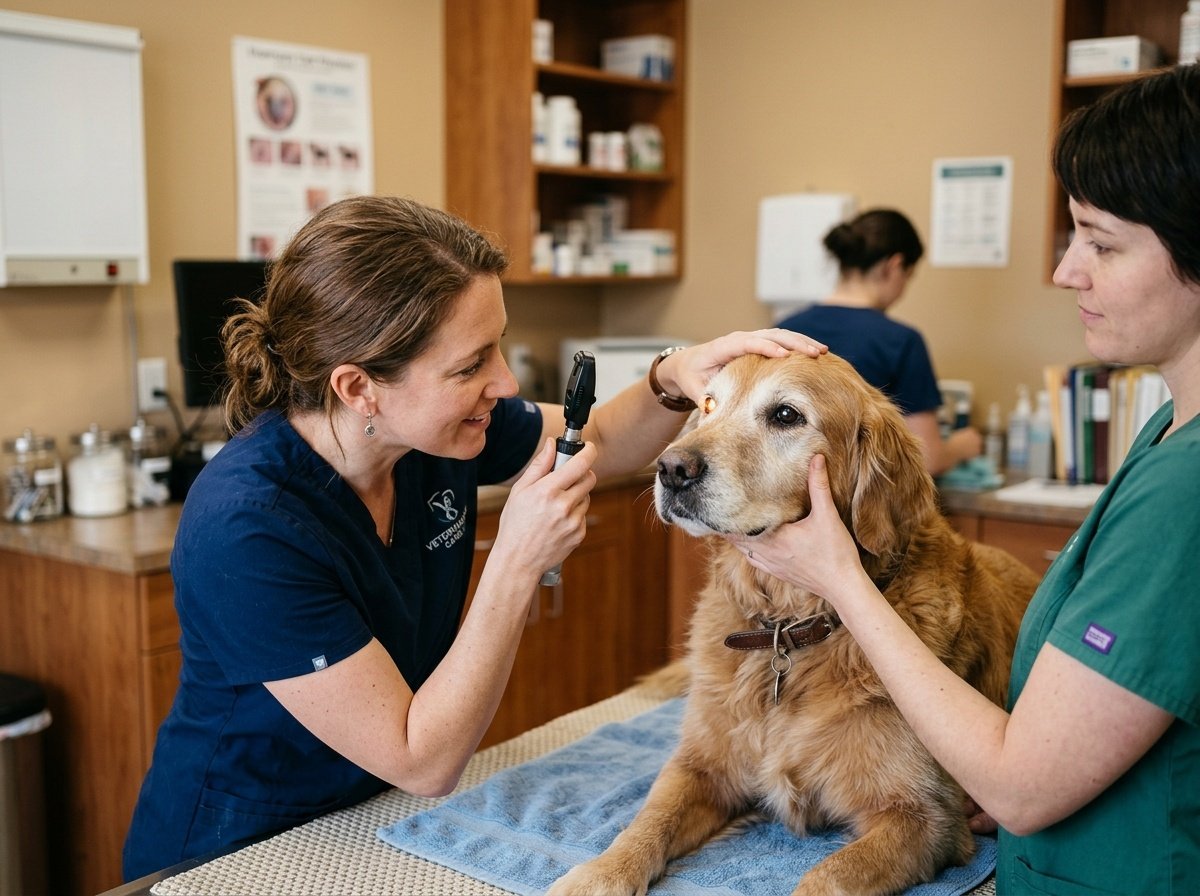
If your senior companion produces heavy, colored, or persistent eye boogers, booking a veterinary checkup is essential. Ophthalmic issues deteriorate fast, and an accurate diagnosis requires specialized diagnostic tools.
First, your vet will perform a Schirmer Tear Test. A small, sterile paper strip is slipped inside the lower eyelid for sixty seconds to measure how many millimeters of tears the eye produces. A normal canine eye produces fifteen millimeters or more per minute.
Next, the veterinarian will apply a bright green fluorescein dye stain. This dye highlights tiny scratches, punctures, or deep corneal ulcers that are invisible to the naked eye under normal room lighting.
Veterinary ophthalmology research published by the Cornell University College of Veterinary Medicine emphasizes that checking for corneal ulceration before administering any medication is vital, as steroids can cause rapid corneal melting if an ulcer is present.
Finally, your vet will inspect the eye using an ophthalmoscope and measure internal pressure with a tonometer to rule out painful glaucoma or deep uveitis.
Safe Step-by-Step Eye Cleaning Protocol for Home Care
Keeping your older dog’s eyes clean prevents crusts from hardening into painful scabs that pull hair and tear delicate skin. Follow this gentle cleaning routine daily.
Supplies You Will Need:
- Sterile isotonic saline solution (such as plain 0.9% sodium chloride wound wash or contact lens saline with zero preservatives).
- Flat round cosmetic cotton pads or sterile gauze squares.
- A clean towel to keep your dog comfortable and dry.
- High-value soft treats to make the experience positive.
Step 1: Soften Hardened Crusts First
Never pick, pull, or scrape dry crusts off your dog’s eyelid hair with your fingernails. Doing so tugs at inflamed skin and causes sharp pain, making your dog head-shy in future sessions.
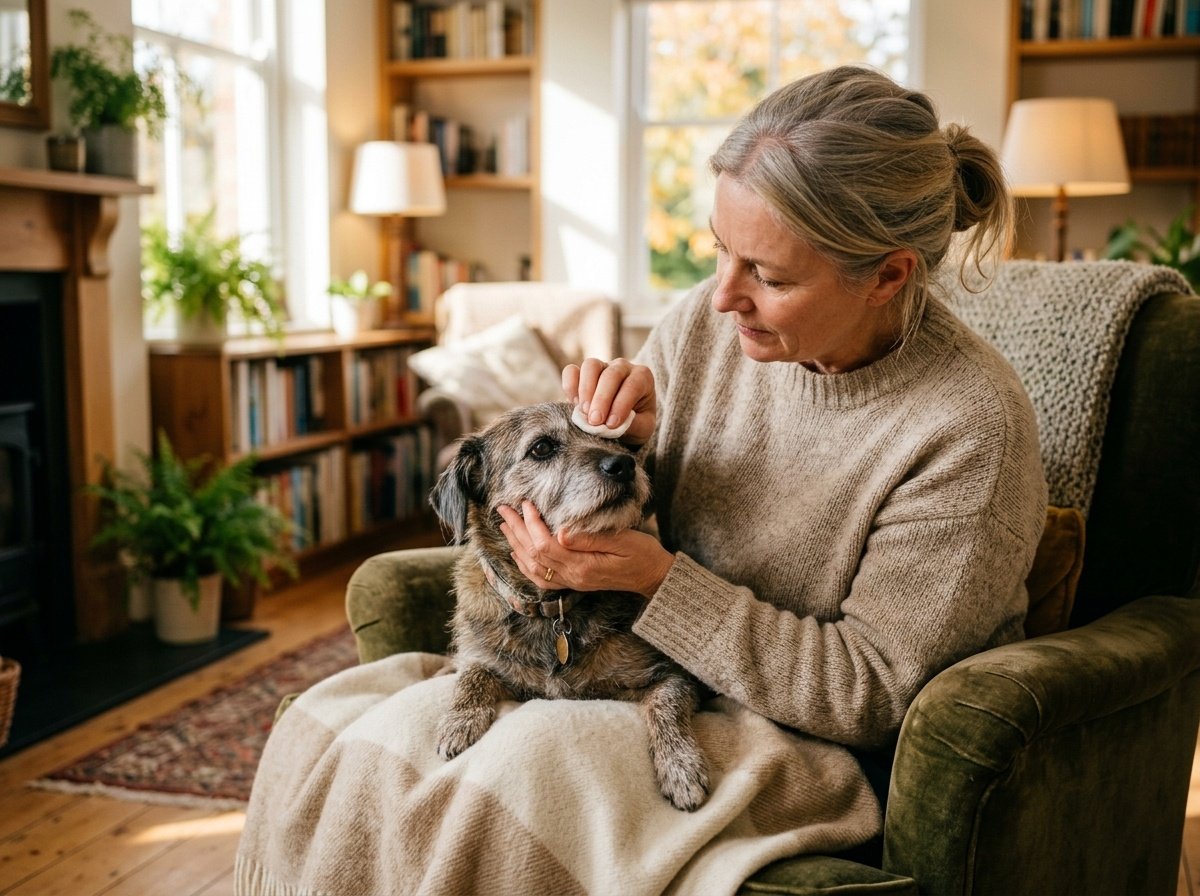
Moisten a cotton pad generously with lukewarm sterile saline. Hold the damp pad gently against the crusty corner of the eye for twenty to thirty seconds without pressing directly on the eyeball. The warmth softens dried mucus naturally.
Step 2: Wipe Gently in an Outward Direction
Once the crust softens, wipe in a smooth, continuous motion starting from the inner corner near the nose and moving outward along the muzzle hair. Never drag dirty debris back across the sensitive eyeball.
Use a clean section of the pad for each pass. Once that pad has gathered gunk, throw it away and take a fresh one. Always use separate pads for each eye so you never transfer bacteria from one side to the other.
Step 3: Dry the Fur Thoroughly
Moisture trapped in facial folds or muzzle fur creates a breeding ground for yeast and bacterial dermatitis. Gently pat the surrounding fur with a dry soft cloth until the skin is dry.
Reward your dog with a tasty treat and verbal praise immediately following the cleaning. To integrate this into your daily routine, review our advice on senior dog grooming and facial hygiene tips.
Dangerous Home Mistakes Pet Owners Must Avoid
When our dogs are uncomfortable, it is tempting to reach into our own medicine cabinets for quick relief. In canine eye care, good intentions with the wrong products can cause devastating damage.
Never use human over-the-counter redness relief drops like Visine. These formulas contain vasoconstrictor drugs that restrict blood flow to surface vessels. In dogs, they trigger severe rebound irritation and can worsen underlying glaucoma.
Never apply leftover prescription eye ointments from a previous illness or another pet without a fresh vet exam. Many combination ointments contain hydrocortisone or dexamethasone. If your dog has an unnoticed corneal scratch, topical steroids prevent healing and can cause the eye to rupture within forty-eight hours.
Avoid using wet paper towels, baby wipes, or dry cotton balls. Paper towels contain abrasive wood pulp fibers that micro-scratch corneas, while loose cotton balls shed tiny strands that stick to mucus membranes.
Authoritative guidance in the Merck Veterinary Manual confirms that sterile saline remains the only completely safe at-home rinse prior to professional medical diagnosis.
Frequently Asked Questions
Is it normal for an older dog to wake up with eye boogers every morning?
Yes, a small amount of clear or pale brownish crust in the inner corners upon waking is normal for senior canines. As dogs sleep, tear flow decreases and natural debris migrates to the corner of the eyelid. As long as the eyeball is clear, the whites are not red, and your dog is not rubbing their face, simply wipe the crust away with warm saline.
Can I use baby wipes to clean dog eye boogers?
No, you should never use commercial baby wipes around your dog’s eyes. Baby wipes contain fragrance, cleansing surfactants, and preservatives designed for human skin that sting intensely and disrupt the delicate canine tear film. Stick exclusively to sterile veterinary saline or clean lukewarm boiled water on a soft cotton pad.
What does yellow or green dog eye discharge mean?
Yellow or greenish eye discharge indicates the presence of white blood cells, which signals an active bacterial infection, a corneal ulcer, or severe dry eye. Unlike clear tears, thick colored discharge will not resolve on its own and requires prescription antibiotic or tear-stimulating eye drops from your veterinarian.
How often should I clean my senior dog’s eyes?
For dogs with normal morning crusts, cleaning once daily in the morning is sufficient. For older dogs suffering from Keratoconjunctivitis Sicca (dry eye) or drooping eyelids that collect dust, cleaning two to three times daily before applying veterinary lubricating drops maintains comfort and prevents painful buildup.
What are the signs that eye boogers are an emergency?
Seek urgent veterinary attention if you observe cloudy discharge accompanied by squinting, a cloudy bluish haze over the cornea, a pupil that remains dilated, or visible blood inside the eye. If your dog holds their eye tightly closed or whines when touching their head, severe pain indicates a possible corneal scratch or acute glaucoma.
Keeping Your Senior Companion Bright-Eyed and Comfortable
Our senior dogs give us unconditional loyalty throughout their lives, and helping them through the small indignities of aging is our privilege as caregivers. A few crusty eye boogers each morning are simply part of their golden years.
By establishing a gentle daily cleaning habit with warm saline, you protect their sensitive skin from irritation and make their mornings much more comfortable. Paying close attention to changes in discharge color ensures you catch treatable issues before they escalate.
Whenever you feel unsure about a sudden change in your dog’s eyes, reach out to your veterinary clinic. A quick tear test and stain provide peace of mind, ensuring your faithful friend continues seeing the world clearly by your side.
Authority and Research Reference Map
Internal Guidance:
- senior dog eye discharge types: Diagnostic breakdown of clear, mucoid, and purulent fluids.
- dog pink eye and conjunctivitis in older dogs: Treating inflamed conjunctival membranes.
- dog’s red eyes in senior dogs: Distinguishing ocular emergencies like glaucoma and uveitis.
- senior dog grooming and facial hygiene tips: Safe daily face and coat care routines.
External Authoritative Veterinary Sources:
- American College of Veterinary Ophthalmologists: Board-certified guidance on canine Keratoconjunctivitis Sicca (KCS) and tear film health.
- Cornell University College of Veterinary Medicine: Clinical protocols for corneal ulcer testing and fluorescein diagnostic stains.
- Merck Veterinary Manual: Standards for canine ophthalmic examination, tear production baselines, and safe hygiene.