


Sitting beside your beloved companion and sensing that their long life journey is nearing its final chapter is one of the most heartbreaking moments a pet parent can face. You look down at your loyal senior dog, whose eyes have mirrored your life for a decade, and you feel a quiet, heavy sadness as you notice their body growing weaker, their breath changing rhythm, and their interest in the world fading away.
You wonder whether the subtle physical changes you see are a temporary dip in energy or the true biological signs your dog is dying and you worry about whether they are experiencing pain, what physical stages to expect in their final days, and how to keep them peaceful, safe, and surrounded by love.
Your grief, anxiety, and profound love are completely natural. Facing the end of a dog’s life is emotionally overwhelming, but understanding the natural physical stages of the dying process replaces fear with clarity and purpose. By recognizing how a dog’s body gently winds down, you can provide compassionate comfort care, relieve distress, and ensure your companion’s departure is peaceful and dignified.
Quick Answer:
The primary physical signs that a dog is dying include complete loss of appetite and thirst, severe weakness (inability to stand), a noticeable drop in body temperature (cooling paws and ears), pale or greyish gums, loss of bowel/bladder control, and irregular breathing patterns (Cheyne-Stokes breathing with long pauses). During this phase, supportive hospice care focuses on keeping them warm, moistening their mouth, providing soft padded bedding, and managing pain. For creating a comprehensive end-of-life wellness plan, review our guide to hospice care for senior dogs. For context on aging expectations across different breeds, explore our guide on senior dog average lifespan facts.
Key Takeaways:
- The 3 End-of-Life Phases: The pre-active phase (weeks to days: social withdrawal, anorexia), the active dying phase (final 24–72 hours: cooling limbs, glassy eyes, incontinence), and the final transition (hours: irregular breathing, slowing pulse).
- Temperature & Circulation Shifts: Blood flows away from extremities toward core organs, causing paws, ears, and muzzles to feel cool to the touch.
- Breathing Patterns: Rapid shallow breaths alternating with long pauses (apnea) are normal neurological reflexes as the respiratory center in the brainstem winds down.
- Compassionate Intervention: If natural passing involves acute distress, severe fluid in the lungs, or uncontrolled pain, gentle in-home euthanasia provides a peaceful final gift of mercy.
This guide explains the physiological timeline of a dog dying of old age or chronic illness, physical indicators across each stage, how to set up compassionate home hospice care, and when veterinary intervention is needed.
The Biological Timeline: How a Dog’s Body Winds Down
The dying process is not an instantaneous event; it is a progressive, natural shutdown of bodily systems. Veterinary hospice professionals divide this transition into three distinct stages.
| End-of-Life Stage | Typical Duration | Key Observable Signs |
|---|---|---|
| 1. Pre-Active Dying Phase | Several days to 2 weeks | Refusing regular meals, sleeping deeply most of the day, profound social withdrawal or extreme clinginess, muscle loss |
| 2. Active Dying Phase | Final 24 to 72 hours | Refusing all food and water, inability to stand, cool paws and ears, pale/grey gums, glassy unblinking stare, urinary incontinence |
| 3. Final Transition | Final minutes to hours | Irregular breathing (Cheyne-Stokes), slowing heart rate, muscle twitches, agonal gasps (brainstem reflex), peaceful final exhalation |
Understanding these stages helps you anticipate your dog’s changing needs. Let us examine the eight primary warning signs that a senior dog is nearing the end of life.
8 Primary Physical Signs Your Dog Is Dying
1. Complete Loss of Appetite and Refusal of Water
As internal metabolic organs slow down, the body no longer requires or processes calories. Your dog will first turn away from dry kibble, then refuse soft treats, and eventually refuse water completely.
Never force-feed an older dog in this stage. Forcing food can trigger severe nausea and life-threatening aspiration into the lungs. If your dog is losing weight rapidly, review our guide on high calorie dog food for senior dogs for earlier stages.
2. Extreme Weakness and Loss of Mobility
Decreasing circulation and cellular energy cause profound fatigue. Your dog will spend entire days lying down, unable to lift their head or stand up to relieve themselves.
Their rear legs will have no strength to bear weight. If mobility issues began earlier, review our guide on old dog back legs giving out.
3. Noticeable Drop in Body Temperature (Cooling Paws and Ears)
When the cardiovascular system enters its final phase, blood flow is diverted away from the skin, paws, ears, and tail to maintain minimal circulation to the heart and brain.
Your dog’s paw pads, muzzle, and ear flaps will feel distinctly cool or clammy to the touch. Their normal internal body temperature (101°F to 102.5°F) can drop below 98°F (36.6°C).
4. Changes in Gum Color and Capillary Refill
Healthy canine gums are a moist, salmon-pink color. In a dog nearing the end of life, gums become pale white, dusty grey, or slightly bluish due to low oxygenation.
When you press a finger against the gum tissue, the color takes several seconds to return (prolonged capillary refill time), reflecting sluggish cardiovascular pressure.
5. Loss of Bladder and Bowel Control (Incontinence)
As the central nervous system winds down, the autonomic sphincter muscles surrounding the bladder and rectum relax completely.
Urine and stool will pass involuntarily without your dog being aware. Place large, absorbent washable waterproof pads beneath them and clean their skin gently with warm damp towels to prevent urine scalding.
6. Irregular Breathing Patterns (Cheyne-Stokes Breathing)
Respiratory changes are one of the clearest indicators of the final hours. Breathing may become shallow and rapid, followed by long pauses lasting 10 to 30 seconds where your dog appears not to breathe at all.
This irregular rhythm (Cheyne-Stokes breathing) is a natural neurological consequence of the brain’s respiratory center shutting down. If your dog has a history of cardiac disease, explore our clinical guide on dog heart murmur in senior dogs.
7. Glassy, Distant, and Unblinking Eyes
In the final 24 hours, your dog’s eyes may take on a hazy, unseeing appearance, often referred to as a “glassy stare.” The pupils may dilate and lose their sharp focus on room movement.
While their vision fades, their hearing and sense of touch remain active until the very end. Speaking in soft, loving tones provides immense reassurance.
8. Social Withdrawal or Seeking Quiet Solitude
Many older dogs follow an ancient canine instinct to retreat to a quiet, cool, dimly lit corner (such as behind a sofa, in a closet, or under a porch). Conversely, some dogs become intensely clingy, seeking constant physical contact with their primary caregiver.
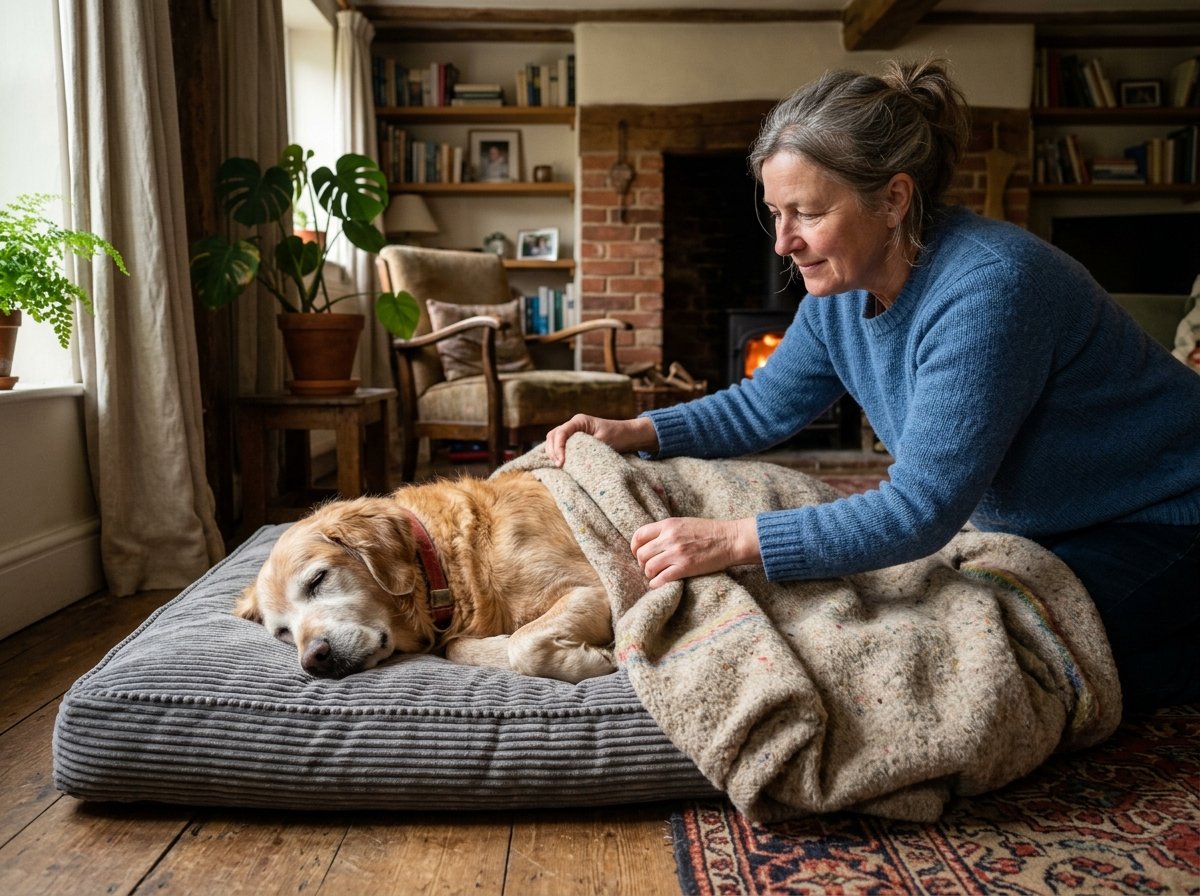
Natural Passing vs. Humane Euthanasia: Making the Compassionate Choice
Every pet parent hopes their loyal friend will pass away peacefully in their sleep without medical intervention. While some senior dogs do slip away quietly during deep rest, in many cases, chronic conditions like heart failure, kidney failure, or cancer create severe respiratory distress or pain before the heart stops on its own.
| Scenario | What Your Dog Experiences | Recommended Action |
|---|---|---|
| Peaceful Natural Transition | Calm, deep comatose sleep; steady breathing that slows gently; zero crying or agitation | Maintain warm blankets, gentle touch, and quiet presence at home |
| Severe Respiratory Distress (CHF/Pneumonia) | Gasping for air, coughing white/pink foam, blue tongue, severe panic and panic pacing | Urgent veterinary emergency hospital care or immediate humane euthanasia |
| Intractable Pain or Neurological Distress | Continuous vocalizing, uncontrollable seizures, severe vomiting, extreme restlessness | Prompt in-home euthanasia to relieve active suffering |
If your companion is struggling with pain or breathing difficulties, compassionate in-home euthanasia is not “giving up”; it is a final, selfless act of mercy that guarantees a gentle, painless transition. Learn all details in our guide on in home pet euthanasia for senior dogs.
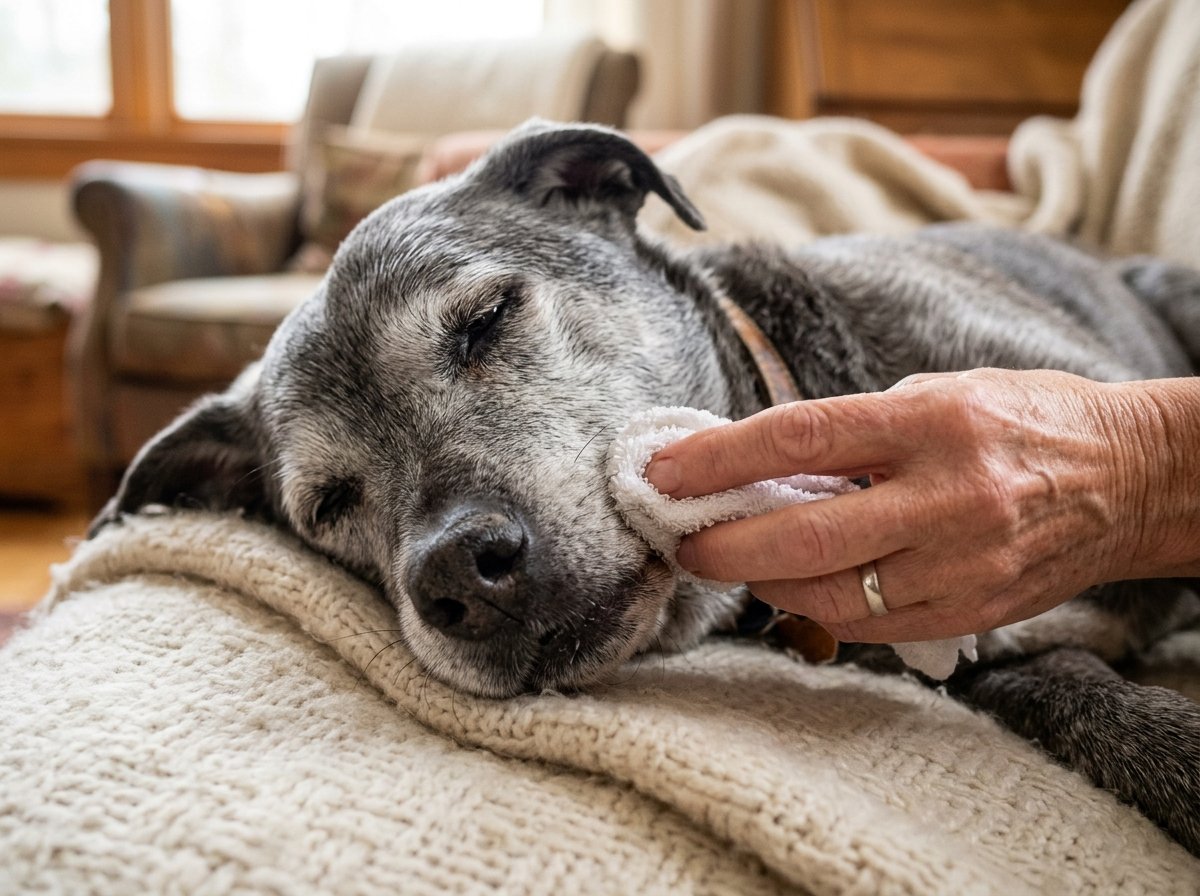
How to Set Up Compassionate Comfort Hospice Care at Home
During your dog’s final days, your primary role transitions from curative treatment to comfort care.
1. Keep Them Warm with Soft Fleece Blankets
Because failing circulation lowers core body temperature, place a warm, lightweight fleece blanket over their body. You can place a warm water bottle (wrapped securely in a thick towel) near their paws. Never place bare heating pads directly against an immobile dog to avoid burns.
2. Moisten Their Mouth with a Damp Sponge
When dogs stop drinking, their tongue and gums become dry and sticky. Dip a clean cotton sponge or washcloth in cool, fresh water and gently moisten their lips and tongue every few hours. Apply a dab of pet-safe lip balm to dry nostrils.
3. Create a Quiet, Low-Stimulation Sanctuary
Dim bright overhead lighting and use warm, soft ambient lamps. Keep the room quiet, free from loud televisions or noisy household traffic, and play soft acoustic melodies. For comfortable room arrangements, explore our guide on keeping senior dogs comfortable.
4. Speak in Reassuring, Gentle Whispers
Hearing is often the very last sense to fade. Sit beside your companion, stroke their head gently, and thank them for the wonderful years you shared together. Your familiar, calm voice provides profound emotional comfort.
According to veterinary hospice resources published on Lap of Love Veterinary Hospice guide on end-of-life signs, ensuring your companion is free from nausea and pain allows them to pass with peaceful dignity.
Frequently Asked Questions
How long does the active dying stage last in dogs?
The active dying phase typically lasts between 24 and 72 hours, though the final transition where breathing becomes very irregular often takes place over several hours or minutes.
Do dogs know when they are dying?
Veterinary behaviorists believe dogs sense the physiological changes occurring in their bodies. Rather than experiencing human existential fear, dogs respond by seeking quiet comfort, peace, and closeness with their trusted caregivers.
What is an agonal breath in a dying dog?
An agonal breath is a reflex muscle contraction of the diaphragm and jaw occurring after consciousness is lost and the heart has stopped. It is a neurological reflex, not conscious gasping for air, and causes no pain.
Should I leave food and water out if my dying dog won’t eat?
You can leave a shallow bowl of fresh water nearby, but never force them to eat or drink. Moisten their mouth gently with a damp cloth to provide comfort without choking risk.
Can I give my dying dog human pain pills like Tylenol?
No. Never give human pain medications like Tylenol (acetaminophen), Advil (ibuprofen), or aspirin, as they cause fatal organ failure. Use only veterinary-prescribed pain management medications.
A Sacred Farewell to a Loyal Friend
Being present with your dog as they reach the end of their life is a profound act of devotion. By recognizing the physical signs of transition, maintaining warmth and comfort, and providing loving presence, you guide your cherished companion across the bridge with the dignity, peace, and love they truly deserve.
Always stay in close contact with your veterinarian or a mobile hospice service for pain management guidance. Review compassionate resources from the American Veterinary Medical Association senior care FAQ for guidance on senior pet hospice and wellness.