

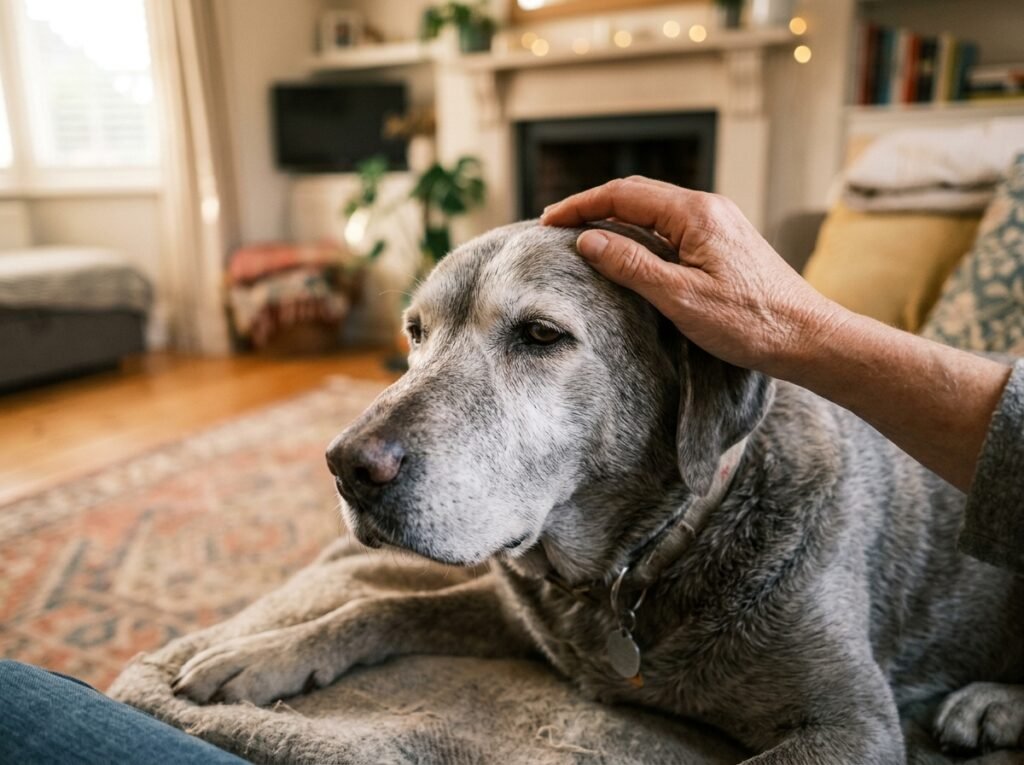
Facing the final chapter with a cherished senior dog is one of the most emotional and heartbreaking journeys a pet parent will ever experience. You sit beside your loyal companion, gently stroking their gray muzzle, and you feel the heavy weight of knowing that their tired body is struggling with irreversible illness, chronic pain, or declining mobility.
You wonder how you will know when the right time has arrived to let them go peacefully and you worry about the stress, fear, and physical pain of lifting an arthritic dog into the car, driving to a busy veterinary clinic, and spending their final moments on a cold examination table.
Your feelings of sorrow, love, and hesitation are completely natural. Choosing in home pet euthanasia allows you to transform a painful medical goodbye into a quiet, sacred act of love and comfort. By welcoming a compassionate mobile hospice veterinarian into your home, your companion can drift to sleep in their favorite warm bed, surrounded by familiar scents, gentle voices, and your loving touch.
Quick Answer:
In home pet euthanasia is a compassionate end-of-life service where a licensed veterinarian visits your home to help your dog pass away peacefully without clinic stress. The procedure is performed in two gentle steps: first, a pain-relieving sedative is administered to allow your dog to fall into a deep, comfortable sleep; second, an intravenous medication is given that stops the heart swiftly and completely painlessly within seconds. Recognizing the physical signs your dog is dying helps you identify the compassionate time for hospice care. Recognizing subtle senior dog end of life symptoms ensures timely palliative care.
Key Takeaways:
- Quality of Life Evaluation: Utilize the clinical HHHHHMM Scale (Hurt, Hunger, Hydration, Hygiene, Happiness, Mobility, More Good Days) to assess your dog’s daily well-being.
- The 2-Step Method: Step 1 induces deep, snore-filled sedation and zero pain in 5–10 minutes; Step 2 gently stops the heart in seconds without distress.
- Home Comfort Benefits: Eliminates slippery clinic floors, stressful car rides, and clinical smells, allowing your dog to rest in their favorite sunny spot or bed.
- Aftercare Choices: Families can choose private cremation (with ashes returned in an urn), communal cremation, or peaceful home burial where permitted.
This guide explains how to assess your senior dog’s quality of life, the step-by-step in-home euthanasia process, how to prepare a calm environment, and aftercare options for peaceful closure.
How to Know When It Is Time: The HHHHHMM Quality of Life Scale
The question every loving owner asks is: “How will I know when it is time?” Because dogs are stoic and endure chronic pain silently to please their families, objective evaluation tools provide invaluable clarity.
Developed by renowned veterinary oncologist Dr. Alice Villalobos, the HHHHHMM Quality of Life Scale evaluates seven critical parameters on a scale of 0 to 10 (with 10 being ideal). A total score above 35 indicates an acceptable quality of life, while scores below 35 or persistent low scores in key categories indicate that letting go is the kindest choice.
| Category (HHHHHMM) | What to Observe in Your Senior Dog | Score (0–10) |
|---|---|---|
| 1. Hurt (Pain Control) | Is your dog’s pain well-managed with medications? Are they breathing comfortably without laboured panting or whimpering? | 0 (Severe pain) to 10 (Pain-free) |
| 2. Hunger (Appetite) | Are they eating willingly? Do they accept hand-fed warm meals, or do they refuse all food? | 0 (Zero appetite) to 10 (Eats eagerly) |
| 3. Hydration (Fluids) | Can they drink water on their own? Do their gums feel moist, or do they require frequent fluid injections? | 0 (Dehydrated) to 10 (Well-hydrated) |
| 4. Hygiene (Cleanliness) | Can they stay clean and dry? Are they able to avoid soiling their bed, or do they suffer from urine scalding? | 0 (Soiled/pressure sores) to 10 (Clean/dry) |
| 5. Happiness (Joy) | Does your dog wag their tail, make gentle eye contact, or interact with you? Are they depressed and unresponsive? | 0 (Completely withdrawn) to 10 (Joyful/engaged) |
| 6. Mobility (Movement) | Can they stand up to go outside, or do their back legs completely give out? Do they stumble or cry when moving? | 0 (Immobile) to 10 (Walks comfortably) |
| 7. More Good Days Than Bad | When tracking on a calendar, do difficult, painful days outnumber comfortable, peaceful days? | 0 (All bad days) to 10 (Mostly good days) |
If your dog’s back legs are failing or mobility is severely limited, review our care guide on old dog back legs giving out to see if mobility slings or ramps can provide temporary relief.
Why Choose In-Home Pet Euthanasia?
For decades, pet euthanasia was performed exclusively in clinical hospital settings. While veterinary clinics provide compassionate care, in-home euthanasia offers unique emotional and physical benefits for older dogs.
1. Eliminating Clinic Stress and Fear
Many senior dogs feel immense anxiety at veterinary clinics, triggered by the smell of antiseptic chemicals, barking dogs in adjacent rooms, and slippery tile floors that cause weak arthritic legs to splay.
At home, there are no waiting rooms, unfamiliar noises, or sterile examination tables.
2. Avoiding Painful Transportation
Lifting a 70-pound senior dog with severe spinal arthritis, bone cancer, or congestive heart failure into a high vehicle can cause acute physical pain.
An in-home visit eliminates the stress of driving and allows your dog to stay comfortable in their chosen spot.

3. Private, Unhurried Family Grieving
In-home hospice veterinarians schedule generous appointment windows (typically 60 to 90 minutes). You and your family are never rushed, allowing everyone to say goodbye, share memories, and cry in complete privacy.
4. Other Pets Can Understand and Say Goodbye
Household dogs and cats often grieve when a companion disappears. Allowing surviving pets to be present or sniff their companion after passing helps them understand that their friend has passed away peacefully.
What Happens During the In-Home Euthanasia Process?
Knowing exactly what to expect helps replace fear with peace. In-home hospice veterinarians follow a gentle, two-step medical protocol designed for total comfort.
Step 1: The Initial Gentle Sedation
The veterinarian arrives quietly, sits on the floor with your dog, and takes time to get to know them. When your family is ready, the vet administers a gentle injection of sedative and pain-relieving medication under the skin.
Within five to ten minutes, your dog feels all chronic aches melt away. Their eyes grow heavy, their breathing becomes steady, and they drift into a deep, peaceful sleep, often snoring softly in your arms.
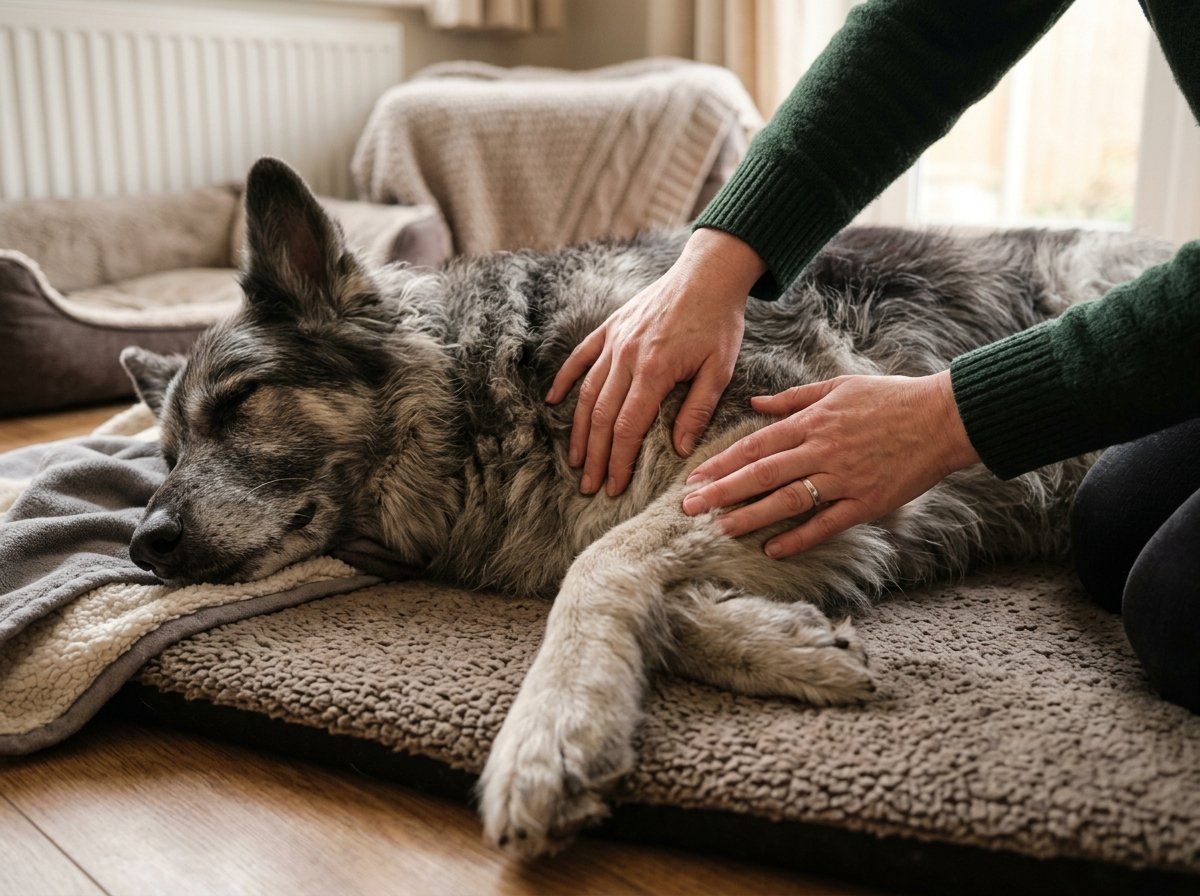
Step 2: The Final Peaceful Passing
Once your dog is in a state of complete surgical anesthesia and feels zero pain, the vet places an intravenous catheter or delivers the final euthanasia medication (concentrated pentobarbital).
This medication gently stops brain activity, followed by the breathing and heartbeat within 30 to 60 seconds. The transition is completely peaceful, painless, and swift. The vet will listen with a stethoscope to confirm that your dog’s heart has stopped.
Normal Reflexes to Understand
The body may exhibit a few natural physiological reflexes after passing. These are not signs of pain or awareness:
- A Deep Sigh: A final release of residual air from the lungs.
- Minor Muscle Twitching: Brief electrical impulses in the limbs as muscles relax.
- Bladder Release: Relaxation of sphincter muscles (the vet places absorbent waterproof pads beneath your dog beforehand).
- Eyes Remaining Partially Open: The muscles that hold eyelids shut relax completely.
Preparing Your Home for a Peaceful Farewell
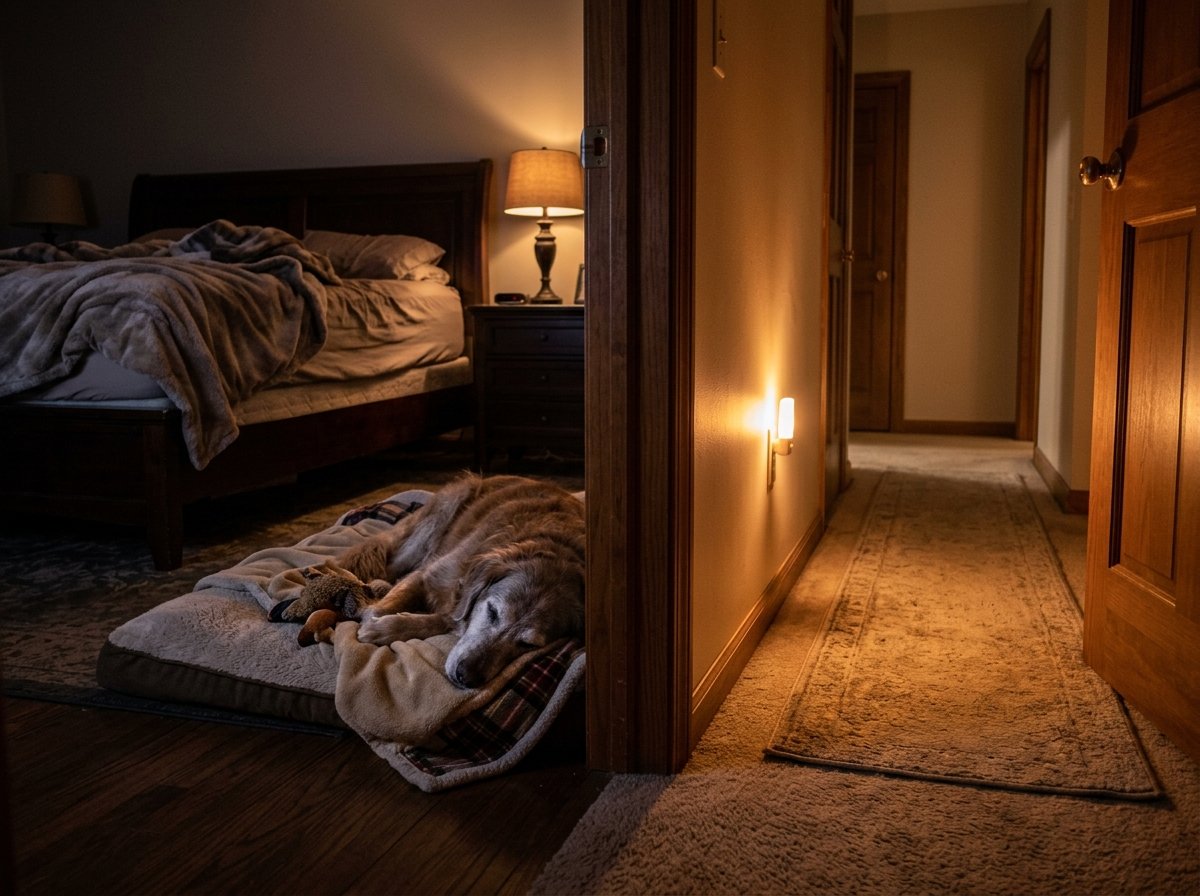
Creating a calm, loving setting ensures a serene experience for your companion and family.
1. Choose Their Favorite Spot
Set up their bed in the place they love most: on the living room rug near the fireplace, on your bed, on the sofa with favorite blankets, or outside in the sunlit backyard on a pleasant afternoon.
2. Offer Special “Forbidden” Treats
If your dog still has an appetite before the appointment, spoil them with favorite foods they were never allowed to eat: a cup of vanilla ice cream, bacon slices, peanut butter, or milk chocolate bars (safe to give in their final hours as toxicity is irrelevant).
3. Play Soft Ambient Music and Dim Harsh Lighting
Soft acoustic music, gentle piano melodies, or crackling fireplace sounds mask outdoor noises and create a peaceful atmosphere. Close window blinds to eliminate bright glare. For home comfort ideas, review our guide on keeping senior dogs comfortable.
Aftercare Options and Memorialization
Following the procedure, your mobile veterinarian will give your family quiet time to be with your dog. You can choose from several aftercare arrangements:
1. Private Individual Cremation
Your dog is cremated individually in a dedicated chamber. Their ashes are preserved and returned to you in a custom wooden or ceramic urn within one to two weeks, often accompanied by a clay paw print impression.
2. Communal Cremation
Your dog is cremated alongside other pets. Their ashes are not returned, but are scattered respectfully on a private rural pasture or memorial garden.
3. Home Burial
If local municipal bylaws permit pet burials on private property, you can bury your companion in your garden. Ensure the grave is at least 3 to 4 feet deep and placed away from underground utility lines and water sources.
According to veterinary hospice resources published on Lap of Love Veterinary Hospice Quality of Life guide, scheduling an assessment before an acute medical crisis occurs prevents unnecessary suffering and emergency panic.
Frequently Asked Questions
Does in-home pet euthanasia hurt?
No. The procedure is designed to be completely pain-free. The initial sedative eliminates all pain and induces a deep, relaxed sleep. The final medication causes a peaceful, swift transition without discomfort.
How much does in-home pet euthanasia cost?
In-home euthanasia typically ranges from $250 to $450 for the visit, with additional cremation fees ranging from $150 to $350 depending on your dog’s weight and whether you choose private or communal cremation.
How long does an in-home euthanasia appointment take?
Appointments typically last between 45 and 90 minutes. Mobile hospice veterinarians work at your family’s pace, ensuring you never feel rushed at any point.
Should my children be present during in-home euthanasia?
Children of all ages can be present if they wish. Hospice vets are skilled at explaining the process in gentle, age-appropriate terms, which can provide children with healthy closure and understanding.
What should I do if my dog is in a sudden midnight emergency?
If your dog experiences acute respiratory distress, uncontrollable bleeding, or severe pain outside mobile vet hours, take them immediately to a 24-hour emergency veterinary hospital rather than waiting for an in-home appointment.
Honoring a Lifetime of Unconditional Love
Choosing in home pet euthanasia is an act of profound courage and devotion. By shielding your companion from fear, clinical stress, and pain, you grant them the ultimate gift: a peaceful, dignified departure in the warmth of the home they loved so dearly.
Take time to grieve, honor their memory, and remember that the love you shared will remain in your heart forever. Review compassionate resources from the American Veterinary Medical Association senior care FAQ for guidance on senior pet hospice and wellness.