


Discovering a new lump or bump while gently petting your companion is a heart-stopping moment that brings immediate worry about tumor signs in dogs. Your hand glides over your senior dog’s ribs, back, or neck, and your fingers suddenly brush against a firm swelling beneath the skin that was not there a few weeks ago.
You wonder whether this new bump is simply a harmless fatty growth from old age. You worry whether that mass could be a malignant mast cell tumor, a soft tissue sarcoma, or an internal growth affecting your dog’s vitality.
Your concern is completely understandable. Finding a lump on an aging pet is one of the most common reasons senior dog owners seek veterinary advice. However, finding a bump does not automatically mean the worst. A significant percentage of lumps in senior dogs are completely benign, such as fatty lipomas, harmless skin tags, or sebaceous cysts. Early veterinary assessment and simple in-clinic needle tests provide clear answers and ensure your dog receives timely care.
Quick Answer:
Tumor signs in dogs include new or rapidly growing skin lumps, firm non-movable masses, ulcerated bleeding sores, unexplained weight loss, enlarged lymph nodes, and sudden lethargy. While many senior lumps are benign fatty lipomas, a veterinarian must perform a Fine Needle Aspirate (FNA) or biopsy to distinguish harmless growths from malignant tumors and determine if surgical removal is needed. When a veterinarian uses broader medical terminology to classify abnormal growths, learn what to expect in our guide on neoplasia in dogs and staging care.
Key Takeaways:
- Benign vs. Malignant: Benign lipomas feel soft, squishy, and movable; malignant tumors often feel firm, fixed to underlying tissue, or grow rapidly.
- The “See Something, Do Something” Rule: Have your vet check any lump larger than a pea (1 cm) or any mass that persists for more than 1 month.
- Gold Standard Test: Fine Needle Aspirate (FNA) is a fast, painless in-clinic needle test that identifies cell types under a microscope within minutes.
- Emergency Red Flags: Uncontrolled bleeding from a mass, sudden abdominal distension, coughing up blood, or sudden collapse.
This guide explains how tumors develop in older dogs, how to tell benign lumps from malignant masses, subtle internal warning signs, diagnostic tests, and home monitoring tips.
Why Senior Dogs Develop More Lumps and Bumps
As dogs pass age eight, their cellular repair mechanisms gradually slow down. Decades of normal cell division, environmental exposures, and genetic factors increase the likelihood of abnormal cellular proliferation.
Fortunately, not all abnormal cells are cancerous. Most cutaneous masses in senior dogs are benign, meaning they grow locally without invading surrounding muscle tissue or spreading (metastasizing) to distant organs.
| Mass Type | Physical Characteristics & Feel | Malignancy Risk |
|---|---|---|
| Lipoma (Fatty Tumor) | Soft, doughy, painless; slides freely under skin | Benign (Non-cancerous) |
| Sebaceous Adenoma | Wart-like, pink or flesh-colored cauliflower growth | Benign (Oil gland growth) |
| Mast Cell Tumor (MCT) | Variable: can look red, swollen, or change size quickly | Malignant (Common skin cancer) |
| Soft Tissue Sarcoma | Firm, deep-seated mass fixed to underlying muscle | Malignant (Locally invasive) |
| Melanoma | Dark brown or black raised mass on gums, lips, or toes | Malignant (High metastasis risk) |
Because malignant tumors can disguise themselves as harmless soft bumps, you cannot determine what a mass is by touch alone. Let us examine the eight primary warning signs of tumors in dogs.
8 Critical Warning Signs of Tumors in Dogs
1. A Lump That Grows Rapidly or Changes Texture
Benign lipomas usually grow very slowly over months or years. If a lump doubles in size over a few weeks or changes from soft to rock-hard, it warrants immediate veterinary evaluation.
Measure any new lump with a ruler and write the dimensions on your calendar to track growth accurately.
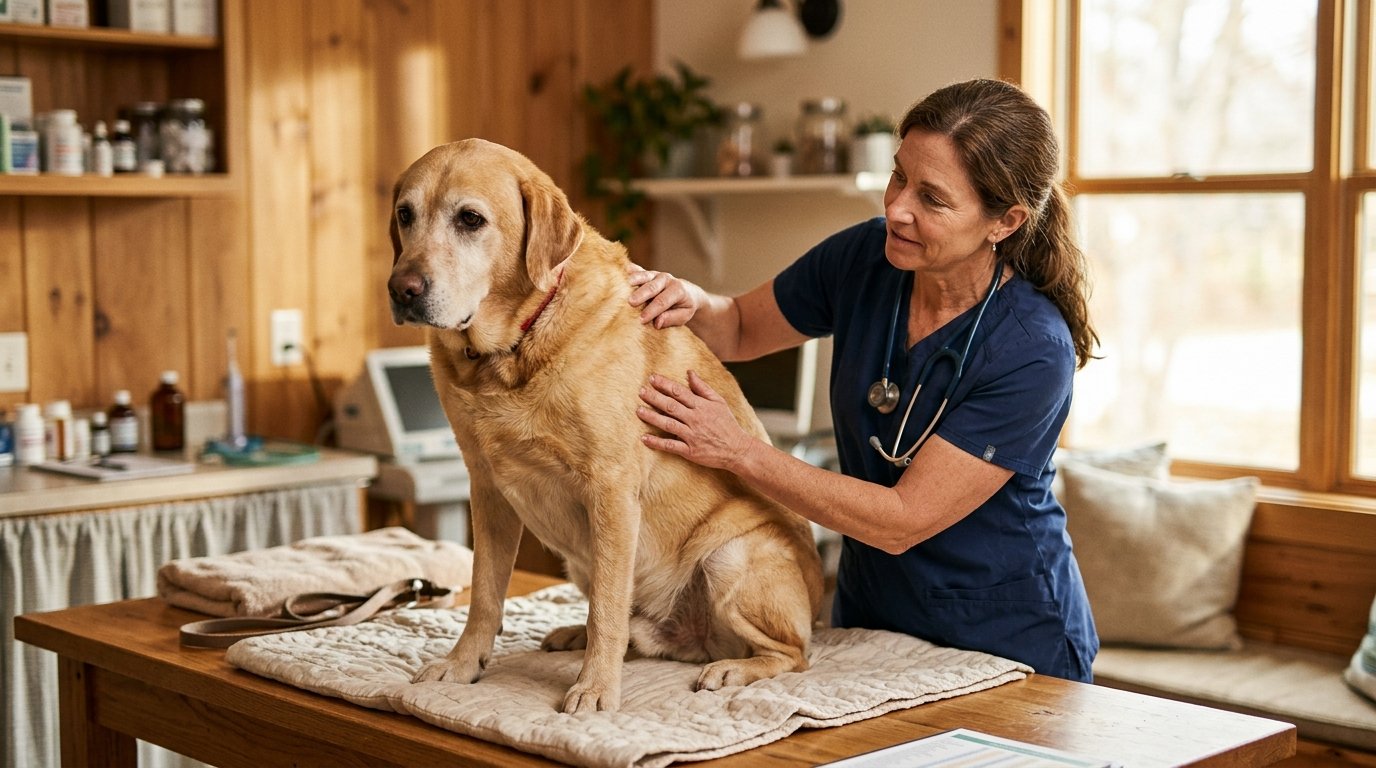
2. A Mass That Is Firm and Fixed to Underlying Tissue
Harmless fatty lumps typically sit loosely in the subcutaneous layer, sliding smoothly beneath your fingers when you gently pinch the skin.
Malignant tumors often anchor themselves deeply into underlying muscle layers or bone, feeling rigid, immovable, and firmly attached.
3. Ulcerated, Bleeding, or Non-Healing Sores
Malignant tumors frequently outgrow their own microscopic blood supply, causing the surface skin to break down, weep fluid, or bleed spontaneously.
If you notice a red sore or scab on your dog that does not heal within two weeks, have it checked promptly.
4. Fluctuating Mass Size (The Histamine Effect)
Mast cell tumors contain granules filled with histamine. When irritated or bumped, these cells release histamine, causing the lump to swell dramatically overnight and shrink a few days later.
A bump that swells, reddens, and shrinks repeatedly is a classic warning sign of a mast cell tumor.
5. Unexplained Weight Loss and Muscle Wasting
Internal tumors consume massive amounts of metabolic energy, altering metabolism and causing the body to break down muscle tissue (cancer cachexia).
Your dog may lose noticeable weight along their spine and hips despite eating normal meals. If your dog is losing weight, review our guide on why your old dog is getting skinny.
6. Swollen Lymph Nodes Under the Jaw, Shoulders, or Knees
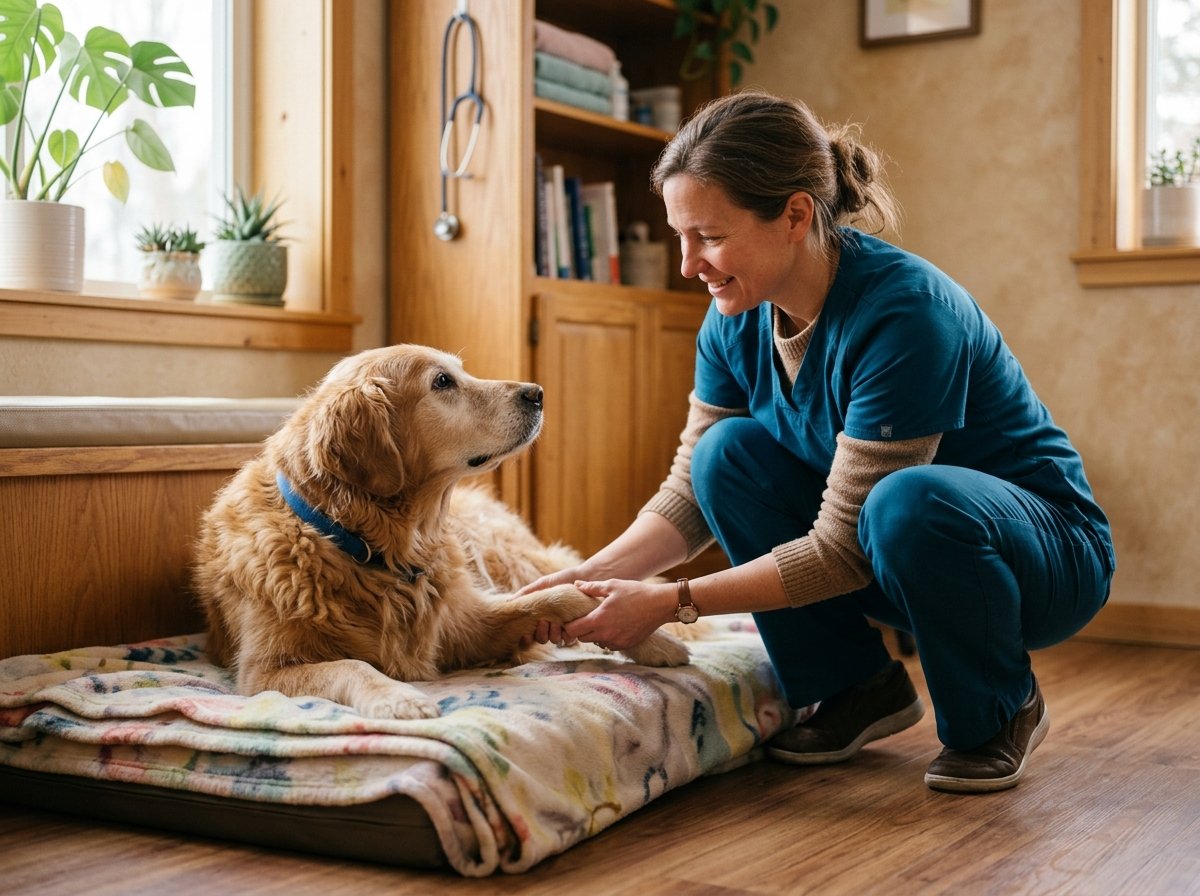
Lymph nodes filter bodily fluids and trap abnormal cancer cells. In dogs with lymphoma or spreading tumors, lymph nodes swell into firm, painless, golf-ball-sized knots.
Check under your dog’s jawline, in front of their shoulder blades, and behind their knees during monthly grooming checks.
7. Persistent Coughing or Difficulty Breathing
Tumors in the chest cavity, lungs, or heart base compress airways, leading to a chronic dry hacking cough or heavy breathing while resting.
If your senior dog exhibits unexplained respiratory changes, explore our detailed guide on senior dog heavy breathing and panting.
8. Lethargy, Lameness, or Foul Mouth Odors
Oral tumors (like melanomas or fibrosarcomas) cause bad breath, blood in the water bowl, or difficulty chewing kibble. Bone tumors (osteosarcoma) cause sudden, painful swelling on leg bones accompanied by persistent limping.
How Veterinarians Diagnose Lumps: The FNA Test
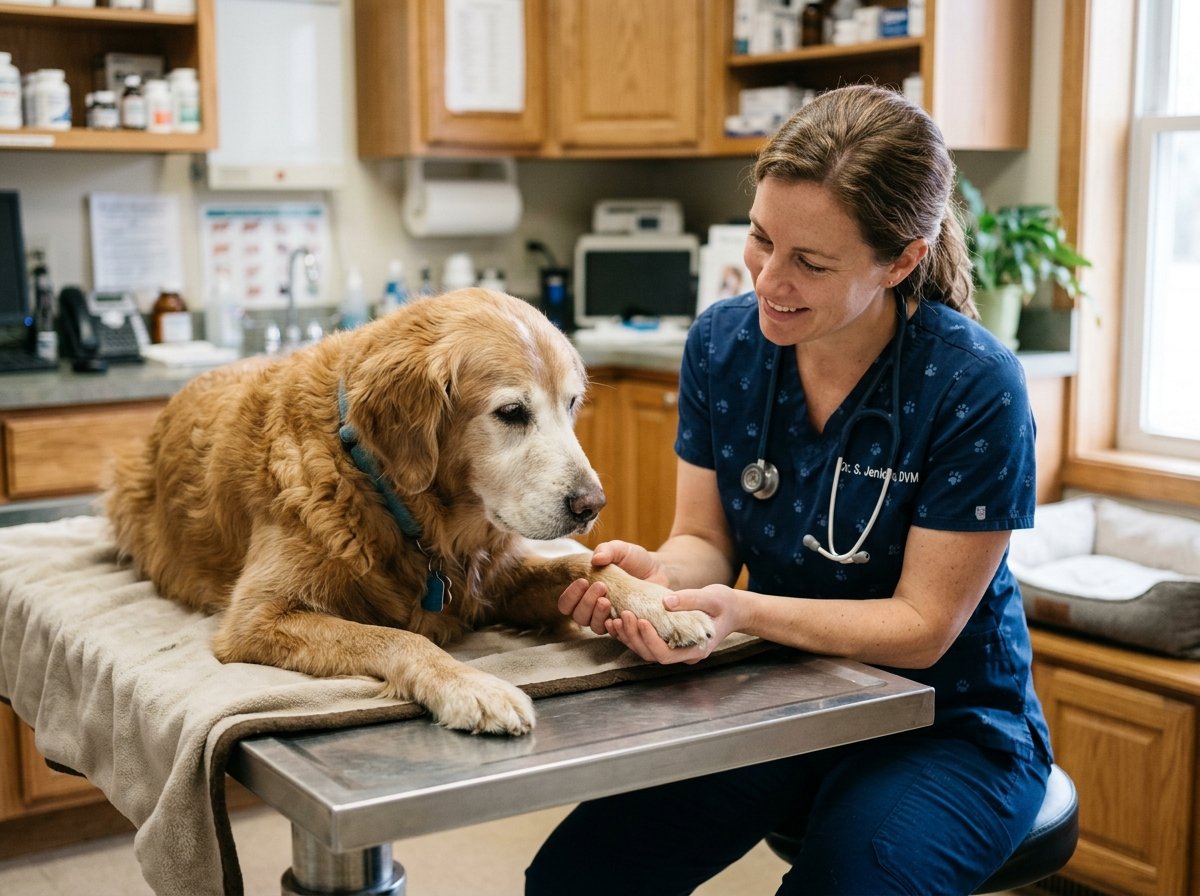
Diagnosing a lump is fast, gentle, and rarely requires anesthesia.
1. Fine Needle Aspirate (FNA) and Cytology
Your veterinarian inserts a tiny needle (smaller than a vaccination needle) into the lump to collect microscopic cells. The cells are placed on a glass slide, stained, and examined under a microscope.
An FNA can instantly identify fatty cells (lipomas), inflammatory cells, or mast cell tumors within 15 minutes right in the clinic.
2. Biopsy and Histopathology
If an FNA is inconclusive, your vet will remove a small tissue sample or surgically excise the entire lump under local or brief general anesthesia.
A veterinary pathologist analyzes the tissue architecture to determine the exact tumor grade, tumor type, and whether surgical margins are completely clean.
When to Call Your Vet: Emergency Red Flags
While most skin lumps are not emergencies, certain clinical situations require urgent veterinary care.
| Symptom Combination | Required Veterinary Action |
|---|---|
| New soft bump + Dog feels happy and active | Schedule routine vet visit for FNA within 1 to 2 weeks |
| Lump grows rapidly OR surface bleeds and oozes | Schedule veterinary appointment within 48 hours |
| Sudden swollen abdomen + Pale white gums | Immediate emergency clinic visit (suspected splenic rupture) |
| Bone swelling on leg + Severe crying and non-weight bearing | Same-day veterinary X-rays (suspected osteosarcoma) |
Schedule a prompt veterinary exam if:
- You find a new lump larger than the size of a pea.
- An existing lump has noticeably grown or changed in firmness.
- Your dog licks or bites at a specific spot on their body repeatedly.
Seek immediate emergency veterinary care if:
- A lump starts bleeding profusely and will not stop with gentle pressure.
- Your dog’s abdomen suddenly becomes firm, bloated, and distended.
- Your dog collapses, becomes extremely weak, or has white gums.
According to oncology resources published on PetMD’s guide on common dog cancers, surgical removal of small, early-stage tumors achieves curative outcomes in over 85 percent of cases.
5 Safe Home Steps to Monitor Your Dog’s Lumps
Conducting monthly at-home lump checks takes only five minutes and provides early detection.
Step 1: Perform the Monthly “Nose-to-Tail” Hand Check
Once a month during a quiet evening petting session, run your flat hands slowly over your dog’s entire body.
Check the head, ears, neck, armpits, chest, belly, groin, paws, and between their toes. Part thick fur to inspect the skin underneath.
Step 2: Create a Body Map Chart
Draw a simple outline of a dog on paper or print a blank canine body diagram.
Mark the exact location of every bump you discover, along with the date and its size in millimeters. Bring this chart to every annual veterinary wellness exam.
Step 3: Measure Lumps with a Physical Ruler
Never estimate lump size using phrases like “grape-sized” or “walnut-sized.”
Use a plastic millimeter ruler to measure length, width, and height. Documenting exact measurements in millimeters allows your vet to see if growth has occurred.

Step 4: Prevent Self-Trauma and Scratching
If your dog scratches or bites at a mass, cover the area with a light cotton recovery shirt or apply an Elizabethan collar.
Preventing friction stops secondary bacterial skin infections from developing on the surface of the mass. For general skin comfort, review our guide on senior dog skin bumps and warts.
Step 5: Maintain Lean Nutrition and Anti-Inflammatory Support
Providing balanced nutrition supports immune surveillance and healthy cellular function.
Feed a nutrient-rich senior dog food with high-quality proteins and Omega-3 fatty acids (EPA/DHA). Avoid high-fat scraps that contribute to excess adipose tissue and large lipomas.
What Not to Do When You Find a Lump
Avoid these common mistakes to protect your dog’s safety:
- Never Squeeze or Pop a Bump: Squeezing a mast cell tumor triggers massive histamine release, which can cause anaphylactic shock and life-threatening blood pressure drops.
- Never Apply Human Wart Removers or Oils: Corrosive human creams cause severe chemical burns on delicate canine skin.
- Never Assume a Lump Is Just a Fatty Growth: Only microscopic cell testing can confirm whether a mass is benign or malignant.
Frequently Asked Questions
How can I tell if a dog’s lump is cancerous?
You cannot tell by look or touch alone. Malignant tumors often feel firm, grow rapidly, anchor to muscle, or ulcerate, but some cancers feel soft. A vet Fine Needle Aspirate (FNA) is required for an accurate diagnosis.
Are fatty lumps in older dogs dangerous?
Benign lipomas (fatty tumors) are harmless and will not spread to other organs. However, if a lipoma grows very large in an armpit or groin area and restricts walking, surgical removal may be recommended.
How much does an FNA needle test cost for dogs?
A Fine Needle Aspirate typically costs between $50 and $150 depending on whether cytology is evaluated in-house by your vet or sent to an outside commercial pathology laboratory.
Do all tumors in senior dogs need surgery?
No. Small, slow-growing benign lumps that do not cause discomfort or hinder movement are usually monitored without surgery. Malignant or rapidly growing masses are surgically removed when medically safe.
Why do older dogs get so many skin tags and warts?
Aging skin produces slower cell turnover and altered oil gland activity, leading to harmless sebaceous adenomas (warts) and skin tags. Most require no treatment unless irritated by grooming.
Caring for Your Golden Companion with Confidence
Finding a new lump on your dog can be unsettling, but proactive monitoring and early veterinary assessment give your companion the best protection. Remember that most senior bumps are benign, and modern veterinary medicine offers gentle, effective solutions when treatment is needed.
Always consult your veterinarian for an in-person exam and diagnostic needle test whenever you discover a new growth. Review official recommendations from the American Veterinary Medical Association senior pet care FAQ to keep your dog comfortable and thriving throughout their golden years.