
Standing beside the grooming tub and watching your older dog tremble, slip on slick porcelain, or groan when you gently lift a paw is a clear sign that routine grooming has become physically exhausting. You love your senior companion, but you notice their coat is getting duller, mats are forming around their hips, and nail trims feel like a stressful ordeal.
You wonder how to keep your aging dog clean, comfortable, and mat-free without causing pain to their arthritic joints. You worry about thin, delicate skin tearing, slipping in the shower, and how to groom a dog who can no longer stand for more than five minutes.
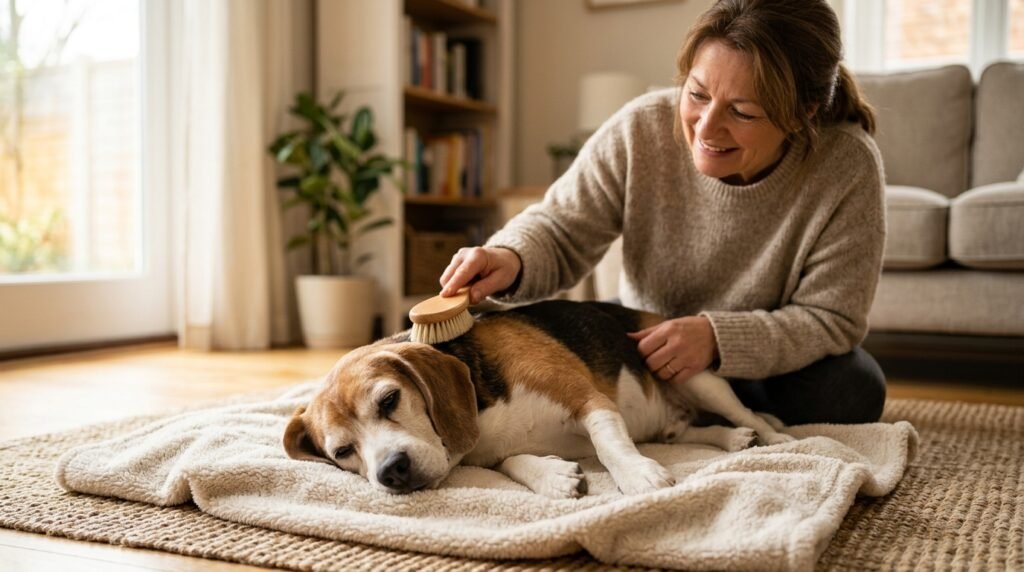
Your concern is completely justified. Grooming a senior dog is no longer about show-ring aesthetics; it is a vital form of medical comfort and preventive health care. As dogs age, reduced self-grooming, slower oil production, and painful osteoarthritis require a gentle, adapted approach. By breaking grooming into short, comfortable sessions and using supportive tools, you keep your old companion clean, fresh, and pain-free.
Quick Answer:
Grooming a senior dog requires adapting routine care to accommodate arthritis and fragile skin: place non-slip rubber mats in tubs and grooming areas, use lukewarm water with moisturizing oatmeal shampoo, groom in short 10-minute sessions while your dog is lying down, keep nails trimmed frequently to prevent posture changes, and maintain clean sanitary trims around the rear to prevent urine scalding.
Key Takeaways:
- Short, Paced Sessions: Never force an arthritic senior dog to endure a 45-minute continuous grooming session; break care into 10-minute intervals.
- Traction and Safety: Always place non-slip rubber bath mats inside the tub and on the bathroom floor to prevent traumatic slips.
- Nail Length Directly Impacts Joints: Overgrown nails shift canine weight backward, exacerbating spinal arthritis and hip pain.
- Sanitary Trims: Keep fur around the perineal area trimmed short to prevent fecal contamination and bacterial skin dermatitis.
This guide explains how aging changes canine skin and coat, bath time safety adaptations, gentle detangling techniques, safe nail trimming, and sanitary hygiene care.
How Aging Changes Your Dog’s Skin and Coat
Understanding biological shifts in older dogs helps you tailor your grooming routine:
| Aging Skin & Coat Shift | Why It Happens | Grooming Adaptation Required |
|---|---|---|
| Thinned, Fragile Epidermis | Decreased collagen and reduced dermal elasticity | Switch to soft bristle brushes; never scrape skin with metal slickers |
| Reduced Natural Sebum (Dry Skin) | Sebaceous glands produce fewer protective natural oils | Use soap-free colloidal oatmeal shampoos and leave-in conditioners |
| Loss of Self-Grooming Flexibility | Spinal arthritis makes bending to lick paws or hips painful | Daily wipe-downs of face, paws, and rear using warm damp cloths |
| Appearance of Skin Warts & Tags | Benign sebaceous hyperplasia and follicular cysts | Gently part fur with fingers before brushing to avoid snagging growths |
If you encounter raised nodules while grooming, review our veterinary guide on old dog skin bumps and warts.
Step-by-Step Senior Bath Time Protocol
Step 1: Secure the Floor with High-Traction Mats
Place a heavy-duty textured rubber mat inside the bathtub and another large absorbent bath rug outside. Senior dogs panic when their paws slide on slick acrylic or enamel surfaces.
Step 2: Maintain Lukewarm Water Temperature
Older dogs cannot regulate body temperature easily. Water that feels pleasantly warm to human hands can scald thinning canine skin, while cool water triggers joint shivering and stiffness. Aim for lukewarm water (around 98°F / 36.6°C).
Step 3: Use a Handheld Shower Wand and Gentle Shampoo
Avoid dumping buckets of water over your dog’s head. Use a low-pressure handheld sprayer held close to the coat. Lather gently with hypoallergenic oatmeal shampoo and rinse thoroughly to prevent itchy soap residue.
Step 4: Towel Dry Thoroughly with Warm Microfiber Towels
Never leave an elderly dog to air-dry shivering in a cool room. Wrap them in warmed microfiber towels and gently press out excess water. If using a blow dryer, set it to the lowest heat and noise settings, keeping the nozzle moving continuously.
Nail Care: Why Short Nails Protect Senior Joints
Nail trimming is often overlooked, but it is one of the most crucial elements of senior dog mobility. When claws grow too long, they force your dog’s toes upward upon ground contact. This shifts body weight backward onto the hocks and pelvis, severely worsening hip arthritis and spinal lordosis.
- Trim Small Slivers Weekly: Rather than clipping large chunks, shave tiny 1-millimeter slivers off the nail tip every week using sharp guillotine trimmers or a low-noise rotary grinder.
- Trim Hair Between Paw Pads: Long tufts of fur growing between footpads act like ice skates on hardwood floors. Trim pad fur flush with the pads to maximize rubbery traction. For mobility gear, explore mobility aids for senior dogs.
Maintaining Daily Sanitary Hygiene
Older dogs with incontinence or mobility struggles frequently soil their rear fur. Urine residue contains caustic ammonia that scalds skin and attracts bacterial infections within hours.
The Daily “Hygiene Wipe” Routine:
- Inspect the tail base, vulva or prepuce, and inner thighs twice daily.
- Clean with alcohol-free, fragrance-free chlorhexidine or aloe wipes.
- Dry completely with a soft towel.
- Apply a thin barrier layer of organic coconut oil or vet-approved zinc-free skin protectant to prevent moisture burns.
If your older companion experiences involuntary urine leakage, review our care guide on senior dog incontinence causes and home care.
Frequently Asked Questions
How often should a senior dog be bathed?
Healthy senior dogs without skin infections typically need a full bath only once every four to six weeks. Spot-cleaning muddy paws and sanitary areas with warm washcloths prevents stripping natural skin oils.
My old dog snaps when I try to trim their nails. What should I do?
Defensive snapping during nail trims is almost always a reaction to joint pain when their leg is extended awkwardly. Trim nails while your dog is lying down, keeping their leg close to their body in a neutral position.
Can I use human baby shampoo on my older dog?
No. Human skin has an acidic pH of 5.5, whereas canine skin is neutral to slightly alkaline (pH 7.0 to 7.4). Human baby shampoo disrupts the acid mantle of dog skin, causing severe dryness, itching, and secondary yeast infections.
Should I shave my senior dog’s coat in summer?
Never shave double-coated senior breeds (like Golden Retrievers, Huskies, or German Shepherds). Their undercoat acts as natural insulation against heat and protects fragile skin from sunburn and bug bites.
Comfort, Cleanliness, and Quality of Life
Adapting your grooming routine transforms what could be a stressful chore into a soothing, bonding ritual. By respecting your senior dog’s physical limitations, keeping nails short, and cushioning their steps, you ensure they feel clean, pampered, and comfortable every single day.