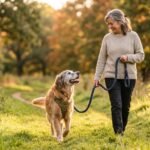

Watching your graying companion hesitate at the bottom of the porch steps, slide awkwardly on the kitchen floor, or abandon their favorite spot by the window because getting there hurts too much is deeply emotional. When a dog who once sprinted through open fields begins to lose their physical footing, many owners feel a creeping sense of helplessness. You worry that their world is shrinking to the perimeter of their dog bed.
Age-related mobility loss is a natural consequence of canine longevity, but it does not mean your companion’s active, happy life has concluded. Modern veterinary rehabilitation and assistive technology have transformed geriatric pet care. Today, thoughtfully engineered mobility aids for senior dogs bridge the gap between declining physical strength and an enduring desire to explore.
From simple non-slip claw grips and supportive lifting harnesses to gentle vehicle ramps and custom mobility wheelchair carts, the right equipment restores your dog’s confidence and physical independence. Selecting tools suited to your dog’s specific condition and stage of decline protects their joints, prevents devastating falls, and keeps their golden years filled with joyful adventures.
Quick Answer:
Mobility aids for senior dogs restore daily physical independence through four primary categories: non-slip floor traction grips (rubber toe bands and grip socks), lifting harnesses (full-body dual-handle support systems), gentle incline ramps (eighteen to twenty-five degree slopes for cars and furniture), and custom two-wheel or four-wheel mobility carts for advanced paralysis. Deploying these tools early preserves muscle tone, protects human caregivers, and prevents slip-and-fall injuries.
Key Takeaways:
- Early Introduction: Introduce assistive aids at the first sign of hesitation rather than waiting until total physical collapse occurs.
- Traction First: Restoring paw grip with rubber toe cylinders or foam runway runners solves up to eighty percent of indoor rising anxiety.
- Ramps Over Stairs: Climbing stairs exerts four times a dog’s body weight on arthritic elbows and hips; gentle ramps eliminate impact stress completely.
- Cart Misconceptions: Canine wheelchair carts do not replace remaining leg use; they provide restorative weight relief that keeps functioning limbs moving.
- Caregiver Protection: Ergonomic lifting harnesses protect pet parents from debilitating lower back injuries when assisting large-breed dogs.
Matching Mobility Aids to Stages of Physical Decline
Every dog ages along their own unique physical timeline. A twelve-year-old Beagle managing mild hip arthritis requires entirely different support than a senior German Shepherd coping with the advanced stages of degenerative myelopathy. Choosing the right tool begins with identifying where your companion falls on the mobility spectrum.
Veterinary rehabilitation therapists categorize mobility impairment into four general phases: early traction loss, rising difficulty, ambulation instability, and complete non-ambulatory paresis. Matching equipment to these distinct stages prevents spending money on tools your dog cannot use while ensuring they receive appropriate biomechanical support.
| Stage of Decline | Observable Daily Symptoms | Primary Recommended Aid | Secondary Supportive Tool |
|---|---|---|---|
| Stage 1: Mild / Early | Hesitates on hardwood; slow to stand; slips occasionally | Rubber toe grips (ToeGrips) & yoga mat runways | Paw friction wax; elevated food bowls |
| Stage 2: Moderate | Cannot climb car steps; needs boost to rise; rear swaying | Rear support lift harness or full-body dual-handle vest | Gentle incline pet ramps for cars and beds |
| Stage 3: Advanced | Rear paws knuckle under; frequent falls; drags toes | Full-body rehabilitation harness (Help ‘Em Up) | Booties with toe-up slings; indoor drag bags |
| Stage 4: Severe / Paralyzed | Cannot walk or stand unassisted; complete hind paralysis | Custom rear-wheel or full-support mobility cart | All-terrain pet stroller; pressure-relief bedding |
Floor Traction Aids: Restoring Confidence Indoors
The vast majority of senior dog mobility crises begin inside the home on slick surfaces. Polished hardwood, glossy laminate, and smooth tile act like freshly Zambonied ice rinks for aging canines. As dogs lose sensory awareness in their paw pads, fear of falling causes them to freeze, hyperventilate, or splay outward into painful splits.
Restoring physical traction is the single fastest and most economical modification you can make. When paws grip reliably, dogs instantly regain the confidence to stand, walk to their water bowls, and interact with the family.
1. Non-Slip Rubber Toe Grips
Developed by veterinary rehabilitation professionals, rubber toe cylinders such as Dr. Buzby’s ToeGrips slide directly onto your dog’s weight-bearing toenails. When a dog walks, their claws naturally make contact with the floor. The nonslip rubber creates instant friction against smooth surfaces, giving paws the mechanical grip that aging foot pads can no longer provide.
Toe grips are unobtrusive and can remain on your dog indoors and outdoors for several weeks. They do not trap heat or moisture against the skin like enclosed socks. However, they require careful sizing based on nail circumference and periodic maintenance to ensure they do not shift upward into the nail bed.
2. Double-Sided Silicone Traction Socks and Booties
Non-slip socks provide full paw protection for dogs that drag their feet or suffer from dry, cracked pads. When shopping for senior socks, look specifically for models with three-hundred-and-sixty-degree double-sided silicone treads. Standard socks twist as a dog walks, leaving smooth fabric on the bottom and silicone treads uselessly on top.
Ensure socks are secured with gentle velcro straps around the pastern joint without restricting arterial circulation. Never leave rubberized boots or socks on an older dog around the clock, as canine paws sweat through their pads. Remove them at night to allow skin to breathe and prevent fungal moisture buildup.
3. Continuous Runner Pathways
Even with paw-based aids, establishing clear traction runways throughout your home remains essential. Inexpensive yoga mats and commercial rubber-backed carpet runners create reliable paths connecting your dog’s bed to the kitchen, dining area, and exterior doors. If you want a complete blueprint for arranging furniture and runners safely, read our home guide on keeping senior dogs comfortable at home with traction adjustments.
Support Harnesses: Safe Assistance for Daily Tasks
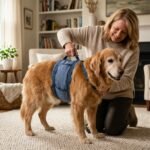
When floor traction alone is not enough to help an older dog rise, support harnesses become your most trusted daily asset. Lifting an unsteady large dog without proper equipment strains your lower back and risks dislocating their arthritic hips.
Support harnesses are designed to distribute lifting pressure across broad, padded skeletal structures rather than concentrating force on delicate bellies or throats. Selecting the right design depends on if your companion needs occasional help or round-the-clock physical support.
Rear Lift Slings vs Full-Body Systems
Rear slings are wide, padded fabric loops equipped with long human handles that slide under a dog’s abdomen just in front of the hind legs. They work well for quick emergency lifts or guiding a dog across a few porch steps. However, simple slings easily bunch into thin bands, slide forward, or press painfully against male anatomy.
Full-body rehabilitation systems, such as the Help ‘Em Up Harness, represent the undisputed clinical standard endorsed by the American Association of Rehabilitation Veterinarians. These two-piece systems feature a front shoulder harness connected to an anatomical pelvic support band, with ergonomic handles over the shoulders and hips.
The specialized pelvic band cradles the pelvic floor, allowing male and female dogs to urinate and defecate naturally without removing the harness. Because the gear can be worn comfortably all day, you eliminate the frantic struggle of strapping equipment onto a dog while they are scrambling on the floor. For detailed lifting techniques, explore our practical guide on helping a senior dog get up safely using proper ergonomics.
Pet Ramps vs Stairs: Managing Elevation Changes
Steep changes in elevation represent significant hazards for aging canines. Jumping into the cargo area of an SUV or leaping down from a sofa generates intense concussive shock that hammers degenerated cartilage and spinal discs. A single awkward landing can cause an acute intervertebral disc herniation or torn cranial cruciate ligament.
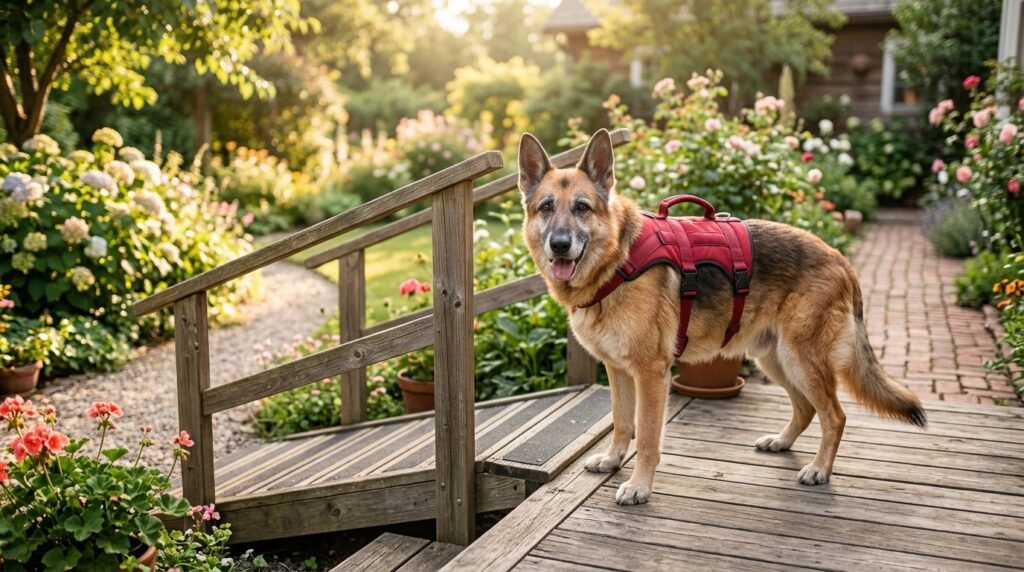
Owners often ask if pet stairs or pet ramps are better for senior dogs. While pet stairs work for agile young animals, ramps are vastly superior for geriatric canines. Climbing stairs forces an arthritic pet to lift their entire body weight on flexed rear joints with each step. Ramps provide a continuous, smooth incline that eliminates joint compression entirely.
When selecting a ramp, prioritize gentle slope angles and high-traction surfaces:
- Incline Angle: Keep the ramp angle between eighteen and twenty-five degrees. A ramp that is too steep feels like a mountain to an arthritic dog, causing them to freeze in fear.
- Surface Grip: Choose ramps surfaced with rubberized ribbed tread or high-grip marine carpeting. Bare plastic or smooth wood ramps are dangerously slippery.
- Side Safety Rails: Look for raised side curbs that prevent paws from stepping off the edge during ascent or descent.
- Weight Capacity: Verify that the ramp supports at least double your dog’s weight so it does not flex or bounce underfoot, which terrifies older pets.
For an in-depth breakdown of slope measurements, materials, and training techniques, consult our specialized analysis on dog stairs versus ramps safety comparison to choose the safest option for your living space.
Canine Wheelchair Carts: Restoring Freedom and Fitness
Few assistive devices carry as much emotional baggage, or provide as much profound joy, as canine wheelchair carts. Many owners view wheelchairs as a tragic final resort, assuming that placing a dog in a cart signals the end of their vitality. In reality, veterinary rehabilitation professionals view carts as life-changing physical therapy equipment.
Canine wheelchairs support the rear pelvic girdle in a lightweight aluminum frame with pneumatic wheels, taking the crushing weight off exhausted back legs. With their weight supported, dogs can walk, run, sniff bushes, and play with family members just as they did years earlier.
A well-fitted wheelchair does not make a dog’s healthy muscles lazy; it lets them stay active safely. For more ways to support mobility at home, see the American Kennel Club tips on senior dog mobility at home. Instead, carts prolong ambulatory life by keeping front legs strong, stimulating cardiovascular health, and encouraging continuing neurological motor pathways.
Rear-Wheel Carts vs Full-Support Quad Carts
Rear-wheel carts are designed for dogs with strong front legs but weak or paralyzed hind limbs, such as pets with advanced arthritis, degenerative myelopathy, or disc injuries. If the dog still has partial rear leg function, their paws can touch the ground and assist with walking. If their legs are completely paralyzed, comfortable stirrups hold the rear feet safely off the ground.
Full-support four-wheel quad carts are designed for pets experiencing weakness in all four limbs, such as senior dogs with advanced neurological disorders or severe cervical disc disease. Quad carts feature four wheels and full torso slings that counterbalance the entire body weight, allowing dogs to stand upright and stroll with gentle guiding assistance.
Acclimation and Training Protocol
Introducing a wheelchair cart requires patience and positive reinforcement. Most dogs adapt within two to five days when guided properly:
- Static Desensitization: Place the cart in your living room for two days. Let your dog sniff it, feed them high-value treats near the wheels, and let them get used to the sound of the frame rolling across the floor.
- First Fitting: Place your dog into the cart during a calm moment. Adjust the saddle height so their spine rests completely level and parallel to the ground. An arched spine or downward tilt indicates improper fitting.
- Positive Forward Motion: Stand six feet in front of your dog outdoors on flat grass. Hold a piece of grilled chicken or cheese and encourage them forward with happy verbal praise. Most dogs take their first steps within seconds once they realize their back legs no longer hurt.
- Paced Sessions: Limit initial cart outings to ten or fifteen minutes twice daily. Cart mobility uses shoulder and neck muscles in new ways, so building endurance gradually prevents soreness.
Strollers, Wagons, and Drag Bags: Specialty Comfort Solutions
Beyond harnesses, ramps, and carts, specialized comfort gear ensures that dogs with severe mobility limits remain active participants in daily family life.
All-terrain pet strollers and rugged pull wagons are magnificent tools for senior dogs whose minds remain bright but whose walking endurance has dropped to a single block. You can walk your companion down the street to their favorite park, let them hop out on a soft lawn for ten minutes of sniffing and gentle wandering, then wheel them home comfortably when their legs grow weary.
For paralyzed pets that spend hours resting indoors, drag bags provide essential skin protection. Drag bags are slick, padded nylon sacks that enclose the hindquarters and rear limbs. As a dog scoots across carpets or tile using their front legs, the durable fabric glides effortlessly across the floor without friction burns, preventing painful pressure sores and urine contamination.
Equally important is upgrading where your companion rests after physical activity. Firm orthopedic memory foam cushions joints and prevents pressure sores from forming on bony hips. If you are evaluating beds, check our recommendations in the best orthopedic beds for senior dogs guide to find models that support weak joints.
Combining Mobility Aids with Active Veterinary Care
Assistive devices are magnificent mechanical tools, but they work best when paired with aggressive medical pain management. You cannot mechanical-gear away active joint inflammation or bone-on-bone pain. Assistive devices and medical pain relief must work hand-in-hand.
Work closely with your veterinarian to establish a multimodal pain protocol. Modern analgesics like Galliprant, carprofen, or gabapentin calm inflammatory cascades and nerve pain. Monthly monoclonal antibody injections like Librela (bedinvetmab) neutralize nerve growth factor, dramatically easing joint stiffness so your dog can take full advantage of their mobility aids.
Clinical guidance from the American Animal Hospital Association pain management guidelines for dogs and cats emphasizes combining pharmacologic treatments with non-pharmacologic physical modalities, such as acupuncture, laser therapy, and hydrotherapy.
As you manage your dog’s mobility over months, take time to periodically assess their daily comfort and joy. Tracking their progress with our validated senior dog quality of life checklist gives you objective data to guide compassionate healthcare decisions.
Frequently Asked Questions
Will using a support harness or wheelchair make my dog’s muscles weaker?
No. This is one of the most common myths in canine care. Inactivity is what destroys muscle mass. When an older dog cannot stand or walk, their muscles wither from disuse sarcopenia. Support harnesses and wheelchair carts take away painful joint strain, allowing dogs to remain active, build cardiovascular fitness, and maintain functioning muscle tone for months longer.
How do I know what size wheelchair cart to order for my dog?
Reputable cart manufacturers require precise anatomical measurements taken while your dog is standing or supported in a towel sling. Key measurements include the fold of flank to ground, shoulder to tail base, and width across the widest part of the hips. Many companies provide adjustable aluminum frames that can be calibrated as your dog’s needs evolve.
Can my dog urinate and defecate while wearing a support harness?
Yes, provided you choose an anatomically designed rehabilitation harness like the Help ‘Em Up Harness. These specialized systems feature open pelvic bands that cradle the pubic bone while leaving urinary and anal openings completely unobstructed for both males and females. Cheaper belly slings, however, must be removed before elimination.
How long can an older dog safely stay in a wheelchair cart?
Dogs should not remain in wheelchair carts unattended or for hours at a time. Start with ten to twenty minute sessions once or twice daily, gradually expanding up to an hour of supervised exercise as their stamina improves. Always remove your dog from the cart when they are resting so their muscles can relax completely.
What should I do if my senior dog is terrified of their new ramp?
Fear of ramps is completely normal. Never force your dog onto an incline before they are ready. Lay the ramp flat on your living room rug for three days and let them walk across it while flat, rewarding each step with high-value treats. Once they trust the surface, raise one end by just three inches, gradually increasing the height over two weeks as their confidence builds.
Reclaiming the Joy of Movement Together
Adjusting to your companion’s mobility loss can feel overwhelming, but modern mobility aids prove that aging does not have to mean staying stuck in one spot. These tools are not monuments to physical decline; they are instruments of freedom that reopen your dog’s world.
With a little patience, thoughtful home modifications, and the right assistive gear, you can restore the spring in your dog’s step and the wag in their tail. Every gentle walk around the yard, every supported sniff along the sidewalk, and every comfortable evening together is a victory worth celebrating in their golden years.