
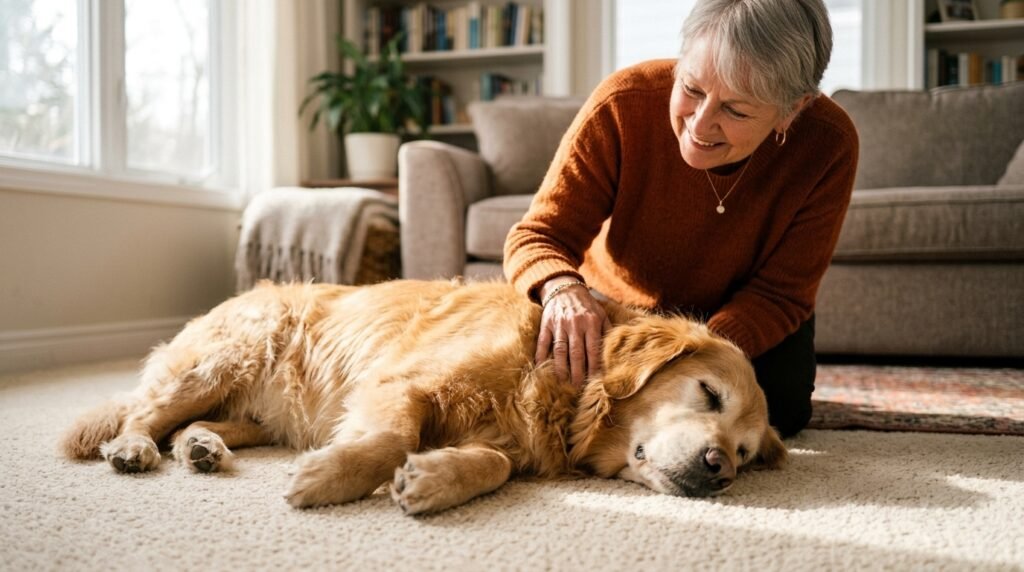
You are gently scratching your senior dog behind the ears or along their back when your fingers brush against a small, bumpy nodule. Parting the fur reveals a flesh-colored or pinkish growth perched on the skin surface.
Discovering any new lump on an older companion naturally triggers a moment of fear. You immediately find yourself wondering if that small dog wart is harmless, or if it represents something far more dangerous.
Skin bumps are extraordinarily common in aging canines. While most growths resembling warts are completely benign, identifying what you are feeling ensures you never overlook a serious tumor masquerading as a harmless blemish.
Quick Answer:
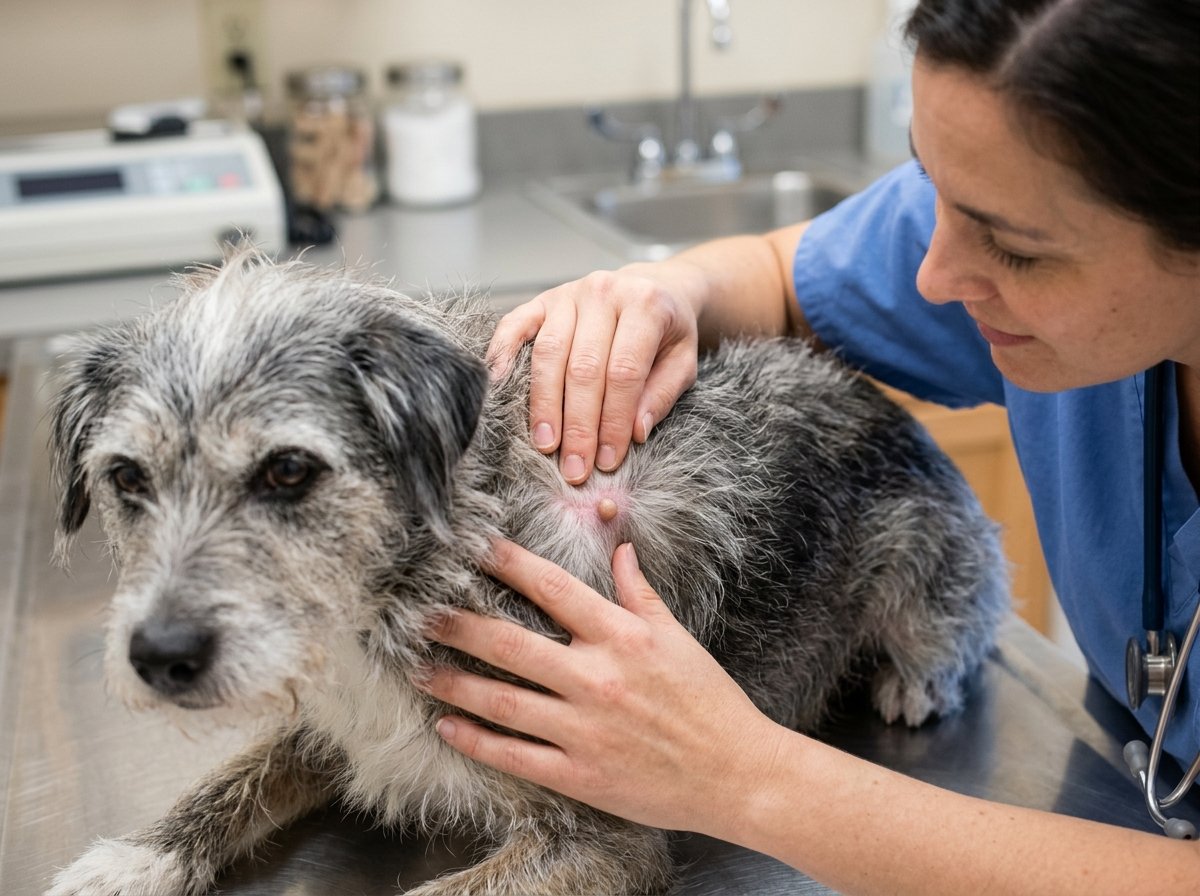
A dog wart on a senior dog is most commonly a benign sebaceous gland growth (sebaceous adenoma or hyperplasia) rather than a viral papilloma. These flesh-colored, cauliflower-like nodules grow slowly and rarely turn cancerous. However, dangerous malignancies like mast cell tumors can mimic warts, making a veterinary fine needle aspirate (FNA) essential before deciding to monitor or remove the growth.
Key Takeaways:
- Viral vs Glandular: Young dogs get viral papillomas from dog parks, while senior dogs develop non-viral sebaceous adenomas from aging oil glands.
- Benign Nature: True sebaceous adenomas are non-cancerous and only require removal if they bleed, itch, or interfere with grooming.
- The Great Imposter: Mast cell tumors frequently present as small, innocent-looking bumps that can release histamines and turn aggressive.
- Safe Veterinary Testing: A simple, painless in-clinic needle aspirate provides cellular answers without requiring anesthesia.
What Is a Dog Wart? Papillomas vs Sebaceous Adenomas
Pet owners use the term wart loosely to describe almost any raised skin bump. In veterinary medicine, true warts and old-dog skin growths have distinctly different biological origins.
True canine warts are caused by canine papillomavirus type one. This contagious virus enters tiny abrasions in skin or mucous membranes, producing clusters of cauliflower-like growths on the lips, gums, and tongue of puppies and young dogs with developing immune systems.
In senior dogs, classic viral papillomas are uncommon unless the dog is severely immunocompromised. Instead, what owners call an old-dog wart is almost always a sebaceous gland growth.
Sebaceous glands sit at the base of every hair follicle, secreting natural oils (sebum) to lubricate the skin and waterproof the coat. As canine cells age, these glands frequently overgrow, forming tiny outward nodules called sebaceous hyperplasia or benign sebaceous adenomas.
For a broader comparison of aging skin conditions, review our reference on old dog skin bumps, warts, and lipomas, or read our in-depth veterinary guide on dog lipoma in senior dogs if you feel a soft subcutaneous fatty lump.
Comparing Senior Dog Warts to Other Skin Growths
Because multiple skin growths share similar textures, comparing key physical characteristics helps you describe the mass accurately to your veterinary team.
| Growth Type | Visual Appearance | Common Locations | Malignancy Risk |
|---|---|---|---|
| Sebaceous Adenoma / Hyperplasia | Pink or flesh-colored, lobulated cauliflower texture, greasy surface | Back, neck, chest, eyelid margins | Benign; rarely invades deeper tissue |
| Canine Viral Papilloma | Fringed, pale fronds resembling tiny sea anemones | Lips, tongue, gums, between toes | Benign; usually regresses spontaneously |
| Skin Tag (Acrochordon) | Smooth, fleshy flap hanging by a narrow stalk | Elbows, armpits, chest, high-friction areas | Benign; purely cosmetic nuisance |
| Mast Cell Tumor (MCT) | Variable; can mimic a soft wart or firm ulcerated red lump | Trunk, limbs, groin, genital region | Potentially malignant; requires staging |
| Cutaneous Melanoma | Dark brown, black, or pigmented raised button | Haired skin, nail beds, oral cavity | Haired skin often benign; nail/mouth malignant |
Why Older Dogs Develop So Many Warts and Skin Bumps
Finding multiple wart-like growths on a senior companion is completely normal. As dogs advance into their geriatric years, biological cell replacement cycles slow down.
Epidermal cells and glandular tissues experience micro-mutations that cause localized clusters of cells to over-multiply rather than slough away naturally. Breeds with oily coats, like Cocker Spaniels, Poodles, Schnauzers, and Basset Hounds, show strong genetic tendencies toward multiple sebaceous adenomas.
Allergic skin inflammation also plays a major role. Chronic itching and scratching damage hair follicle openings, stimulating underlying sebaceous glands to overproduce sebum and form cysts.
If your older dog suffers from seasonal itching alongside skin bumps, explore our guide on dog skin allergies in senior dogs for gentle barrier care.
Eyelid Warts: Meibomian Gland Adenomas in Seniors
One specific location where warts frequently appear in older dogs is along the rim of the eyelid. The specialized oil glands running through canine eyelids are called meibomian glands.
When a meibomian gland overgrows into an adenoma, it sprouts directly along the eyelid margin. As your dog blinks, the textured surface of the nodule rubs against the clear cornea like a piece of rough sandpaper.
This constant mechanical friction triggers chronic watery tearing, redness, and painful corneal abrasions. Left untreated, an eyelid wart can cause severe corneal ulcers.
Veterinarians often treat small eyelid growths using local cryosurgery or minor wedge resection to protect the eye surface before serious damage occurs.
When a Dog Wart Is Actually Dangerous: Warning Red Flags
While most warts are harmless cosmetic blemishes, you should never assume a new bump is safe without veterinary verification. Certain dangerous tumors look almost identical to innocent warts.
The most deceptive of these is the mast cell tumor, known in veterinary oncology as the great imposter. Mast cell tumors can appear as small, flesh-colored bumps that swell up after being touched and then shrink back down due to fluctuating histamine release.
Appearance alone can never rule out cancer, so a new lump needs testing. The Merck Veterinary Manual on skin tumors explains common skin tumors in dogs.
The “ABCDE” Checklist for Canine Skin Growths:
- Asymmetry: Benign warts tend to be round and symmetrical, while aggressive tumors spread with irregular, jagged borders.
- Border Irregularity: The edges should be distinct. If a growth feels rooted deep into underlying muscle tissue, seek prompt medical care.
- Color Changes: Sudden darkening to black, purple, or mottled red signals vascular changes that demand immediate biopsy.
- Diameter and Rapid Growth: A benign adenoma grows slowly over months or years. A mass that doubles in size over several weeks is a major red flag.
- Evolution and Ulceration: If a wart starts bleeding, oozing yellowish pus, or losing surface hair, schedule a veterinary visit right away.
For more detailed information on evaluating systemic cancer warning signs, review our guide to neoplasia in dogs.
How Veterinarians Diagnose Skin Warts and Masses
Visiting your vet with a new skin bump does not automatically lead to complex surgery. Veterinarians follow a conservative diagnostic pathway starting with simple in-clinic tests.
According to the Merck Veterinary Manual epidermal skin tumors pathology guide, microscopic examination is essential to confirm glandular cell differentiation.
1. Fine Needle Aspirate (FNA) and Cytology
The veterinarian inserts a tiny, sterile needle (the same size used for routine vaccines) into the bump to collect a sample of microscopic cells. The cells are sprayed onto a glass slide, stained with specialized dyes, and evaluated under a microscope.
This test takes only minutes, requires zero sedation, and causes no more discomfort than a routine injection. If the slide reveals clusters of foamy, lipid-filled sebocytes, benign sebaceous hyperplasia is confirmed.
2. Surgical Biopsy and Histopathology
If the needle aspirate yields inconclusive results, or if the sample contains suspicious mast cells or abnormal lymphocytes, your vet will recommend a surgical punch biopsy. Sending intact tissue to a veterinary pathologist provides an absolute diagnosis.
Monitoring at Home: The Skin Map Technique
Because older companions often develop half a dozen bumps over several years, keeping track of them in your head quickly becomes impossible. Veterinarians recommend creating a simple canine body map.
Draw a basic outline of a dog on a sheet of paper showing left, right, top, and belly views. Whenever you find a new bump during petting or grooming, mark its exact anatomical location on the diagram.
Measure the diameter using a small millimeter ruler and record the date, color, and texture. Snap a quick smartphone photo with a small coin placed next to the bump for accurate scale.
Re-evaluate the map once every month. If any recorded nodule changes shape, darkens, or begins to bleed, bring your map and photos directly to your veterinarian for review.
Removal Options: When and How to Treat Dog Warts
If your vet confirms that the growth is a benign sebaceous adenoma, the most common clinical recommendation is simple observation. Benign warts do not cause systemic harm, and older dogs do not feel self-conscious about their appearance.
However, removal becomes medically necessary under specific circumstances:
- Traumatic Bleeding: The wart catches on grooming clippers, collars, or branches, causing repeated bleeding and open infections.
- Eyelid Margin Irritation: An adenoma growing along the eyelid rubs directly against the clear cornea with every blink, creating corneal ulcers.
- Constant Licking and Chewing: The dog constantly gnaws at the growth, creating a raw lick granuloma.
Modern Removal Techniques for Senior Canines:
Clinical resources from veterinary clinical canine papilloma guidance outline several safe removal options that avoid heavy general anesthesia in fragile seniors:
- Cryosurgery (Freezing): Using liquid nitrogen or specialized cryo-probes, the veterinarian freezes the wart in seconds. The frozen tissue dries up and sloughs off naturally within ten to fourteen days. This procedure often requires only local numbing and mild sedation.
- Electrosurgery or Radiosurgery: High-frequency electrical currents vaporize the growth while instantly cauterizing blood vessels, preventing bleeding.
- Standard Surgical Excision: For larger masses or eyelid tumors, small surgical removal under light anesthesia ensures clean margins and rapid primary healing.
Home Care Mistakes to Avoid
Caring pet owners frequently turn to the internet for home remedies, where dangerous DIY advice abounds. Never attempt the following hazardous home treatments:
Never tie dental floss, thread, or rubber bands around a dog’s wart. This outdated practice cuts off blood supply, causing the mass to rot, smell foul, and become a breeding ground for severe bacterial infections.
Never apply human wart removers, apple cider vinegar, or tea tree oil to your dog’s skin. Human wart medications contain concentrated salicylic acid, which causes severe chemical burns on delicate canine skin.
Tea tree oil is highly neurotoxic to dogs if absorbed through inflamed skin or licked off. The safest approach is simply keeping the area clean using warm water and gentle pet shampoo while tracking size changes.
Frequently Asked Questions
Can dog warts spread to humans or other pets?
No. Sebaceous adenomas are non-infectious cellular overgrowths that cannot spread to anyone. Even viral papillomas are strictly species-specific, meaning canine papillomavirus cannot infect humans, cats, or other animal species.
Why does my senior dog’s wart smell bad?
Sebaceous adenomas produce waxy sebum that can become trapped beneath surface crusts. If secondary bacteria invade the oily sebum, it produces an unpleasant cheese-like or yeasty odor that requires gentle cleansing.
Can a benign dog wart turn into cancer later?
True sebaceous hyperplasia and adenomas almost never transform into malignant cancers. However, a malignant tumor can initially look like a small benign wart, which is why regular veterinary checks are essential.
Can I freeze off my dog’s wart at home with human freeze kits?
No, you should never attempt to freeze dog warts with human over-the-counter kits. These products can cause severe frostbite necrosis to surrounding healthy tissue, and freezing a growth without a prior veterinary biopsy risks leaving a malignant tumor behind.
What should I do if a dog wart starts bleeding?
Apply gentle pressure with a clean damp cloth for three to five minutes until bleeding stops. Clean the surface with sterile saline, prevent your dog from licking the spot, and contact your veterinarian to evaluate removal.
Can diet help prevent new warts from forming?
While diet cannot stop glandular mutations caused by aging, omega-3 fatty acids from fish oil support the epidermal lipid barrier. Healthy skin oils help keep hair follicles and sebaceous glands clear of debris.
Embracing the Golden Years with Peace of Mind
Every silver hair, stiff morning stretch, and small skin bump is a quiet reminder of the wonderful life you have shared with your dog. Aging brings physical changes, but with attentive care, those changes do not need to diminish your companion’s happiness.
Whenever you find a new bump, make a gentle note of its size, color, and location. Partnering with your veterinarian for routine skin checks ensures your faithful companion remains comfortable, healthy, and deeply loved in their golden years.
Authority and Research Reference Map
Internal Clinical Guides:
- Old Dog Skin Bumps, Warts, and Lipomas: Categorizing aging canine lumps and diagnostic timelines.
- Dog Skin Allergies in Senior Dogs: Managing dermal inflammation and hair follicle health.
- Neoplasia in Dogs: Recognizing malignant tumor signs, staging protocols, and comfort care.
External Veterinary Citations:
- Merck Veterinary Manual: Histological classification of canine epidermal and adnexal skin tumors.
- Merck Veterinary Manual on skin tumors: common skin tumors in dogs and how they are diagnosed.
- VCA Animal Hospitals: Clinical management of canine papillomas and surgical removal options.