

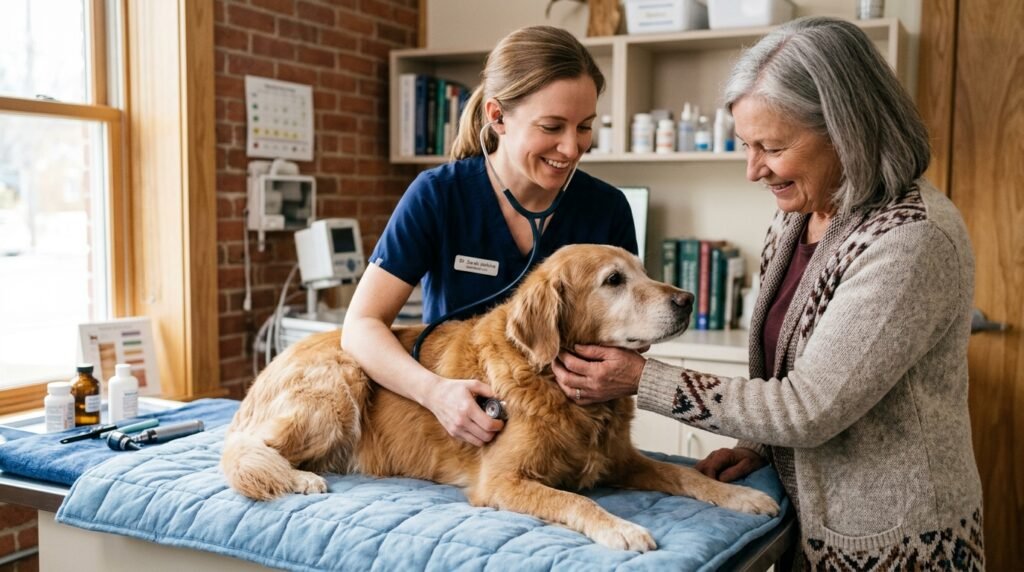
Sitting in the sterile quiet of a veterinary exam room and hearing the veterinarian look across the table and say the word “neoplasia” is a moment that makes every pet parent’s heart drop into their stomach. You look down at your faithful gray-muzzled companion, who is resting peacefully at your feet, and your mind fills with overwhelming questions, confusion, and fear.
You wonder whether neoplasia is simply another medical term for terminal cancer, or whether there is still hope for gentle, effective treatment and you worry about whether your dog is in hidden pain, what diagnostic tests are truly necessary versus unnecessarily stressful, and how you can protect their dignity, happiness, and comfort in the months ahead.
Take a deep, reassuring breath. While hearing this medical diagnosis is frightening, the word neoplasia simply refers to an abnormal, uncontrolled growth of cells. It does not automatically mean a hopeless prognosis or immediate suffering. In senior dogs, roughly half of all new cellular growths are completely benign, harmless masses. Even when a growth is malignant, modern veterinary oncology offers gentle palliative therapies focused entirely on comfort, pain relief, and cherishing your dog’s golden years.
Quick Answer:
Neoplasia in dogs refers to abnormal, unregulated growth of tissue cells that forms either benign (non-cancerous, localized) or malignant (cancerous, invasive) tumors. Roughly 50% of dogs over ten years old develop neoplasia. The most common forms in senior canines include lipomas, mast cell tumors, lymphoma, and hemangiosarcoma. Definitive diagnosis relies on a gentle Fine Needle Aspirate (FNA) or biopsy, while modern care prioritizes quality of life through multi-modal pain relief and palliative oncology.
Key Takeaways:
- Neoplasia Does Not Always Mean Cancer: Benign neoplasms (like fatty lipomas and sebaceous adenomas) do not invade surrounding tissues or spread to distant organs.
- Never Diagnose by Touch Alone: Malignant tumors and benign cysts can feel identical under the skin; a simple Fine Needle Aspirate (FNA) is essential for accurate diagnosis.
- Common Warning Signs: Watch for rapidly enlarging lumps, non-healing sores, unexplained weight loss, chronic lethargy, and sudden difficulty breathing.
- Palliative Comfort Over Cures: For geriatric dogs, therapy often shifts from aggressive surgery to gentle pain control, appetite stimulants, and quality-of-life preservation.
This comprehensive veterinary guide demystifies canine neoplasia, outlines the differences between benign and malignant tumors, explains the staging process, and details compassionate home palliative care.
Neoplasia vs. Tumor vs. Cancer
Medical terminology can feel cold and confusing when you are worried about your dog. Understanding the clinical definitions helps you make clear, informed decisions:
- Neoplasia: Originates from the Greek words neo (new) and plasma (formation). It is the broad scientific term for any abnormal, uncontrolled proliferation of cells within the body.
- Neoplasm / Tumor: The actual physical mass or swelling created by those dividing cells. A tumor can be either benign or malignant.
- Cancer: Specifically refers to malignant neoplasia. Malignant cells have lost normal cellular boundaries, allowing them to invade adjacent healthy tissues and enter blood or lymphatic vessels to spread (metastasize) to distant organs like the lungs, liver, or bone marrow.
Benign vs. Malignant Neoplasia in Older Dogs
Just because your senior dog has a new mass does not mean their life is in immediate jeopardy. Consider the fundamental biological differences:
| Neoplasm Category | Typical Characteristics | Common Senior Dog Examples |
|---|---|---|
| Benign Neoplasia (Non-Cancerous) | Slow-growing, encapsulated, moveable under skin, does not spread to other organs; rarely fatal unless physically pressing on vital structures | Lipomas (fatty tumors), sebaceous adenomas (“old dog warts”), histiocytomas, skin tags |
| Malignant Neoplasia (Cancerous) | Rapid growth, poorly defined irregular borders, firmly attached to deeper muscle/bone, capable of ulceration and distant metastasis | Mast cell tumors, lymphoma, hemangiosarcoma, osteosarcoma, melanoma, soft tissue sarcomas |
For more details on differentiating harmless skin nodules from concerning growths, explore our companion guide on old dog skin bumps and warts.
Top 5 Most Common Malignant Neoplasias in Senior Canines
When malignancy is diagnosed, it most frequently involves one of these primary cellular origins:
1. Mast Cell Tumors (MCT)
Mast cell tumors are the most common malignant skin cancer in dogs. These cells are immune cells responsible for allergic responses, containing granules filled with histamine and heparin. When an MCT is bumped or poked, it can swell dramatically and release histamine (known as Darier’s sign).
Mast cell tumors can range from low-grade (cured by simple surgical removal) to high-grade, which requires systemic therapy.
2. Canine Lymphoma (Lymphosarcoma)
Lymphoma is a systemic cancer of the white blood cells (lymphocytes). The classic early sign is painless, symmetrical enlargement of peripheral lymph nodes beneath the jaw, in front of the shoulders, and behind the knees.
Dogs with lymphoma often feel completely healthy initially. While not curable, canine lymphoma is remarkably responsive to gentle chemotherapy, often giving dogs twelve to eighteen months of joyful, symptom-free remission.
3. Hemangiosarcoma (HSA)
Hemangiosarcoma is an aggressive cancer of the blood vessel endothelial cells, most commonly targeting the spleen, liver, or the right atrium of the heart. It is notoriously silent until the fragile blood-filled tumor ruptures internally, causing acute weakness, pale gums, and sudden collapse.
4. Osteosarcoma (Bone Cancer)
Primary bone cancer predominantly strikes large and giant senior breeds (such as Great Danes, Rottweilers, and Golden Retrievers). It develops near the growth plates of long bones (often summarized as “away from the elbow, toward the knee”), causing severe, progressive limping and painful bony swelling.
5. Soft Tissue Sarcomas
Arising from connective, fibrous, or muscular tissues, these masses often feel pseudo-encapsulated like fatty lipomas. However, microscopic tentacles invade deeply into adjacent muscle planes, requiring wide surgical margins.
If you have noticed unexplained physical changes or swelling in your older dog, review our detailed guide on tumor signs in dogs: early detection guide.
How Veterinarians Diagnose and Stage Neoplasia
Accurate diagnosis and clinical staging tell you exactly what you are facing and help you choose the best path forward for your dog’s comfort:
| Diagnostic Procedure | How It Works | What It Discovers |
|---|---|---|
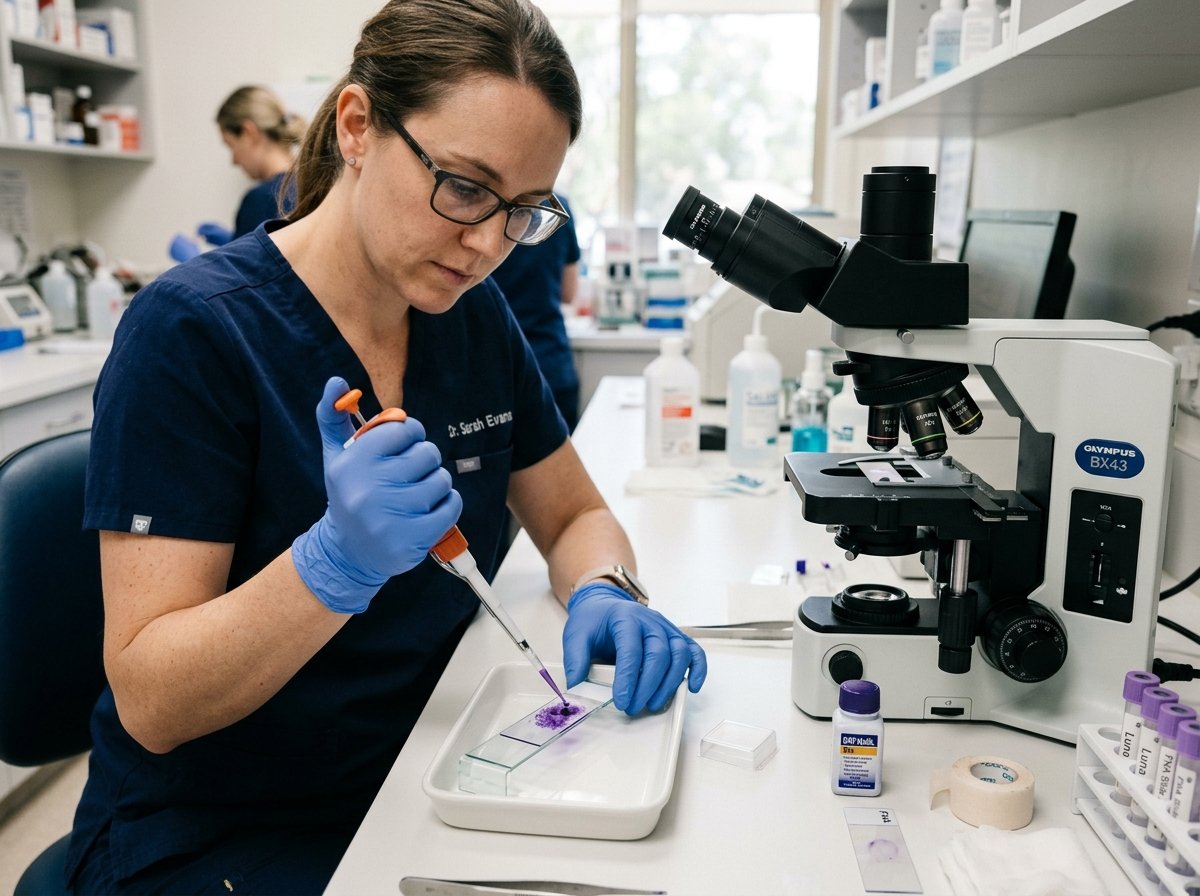
| Fine Needle Aspirate (FNA) | A tiny sterile needle gently collects cells without anesthesia; examined on a slide | Fast differentiation between lipomas, cysts, mast cells, and carcinomas |
| Biopsy & Histopathology | A small tissue wedge is surgically sampled and sent to a veterinary pathologist | Provides definitive tumor type, cellular malignancy grade, and surgical margins |
| 3-View Chest Radiographs (X-rays) | X-rays of the lungs taken from three different angles | Detects whether microscopic cancer cells have spread to lung tissue (pulmonary metastasis) |
| Abdominal Ultrasound | High-frequency sound waves imaging the spleen, liver, kidneys, and lymph nodes | Identifies internal organ nodules or fluid accumulation before surgery |
According to veterinary oncology clinical guidelines published by the Veterinary Cancer Society clinical resources, full staging ensures pet parents have complete clarity on life expectancy and quality of life before committing to invasive treatments.

Palliative Care: Prioritizing Comfort Over Curative Battles
When an older dog is twelve, thirteen, or fourteen years old, putting them through aggressive amputations, radiation therapy, or intense hospitalizations is not always the kindest choice. Many pet owners choose palliative oncology, which focuses entirely on comfort, pain management, and peaceful happiness.
1. Multi-Modal Pain Management
Modern veterinary protocols use layered medications to block pain at every level of the nervous system:
- Targeted Prescription NSAIDs: Medications like Carprofen, Meloxicam, or Galliprant reduce inflammatory pain around tumors.
- Neuropathic Pain Reducers: Gabapentin calms nerve pain and anxiety.
- Opioids and Transdermal Gels: Codeine, Tramadol, or fentanyl patches for breakthrough pain in advanced bone cancer.
2. Appetite and Digestion Support
Cancer cells release inflammatory cytokines that induce cachexia (muscle wasting) and nausea. Veterinarians frequently prescribe Capromorelin (Entyce) to stimulate appetite and Maropitant (Cerenia) to eliminate nausea, ensuring your companion enjoys meals.
3. Low-Dose Metronomic Chemotherapy
Instead of high-dose chemotherapy that causes nausea and white blood cell crashes, metronomic chemotherapy uses low-dose daily oral medications (such as cyclophosphamide paired with an NSAID). This suppresses tumor blood vessel formation (anti-angiogenesis) without causing unpleasant side effects.
For more home nursing techniques, explore our guide on old dog comfort care and wellness.
Tracking Quality of Life: The HHHHHMM Scale
Navigating neoplasia requires evaluating your dog’s daily well-being objectively. Renowned veterinary oncologist Dr. Alice Villalobos created the HHHHHMM Scale to help families assess quality of life across seven key criteria:
- Hurt: Is physical pain, panting, or discomfort effectively controlled with medication?
- Hunger: Is your dog eating eagerly on their own or with gentle encouragement?
- Hydration: Are they drinking water normally and showing moist, pink gums?
- Hygiene: Can your dog stay clean, dry, and free of pressure sores or soiled fur?
- Happiness: Do they wag their tail, enjoy petting, and engage with the household?
- Mobility: Can they get up to go outside with or without a support harness?
- More Good Days Than Bad: When bad, distressing days outnumber good, peaceful days, their quality of life has become compromised.
To prepare for end-of-life considerations, review our compassionate guide on signs your dog is dying and comfort care.
Official wellness guidance is available through the American Veterinary Medical Association senior care FAQ.
Frequently Asked Questions
Does neoplasia mean my dog is going to die soon?
No. Many neoplasms in senior dogs are completely benign (such as lipomas or skin adenomas) and will never shorten their lifespan. Even with malignant tumors, modern palliative therapies can provide months or years of comfortable, joyful living.
Can I tell if a tumor is cancerous just by feeling it?
No. Even board-certified veterinary oncologists cannot diagnose malignancy by touch alone. A soft, squishy lump can occasionally be a mast cell tumor, while a firm mass can be a harmless fibrous cyst. A simple needle aspirate is always required.
Is surgery always necessary for neoplasia in an old dog?
Not always. If a benign mass is not interfering with walking, breathing, or eating, veterinarians often recommend monitoring it rather than subjecting an elderly dog to general anesthesia.
What should I feed a senior dog with neoplasia?
Dogs battling neoplastic disease thrive on highly palatable diets rich in high-quality animal protein and marine Omega-3 fatty acids (EPA and DHA), while keeping simple carbohydrates low to prevent feeding tumor glycolysis.
Loving Your Companion Through Every Season
A diagnosis of neoplasia can feel overwhelming, but remember that your dog does not know about medical labels or test results. They only know how they feel in the present moment, surrounded by your familiar love, comforting touch, and gentle care.
By staying informed, partnering closely with your veterinary team, and prioritizing your dog’s daily comfort and happiness above all else, you ensure their golden years remain filled with dignity, peace, and boundless devotion.