
As dogs age, their world becomes smaller and quieter. Eyesight dims, hearing fades, and cognitive sharpness naturally softens. In this stage of life, a predictable daily routine isn’t just convenient for owners—it’s an essential anchor that gives an aging dog emotional security and reduces anxiety.
A senior-friendly daily routine balances structured meal times, gentle low-impact exercise, targeted health monitoring, and deep restorative sleep. Predictability helps dogs with cognitive decline or vision loss navigate their day without stress.
This guide gives you a complete, practical daily schedule blueprint tailored to the physical and emotional needs of an aging dog.
Why Predictability Matters to Aging Dogs
Senior dogs thrive on consistency because unexpected changes trigger biological stress responses. According to veterinary behavioral research from The American Kennel Club, senior dogs experiencing cognitive decline or vision loss rely heavily on environmental rhythms.
When meals, potty breaks, and bedtime happen at the exact same time every day, your dog’s brain releases fewer stress hormones (cortisol). Predictable schedules also make it easy for owners to spot early health changes in appetite, mobility, or elimination.
Sample Senior Dog Daily Schedule
| Time Window | Routine Activity | Senior Health Focus |
|---|---|---|
| 7:00 AM – 7:30 AM | Gentle wake-up & immediate potty break | Relieves overnight bladder; easy morning warm-up |
| 7:30 AM – 8:00 AM | Morning meal + joint supplements & medications | High-protein food; fish oil & glucosamine chews |
| 8:30 AM – 9:00 AM | Short 10-15 min “sniffari” walk on soft grass | Low-impact joint lubrication & mental enrichment |
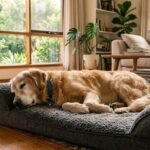
| 9:00 AM – 12:30 PM | Restorative morning nap on orthopedic bed | Deep memory foam joint cushioning |
| 12:30 PM – 1:00 PM | Midday potty break & hydration check | Prevents incontinence leaks; checks water intake |
| 1:00 PM – 5:00 PM | Quiet resting / gentle grooming session | Skin check for bumps; gentle coat brushing |
| 5:00 PM – 5:30 PM | Evening meal + warm water topper | Hydration boost; consistent digestive timing |
| 6:00 PM – 6:30 PM | Relaxed evening stroll & potty trip | Loosens evening stiffness before night rest |
| 9:30 PM – 10:00 PM | Final potty outing & night sanctuary prep | Calm nightlights & white noise for sound sleep |
1. Structured Feeding and Hydration Timing
Feed your senior dog two to three smaller meals per day at fixed times. Smaller meals digest easily and maintain steady blood sugar levels without overwhelming a sensitive gut.
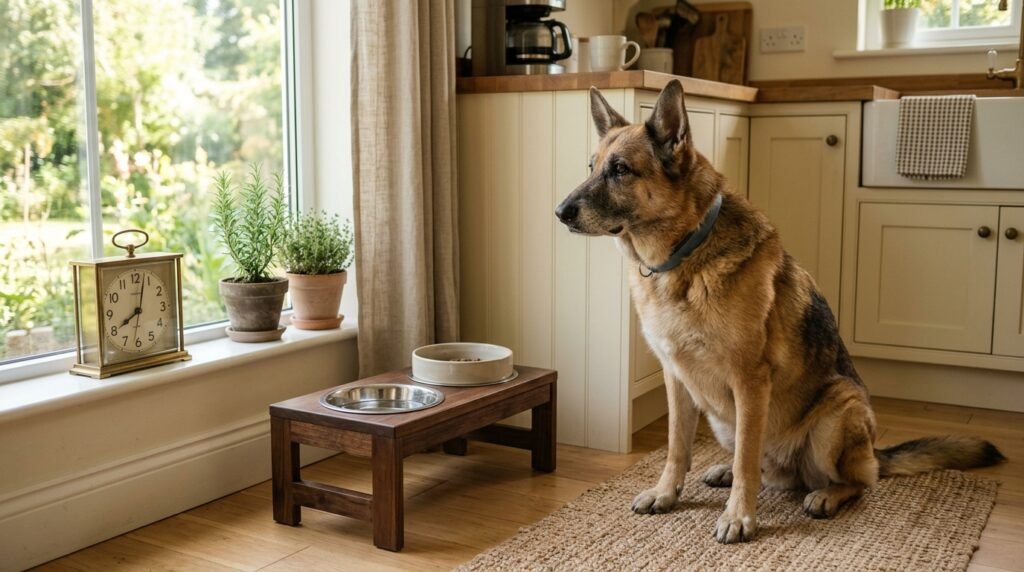
Always serve food in raised bowls to reduce neck strain. Add warm water or low-sodium bone broth to kibble to increase hydration and enhance aroma for picky eaters. Read our full advice in senior dog diet plan.
2. Low-Impact Exercise and “Sniffari” Walks
Replace long continuous walks with two or three short, 10-to-15-minute walks daily. Allow your senior dog to lead the pace and sniff thoroughly. Sniffing provides rich mental stimulation that tires out an aging brain without causing joint fatigue.
Always walk on soft grass or dirt paths rather than hard pavement. Check our detailed guide on senior dog walking tips.
3. Evening Wind-Down and Night Sleep Sanctuary
Senior dogs with dementia or sundowning often become restless as daylight fades. Establish a relaxing wind-down routine 30 minutes before bedtime:
- Dim household lights to signal night transition.
- Turn on a warm LED nightlight near water bowls and beds.
- Play continuous soft white noise to mask night household sounds.
- Provide an orthopedic memory foam bed in a warm corner. See our recommendations for the best orthopedic beds for senior dogs.
Frequently Asked Questions
#### Should a senior dog sleep all day?
Senior dogs naturally sleep 14 to 18 hours per day. However, if your dog is unresponsive, refuses food, or seems lethargic rather than peacefully resting, consult your vet to rule out illness or pain.
#### How many potty breaks does a senior dog need per day?
Most senior dogs need 4 to 6 potty breaks daily, including immediately after waking, after meals, and before bed. Dogs with kidney disease or incontinence may need breaks every 3 to 4 hours.
#### How do I adjust my senior dog’s routine during winter?
Shorten outdoor walks during cold weather, use dog fleece coats, move orthopedic beds away from cold exterior walls, and practice gentle indoor movement games.
#### What mental stimulation is safe for an old dog?
Lick mats, slow snuffle mats, gentle hand-feeding games, and short “sniffari” walks provide excellent mental enrichment without physical joint stress.
#### How do I help a senior dog adapt to a routine change?
Introduce routine shifts gradually over 7 to 10 days. Keep meal times and sleeping locations constant so your dog feels secure while other elements adjust.
#### What should I do if my senior dog paces at night?
Night pacing is a sign of sundowning or joint pain. Ensure your dog has a warm bed, use nightlights, and consult your vet about melatonin or pain management. Read senior dog dementia sleep solutions.
Anchor of Comfort
A consistent daily routine is a priceless gift for an aging dog. By anchoring your companion’s day with structured meals, short grass walks, loving health checks, and quiet night sanctuaries, you provide the peace and security they deserve in their golden years.
“@
,Description: