
If your senior dog stands up slowly on chilly mornings, takes short gingerly steps for the first few minutes, or hesitates before climbing into the car, joint stiffness is almost certainly at play. Morning stiffness is one of the earliest signs of canine osteoarthritis, but it doesn’t have to ruin your dog’s daily comfort.
Managing joint stiffness requires a multi-modal approach: targeted nutraceutical supplements, gentle morning warm-up routines, thermal heat therapy, and vet-backed pain management.
This guide gives you practical, vet-consistent remedies to ease joint stiffness and keep your senior dog moving freely throughout the day.
What Causes Morning Joint Stiffness in Senior Dogs?
During sleep, a dog’s heart rate drops and joint movement stops completely. Inside an arthritic joint capsule, synovial fluid (the natural joint lubricant) thickens and cools, while microscopic inflammatory proteins build up in surrounding tissues.
According to veterinary orthopedic research from VCA Animal Hospitals, when your dog wakes and attempts to stand, this thickened fluid and inflamed joint lining cause mechanical resistance and friction pain, resulting in stiff, wooden-legged movement for the first 5 to 10 minutes.
1. Establishing a Gentle Morning Warm-Up Routine
Never rush a stiff senior dog straight out the door for a fast walk immediately after waking up. Rushing cold, stiff joints risks muscle strains and joint flare-ups.
Follow this gentle 5-minute morning warm-up:
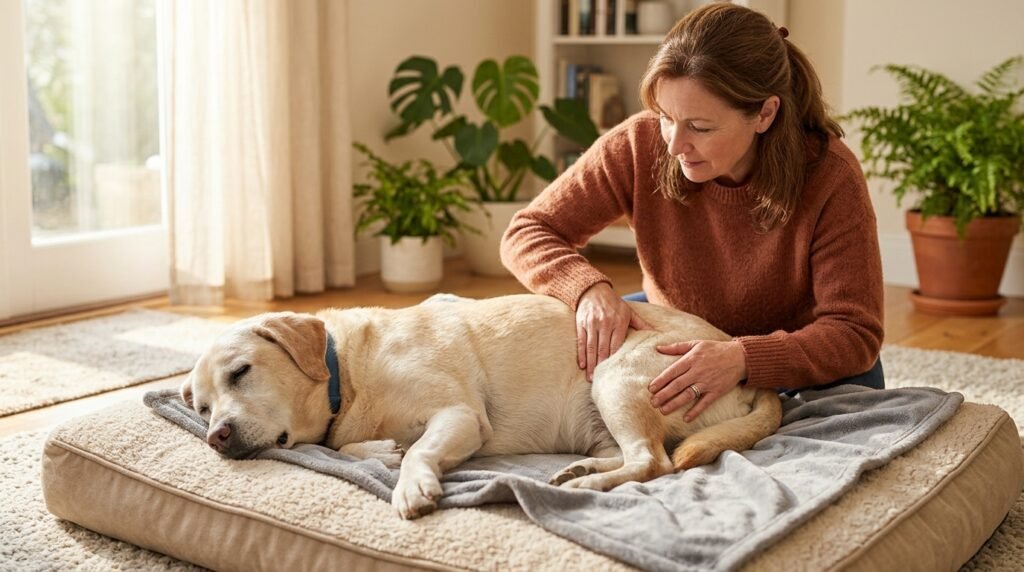
- Gentle Massage: While your dog is still lying down, stroke their back, hips, and shoulders with warm hands for 2 minutes to stimulate peripheral blood flow.
- Slow Pacing Indoors: Allow your dog to walk at their own slow pace around carpeted indoor rooms before going outside.
- Short Sniff Walk: Keep the first morning walk short (5-10 minutes) on soft grass to allow joint fluid to warm up naturally. Read our guide on senior dog walking tips.
2. Targeted Joint Supplements: Glucosamine, Chondroitin & Omega-3s
Daily nutraceutical supplementation supplies the raw building blocks needed to protect cartilage and reduce joint fluid inflammation:
| Ingredient | Clinical Role | Recommended Source |
|---|---|---|
| Omega-3 (EPA/DHA) | Reduces joint capsule inflammatory cytokines | Canine fish oil or krill oil capsules |
| Glucosamine HCI | Stimulates chondrocyte cartilage repair | Canine chewable joint supplements |
| Chondroitin Sulfate | Inhibits cartilage-destroying enzymes | Marine or bovine chondroitin chews |
| Boswellia Serrata | Natural herbal anti-inflammatory relief | Standardized Boswellia extract |
For detailed dosages, see our comprehensive guide on senior dog joint supplements.
3. Thermal Heat Therapy for Sore Joints
Applying gentle, dry heat to stiff hips and shoulders dilates blood vessels, increasing oxygen delivery and relaxing tight tendons. Apply a warm therapeutic pet heating pad or warm towel to your dog’s hips for 10 to 15 minutes before morning walks.
Always ensure heat pads are low-voltage and wrapped in a soft towel so they never burn sensitive skin.
4. Indoor Traction and Bedding Optimization
Stiff joints struggle to rise on slick hardwood or tile floors. Slipping during a morning rise causes pain and anxiety.
Place rubber-backed rug runners around sleeping beds, and ensure your dog sleeps on a solid orthopedic memory foam mattress. Read our recommendations for the best orthopedic beds for senior dogs.
5. Vet-Prescribed Anti-Inflammatory Care (NSAIDs & Injections)
When natural supplements and home care aren’t enough for moderate to severe stiffness, veterinarians prescribe targeted anti-inflammatory medications:
- Canine NSAIDs (Carprofen, Meloxicam, Galliprant): Prescription medications that block COX inflammatory pathways, providing dramatic pain relief.
- Disease-Modifying Osteoarthritis Drugs (Adequan): Injectable polysulfated glycosaminoglycans (PSGAGs) that stimulate cartilage repair directly inside joints.
- Monoclonal Antibody Therapy (Librela): Monthly bed-side injections targeting Nerve Growth Factor (NGF) to block canine arthritis pain signals.
Frequently Asked Questions
#### Why is my senior dog stiffer in cold, damp weather?
Barometric pressure drops and cold temperatures increase joint capsule pressure while tightening surrounding muscles. Keep sleeping areas warm, dry, and elevated off cold floors.
#### How long should morning joint stiffness last in an old dog?
Mild stiffness typically eases within 5 to 10 minutes of gentle walking. If stiffness persists for hours or causes severe limping throughout the day, consult your vet for prescription pain relief.
#### Can I give human ibuprofen or aspirin to my stiff dog?
NO. Never give human ibuprofen, naproxen, or acetaminophen to dogs. Human NSAIDs cause severe gastric ulceration, acute kidney failure, and death in dogs. Only use vet-prescribed canine medications.
#### Are joint supplements enough to cure senior dog stiffness?
Supplements slow cartilage erosion and manage mild inflammation, but they do not cure advanced osteoarthritis. They work best as part of a multi-modal protocol combining weight control, warmth, and vet care.
#### Should I exercise a dog with stiff joints?
Yes. Gentle, low-impact exercise (like short grass walks or hydrotherapy) keeps joint fluid circulating and prevents muscle atrophy. Avoid high-impact running or jumping.
#### How can I help my senior dog rise from bed without slipping?
Place non-slip rug runners around the bed, consider using rubber toe grips on nails, or use a padded belly sling to give gentle upward assistance. Read our guide on helping a senior dog get up.
Restoring Comfortable Movement
Joint stiffness is a natural part of canine aging, but your dog doesn’t have to suffer through painful mornings. By combining warm routines, high-quality joint supplements, non-slip indoor paths, and vet-backed care, you can help your senior companion move with ease and joy every day.
“@
,Description: