

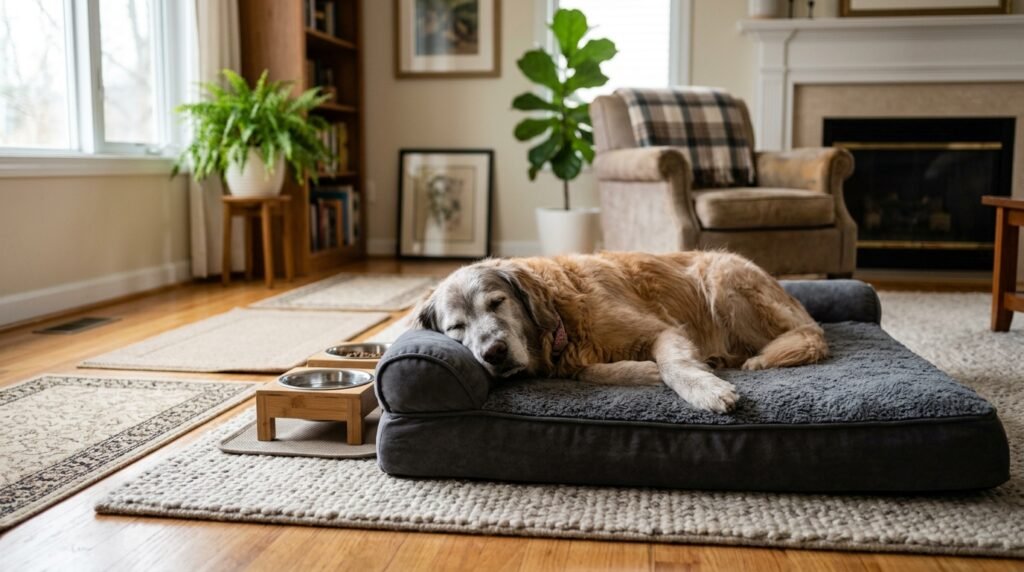
Watching your gray-muzzled companion hesitate at the threshold of a smooth wooden hallway is a quiet heartbreak familiar to many dog lovers. Floors they once trotted across without a second thought suddenly resemble slick sheets of frozen glass. An awkward step causes hind legs to splay, creating a sudden flash of worry in eyes that have trusted your care for over a decade.
Aging fundamentally alters how a canine experiences their domestic environment. Deteriorating joint cartilage, diminished muscle mass, and fading sensory acuity turn routine household layouts into formidable obstacle courses. Creating a supportive living sanctuary relieves constant physical strain, prevents catastrophic falls, and restores daily joy.
Quick Answer:
Keeping senior dogs comfortable requires eliminating slick flooring hazards with interlocking rubber mats or non-slip runners, providing thick high-density orthopedic memory foam bedding, raising food and water dishes to elbow height, maintaining draft-free room temperatures, and setting up gradual ramps for furniture access. These environmental updates protect arthritic joints, prevent painful falls, and restore peace of mind.
Key Takeaways:
- Secure Traction: Hardwood and laminate floors create acute fall risks. Connect living zones using non-slip runner rugs and rubber-backed mats.
- True Orthopedic Bedding: Fiberfill dog beds flatten quickly, causing sore hips to contact hard flooring. Invest in solid high-density memory foam bases.
- Thermal Comfort: Arthritic joints stiffen dramatically in chilly drafts. Position sleep stations away from exterior doors and provide self-warming thermal pads.
- Raised Nourishment: Bending down to floor bowls places painful shear force on aging cervical vertebrae. Raise bowls to mid-chest level.
- Predictable Surroundings: Sensory loss makes older dogs reliant on spatial consistency. Avoid rearranging furniture or repositioning water stations.
Why Your Living Space Needs Senior-Friendly Adjustments
Young dogs view your home as an open playground with endless vertical possibilities. Couches serve as launching pads, stairs function as speed tracks, and smooth tiles provide sliding stops. As canines pass the eight-to-ten-year milestone, biological realities shift their perception of domestic space completely.
Osteoarthritis develops quietly in over eighty percent of dogs past eight years old, according to the American Veterinary Medical Association senior care guidelines. Chronic inflammation erodes protective joint cartilage in hips, elbows, and knees, leaving sensitive bone surfaces to grind uncomfortably against one another. Movements that once felt effortless now trigger sharp twinges and defensive muscle guarding.
Modifying your home breaks this cycle of apprehension and physical decline. When an older dog feels secure underfoot and supported during sleep, their confidence rebounds quickly. Thoughtful environmental adjustments prevent severe ligament tears, extending mobility and quality of life.
Flooring and Traction: Eliminating the Slip Factor
Slick flooring represents the single greatest domestic hazard for aging dogs. Hardwood, laminate, vinyl planks, and polished tile offer near-zero grip for canine foot pads. Arthritic dogs compensate for weak joints by clenching their toes, causing brittle nails to skate across smooth surfaces without finding grip.
A single splay injury can cause severe muscle tears or trigger acute spinal disc flare-ups. Once an older dog experiences a painful fall on hardwood, they often develop surface phobia. They may refuse to enter the kitchen, whine anxiously at carpet edges, or tremble when guided toward tile.
Building Non-Slip Walking Corridors
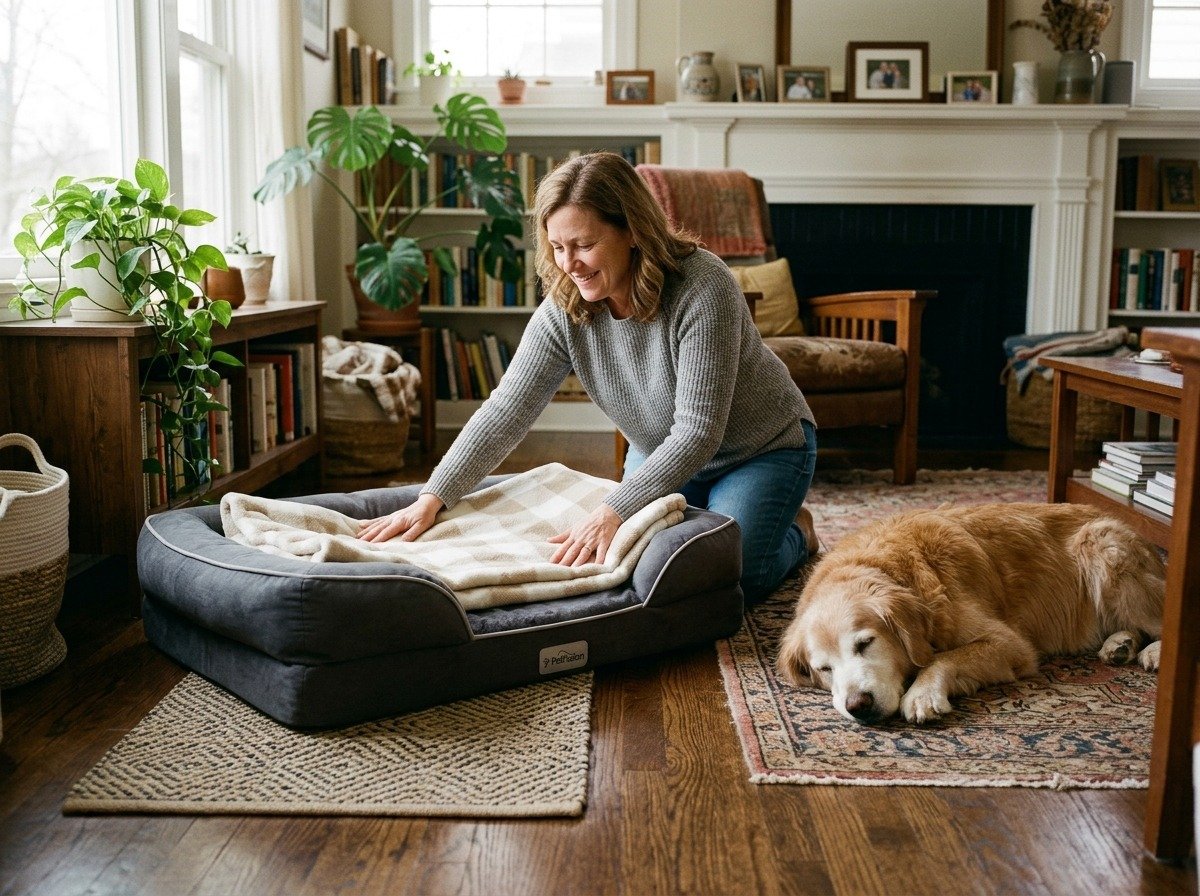
Identify your dog primary daily walking routes between beds, food bowls, and exterior doors. Lay down long runner rugs with non-skid rubber backing along these frequently traveled corridors.
Interlocking foam exercise tiles provide another outstanding traction solution for kitchens and dining areas. These closed-cell EVA foam mats wipe clean instantly, absorb shock, and insulate paws from cold ceramic subflooring. Inexpensive yoga mats also provide excellent grip for awkward transition zones when secured with heavy rug tape.
Paw-Level Traction Enhancements
Environmental adjustments work best when paired with direct paw care. Long hair growing between paw pads acts like slick silk on polished wood, eliminating natural pad traction. Trim pad fur flush with the skin every two weeks using blunt-tip grooming shears.
Keep toenails short and neatly rounded. Overgrown nails strike the ground before paw pads can make contact, twisting delicate toe joints backward and breaking floor grip. Applying natural beeswax paw balms provides additional tacky grip for dogs struggling with hind limb weakness.
Orthopedic Bedding: Selecting Support Over Cushioning
Older dogs spend up to eighteen hours each day resting or sleeping to conserve energy. The quality of their sleep surface directly dictates how easily they rise and walk each morning. Standard pet store beds stuffed with polyester fiberfill fail to provide necessary musculoskeletal support.
Fiberfill compresses rapidly under canine body weight, forming deep depressions surrounded by lumpy mounds. Within minutes, your dog heavy hips and shoulders sink through the fluff and press firmly against the rigid floor below. This continuous pressure restricts local blood circulation and inflames sensitive bursae around arthritic joints.
Genuine orthopedic dog beds feature solid blocks of high-density therapeutic memory foam. Medical-grade foam conforms gently to canine contours, distributing body weight evenly across the entire surface. This even distribution eliminates focal pressure points on bony hips, shoulders, and spinal vertebrae.
Selecting the Proper Foam Density and Thickness
Look for beds built with a dual-layer foam design. A firm four-inch base prevents bottoming out, while a two-inch memory foam topper cradles sore joints.
Bolster-style beds featuring raised cushioned rims offer excellent head and neck support. Senior canines frequently suffer from cervical arthritis, making a slightly elevated headrest deeply comforting. Ensure the entry edge features a low cutout so stiff legs do not stumble when stepping inside.
Strategic Bed Placement Throughout the House
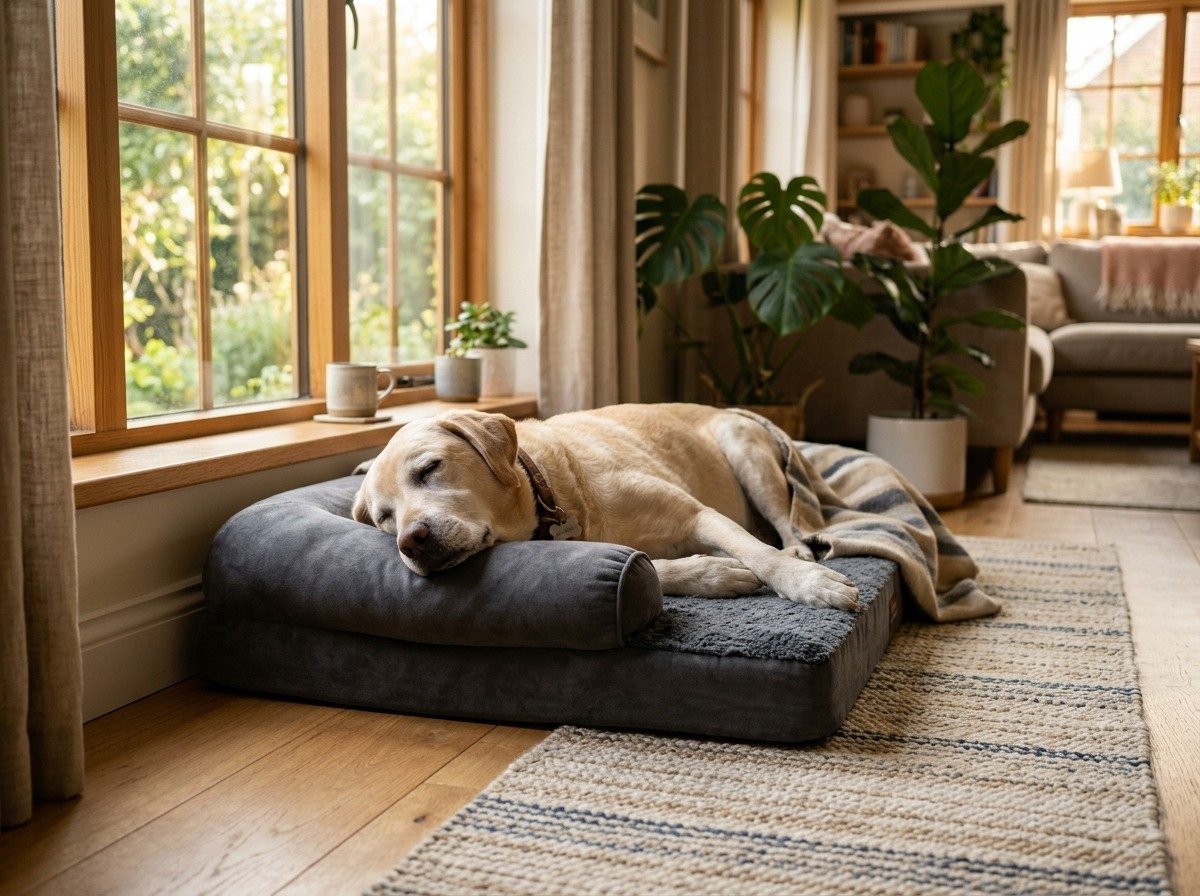
One bed in the primary bedroom is rarely sufficient for an older companion. Dogs are social creatures who want to remain close to their human family throughout the day. Place comfortable orthopedic resting spots in every room where family members spend substantial time.
Keep sleep stations away from exterior doorways, single-pane windows, and drafty air conditioning vents. Sudden temperature drops chill arthritic joints, intensifying morning stiffness and muscle spasms. Position beds against interior walls away from high-traffic hallways to ensure unbroken rest.
Temperature and Microclimate Control: Warmth for Sore Joints
Arthritic joints react acutely to changes in barometric pressure, dampness, and ambient indoor chill. Cold air causes canine muscles to contract defensively, tightening tendons and restricting synovial fluid circulation within worn joint capsules. This stiffness makes rising from rest slow, creaky, and painful.
Maintaining a steady indoor temperature between sixty-eight and seventy-two degrees Fahrenheit protects older canines from thermal shock. Keep humidity levels moderate using a quiet humidifier during dry winter months to soothe dry airways and skin. Minimizing thermal fluctuations allows joints to remain loose and flexible.
Self-warming thermal blankets contain an internal heat-reflecting foil layer surrounded by soft fleece. These pads capture your dog natural radiant body heat and bounce it back into sore hip and lumbar muscles without electricity. They provide gentle, continuous warmth without any risk of thermal burns.
Veterinary guidance from the American Animal Hospital Association arthritis management guidelines highlights that consistent warmth significantly enhances blood perfusion to stiff connective tissues. Pairing ambient temperature regulation with warm fleece wraps helps keep creaky limbs mobile through cold mornings.
Raised Feeding Stations and Accessible Hydration
The simple act of eating and drinking can become an exhausting physical ordeal for an older dog. Lowering the head all the way to the floor requires bending the neck into an extreme downward angle while bearing excess weight on arthritic front elbows. This posture compresses cervical discs and strains fragile shoulder ligaments.
Dogs with spinal spondylosis or balance challenges often choke or regurgitate when eating from floor bowls. Gravity works against food transit when the esophagus angles downward. Unstable front legs can also slip outward while leaning down, creating messy spills and painful falls.
Elevated feeding stations bring nourishment directly to your dog natural standing posture. The most comfortable feeding platform raises food and water bowls to mid-chest or elbow height. This ergonomic height allows the neck and spine to remain parallel with the floor, promoting smooth swallowing and steady balance.
Distribute multiple water stations in every major living area of your home. Place wide, shallow ceramic bowls in bedrooms and living rooms so hesitant drinkers avoid long walks. Adding a splash of warm water to daily meals also boosts fluid intake while protecting aging kidneys.
Ramps, Low Steps, and Vertical Mobility Aids
Jumping onto couches, beds, or vehicle seats places extreme concussive force on canine skeletal structures. When a thirty-pound or sixty-pound dog lands on the floor, impact shockwaves reverberate through front wrist joints, elbows, and spinal discs. For a dog with existing cartilage degradation, a single hard landing can cause acute joint trauma.
Eliminating vertical jumping is essential for long-term comfort and mobility preservation. Providing gradual ramps or wide, shallow foam stairs preserves your companion access to cherished resting spots without physical damage. Ramps allow them to walk smoothly upward using steady momentum rather than explosive leaping force.
To explore specific dimension criteria, incline angles, and training methods for these aids, consult our complete guide on dog stairs and ramps for old dogs. That resource outlines how to choose between foam steps and carpeted ramps based on weight and joint conditions.
Assisting Daily Mobility with Support Slings
There are times when environmental modifications require hands-on owner support. Tackling high porch steps, entering the yard during rainy weather, or rising after a deep nap often requires a gentle lifting assist. Bending over to hoist a heavy dog by their collar or ribs strains your back and causes them intense chest pain.
A padded support sling loops comfortably under your dog pelvic abdomen or ribcage. Wide handles allow you to lift up to fifty percent of their body weight with minimal effort, taking pressure off painful hips while keeping feet planted. Support slings provide vital stability without placing pressure on sensitive bladders.
Home Comfort Modification Matrix
Every home presents unique physical challenges depending on floor plans, architectural steps, and room configurations. The following reference table outlines common household pain triggers alongside practical, low-cost modifications that restore senior canine comfort.
| Living Area | Potential Discomfort Trigger | Targeted Environmental Modification | Immediate Benefit to Pet |
|---|---|---|---|
| Hallways & Foyers | Polished wood, slippery tile, sudden cold drafts | Interlocking rubber-backed runners and door draft stoppers | Prevents splay falls, restores walking confidence |
| Kitchen & Dining | Floor-level food bowls, smooth linoleum or tile | Elevated feeding stands, textured EVA foam puzzle mats | Relieves neck compression, stops rear paws slipping |
| Living Room | High couches, jumping down impact, cold window drafts | Gentle incline pet ramp, thick bolster memory foam bed | Eliminates concussive impact on elbows and wrists |
| Bedrooms | High bed heights, dark night disorientation | Soft amber LED nightlights, floor-level orthopedic mattress | Aids navigation during night bathroom calls |
| Backyard Access | Steep porch steps, wet wooden deck boards, mud | Exterior wooden ramp with grip tape, support sling assist | Ensures dignified outdoor relief without joint shocks |
Subtle Behavioral Signs of Canine Discomfort
Canines possess an evolutionary instinct to conceal physical vulnerability and pain. In the wild, displaying overt weakness invites competition or abandonment from pack members. Domestic dogs retain this stoic trait, meaning they rarely whimper or cry out until discomfort becomes intense.
Instead of vocalizing, older dogs communicate discomfort through discreet behavioral shifts. Recognizing these subtle physical cues allows you to adjust their living environment proactively before minor soreness evolves into acute distress. Prompt veterinary evaluation paired with environmental updates preserves comfort.
Clinical guidance from the Cornell University canine osteoarthritis management protocols underscores that changes in posture and resting habits represent the most dependable early indicators of musculoskeletal deterioration.
Key Discomfort Indicators to Watch
- Hesitation Before Rising: Taking multiple attempts to stand up or using front paws to pull the body upward while hind legs remain sluggish.
- Excessive Licking of Joints: Obsessively licking carpal wrists, hocks, or stifle knees to stimulate natural pain relief endorphins.
- Changes in Sleeping Posture: Inability to curl into a tight ball, preferring to stretch out flat on firm surfaces to avoid flexing tight hips.
- Reluctance to Climb Steps: Stopping at the base of stairs, looking up with head lowered, or pacing back and forth along bottom risers.
- Personality Shifts: Displaying irritability when touched around the lower spine or withdrawing from playful interactions with family members.
If you observe severe morning immobility, pairing environmental updates with gentle morning massage helps loosen tight connective tissue. Review our step-by-step tutorial on senior dog joint stiffness remedies for proven tactile techniques that restore flexibility.
Establishing a Calming Daily Comfort Routine
Physical modifications create a safe physical foundation, but daily behavioral structure provides emotional serenity. Senior dogs thrive when their days follow a rhythmic, dependable pattern. Knowing precisely when food arrives, when bathroom visits occur, and when quiet naps happen eliminates chronic stress.
Structure your morning to allow ample warm-up time before outdoor excursions. Spend a few quiet minutes stroking their muscles indoors, offer a sip of fresh water, and allow joints to lubricate before stepping outside into cool morning air.
Integrate short, frequent outdoor breaks throughout daylight hours. Providing easy yard access every three to four hours prevents accidents and maintains canine dignity. To align your household schedule with biological aging needs, explore our structured framework on senior dog routine schedules to anchor cognitive clarity.
Balance gentle physical activity with restorative afternoon downtime. Older canines require substantial sleep cycles to recover from minor exertion. If you wonder how much daytime resting is healthy, read our analysis on old dog sleeping patterns versus lethargy to identify healthy rest cycles.
Frequently Asked Questions
How do I stop my senior dog from slipping on wood floors?
The most reliable method to prevent slipping involves laying non-skid runner rugs or interlocking EVA foam exercise mats along high-traffic hallways. In addition, keep the hair between paw pads neatly trimmed flush with skin and maintain short toenails. Natural beeswax paw balms or rubber toe grips can provide supplemental traction for dogs struggling with hind limb weakness.
What type of bed is best for a dog with severe arthritis?
Dogs with arthritis require true orthopedic beds made from high-density, multi-layer memory foam rather than loose fiberfill. Look for a solid four-inch supportive base layer topped with two inches of contouring memory foam that distributes body weight evenly without bottoming out. Bolster edges provide comfortable head support, while a low step-in threshold prevents tripping upon entry.
Are heated dog beds safe for older arthritic dogs?
Heated beds are safe and beneficial if you select low-voltage pet pads with chew-proof cords and automatic temperature limits. Never use standard human heating pads, which can overheat rapidly and cause severe thermal skin burns on immobile dogs. Self-warming thermal blankets that reflect radiant body heat provide an outstanding electricity-free alternative.
Should I raise my senior dog food and water bowls?
Yes, raising bowls to mid-chest or elbow height provides substantial physical relief for aging canines. Elevated feeding stations keep the neck and spine in a neutral horizontal position, eliminating excessive downward bending that strains arthritic necks and shoulders. This ergonomic height also promotes smooth swallowing and helps prevent digestive regurgitation.
How can I tell if my senior dog home modifications are working?
You can gauge success by observing subtle improvements in daily behavior and posture. Signs of greater comfort include rising from rest with fewer attempts, walking confidently down hallways without hesitation, sleeping deeply without frequent repositioning, and showing eager interest in family activities. A relaxed facial expression and wagging tail confirm that environmental stress has lifted.