

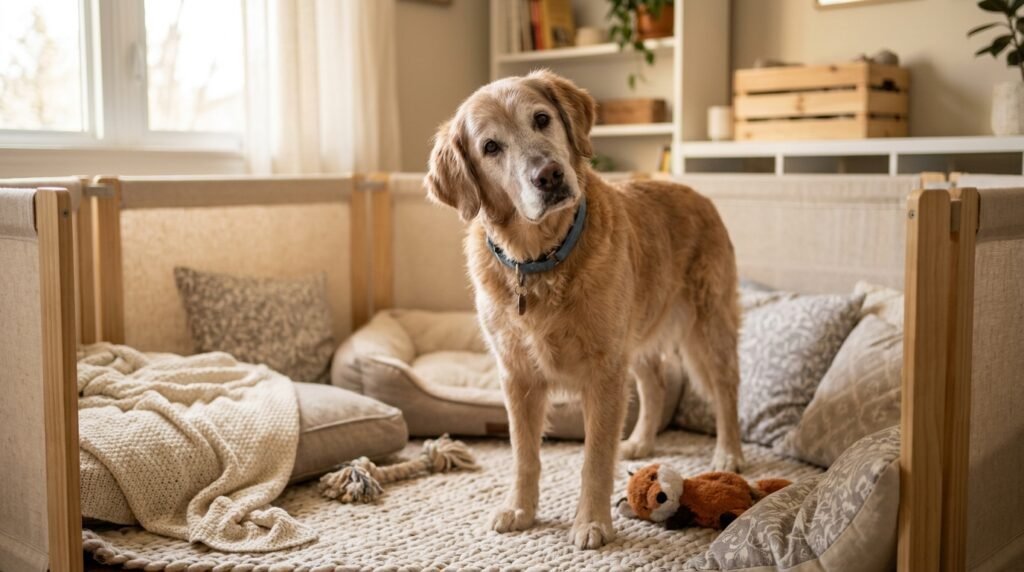
Watching your senior dog suddenly stumble, tilt their head sideways, and walk like they’re drunk can be terrifying. Many owners immediately fear their dog has suffered a severe stroke or brain tumor. But in older dogs, sudden loss of balance is most frequently caused by a common, non-fatal condition called Old Dog Vestibular Disease.
While the symptoms look dramatic and alarming, many senior dogs with vestibular syndrome recover remarkably well within a few days to weeks with proper veterinary diagnosis and supportive home care.
This guide explains what causes loss of balance in aging dogs, how to recognize vestibular symptoms, and how to keep your dog safe and comfortable during recovery.
What Is Old Dog Vestibular Disease?
The vestibular system is a complex network of sensory organs located in the inner ear and brainstem that controls balance, spatial orientation, and eye coordination. When this system experiences sudden inflammation, your dog loses sense of gravity and balance, resulting in acute vertigo.
According to veterinary neurology guides from The American Kennel Club, when no underlying ear infection or brain lesion is found, the condition is termed Idiopathic Vestibular Syndrome (Old Dog Vestibular Disease). It occurs most commonly in dogs past age eight.
Key Symptoms of Vestibular Disease vs. Stroke
| Symptom | Old Dog Vestibular Disease | Canine Stroke / Brain Injury |
|---|---|---|
| Head Tilt | Pronounced, persistent tilt to one side | May be absent or paired with limb weakness |
| Eye Movements (Nystagmus) | Rapid side-to-side or up-and-down eye flicking | Irregular or non-flicking eye positions |
| Balance & Gait | Wobbling, stumbling, leaning into walls | Weakness or paralysis on one side of body |
| Nausea & Drooling | Common due to severe motion sickness | Uncommon unless severe brainstem involvement |
Other Potential Causes of Loss of Balance in Senior Dogs
While vestibular syndrome is common, your vet will perform diagnostic tests to rule out other medical causes of balance loss:
- Deep Inner Ear Infections (Otitis Interna): Bacterial infections that breach the eardrum and inflame inner ear balance canals.
- Severe Spinal Cord Compression: Advanced intervertebral disc disease or arthritis compressing motor nerves. Learn more in our guide on senior dog walking tips.
- Hypothyroidism: Severely low thyroid levels affecting peripheral nerve function.
- Medication Toxicity: Adverse reactions to certain antibiotics (like chlorhexidine ear flushes or aminoglycosides).
1. Home Care During the First 48 Hours of Vertigo
The initial 48 hours of a vestibular episode are the most disorienting for your dog. Focus on physical safety and reducing motion nausea:
- Create a Padded Safety Zone: Confine your dog to a carpeted room padded with cushions and blankets to prevent falls into hard furniture edges.
- Block Staircases: Secure baby gates at the top and bottom of all staircases immediately.
- Support During Potty Breaks: Use a padded harness or towel sling under the belly to steady your dog while walking outside to eliminate. See our recommendations for mobility aids for senior dogs.
- Hand-Feed Soft Meals: Offer small portions of wet food or chicken and rice from your hand so your dog doesn’t have to lower their tilted head to a bowl.
2. Veterinary Treatments for Balance Recovery
Because idiopathic vestibular disease is self-limiting, veterinary care focuses on managing symptoms until brain inflammation settles:
- Anti-Nausea Medications: Drugs like maropitant (Cerenia) or meclizine control dizziness, drooling, and vomiting.
- Subcutaneous Fluid Therapy: Hydration support if your dog is too nauseous to drink independently.
- Otoscopic Ear Exams: Flushing and clearing any underlying inner ear bacterial infections with targeted antibiotics.
Timeline of Recovery: What to Expect
Most senior dogs show significant improvement within 48 to 72 hours as the brain adapts to vestibular signaling. Wobbling and nausea usually subside within 7 to 14 days, though a mild residual head tilt may persist permanently without affecting quality of life.
Frequently Asked Questions
#### Is old dog vestibular disease painful?
No. Vestibular disease causes severe dizziness, nausea, and spatial disorientation, but it is not physically painful. Managing nausea with vet-prescribed medication keeps your dog comfortable during recovery.
#### How long does it take for a senior dog to recover from vestibular disease?
Most dogs show noticeable improvement within 48 to 72 hours, with walking balance returning over 2 to 3 weeks. A slight head tilt may remain, but dogs adapt completely.
#### Can old dog vestibular disease happen again?
While most dogs experience only one episode of idiopathic vestibular syndrome in their lifetime, recurrent episodes can occur, especially if underlying inner ear issues persist.
#### How can I tell if my old dog had a stroke or vestibular disease?
Vestibular disease features rapid side-to-side eye flicking (nystagmus) and head tilts without limb paralysis. Strokes usually cause one-sided weakness or facial drooping without nystagmus. A vet exam confirms the diagnosis.
#### Should I carry my dog outside if they lose balance?
For small dogs, carrying them carefully is fine. For medium and large dogs, use a supportive belly sling or chest harness so their feet maintain touch contact with the ground safely.
#### Does a head tilt ever go away after vestibular disease?
In many dogs, the head tilt resolves completely within a few weeks. In some cases, a minor residual head tilt remains permanently, but it does not cause pain or impair happiness.
Guiding Your Dog Through Recovery
While watching your old dog lose balance is frightening, understanding that idiopathic vestibular disease is manageable provides immense peace of mind. With gentle home support, anti-nausea care, and a safe padded environment, your senior companion can navigate recovery smoothly.
“@
,Description: