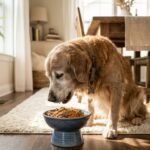


Noticing an extra roll of padding over your senior dog’s ribs or watching them struggle to rise from the living room rug after an afternoon nap is a poignant moment for every dedicated pet owner. When our canine companions enter their golden years, their daily pace slows down. Morning runs turn into gentle sniffing strolls, frisbee games turn into quiet naps by the radiator, and their internal metabolic furnace cools down significantly.
Yet many devoted owners continue filling the food dish with the exact same measuring cup and the exact same kibble brand that their dog ate at age three. Over months and years, excess calories quietly accumulate. What looks like harmless cuddly plumpness actually carries severe physiological consequences for an aging dog. Extra weight places punishing mechanical stress on worn joint cartilage, accelerates spinal osteoarthritis, elevates cardiac workload, and triggers persistent low-grade systemic inflammation.
Helping your aging companion reach a lean body condition is the single most powerful longevity gift you can give them. A landmark fourteen-year Purina lifespan study proved that dogs kept in lean body condition lived an average of 1.8 years longer than their overweight littermates and delayed the onset of chronic chronic diseases by nearly two years. Transitioning to a properly formulated low calorie senior dog food allows your companion to shed dangerous adipose tissue safely without feeling starved, losing essential muscle mass, or missing vital micronutrients.
Quick Answer:
Low calorie senior dog food supports safe geriatric weight loss by reducing fat density while deliberately maintaining high protein levels (26 to 32 percent on a dry matter basis) to protect against age-related muscle wasting (sarcopenia). Quality weight management foods incorporate balanced soluble and insoluble fiber blends to promote fullness, alongside L-carnitine to facilitate cellular fat oxidation and omega-3 fatty acids to reduce joint inflammation. Safe senior weight reduction requires calculating the dog’s Resting Energy Requirement (RER) based on target body weight and aiming for a gradual loss of one to two percent of total body weight per week. Simply cutting standard maintenance kibble portions in half is dangerous because it causes severe protein malnutrition, hunger anxiety, and skeletal muscle wasting.
Key Takeaways:
- Metabolic Rate Drops 20 to 30 Percent: Aging canines burn significantly fewer daily calories due to declining thyroid activity, cellular slowing, and reduced physical exertion.
- Beware of Sarcopenic Obesity: Senior dogs naturally lose lean skeletal muscle as they age; weight loss diets must feature elevated protein to burn fat while sparing vital muscle.
- The Kitchen Scale Rule: Measuring kibble with standard volume cups creates up to a twenty percent error margin; weighing daily food in grams ensures precise calorie control.
- Fiber for True Satiety: Blended dietary fibers expand in the digestive tract and slow glucose absorption, keeping older dogs satisfied between morning and evening meals.
- Gradual Pacing Prevents Crisis: Never exceed a weight loss rate of two percent per week to protect liver metabolism and prevent nutritional deficiencies.
The Geriatric Metabolic Shift: Why Older Dogs Gain Weight
To understand why your senior dog gains weight on portions that once kept them lean, you must examine how canine physiology transforms during the transition from adulthood to geriatric life. Weight gain in senior dogs is rarely a matter of sudden gluttony; it is the natural consequence of multiple converging biological shifts.
1. Decreased Basal Metabolic Rate (BMR)
The basal metabolic rate represents the baseline number of calories an animal burns simply staying alive: fueling heart contractions, powering pulmonary respiration, regulating body temperature, and running cellular repair mechanisms. In geriatric dogs, the basal metabolic rate declines by roughly twenty to thirty percent compared to their young adult baseline.
Several cellular mechanisms drive this metabolic deceleration. Thyroid hormone output and peripheral tissue sensitivity gradually diminish, slowing mitochondrial respiration across the body. Cells replicate more slowly, and cellular repair processes require less daily energy expenditure. Consequently, an older dog resting on a rug burns substantially fewer calories per hour than a three-year-old dog engaged in the same resting posture.
2. The Sarcopenia and Adipose Paradox
Sarcopenia is the involuntary, progressive loss of skeletal muscle mass and strength associated with biological aging. Lean muscle tissue is the primary metabolic driver in the canine body; muscle cells are packed with mitochondria that actively burn glucose and fatty acids even at rest. Adipose fat tissue, by contrast, is metabolically sluggish, functioning primarily as a storage reservoir.
As older canines lose lean muscle mass, their total metabolic calorie burn drops further. A dangerous vicious cycle develops: lower muscle mass reduces daily caloric burn, which leads to fat accumulation; additional fat increases joint strain, reducing physical mobility and causing further muscle wasting. Veterinarians term this state sarcopenic obesity. A dog trapped in sarcopenic obesity may weigh the same as they did at age five, but their physical body composition has dramatically shifted from healthy muscle to inflammatory fat.
3. Hormonal Influences and Neutering Status
Sex hormones provide natural metabolic stimulation and muscle tone maintenance. Because the vast majority of senior dogs are spayed or neutered, they lack circulating estrogen and testosterone, which lowers baseline energy needs by another fifteen to twenty percent. In addition, middle-aged and older dogs are prone to subtle endocrine imbalances such as subclinical hypothyroidism and hyperadrenocorticism (Cushing’s disease), both of which depress fat breakdown and promote abdominal weight gain.
The Dangers of Excess Weight in Aging Canines
Carrying extra body fat is not merely a cosmetic concern. In modern veterinary science, adipose tissue is recognized as an active endocrine organ that continuously synthesizes and secretes pro-inflammatory cytokines, including tumor necrosis factor-alpha (TNF-alpha) and interleukin-6 (IL-6). This persistent low-grade systemic inflammation damages multiple organ systems simultaneously.
1. Accelerated Osteoarthritis and Joint Destruction
For a senior dog, every single pound of excess weight multiplies the mechanical load placed on arthritic hips, stifles, elbows, and spinal vertebrae. When a dog walks, forces across the forelimb joints equal roughly one hundred and twenty percent of their total body weight. Carrying an extra five pounds adds significant repetitive impact with every step.
Beyond mechanical wear, circulating inflammatory adipokines actively degrade articular cartilage matrices, accelerating cartilage erosion and intensifying joint pain. Reducing body weight is consistently proven to be as effective as pharmaceutical pain medications in restoring comfortable mobility for arthritic dogs. To support stiff limbs during weight loss, explore our practical guidance on senior dog joint stiffness remedies and morning care routines.
2. Compromised Respiratory and Cardiovascular Function
Excess fat accumulates not only beneath the skin but also around internal organs. Heavy fat deposits in the chest cavity compress the heart and lungs, while thick fat sheets in the abdominal wall press forward against the diaphragm. This restricts lung expansion, forcing older dogs to breathe rapidly and shallowly. In hot summer weather, overweight dogs struggle severely with thermoregulation, escalating the risk of heat exhaustion and respiratory distress.
3. Metabolic and Endocrine Stress
Obesity induces insulin resistance in canine tissues, placing heavy demands on the pancreas to manufacture excess insulin. Overweight dogs face heightened risks of acute pancreatitis, hepatic lipidosis (fatty liver infiltration), and systemic hypertension. Veterinary research from the AVMA healthy pet weight resources indicates that maintaining an optimal body condition score directly protects against secondary metabolic disorders and significantly extends quality of life.
The Common Mistake: Why “Just Feeding Less” Fails
When pet parents realize their senior dog has gained weight, the most common instinctive reaction is simply cutting their standard adult kibble portion in half. While this strategy reduces daily calories, it creates serious nutritional deficiencies that harm older canines.
Standard adult maintenance dog foods are formulated around complete nutritional profiles designed for full serving sizes. When you cut a maintenance diet by thirty to fifty percent, you inadvertently cut all essential nutrients by thirty to fifty percent. Your dog receives inadequate levels of vitamins, trace minerals, essential fatty acids, and most critically, high quality protein.
Protein deprivation triggers rapid catabolism of skeletal muscle tissue. The body breaks down its own muscle fibers to scavenge amino acids for vital organ survival, accelerating sarcopenia. Meanwhile, severe volume restriction leaves the stomach empty, triggering ravenous hunger behaviors, food stealing, whining, and chronic stress. A dedicated low calorie senior dog food is specifically designed to provide high nutrient density and high protein within a low-calorie, high-volume kibble.
What to Look For in a Low Calorie Senior Dog Food
Selecting the right diet requires looking past front-of-bag marketing buzzwords and examining the guaranteed analysis, ingredient panel, and caloric density. High quality weight management formulas for aging dogs share several core nutritional characteristics.
1. High Protein, Moderate-to-Low Fat Architecture
The cardinal rule of senior weight loss nutrition is protecting lean muscle mass while eliminating surplus fat calories. Fat contains approximately nine calories per gram, whereas protein and carbohydrates contain roughly four calories per gram. Lowering dietary fat is the most efficient way to reduce total caloric density.
Look for foods that adhere to these macronutrient targets on a Dry Matter (DM) basis:
- Crude Protein (26% to 32%+ DM): Elevated protein preserves skeletal muscle mass during calorie restriction, provides satiety, and maintains immune competence. Sources should feature easily digestible animal proteins such as deboned chicken, turkey, whitefish, or eggs.
- Crude Fat (8% to 12% DM): Significantly lower than standard maintenance foods (which often run 14% to 18% fat). Restricting fat drops the total caloric density without sacrificing bowl volume.
- Caloric Density (Under 320 to 350 kcal/cup): Standard adult kibble contains 380 to 450 kcal per cup. A true low-calorie senior diet should provide between 280 and 340 kcal per standard measuring cup, allowing your dog to enjoy a satisfying physical portion.
For a detailed breakdown of how nutritional requirements transform with canine age, consult our authority guide on old dog nutrition needs and what changes as your dog ages.
2. Dual-Fiber Blends for Satiety and Gut Health
Dietary fiber is the secret weapon in senior canine weight management. By replacing calorie-dense fats with non-digestible fiber, pet food formulators can increase the physical bulk of the food without adding calories. High-quality diets blend two distinct types of fiber:
- Insoluble Fiber (Cellulose, Pea Fiber, Oat Hulls): Insoluble fiber does not dissolve in water. It passes through the gastrointestinal tract largely intact, physically stretching the stomach wall. This mechanical stretch stimulates gastric stretch receptors, sending hormonal signals of fullness to the canine brain.
- Soluble and Prebiotic Fiber (Beet Pulp, Pumpkin, Inulin, FOS): Soluble fiber dissolves into a viscous gel, slowing gastric emptying and moderating the post-meal rise in blood glucose. In the large colon, prebiotic fibers ferment into short-chain fatty acids (SCFAs), nourishing beneficial colonocytes and supporting firm, healthy stool quality.
Look for total dietary crude fiber levels between 6% and 12% on the label. Avoid foods with extreme fiber exceeding 15%, which can cause excessive flatulence, loose stools, and impaired mineral absorption.
3. Metabolic Co-Factors: L-Carnitine and Omega-3 Fatty Acids
Premium low calorie senior formulations include targeted nutraceutical co-factors that assist fat metabolism and protect aching joints:
- L-Carnitine: L-carnitine is a vitamin-like amino acid derivative that acts as a cellular shuttle. It binds long-chain fatty acids in the cytoplasm and transports them across the inner mitochondrial membrane, where they can be burned for cellular energy via beta-oxidation. Clinical studies confirm that dogs supplemented with dietary L-carnitine lose fat mass faster while retaining significantly more lean muscle.
- Marine Omega-3s (EPA and DHA): Sourced from fish oil or marine algae, EPA and DHA suppress the production of inflammatory prostaglandins and cytokines in both adipose tissue and arthritic joints. This double benefit cools systemic inflammation while relieving joint discomfort.
- Glucosamine and Chondroitin: These chondroprotective agents provide foundational building blocks to support worn articular joint surfaces as mobility increases during weight loss.
To evaluate various kibble styles and processing methods, review our in-depth resource on senior dog kibble selection and nutritional evaluation.
Comparison Table: Standard Senior Diet vs Weight Loss Formula
To help you distinguish between routine senior maintenance foods and specialized therapeutic weight reduction diets, the table below highlights key nutritional parameters.
| Diet Category | Caloric Density | Protein & Fat Profile | Fiber & Satiety Design | Primary Clinical Target |
|---|---|---|---|---|
| Standard Senior Maintenance | 350 to 390 kcal / cup | Protein: 22% to 26% Fat: 12% to 15% | Standard fiber (3% to 5%); designed for normal digestive transit. | Aging dogs with stable weight, moderate activity, and normal body condition. |
| Over-the-Counter Weight Management | 300 to 340 kcal / cup | Protein: 26% to 28% Fat: 9% to 11% | Moderate fiber (6% to 9%); incorporates beet pulp and cellulose for gentle fullness. | Mildly overweight seniors needing to lose 5% to 10% of total body weight. |
| Therapeutic Prescription Weight Loss | 240 to 290 kcal / cup | Protein: 30% to 36% Fat: 6% to 9% | High therapeutic fiber (10% to 14%); complex prebiotics and high L-carnitine. | Obese dogs (BCS 7/9 or higher) requiring supervised clinical weight reduction. |
Clinical nutrition insights published by the Tufts University Petfoodology clinical nutrition research emphasize that senior diets vary widely across manufacturers. Checking guaranteed analyses and speaking with your veterinarian ensures the food aligns with your dog’s specific organ health and muscle preservation needs.
Calculating Daily Portions: The RER Scientific Formula
Relying on the feeding charts printed on dog food bags is the number one reason weight loss programs stall. Bag feeding guidelines are based on broad averages for active, intact adult dogs. If you feed the recommended bag portion for your dog’s current overweight body weight, they will remain overweight indefinitely.
Veterinary nutritionists calculate daily caloric intake using the Resting Energy Requirement (RER) formula, which determines the baseline calories required at rest based on the dog’s optimal target body weight.
Step 1: Determine Target Body Weight in Kilograms
Work with your veterinarian to assess your dog’s current Body Condition Score (BCS on a 1-to-9 scale, where 4 to 5 is optimal). If your dog currently weighs 30 kg (66 lbs) with a BCS of 7/9, they are carrying approximately twenty percent excess fat. Their target healthy body weight is roughly 25 kg (55 lbs).
Step 2: Calculate Resting Energy Requirement (RER)
The standard scientific formula for canine Resting Energy Requirement is:
RER (kcal/day) = 70 × (Target Body Weight in kg)0.75
For a target weight of 25 kg, the calculation is:
250.75 ≈ 11.18
70 × 11.18 ≈ 783 kcal/day
Step 3: Apply the Weight Loss Factor
For an active adult dog, veterinarians multiply RER by 1.6 to 1.8. However, for safe senior canine weight loss, the target multiplier is typically 1.0 × RER (or 0.8 × RER for dogs with severe metabolic slowing). Thus, our 25 kg target dog requires approximately 780 kcal per day to lose weight steadily.
Step 4: Convert Daily Calories to Daily Grams
If your chosen low calorie senior dog food provides 320 kcal per 100 grams, divide 780 by 3.2, which equals approximately 244 grams of food per day. Split this amount into two equal meals of 122 grams morning and night.
Daily Home Feeding Strategies and Practical Hacks
Successfully helping an older dog lose weight requires establishing daily kitchen habits that eliminate accidental calorie creep while keeping your companion happy and satisfied.
1. Switch to a Digital Gram Scale
Throw away plastic measuring scoops. Studies show that pet owners using volume cups overfeed by anywhere from ten to twenty-five percent depending on how tightly kibble settles in the scoop. A digital kitchen scale eliminates human error. Weighing food in grams takes five seconds and guarantees consistent caloric intake every single day.
2. The Healthy Green Bean and Vegetable Trick
If your dog whines at their bowl after finishing their reduced meal, you can safely add high-volume, low-calorie vegetables to physically fill their stomach. Plain, no-salt-added canned green beans, steamed broccoli florets, or chopped raw zucchini provide excellent bulk with virtually zero calories.
A half-cup of green beans contains only twenty calories while providing water and dietary fiber that stretch gastric walls. Pure canned pumpkin (pure pumpkin puree, never sugary pumpkin pie mix) is another fantastic high-fiber, vitamin-rich topper that aids digestive health. Review grain alternatives and toppers in our guide on grain-free senior dog food pros, cons, and dietary balance.
3. Account for Treats and Table Scraps
Treats are the silent saboteurs of canine weight loss. A single strip of bacon or a slice of cheddar cheese can deliver one hundred calories: representing more than fifteen percent of a medium dog’s total daily caloric allowance. All treats, dental chews, and training rewards must be factored into your dog’s total daily calorie budget and should never exceed ten percent of daily calories.
Replace high-calorie biscuits with fresh crunchy vegetables such as raw baby carrots, apple slices (without seeds), celery sticks, and blueberries. These treats satisfy your dog’s chewing urge without packing on body fat.
4. Slow-Feeder Bowls and Puzzle Mats
Senior dogs often inhale their meals in thirty seconds, which prevents satiety hormones from reaching the brain before the bowl is licked clean. Use slow-feeder spiral bowls, snuffle mats, or silicone lick mats spread with pureed pumpkin to extend mealtime to ten or fifteen minutes. Slower eating improves digestion, reduces aerophagia (air swallowing), and promotes cognitive satisfaction.
Safe Exercise and Weight Loss Pacing
Dietary control accounts for eighty percent of weight loss success in canines; physical exercise contributes the remaining twenty percent. For senior dogs with worn joints, forced high-impact running or intense ball retrieval is counterproductive and risks acute cruciate ligament tears.
Adopt a gentle, low-impact exercise philosophy. Break daily activity into multiple short, flat-surface sniff walks of ten to fifteen minutes each. Sniffing stimulates the brain and keeps the body in gentle continuous motion without overloading inflamed joint capsules. For safe walking routines designed for older companions, review our expert advice in senior dog walking tips and low-impact exercise routines for arthritic dogs.
Monitor your dog’s progress on a consistent schedule. Weigh your dog once every two weeks on the exact same clinic scale or home digital scale. The recommended weight loss rate is one to two percent of total body weight per week. For a 60-pound dog, that equals approximately 0.6 to 1.2 pounds per week. If your dog loses weight faster than three percent per week, increase daily calories slightly to prevent muscle wasting.
For additional clinical strategies on weight management, review the veterinary overview provided in the VCA Animal Hospitals guide on creating a weight reduction plan for dogs.
Frequently Asked Questions About Low Calorie Senior Dog Food
What is the difference between senior dog food and weight management dog food?
Standard senior dog foods are formulated for older dogs with normal body weights, focusing on moderate protein, joint supplements like glucosamine, and balanced mineral levels to spare aging kidneys. Weight management dog foods, by contrast, are specifically engineered to induce a caloric deficit. They feature significantly lower fat levels, higher dietary fiber for stomach fullness, elevated protein to preserve muscle during weight loss, and metabolic additives like L-carnitine to accelerate fat burning.
How do I know if my senior dog needs a low calorie food?
Perform a hands-on rib check. Stand over your dog and gently run your flat palms along both sides of their ribcage. In a healthy body condition, you should easily feel their ribs beneath a thin layer of skin, comparable to running your fingers over the knuckles of a flat hand. If you must press firmly through a thick layer of fat to locate the ribs, or if your dog lacks a visible waistline tuck when viewed from above, your dog is carrying excess weight and will benefit from a low calorie diet.
Will low calorie dog food make my older dog lose muscle mass?
Not if you choose a high quality formula. Cheap low-calorie foods that simply reduce protein and pack the kibble with grain fillers can indeed cause muscle loss. However, a properly formulated low calorie senior dog food features elevated, highly digestible crude protein (26% to 32%+ on a dry matter basis). This high protein density supplies essential branched-chain amino acids that protect skeletal muscle fibers while the body burns stored adipose fat.
Can I just mix green beans with my dog’s regular food to help them lose weight?
The green bean diet can be helpful as a short-term volume extender, but simply cutting half of your dog’s regular food and replacing it with green beans can cause nutrient deficiencies over time. Green beans lack essential amino acids, fatty acids, zinc, and B vitamins. The safest approach is transitioning to a balanced low calorie senior food, using plain green beans only as a healthy topper or low-calorie treat.
How long will it take for my senior dog to reach their goal weight?
Safe canine weight loss is a steady marathon, not a sprint. Aiming for a healthy rate of one to two percent of body weight lost per week, a dog that needs to lose ten percent of their body weight typically requires ten to twelve weeks. A dog needing to lose twenty percent of their body weight will take five to six months. Slow, steady weight reduction ensures that fat is lost while vital muscle mass and organ health are preserved.