

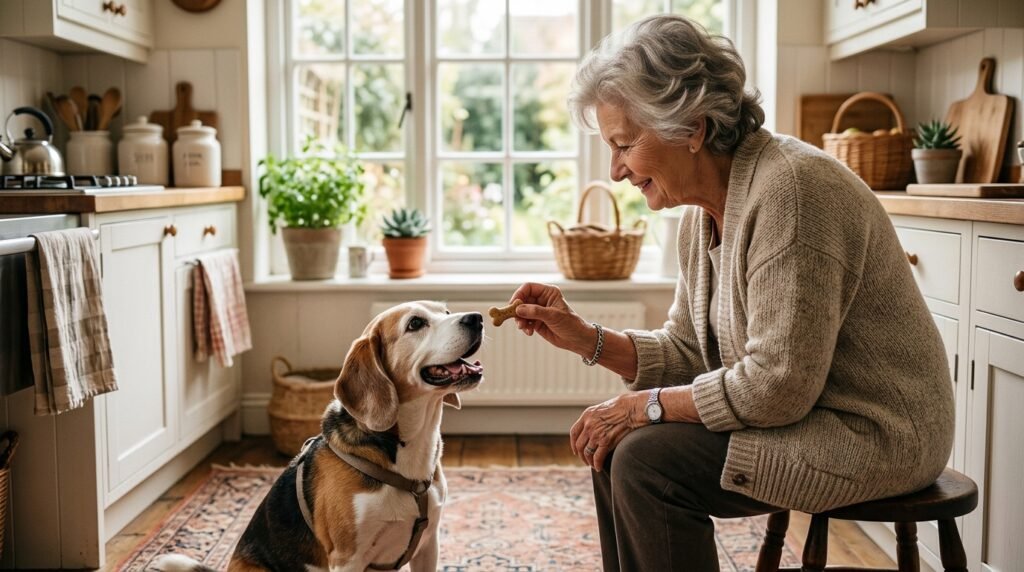
Sharing a treat with your loyal senior dog is one of daily life’s simplest joys. However, as dogs enter their golden years, their nutritional needs and dental health change significantly. High-calorie, hard crunch treats designed for young active dogs can strain aging teeth and contribute to unhealthy weight gain.
Selecting the best senior dog treats involves finding options that are soft on sensitive gums, low in extra calories, and enriched with beneficial nutrients like glucosamine or omega-3 fatty acids.
In this guide, you will learn how to choose safe, healthy treats for senior dogs, explore top vet-approved treat categories, and discover easy homemade options.
What Makes a Great Senior Dog Treat?
Senior dogs require treats tailored to their changing anatomy and lower energy levels:
- Soft and Chewy Texture: Easy to break apart and gentle on worn teeth or sensitive gums.
- Low Calorie Count: Ideal treats contain under 10 calories each to avoid triggering weight gain.
- Functional Ingredients: Added joint support (glucosamine, chondroitin) or gut-friendly fiber (pumpkin, sweet potato).
- Single-Protein Sources: Easily digestible meats like turkey, salmon, or chicken for sensitive stomachs.
1. Joint-Health Functional Soft Chews
Functional treats serve a dual purpose: rewarding your dog while delivering daily wellness ingredients.
Look for soft chews containing glucosamine, MSM, and green-lipped mussel. These treats support cartilage health while offering a delicious flavor your dog loves.
Combine functional treats with a complete wellness plan by reading our guide on senior dog joint supplements.
2. Single-Ingredient Freeze-Dried Meat Treats
Freeze-dried treats offer intense natural flavor without added artificial preservatives, sodium, or fillers.
Pieces of freeze-dried beef liver, salmon, or turkey crumble easily over kibble to entice picky eaters or can be fed directly as high-value rewards.
3. Gentle Whole Food Treats from Your Kitchen
Healthy human foods provide safe, budget-friendly treat options for senior pets:
- Steamed Sweet Potato Slices: Rich in dietary fiber and gentle on digestion.
- Fresh Blueberries: Low-calorie antioxidant powerhouses that support cognitive health.
- Plain Canned Pumpkin: Soluble fiber that aids stool quality and supports digestion.
- Crunchy Green Beans: High in fiber and water content while virtually calorie-free.
Treat Safety Guidelines for Senior Dogs
Treats should never exceed 10 percent of your senior dog’s daily caloric intake. Excess treat calories displace balanced nutrition from complete meals and lead to weight issues.
Veterinary guidance from VCA Animal Hospitals highlights avoiding hard rawhide chews or bones, which risk tooth fractures and intestinal blockages in older pets.
To keep your dog’s overall weight balanced, review our recommendations for the best senior dog food options and learn about senior dog weight management.
Senior Dog Treat Category Comparison
| Treat Type | Best For | Texture | Calorie Count |
|---|---|---|---|
| Functional Soft Chews | Joint & mobility support | Soft / Chewy | 10–15 kcal |
| Freeze-Dried Meats | Picky eaters & high reward | Crumbly | 5–8 kcal |
| Fresh Vegetables | Weight management | Crisp / Soft | Under 5 kcal |
Frequently Asked Questions
Can soft treats cause dental plaque buildup?
While soft treats do not scrape teeth like hard kibble, routine brushing and dental wipes maintain clean gums. Read our full guide on old dog dental care for brushing tips.
How many treats can I give my senior dog per day?
Limit treats to no more than 10 percent of total daily calories. Adjust meal portions if giving functional soft chews during training.
Conclusion
Rewarding your senior dog with soft, healthy, low-calorie treats strengthens your bond while supporting their aging body. Choose functional ingredients, keep portion sizes modest, and enjoy sharing safe treats with your loyal companion.
Comprehensive Veterinary Guide to Senior Dog Treat Ingredients
Understanding every single ingredient listed on a dog treat label empowers pet owners to make safe, healthy choices for their aging dogs.
Many commercial treats use artificial preservatives, synthetic dyes, and excessive sodium to extend shelf life and enhance color. In senior dogs, excess sodium strains aging kidneys and increases blood pressure, while artificial dyes can trigger gastrointestinal sensitivity.
Focus on treats that utilize natural preservatives such as mixed tocopherols (Vitamin E) and rosemary extract. These natural antioxidants protect fats from oxidation without adding chemical burden to your dog’s liver.
Evaluating Treat Hardness and Dental Risk
As dogs age, tooth enamel thins and gums recede due to lifelong wear and underlying periodontal changes.
Hard bones, antler chews, and compressed nylon toys pose high risks of slab fractures on upper premolar teeth. A slab fracture exposes sensitive nerve pulp, causing intense pain whenever your dog attempts to chew meals.
Use the thumbnail test: if you cannot press your thumbnail into the surface of a treat and leave an indentation, the item is too hard for a senior dog’s teeth.
Homemade Low-Calorie Senior Dog Treat Recipes
Preparing simple, wholesome treats at home allows complete control over ingredient quality, sodium content, and caloric density.
1. Baked Sweet Potato and Pumpkin Chews
Slice sweet potatoes into quarter-inch planks. Coat lightly with plain canned pumpkin puree and bake at 250 degrees Fahrenheit for two to three hours until pliable and chewy. Store in an airtight container for up to two weeks.
2. Frozen Blueberry and Yogurt Bites
Mix one cup of plain, unsweetened Greek yogurt with half a cup of fresh blueberries. Pour into silicone paw-print molds and freeze for four hours. These cooling bites soothe inflamed gums on warm afternoon days.
Managing Caloric Allowance and Weight Stability
Treat calories must be integrated into your dog’s total daily energy allowance. If your vet recommends 600 calories per day, no more than 60 calories should come from treats.
Reduce main kibble portions slightly when training or rewarding with higher-value treats to prevent slow weight gain. Read our guide on senior dog weight management steps for detailed portion formulas.
Frequently Asked Questions
Can soft treats cause dental plaque buildup?
While soft treats do not scrape teeth like hard kibble, routine brushing and dental wipes maintain clean gums. Read our full guide on old dog dental care for brushing tips.
How many treats can I give my senior dog per day?
Limit treats to no more than 10 percent of total daily calories. Adjust meal portions if giving functional soft chews during training.
Are freeze-dried treats safe for dogs with kidney disease?
Freeze-dried meat treats are high in protein and phosphorus. Consult your veterinarian before giving freeze-dried meats to a dog with diagnosed renal failure.
What treats are best for senior dogs with no teeth?
Lickable treats, plain canned pumpkin, cooked sweet potato puree, or softened freeze-dried meats work best for dogs without teeth.
Can human cheese be given as a senior dog treat?
Cheese should be fed sparingly due to high fat and sodium content. Low-fat cottage cheese or small cubes of low-sodium mozzarella are safer options.
Do joint treats replace daily joint supplements?
Most joint treats contain low levels of active ingredients. They complement, but rarely replace, dedicated therapeutic joint supplements.