


Your vet just said the words “kidney disease,” and now you’re standing in the pet store aisle staring at a wall of bottles. Some promise to “flush toxins.” Others claim to “restore kidney function.” You want to help your old dog, and you don’t want to waste money or make things worse.
This guide covers the best supplements for senior dogs with kidney disease, the ones vets actually use, and what each one does. You’ll also see which popular products can backfire in a dog with weak kidneys. The honest angle here: the most useful kidney “supplements” depend on bloodwork, not on a label.
No supplement can repair damaged kidney tissue. The right ones can ease the workload on the kidneys that are left, and that can mean more good months with your dog.
Quick Answer:
The best supplements for senior dogs with kidney disease are fish oil (EPA and DHA omega-3s) and, when bloodwork shows a need, phosphate binders, potassium and calcitriol. A low-phosphorus kidney diet comes first, and every add-on should be matched to your dog’s blood tests by your vet.
Key Takeaways:
- Primary Cause: Kidney disease in dogs is closely tied to aging, and signs appear only after about two-thirds of kidney function is gone.
- Observable Signs: Drinking and peeing more is usually the first clue, followed by poor appetite, vomiting and bad breath.
- Home Action Step: Start with a vet-recommended kidney diet, then add fish oil and other supplements only as your dog’s bloodwork calls for them.
- When to See a Vet: Call your vet before starting any kidney supplement, and right away if your dog stops eating, vomits repeatedly or seems weak.
Before You Buy Anything: Diet Comes First
Kidney disease is common in older dogs. Small dogs often show early signs around 10 to 14 years, and large breeds as early as seven years. By the time you notice anything, at least two-thirds of kidney tissue has usually stopped working, as this overview of chronic kidney disease explains.
That’s why a supplement alone rarely moves the needle. A therapeutic kidney diet with less phosphorus and controlled protein does most of the heavy lifting. Many of these diets already contain extra omega-3s and B vitamins, so check the label with your vet before adding more of the same.
Your vet will also stage the disease using the IRIS kidney staging guidelines. The stage, along with phosphorus, potassium and blood pressure readings, decides which supplements make sense. If you haven’t read up on the stages yet, our guide to kidney disease in senior dogs walks through them.
1. Omega-3 Fish Oil (EPA and DHA)
Fish oil is the supplement with the strongest track record for dogs with kidney disease. It’s rich in EPA and DHA, two omega-3 fatty acids that calm inflammation. Vets use it for several inflammatory conditions, and kidney disease is one of them.
Older research in dogs with induced kidney damage found that fish oil helped protect the kidneys over time, as this review of diet and kidney disease describes. In those studies, a plant-based omega-6 oil (safflower) actually sped up the decline. The source of the fat matters, so pick a marine oil over a generic “omega blend.”
Flaxseed oil is not a good stand-in. It contains ALA, a plant omega-3 that dogs convert poorly, and its benefit for kidneys hasn’t been shown. For dose ranges by body weight, see our omega-3 dosing guide for senior dogs, then confirm the number with your vet.
What to watch for: Loose stools, a fishy smell and an oily coat are common at higher doses. Stop and call your vet if you see unusual bruising, vomiting or signs of pancreatitis.

2. Phosphate Binders
Failing kidneys struggle to clear phosphorus, so it builds up in the blood. High phosphorus can make a dog feel nauseous and tired, and it speeds up kidney damage. A phosphate binder grabs phosphorus from food in the gut so less of it gets absorbed.
Common binders include aluminum hydroxide, lanthanum carbonate, and calcium carbonate combined with chitosan. Some are sold over the counter, and some kidney “support” powders are mostly a binder. They only work when mixed into food or given right before a meal.
Binders are meant for dogs whose phosphorus stays high even on a kidney diet. If your dog’s levels are normal, a binder adds side effects with no benefit. Constipation is the most common problem with aluminum hydroxide, and it can affect how other medicines are absorbed.
Doing it right: Give other medications two hours before or after the binder. Expect your vet to recheck phosphorus monthly at first, then about every three months once it’s stable.
3. Potassium (Only If Levels Are Low)
Dogs with kidney disease pass a lot of dilute urine, and some lose potassium along with it. Low potassium can cause muscle weakness and a poor appetite. Potassium citrate or potassium gluconate can bring levels back up.
The citrate form does a second job, too. It helps keep the blood and urine from becoming too acidic, which is another common problem in kidney disease.
This is not a “just in case” supplement. Some dogs with kidney disease have high potassium instead, and adding more can be dangerous. Muscle weakness, collapse or very low energy can be signs of too much potassium, so only give it when bloodwork shows a shortage.
4. Calcitriol (Prescription Vitamin D)
Healthy kidneys turn vitamin D into its active form, called calcitriol. Damaged kidneys make less of it, which upsets the balance of calcium, phosphorus and parathyroid hormone. Some vets prescribe calcitriol to help correct this.
Calcitriol is a prescription drug, and it’s very different from the vitamin D on a store shelf. Never give an over-the-counter vitamin D supplement to a dog with kidney disease. Too much vitamin D raises calcium and can harm the kidneys further.
Your vet will check calcium, phosphorus and kidney values before starting, then after one week, and then every two to four weeks. Calcium supplements should not be given alongside it. Increased thirst, more urination or a drop in appetite can mean the dose is too high.
5. B Vitamins
B vitamins dissolve in water, and a dog with kidney disease loses a lot of water through urine. Poor appetite makes the gap worse. Low B vitamin levels can add to the tiredness and appetite loss many kidney dogs already have.
Most prescription kidney diets add extra B vitamins for this reason. If your dog eats a kidney diet well, a separate B complex may not be needed. Dogs that eat only part of each meal, or eat a homemade diet, may need one, so ask your vet about a B complex supplement.
B vitamins are among the gentler add-ons because extra amounts usually leave the body in urine. Still, combination products often include minerals, so read the full ingredient list for phosphorus or potassium before buying.
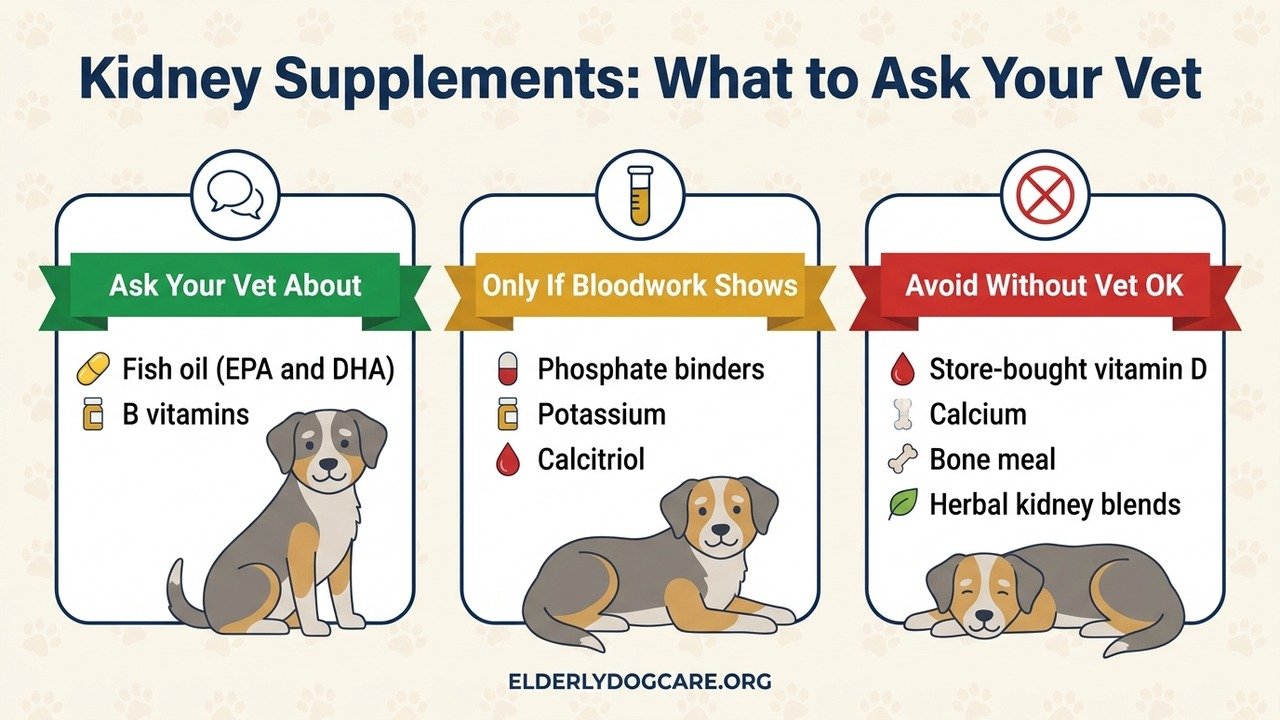
The chart above, and the table below, sum up how each common supplement fits a dog with kidney disease.
| Group | Supplements | Why |
|---|---|---|
| Ask your vet about | Fish oil (EPA and DHA), B vitamins | Helpful for many kidney dogs, dose set by your vet |
| Only if bloodwork shows a need | Phosphate binders, potassium, calcitriol | Can cause harm when levels are already normal |
| Avoid without vet OK | Store-bought vitamin D, calcium, bone meal, herbal kidney blends | May raise calcium or phosphorus, or interact with medicines |
6. Vitamin E and Other Antioxidants
Kidney disease involves ongoing oxidative damage to kidney cells. Antioxidants like vitamin E help protect cell walls from this wear. They matter more once you add fish oil, because omega-3 fats are easily damaged by oxidation and raise the body’s need for vitamin E.
Many quality fish oils already include a little vitamin E to keep the oil fresh. Some vets suggest a small extra amount of vitamin E when a dog takes fish oil long term. Ask before adding it, since high doses of fat-soluble vitamins can build up.
Store fish oil in the fridge and replace it if it smells rancid. Spoiled oil adds the very oxidative stress you’re trying to reduce.
7. Kidney Probiotics
Some probiotics are sold as “kidney” or “renal” probiotics. The idea is that certain gut bacteria can break down waste products like urea before they’re absorbed. Owners sometimes hear this described as gut-based support for the kidneys.
The research in dogs is small and mixed, and these products don’t replace diet, fluids or medicine. For a dog with diarrhea or a fussy appetite, a vet-chosen probiotic may still help digestion and comfort. Think of it as a possible extra, not a kidney treatment.
If you try one, keep everything else the same for a few weeks. That way you and your vet can see if it made any difference at the next blood test.
Supplements That Can Backfire
Some products that seem healthy can work against a dog with weak kidneys. Read every label with these in mind:
- Store-bought vitamin D: Can raise blood calcium and add to kidney damage.
- Calcium supplements: Unsafe alongside calcitriol, and can upset the mineral balance on their own.
- Bone meal and some joint chews: Often high in phosphorus, the mineral you’re trying to limit.
- Potassium products when levels are normal: High potassium can cause weakness or collapse.
- Herbal “kidney cleanse” blends: Few have been tested in dogs, and some interact with medications.
- Protein powders and high-protein toppers: Extra protein adds waste for the kidneys to clear.
Joint supplements are a common surprise here. Many older dogs take them for arthritis, so check the label for added minerals and bring the bottle to your next vet visit.
What Helps More Than Any Supplement
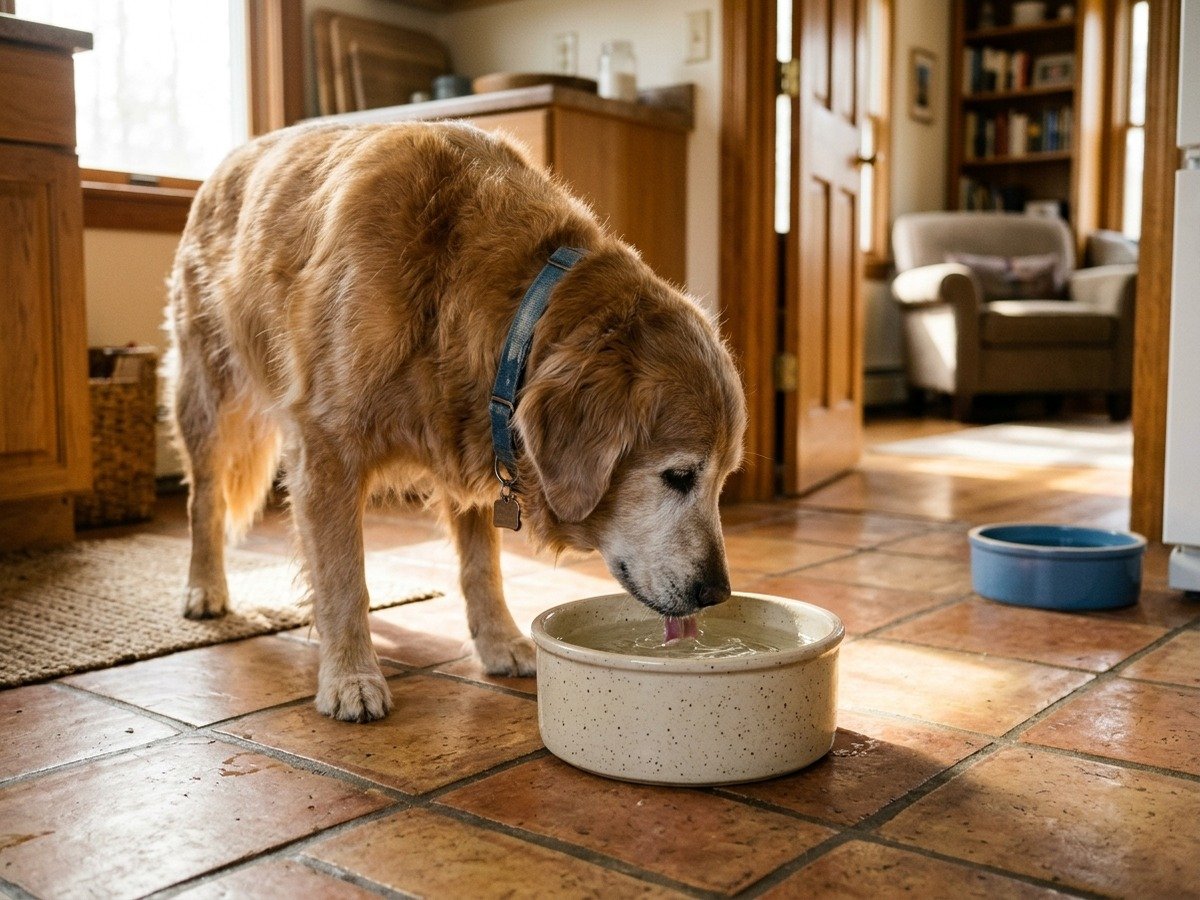
Water is the most underrated tool for a kidney dog. Keep fresh water in several spots, and try adding warm water to meals. If your dog is drinking much more than usual, our guide to a senior dog drinking a lot of water explains what that can mean.
Many vets teach owners to give fluids under the skin at home. It sounds scary, but most dogs tolerate it well, and it helps flush waste and prevent dehydration. Your vet may also prescribe anti-nausea medicine or an appetite stimulant, which can help a dog feel well enough to eat again.
Blood pressure checks matter, too. High blood pressure is common in dogs with kidney disease and damages the kidneys further. No supplement treats it, but prescription medication can.
How to Add Supplements Safely
- Get current bloodwork. Phosphorus, potassium, calcium and kidney values decide what your dog needs.
- Start one product at a time. Wait about one to two weeks before adding the next, so you can spot side effects.
- Keep a simple log. Note appetite, water intake, energy and stool each day.
- Bring every bottle to the vet. Labels show hidden minerals and doses that a product name won’t.
- Recheck as advised. Kidney disease changes over time, and supplement needs change with it.
Appetite is the signal to watch most closely. If your dog starts skipping meals after a new supplement, stop it and call your vet. Our guide to senior dog loss of appetite covers other reasons an old dog may turn away from food.
Warning Signs That Need a Vet Today
Supplements are for steady, managed kidney disease. Some signs mean the disease is getting worse, and they need a vet visit rather than a new product:
- Not eating for more than a day
- Repeated vomiting or diarrhea
- Pale gums, mouth ulcers or strong ammonia breath
- Sudden weakness, wobbling or collapse
- Drinking or peeing far less than usual
Frequently Asked Questions
What is the best supplement for a dog with kidney disease?
Fish oil with EPA and DHA has the strongest support for most dogs with kidney disease. Phosphate binders, potassium and calcitriol can matter just as much, but only when bloodwork shows a need. Your vet will match the supplement to your dog’s test results.
Can supplements reverse kidney disease in dogs?
No. Chronic kidney damage can’t be undone by any supplement. The right add-ons, along with a kidney diet and good hydration, can slow the decline and help your dog feel better for longer.
Is fish oil safe for senior dogs with kidney disease?
For most dogs, yes, when the dose is set by a vet. Check if your dog’s kidney diet already contains added omega-3s first. Dogs with bleeding problems or a history of pancreatitis need extra care.
Should I give my dog a kidney cleanse or herbal kidney support?
Most herbal kidney blends haven’t been tested well in dogs. Some contain ingredients that interact with heart or blood pressure medicines. Ask your vet before trying one, and never use it in place of a kidney diet or prescribed treatment.
Can I give my dog human kidney supplements?
It’s not a good idea without your vet’s input. Human products may contain vitamin D, calcium, potassium or xylitol at levels that don’t suit dogs. A vet can suggest a pet-safe version and the right dose.
How long do dogs with kidney disease live with treatment?
It varies a lot with the stage at diagnosis and how well a dog responds. Many dogs keep a good quality of life for months or years with the right care. Early diagnosis and steady follow-up make the biggest difference.
Giving Your Old Dog the Best Months Possible
The best supplements for senior dogs with kidney disease are the ones chosen from your dog’s bloodwork. For most dogs, that means a kidney diet and fish oil first, with binders, potassium or calcitriol added only when tests call for them. Skip the bottles that promise to cleanse or cure.
Kidney disease is a lot to take in, and it’s normal to feel overwhelmed at first. Many dogs do well for a long time with steady care and regular checkups. If you’re unsure about any product, bring it to your vet before your dog takes it.
Found this guide useful? Bookmark it for your next vet visit and share it with a friend caring for an older dog. When you’re ready to read about the later stages, our guide to kidney failure signs and stages is a good next step.