

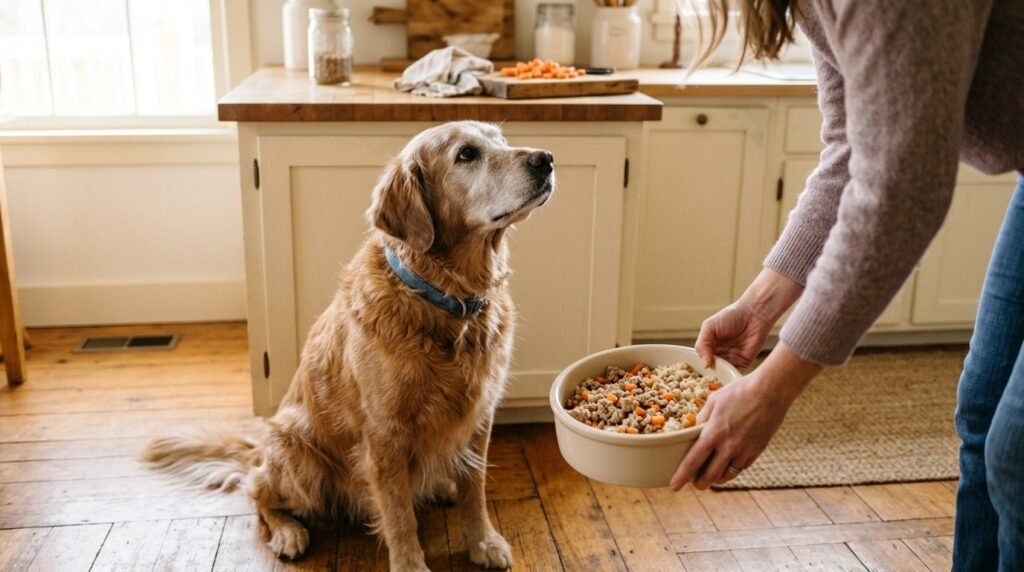
Your old dog has started pushing kibble around the bowl. Perhaps their teeth hurt, or you just want to cook them something warm and real. Making homemade food for an older dog comes from a good place, and it can work well.
There is one catch most recipe sites skip. When researchers at UC Davis reviewed 200 published homemade dog food recipes, almost all fell short on at least one essential nutrient. This guide gives you three gentle homemade food recipes for older dogs and shows you how to make them safe for daily feeding, not just tasty.
Quick Answer:
Good homemade food recipes for older dogs use lean cooked protein (turkey, chicken, lean beef, or eggs), an easy-to-digest carb like rice, oats, or sweet potato, and soft cooked vegetables, with no onion, garlic, grapes, or xylitol. On their own, these recipes are not complete. Before you feed homemade meals every day, have a vet or board-certified veterinary nutritionist add the right calcium, vitamin and mineral supplement for your dog.
Key Takeaways:
- Main Risk: A UC Davis review found 95% of 200 published dog food recipes were short on at least one essential nutrient.
- Base Recipe: Lean cooked protein, a gentle carb and soft vegetables, cooked plain with no seasoning.
- Home Action Step: Use these recipes as toppers now, and as full meals only once a vet has balanced them.
- Switch Slowly: Mix new food in gradually over about a week to spare an older stomach.
- When to See a Vet: Check first if your dog has kidney, liver, heart or pancreas disease, or is losing weight.
Overview
This plan covers what a senior dog needs from a home-cooked meal, three starter recipes, how to switch over without an upset stomach, and how to store batches. It also covers the step most owners miss: getting the recipe balanced.
Expect about an hour to cook a batch that lasts three or four days for a medium dog. The vet or nutritionist step takes longer, often a week or two to set up. After that, cooking becomes a routine, not a project.
Homemade feeding is not right for every dog. If your dog has kidney disease, liver disease, pancreatitis or a heart condition, talk to your vet before changing anything. Those dogs often need a specific prescription diet.
Why Most Online Recipes Fall Short
In a study published in the Journal of the American Veterinary Medical Association, the UC Davis team looked at 200 recipes from 34 sources. Only nine provided every essential nutrient at the levels set for adult dogs. You can read the UC Davis homemade recipe study for the full findings.
Recipes written by vets did better, and the four written by board-certified veterinary nutritionists were all adequate. The most common gaps included choline, vitamin D, zinc and vitamin E. Calcium is another usual problem, because meat is rich in phosphorus but low in calcium.
For a senior dog, small gaps add up over months. Older dogs already lose muscle more easily and absorb some nutrients less well. That’s why the recipes below are a starting point, and why Step 2 matters so much.
What You’ll Need
- A large pot or deep pan, and a cutting board
- A kitchen scale (cups are less accurate)
- Lean protein: ground turkey, boneless chicken, 95% lean beef or eggs
- Gentle carbs: white or brown rice, rolled oats, sweet potato or plain canned pumpkin
- Soft vegetables: carrots, green beans, zucchini
- Airtight containers for the fridge and freezer
- A vet-recommended supplement to balance the recipe (from Step 2)
- Your dog’s current weight and a body condition score from your vet
Step 1: Talk to Your Vet First
Start with a quick check-up or a call. Older dogs often have quiet health problems that change what they should eat. Kidney values, liver values and weight trend all matter here.
Ask your vet three things. First, how many calories should my dog eat per day? Second, are there any foods or nutrients to limit?
Third, can you refer me to a board-certified veterinary nutritionist, or recommend a balancing supplement?
The most common mistake is changing diet first and checking health later. If your dog is eating less or losing weight, look at our guide to senior dog loss of appetite before you start cooking. Doing it right means you begin with a calorie target and a clear list of no-go foods.
Step 2: Get the Recipe Balanced
This is the step that turns a tasty meal into a complete diet. A board-certified veterinary nutritionist can build a recipe for your exact dog, often through a remote consult. Many vets also work with online services that create a balanced recipe and matching supplement.
Bring the recipe you plan to use. The nutritionist will usually keep your ingredients and add a calcium source and a vitamin and mineral mix in set amounts. Follow those amounts exactly, because both too little and too much can cause harm.
A common mistake is adding a human multivitamin or crushed eggshell by guesswork. Doses made for people are not right for dogs, and guessing calcium can throw off the balance. Doing it right means every addition comes from your vet or nutritionist, with a written amount.
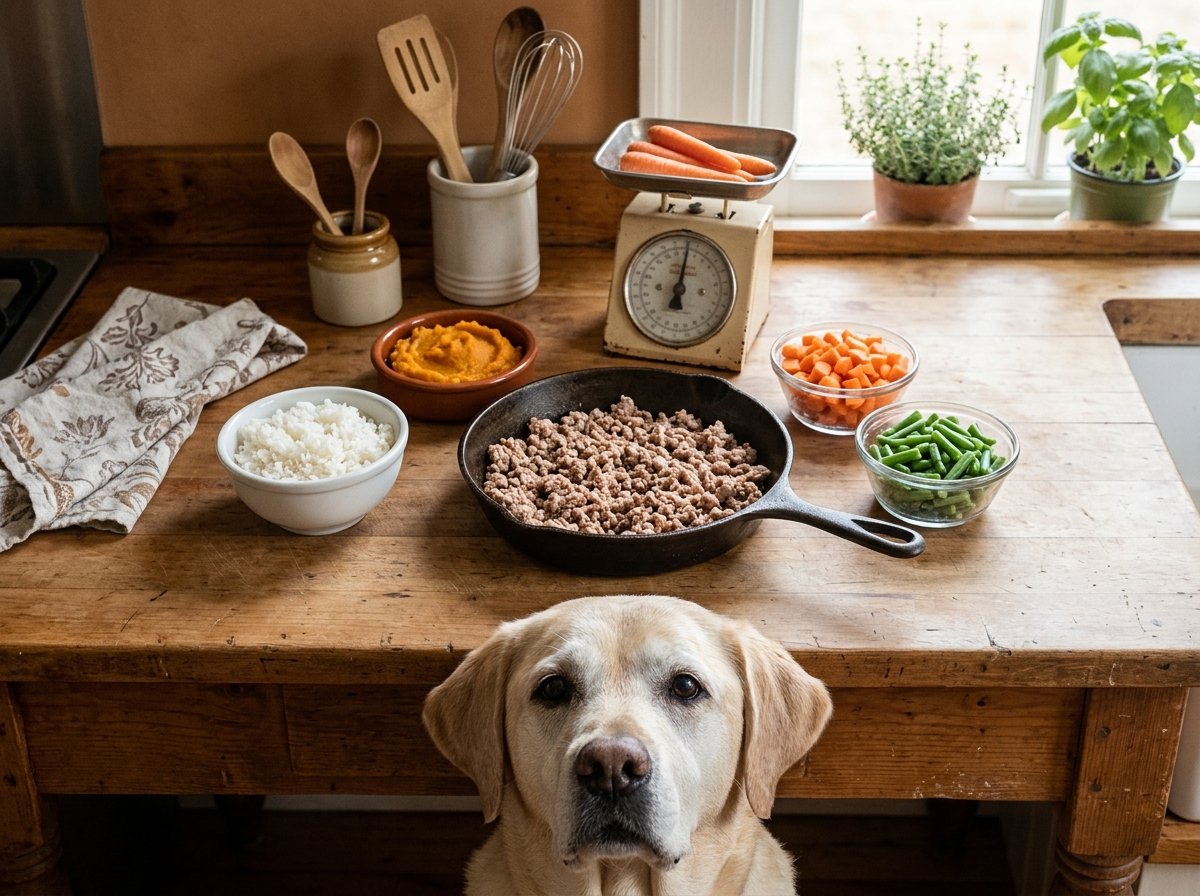
Step 3: Homemade Food Recipes for Older Dogs
Each recipe below makes roughly three to four days of food for a 30 to 40 pound dog. Cook everything plain, with no salt, butter, onion, garlic or seasoning. Portions depend on your dog’s calorie target, so use our senior dog feeding guide with your vet’s numbers.
Recipe 1: Turkey, Rice and Pumpkin
This one suits dogs with a sensitive stomach. Turkey is lean, and pumpkin adds gentle fiber.
- 2 pounds lean ground turkey
- 2 cups cooked white rice
- 1 cup plain canned pumpkin (not pie filling)
- 1 cup carrots, diced small
- Brown the turkey in a pan with a splash of water, breaking it into small pieces.
- Drain off any fat.
- Steam or boil the carrots until soft enough to crush with a fork.
- Stir the turkey, rice, carrots and pumpkin together, then let it cool.
Recipe 2: Soft Chicken and Sweet Potato Stew
This is a good choice for dogs with dental pain or missing teeth. It blends easily into a smooth mash.
- 2 pounds boneless, skinless chicken thighs or breast
- 2 medium sweet potatoes, peeled and cubed
- 1 cup green beans, chopped
- Water to cover
- Put the chicken and sweet potato in a pot and cover with water.
- Simmer for about 25 minutes, until the chicken is cooked through and the potato is soft.
- Add the green beans for the last 8 to 10 minutes.
- Shred the chicken, then mash everything with a little of the cooking water.
Use thighs for a dog who needs to gain weight, and breast for one who needs to stay lean. Remove every bone, since cooked bones can splinter.
Recipe 3: Lean Beef, Egg and Oats
This higher-protein option helps dogs who are losing muscle, as long as your vet agrees. It works well for active seniors who still enjoy their walks.
- 2 pounds 95% lean ground beef
- 4 eggs
- 2 cups rolled oats, cooked in water
- 1 cup zucchini, grated
- Brown the beef in a pan and drain off the fat.
- Scramble the eggs plain in the same pan until fully set.
- Cook the oats in water until soft.
- Mix in the zucchini while the oats are hot, so it softens, then combine everything.
Eggs are a great senior protein when cooked plain. Our guide on scrambled eggs for senior dogs covers how many to feed.
Step 4: Adjust for Senior Health Needs
Older dogs are not all the same. A 14 year old terrier with bad teeth has very different needs from a 9 year old Lab putting on weight. Use this table to shape the recipe, then confirm changes with your vet.
| Senior issue | What to change in the recipe | Check with your vet about |
|---|---|---|
| Dental pain or missing teeth | Mash or blend the food into a soft stew | A dental exam, since sore teeth often cause food refusal |
| Weight gain | Use the leanest protein and more green beans | A calorie target for your dog’s healthy weight |
| Weight loss or picky eating | Warm the food and use moist, fragrant proteins | Bloodwork, because weight loss needs a cause |
| Sensitive stomach | Keep fat low and use white rice or pumpkin | If a bland diet or a prescription food fits better |
| Kidney disease | Do not use general recipes | A renal diet with controlled phosphorus |
| Pancreatitis history | Avoid fatty meats, skin and added oils | A low-fat plan from your vet |
The biggest mistake here is using a general recipe for a dog with kidney disease. Many standard recipes are high in phosphorus, which a failing kidney struggles to clear. Our kidney disease in senior dogs guide explains why renal diets are built so differently.
Step 5: Know What Never Goes in the Bowl
Some everyday kitchen foods are dangerous for dogs. The ASPCA lists onion, garlic and chives as causes of red blood cell damage, and grapes and raisins as a cause of kidney damage. See the full ASPCA list of foods to avoid before you add anything new.

| Safe | In moderation | Avoid |
|---|---|---|
| Lean cooked chicken or turkey | Cooked eggs | Onion, garlic, chives |
| Plain cooked rice or oats | Liver (small amounts) | Grapes and raisins |
| Plain canned pumpkin | Cheese and dairy | Xylitol |
| Cooked carrots, green beans | Added oils and fats | Chocolate, macadamia nuts |
Watch out for hidden onion and garlic in stock cubes, broths and seasoning mixes. Xylitol hides in some peanut butters and sugar-free products, so check every label. Raw meat and raw eggs can carry Salmonella and E. coli, so cook everything through.
Step 6: Switch Over Slowly
Older digestive systems don’t like sudden change. A fast switch can bring diarrhea, vomiting or a dog who refuses the new food. Spread the change over about a week.
| Days | Old food | Homemade food |
|---|---|---|
| 1 and 2 | About 75% | About 25% |
| 3 and 4 | About 50% | About 50% |
| 5 and 6 | About 25% | About 75% |
| 7 onward | None, if stools stay firm | All, once balanced by your vet |
If stools turn loose at any stage, go back to the last mix that worked for two or three days. Then move forward again more slowly. If diarrhea lasts more than a day or two, or your dog vomits or seems unwell, call your vet.
Step 7: Store and Serve Safely
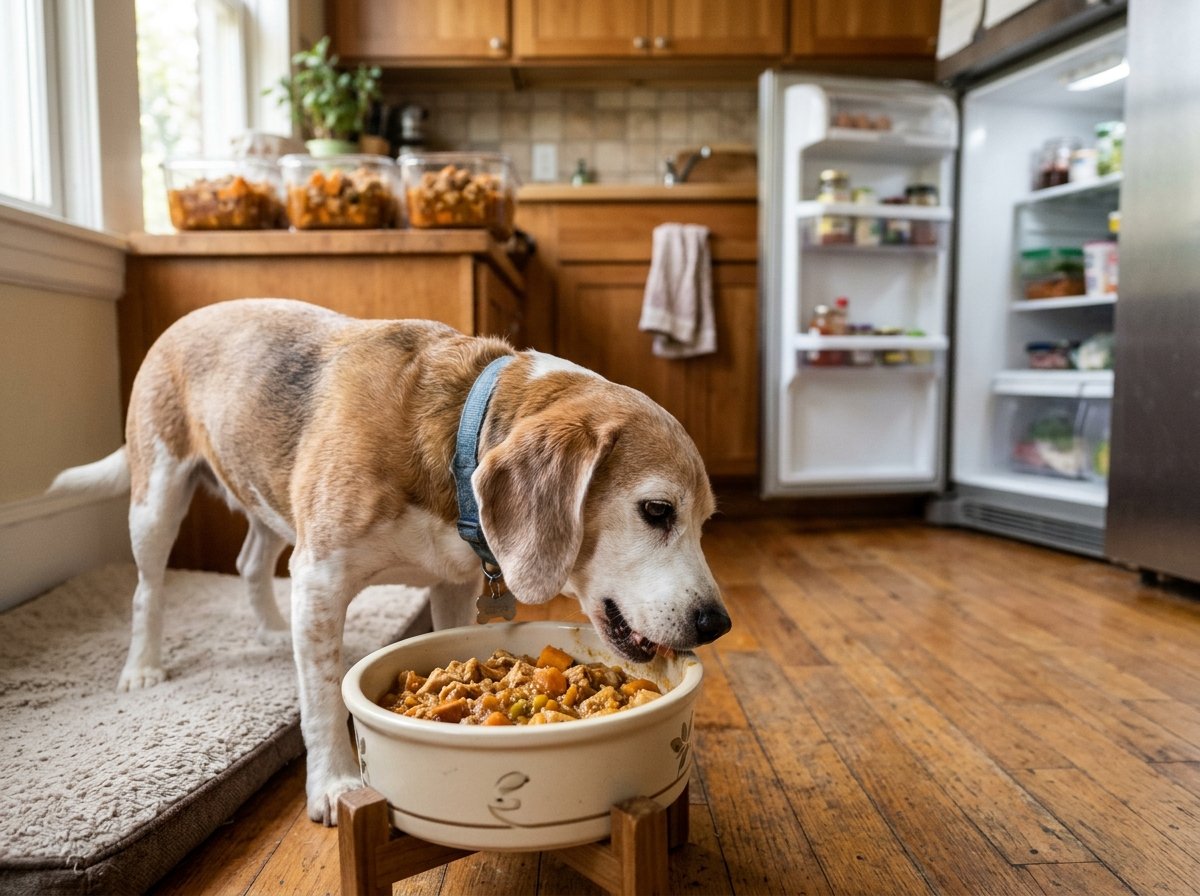
Cooked homemade food keeps for about three to four days in the fridge, in sealed containers. Freeze the rest in daily portions, and thaw overnight in the fridge, not on the counter.
Many senior dogs eat better when food is warmed slightly, since smell drives appetite. Warm it to about body temperature and stir well to remove hot spots. Lift any uneaten food after 20 to 30 minutes and throw it away.
Label each container with the date. When you are cooking for an old dog every few days, it’s easy to lose track.
What to Expect Over Time
In the first week, the main goal is a calm stomach and firm stools. Some dogs eat with more interest right away, especially picky eaters who like warm, fresh food.
Over the first month, weigh your dog every one to two weeks. Small changes either way show if the portions are right. Adjust slowly, by a small amount at a time, and only with your vet’s calorie target in mind.
After two to three months, book a recheck. Your vet may suggest bloodwork to confirm the diet is meeting your dog’s needs. Coat condition, energy and muscle over the back and hips are good signs to watch at home.
When to Call Your Vet
Homemade food should make your dog feel better, not worse. Call your vet if you notice any of these:
- Vomiting more than once, or diarrhea lasting over 48 hours
- Weight loss of more than a pound or two you can’t explain
- Refusing food for more than a day
- Drinking or peeing much more than usual
- A dull coat, flaky skin or weakness that develops over weeks
- Any sign your dog may have eaten onion, grapes, xylitol or chocolate
Toxic food exposure is an emergency, even if your dog seems fine. Phone your vet or an animal poison control line straight away.
Frequently Asked Questions
What is the best homemade food for senior dogs?
The best homemade food for senior dogs is a balanced recipe built on lean cooked protein, an easy carb and soft vegetables. Turkey with rice and pumpkin is a gentle place to start. For daily feeding, it needs a vet-recommended supplement to cover calcium, vitamins and minerals.
Is homemade food better than kibble for older dogs?
Not automatically. A balanced homemade diet can help picky eaters and dogs with dental pain. An unbalanced one can cause deficiencies over time, while a good commercial senior food is already complete.
Can I mix homemade food with kibble?
Yes, and it’s a safe way to begin. Many owners use homemade food as a topper while they wait for a balanced recipe. Reduce the kibble so total calories stay the same, and see our guide to food toppers for senior dogs for more ideas.
How much homemade food should I feed my senior dog?
It depends on your dog’s target weight, activity and health, so ask your vet for a daily calorie target. Weigh your dog every week or two at first. If weight drifts up or down, adjust portions a little at a time.
Do senior dogs need more protein?
Many healthy older dogs benefit from good-quality protein to protect muscle. Dogs with kidney disease may need it controlled instead. Your vet can tell you which group your dog is in.
What should I never put in homemade dog food?
Never add onion, garlic, chives, grapes, raisins, xylitol, chocolate or macadamia nuts. Skip salt, seasoning, cooked bones and fatty trimmings. Check broths and stock cubes, since many contain onion or garlic.
Cooking for Your Old Friend
Making food for your senior dog is a real act of care. Done right, it can bring back an interest in meals and help with sore teeth and a fussy stomach.
Start with one of these recipes as a topper, and book that vet chat to get it balanced. Once you have a complete recipe and a calorie target, you can cook with confidence.
If this guide helped, bookmark it for your next batch day. Share it with a friend whose old dog has gone off their food, too.