
Waking up in the morning to find your gray-muzzled dog squinting with a crusty, inflamed eye is alarming. You notice they keep pawing at their face, rubbing their head against the carpet, or avoiding bright sunlight streaming through the window. The white sclera of their eyeball looks bloodshot, and the pink tissue lining the eyelids appears swollen and angry.
Many pet owners immediately assume their pet has caught human-style pink eye. While dogs can develop conjunctivitis, dog pink eye in older pets behaves quite differently from childhood schoolyard outbreaks. In an aging dog, inflamed ocular tissue is rarely just a simple bug; it frequently signals underlying tear production failure, corneal scratches, or systemic health changes that require prompt veterinary care.
Quick Answer:
Dog pink eye, clinically termed canine conjunctivitis, is an inflammation of the thin mucous membrane lining your dog’s eyelids and eyeball surface. In senior dogs, it presents with redness, swollen pink conjunctival tissue, squinting, and clear or yellow-green mucus discharge, most commonly triggered by dry eye (KCS), foreign irritants, bacterial infection, or corneal damage.
Key Takeaways:
- Symptom, Not Single Disease: Conjunctivitis in older dogs is usually a clinical reaction to an underlying issue like dry eye rather than a primary contagious virus.
- Never Use Leftover Drops: Administering steroid-containing eye drops to a dog with an undiagnosed corneal scratch can cause rapid blindness or corneal perforation.
- Crucial Diagnostic Trio: A complete veterinary exam requires a Schirmer tear test, fluorescein stain test, and eye pressure measurement (tonometry).
- Safe Home Cleaning: Flush irritated eyes gently with sterile veterinary saline solution and wipe crusts with a warm damp cloth, avoiding all human eye medications.
What Does Dog Pink Eye Look Like in Senior Pets?
Recognizing the visual markers of canine conjunctivitis helps you catch ocular inflammation before it damages your senior dog’s vision. The conjunctiva is a delicate layer of tissue that protects the globe. When irritated, the microscopic blood vessels within it engorge, producing distinct visual signs.
The most obvious hallmark is intense redness along the conjunctiva and the third eyelid (nictitating membrane) in the inner corner of the eye. Instead of a pale, healthy salmon-pink, the tissue turns bright crimson or angry magenta. The eyelid margins often puff up, making the eye look smaller than normal or partially closed.
Discharge patterns also provide vital diagnostic clues. Allergic or viral conjunctivitis usually produces copious, watery clear discharge that drips down the muzzle. Bacterial infections or advanced dry eye create thick, stringy mucus that dries into hard crusts, gluing the eyelids together overnight. If your older companion shows generalized ocular redness, compare these clues with our detailed guide on causes of red eyes in older dogs.
Common Causes of Pink Eye in Aging Canines
While young dogs often develop conjunctivitis from foreign dust or viral exposure, geriatric dogs face unique degenerative changes. Identifying these underlying triggers ensures you treat the root cause rather than just temporarily masking surface redness.
1. Keratoconjunctivitis Sicca (KCS or Dry Eye)
KCS is by far the most frequent culprit behind chronic pink eye in senior dogs. As canines age, immune-mediated destruction of the lacrimal glands dramatically reduces watery tear production. Without natural tears to lubricate the cornea and flush away debris, the surface dries out, triggering severe friction, secondary bacterial infections, and thick yellowish mucus.
2. Foreign Body Irritation and Environmental Allergens
Older dogs often spend more time sniffing close to the ground, increasing the risk of getting grass seeds, grit, or stray hairs trapped beneath their third eyelid. Airborne pollens, household dust mites, scented air fresheners, and woodsmoke from fireplaces can also provoke allergic conjunctivitis in both eyes simultaneously.
3. Bacterial and Viral Infections
Secondary bacterial overgrowth from common organisms like Staphylococcus or Streptococcus frequently takes hold when an older dog’s local immune defenses weaken. Viral infections, while less common in vaccinated adults, can still cause flare-ups in immunocompromised geriatric patients.
4. Eyelid Tumors and Anatomical Changes
Benign eyelid growths, such as meibomian gland adenomas, become very common as dogs pass the age of eight. When these tiny bumps rub directly against the cornea and conjunctiva with every blink, they create persistent mechanical irritation and localized pink eye.
Comparing Serious Senior Eye Conditions
One of the greatest dangers with dog pink eye is mistaking a vision-threatening emergency for mild conjunctivitis. Several serious canine eye diseases present with identical redness and squinting. The table below helps pet parents understand the critical differences.
| Eye Condition | Discharge Type | Pain Level | Corneal Clarity | Emergency Urgency |
|---|---|---|---|---|
| Conjunctivitis (Pink Eye) | Watery or mucus | Mild (itchy, rubs face) | Clear and shiny | Within 24 to 48 hours |
| Dry Eye (KCS) | Thick, sticky yellow-gray mucus | Moderate (gritty discomfort) | Dull, dry, brown pigment | Within 24 hours |
| Corneal Ulcer | Excessive tearing | Severe (squints tightly shut) | Cloudy focal spot or divot | Same-day emergency |
| Glaucoma | Minimal discharge | Intense (head shy, lethargic) | Milky blue, dilated pupil | Immediate emergency (hours count) |
| Anterior Uveitis | Watery tears | Moderate to severe | Cloudy, pinpoint pupil | Same-day emergency |
For pet owners managing severe bacterial discharge or swollen eyelids, explore our detailed companion review on senior dog eye infections to distinguish deeper infections from surface conjunctivitis.
How Veterinarians Diagnose Canine Pink Eye
Never treat dog pink eye with leftover medications from a previous illness or human eye drops like Visine. Using the wrong medication can permanently blind an older dog. A thorough veterinary ophthalmic examination relies on three indispensable diagnostic steps.
- Schirmer Tear Test: The vet places a sterile paper strip inside the lower eyelid for sixty seconds to measure natural tear production. A reading below 15 millimeters per minute confirms dry eye (KCS), pinpointing the exact driver of conjunctival inflammation.
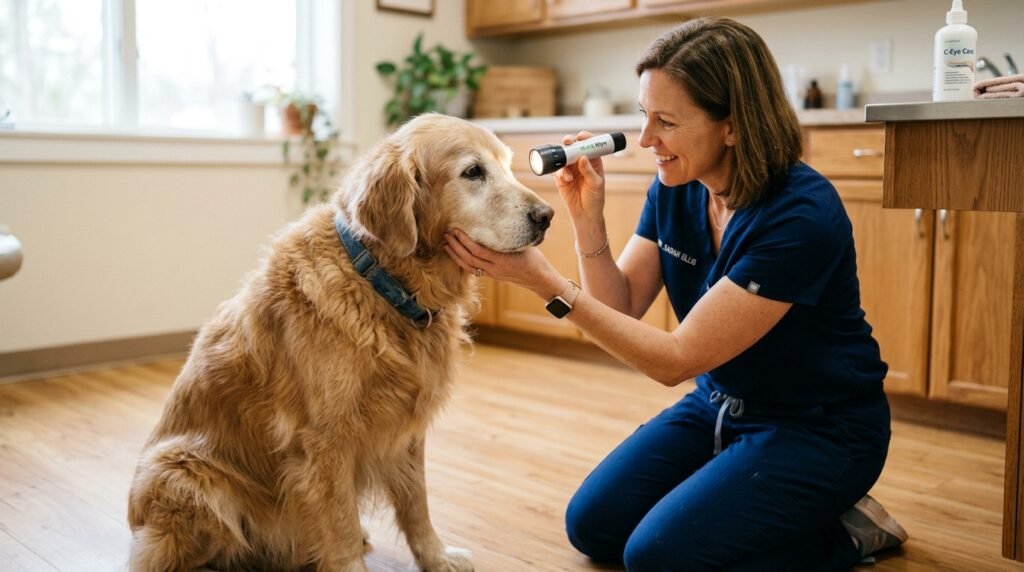
- Fluorescein Stain Test: A non-toxic orange dye is placed on the eye surface and rinsed. When illuminated with a blue cobalt light, the dye glows bright green if it adheres to an open scratch or corneal ulcer.
- Tonometry (Intraocular Pressure): Using an electronic tonometer, the veterinarian gently taps the cornea to measure internal eye pressure. Normal pressure ranges from 10 to 25 mmHg. Elevated pressure signals glaucoma, while low pressure indicates uveitis.
These tests take less than ten minutes and protect your senior dog from disastrous treatment errors. If a corneal ulcer is present, prescribing steroid drops breaks down the collagen scaffolding of the eye, risking rapid globe rupture.
Medical Treatments for Senior Dog Conjunctivitis
Once your veterinarian identifies the specific trigger behind your dog’s pink eye, they will prescribe targeted topical or oral medications designed for older canines.
For bacterial conjunctivitis without corneal ulceration, topical antibiotic drops or ointments (such as tobramycin, ofloxacin, or triple-antibiotic neomycin-polymyxin-bacitracin) are applied two to four times daily for seven to ten days. Always complete the full course even if your dog’s eye looks dramatically better after forty-eight hours.
If dry eye (KCS) is diagnosed, standard antibiotics alone will fail. Your dog will need lifelong immune-modulating tear stimulants like cyclosporine (Optimmune) or tacrolimus drops, paired with preservative-free artificial tear lubricants. These medications stimulate dormant tear glands, calming chronic redness and preventing brown pigment from spreading across the cornea.
For allergic conjunctivitis, veterinary antihistamine drops or mild non-steroidal anti-inflammatory drops soothe swollen tissue quickly. In cases where progressive eye diseases impact your pet’s daily mobility, our compassionate resource on managing senior dog vision loss provides practical home layout strategies to keep visually impaired seniors safe.
Safe Home Care and Daily Eye Cleaning Routine
Medical prescriptions do the heavy lifting, but gentle daily home support keeps your senior dog comfortable while their eyes heal.
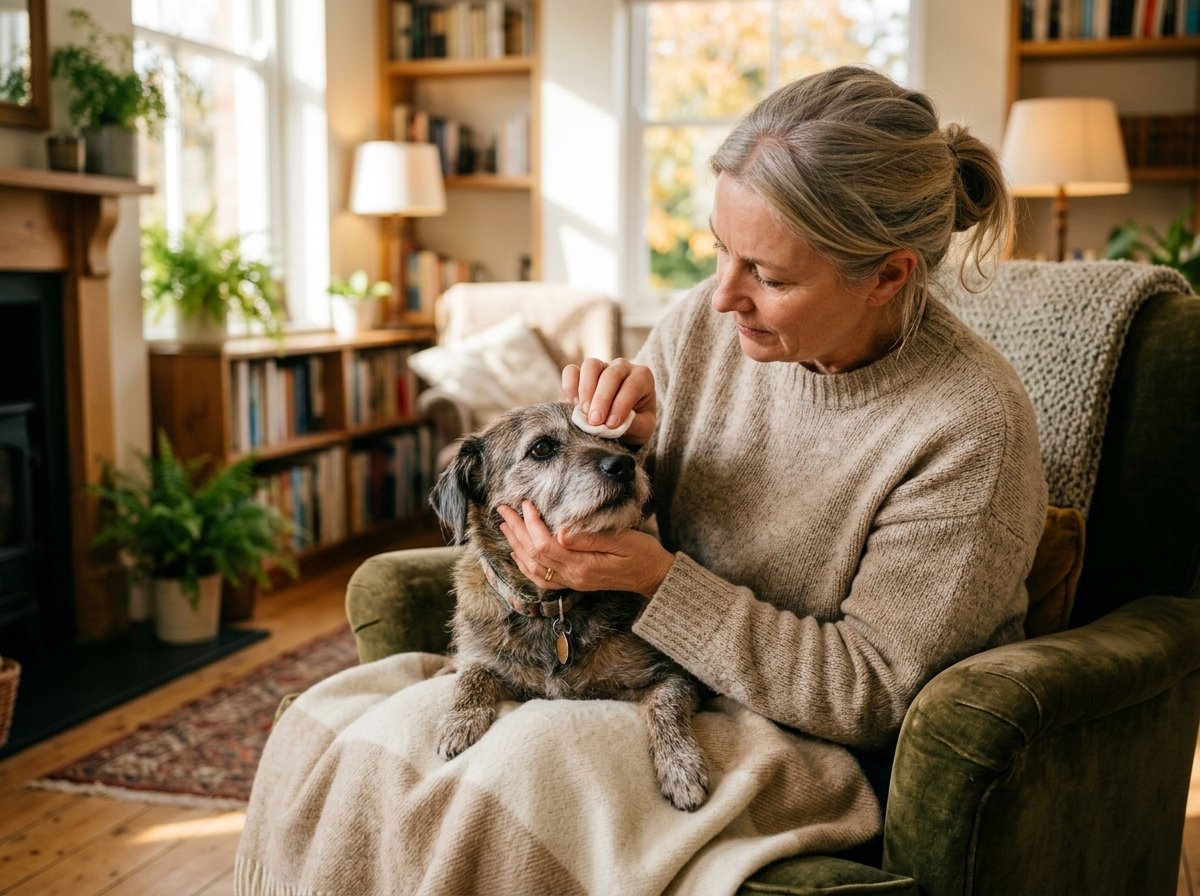
- Gentle Warm Compresses: Moisten a clean, lint-free cotton round with warm water. Hold it gently against the closed eyelid for thirty seconds to soften dried crusts before wiping smoothly outward from the inner corner.
- Flush with Sterile Saline: Use preservative-free veterinary eyewash or plain sterile saline to flush stray dust and pollen from the eye. Never use saline designed for cleaning contact lenses, as it contains harsh disinfectants.
- Prevent Self-Trauma: If your dog persistently rubs their face against the sofa or scratches with their dewclaw, fit them with a soft, comfortable Elizabethan collar (e-collar) until the itch subsides.
- Separate Cotton for Each Eye: Never use the same cotton pad or cloth on both eyes. If one eye harbors a bacterial infection, wiping both spreads the pathogen immediately.
When Does Pink Eye Become a True Veterinary Emergency?
While mild conjunctivitis can be evaluated during regular clinic hours, certain red-flag symptoms demand immediate emergency veterinary intervention to prevent permanent vision loss.
Seek emergency veterinary care immediately if your senior dog keeps their eye squinted tightly shut, if the clear cornea turns cloudy, bluish, or milky white, or if the eyeball appears physically enlarged or bulging forward. Sudden lethargy, refusal to eat, extreme head-shyness, or dilated pupils that do not respond to light also indicate severe internal ocular pain from glaucoma or deep ulcers.
Breeds Most Susceptible to Senior Conjunctivitis
While any older dog can develop pink eye, certain breeds possess facial and anatomical structures that dramatically increase their lifetime risk. Brachycephalic breeds, such as Pugs, French Bulldogs, Boston Terriers, and Shih Tzus, have shallow eye sockets and prominent globes.
As these flat-faced dogs age, their eyelid muscles weaken, leading to incomplete blinking known as lagophthalmos. The center of the cornea remains exposed to air and room dust even when resting, promoting chronic surface dryness and recurrent conjunctival flare-ups.
Spaniels, including Cocker Spaniels and Cavalier King Charles Spaniels, carry a strong genetic predisposition toward immune-mediated dry eye. Bloodhounds, Saint Bernards, and Basset Hounds frequently develop ectropion, an outward drooping of the lower eyelid that forms a pocket where environmental pollen, grass seeds, and debris accumulate. Knowing your breed’s anatomical tendencies helps you inspect their eyes with greater vigilance as they age.
How to Administer Eye Drops Without Stress
Giving eye drops to an anxious senior dog can quickly turn into a daily battle of wills. Approaching your dog directly from the front while holding a bottle often triggers fear, causing them to jerk their head away or squeeze their eyes shut.
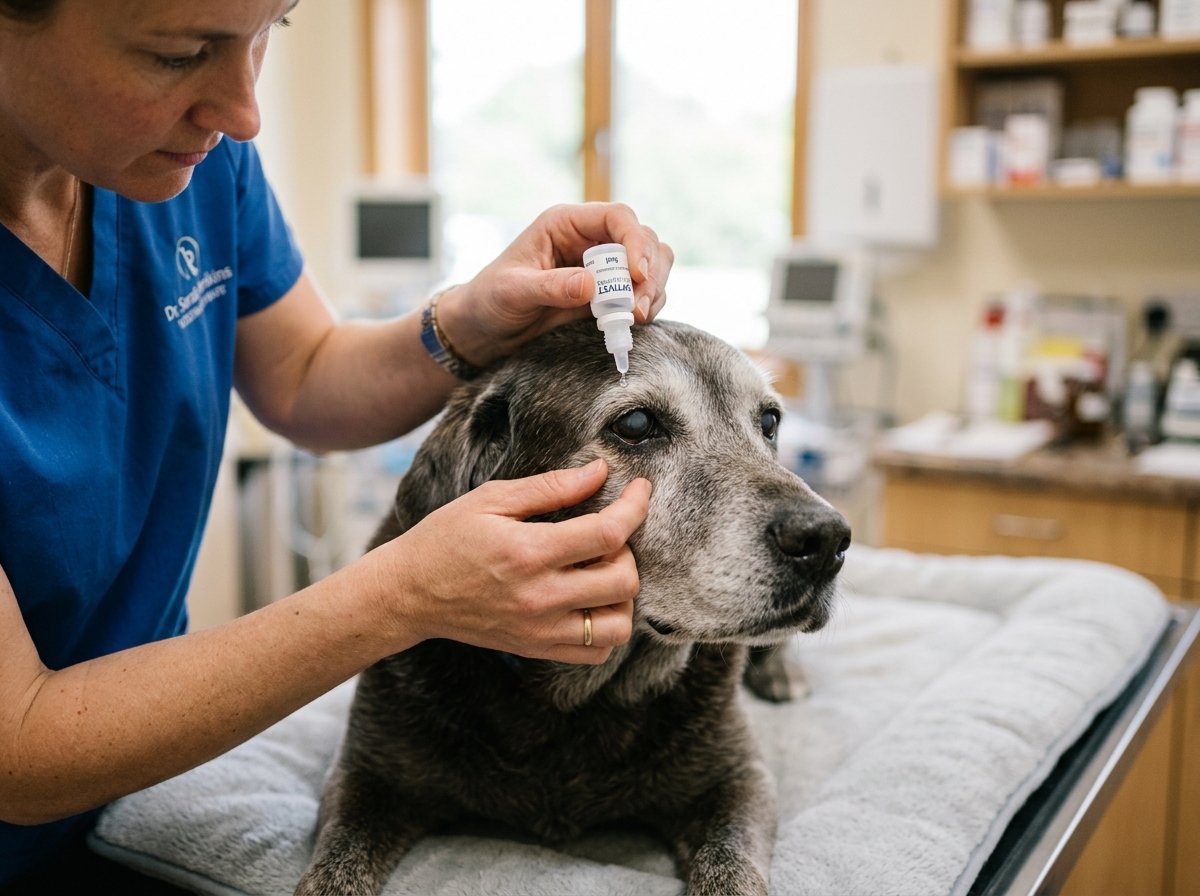
Instead, approach your dog calmly from behind or the side while they are seated comfortably between your knees. Gently rest your non-dominant hand beneath their chin, tilting their muzzle upward at a forty-five-degree angle. Rest the heel of your hand holding the dropper bottle against the top of their forehead; this ensures that if they move suddenly, your hand moves with them, preventing the plastic tip from accidentally poking the cornea.
Use your thumb to pull down the lower eyelid, creating a small pink pouch. Squeeze a single drop into this pocket from above without touching the eye surface. Praise your dog warmly and reward them immediately with a high-value soft treat so they associate daily eye drops with positive comfort.
Clinical Guidelines and Authoritative Research
Safeguarding canine vision requires adherence to established veterinary ophthalmology standards. Clinical wellness frameworks from the AVMA senior pet wellness recommendations emphasize scheduling bi-annual physical exams to screen older pets for subtle systemic conditions that manifest in the eyes. Diagnostic protocols in the Merck Veterinary Manual canine conjunctivitis reference detail the physiological distinctions between primary and secondary conjunctival inflammation, while published studies from the Cornell University canine corneal ulcer guide reinforce the mandatory use of fluorescein staining before administering any ophthalmic medication.
Frequently Asked Questions
Can a dog catch pink eye from a human?
Transmission of conjunctivitis between humans and dogs is exceptionally rare. The bacterial and viral pathogens responsible for human pink eye typically do not infect canine ocular tissue. Always wash your hands before and after treating your dog’s eyes to maintain clean hygiene.
Can I use human saline or eye drops on my dog?
You can use plain, preservative-free sterile saline solution to flush debris from your dog’s eye. However, you must never use human redness-relieving drops like Visine or medicated human drops, which contain vasoconstrictors and chemicals that can severely irritate canine eyes.
How long does dog pink eye take to clear up?
With appropriate veterinary treatment, uncomplicated bacterial or allergic conjunctivitis usually resolves within five to seven days. If the underlying cause is dry eye (KCS), ongoing daily management is required to maintain tear production and prevent relapses.
Is dog pink eye contagious to other dogs in the house?
Most cases of dog pink eye in senior pets stem from non-contagious factors like dry eye, allergies, or eyelid irritation. However, if the inflammation is driven by a primary bacterial or viral infection, it can spread to other pets through shared bedding or direct face-to-face contact.
Why does my senior dog’s eye look milky or blue?
A bluish or milky haze on the cornea is not typical of simple conjunctivitis. It indicates corneal edema, which can be caused by glaucoma, anterior uveitis, or a deep corneal ulcer. This symptom requires urgent veterinary evaluation to protect your dog’s eyesight.
Protecting Your Companion’s Bright, Clear Eyes
Your senior dog relies on you to notice the subtle discomfort they cannot put into words. While waking up to a red, swollen eye is alarming, prompt veterinary care and gentle daily hygiene make canine conjunctivitis straightforward to manage.
Schedule a quick exam to rule out deeper corneal issues, administer their prescribed drops faithfully, and keep their eyes clean with soothing warm compresses. With a little dedicated care, those loving, expressive eyes will soon be clear, comfortable, and ready to enjoy many more golden moments by your side.