
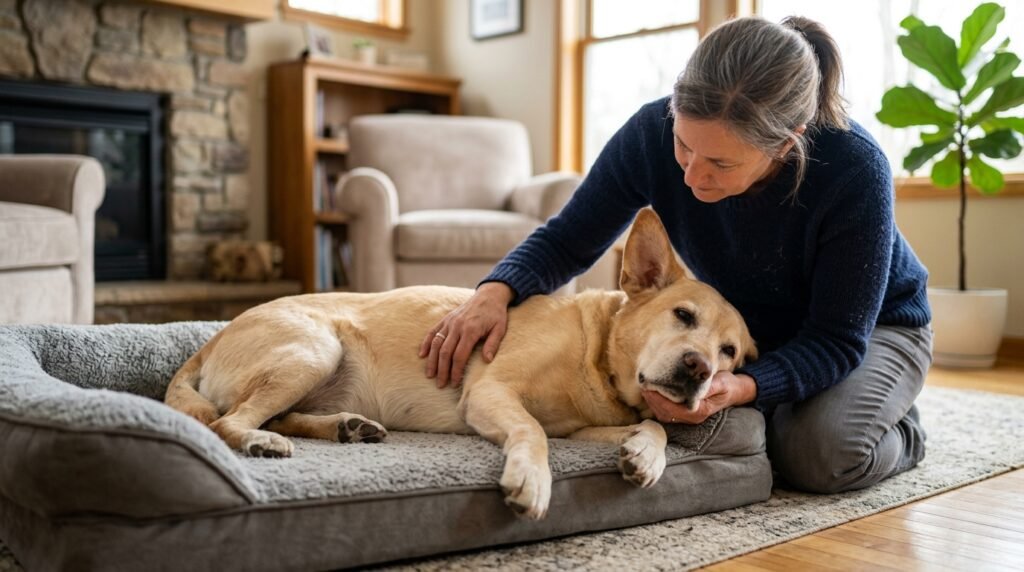
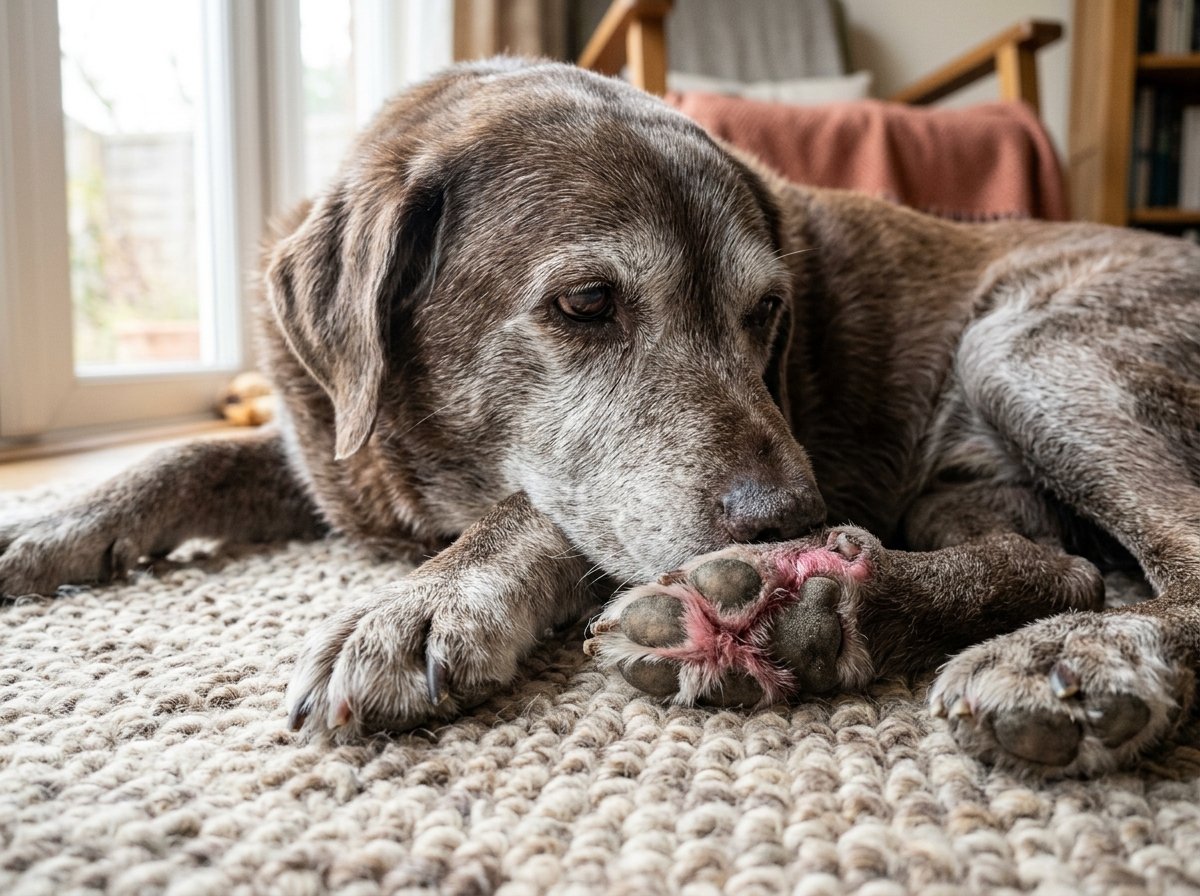
Watching your older companion stop mid-nap, frantically scratch their flank until their hind leg thumps against the floor, or chew their paw pads until the fur turns rusty pink is heartbreaking. You sit beside your gray-faced friend, gently stroking their head to comfort them, but the moment you stop petting, the relentless itching begins all over again.
You wonder why your dog has suddenly developed such severe skin problems late in life when they never struggled with allergies as a puppy and you worry whether an underlying illness is weakening their immune defenses, how to differentiate flea bites from environmental pollens or food sensitivities, and which veterinary medications can safely relieve their discomfort without harming aging kidneys and livers.
Your concern comes from deep love. Senior dog skin allergies are exceptionally common: as dogs age, the protective lipid barrier of their skin thins out, natural oil production drops, and the immune system becomes prone to hypersensitive flare-ups. Learning to identify the root cause of your companion’s pruritus, working closely with your vet, and implementing gentle home care can bring lasting relief, allowing your senior friend to rest comfortably once again.
Quick Answer:
Dog skin allergies in senior dogs are caused by three primary triggers: environmental atopy (pollens, dust mites, mold), flea allergy dermatitis (FAD), and cutaneous food sensitivities. Aging skin has a thinned lipid barrier that allows allergens to penetrate deeper into dermal tissues. Safe veterinary relief for older dogs centers on targeted biological injections like Cytopoint (which bypasses liver and kidney metabolism) or Apoquel, paired with antiseptic chlorhexidine baths to control secondary bacterial and yeast infections. To compare novel single-source proteins and therapeutic omega-3 diets, explore our complete buyer’s guide on the best dog food for sensitive skin in senior dogs. If your older dog develops thick yellow-gray scabs around their ear margins and elbows, learn how to identify parasitic mites in our visual diagnostic guide on what does mange look like on a dog.
Key Takeaways:
- The Aging Skin Barrier: Senior dogs lose epidermal ceramides and natural sebum, making skin dry, flaky, and highly vulnerable to airborne allergens.
- The Diagnostic Triad: Flea allergies concentrate along the lower back and tail base; environmental atopy targets the face, belly, and paws; food allergies trigger year-round itching and recurrent ear yeast infections.
- Senior Safety with Cytopoint: Cytopoint is a targeted monoclonal antibody that neutralizes the IL-31 itch protein without burdening senior kidneys or livers.
- Antiseptic Bathing: Bathe with cool or lukewarm water and a 2% to 4% chlorhexidine and ketoconazole shampoo to eradicate itchy secondary yeast overgrowth.
This comprehensive veterinary guide examines why senior dogs develop late-onset skin allergies, how to decode allergy patterns, modern veterinary treatments, and safe home remedies for chronic itching.
Why Senior Dogs Develop Sudden Skin Allergies
A frequent question pet parents ask veterinarians is: “Why did my dog never have allergies before, but suddenly started itching uncontrollably at age ten?”
In senior dogs, late-onset skin allergies are driven by specific physiological changes in canine dermatology:
1. Loss of Stratum Corneum Integrity (Skin Barrier Breakdown)
The outermost layer of mammalian skin (the stratum corneum) functions like a brick wall: skin cells are the bricks, and lipid ceramides are the mortar. In older dogs, ceramide synthesis declines sharply, leaving microscopic gaps in the barrier.
Microscopic allergens like tree pollen, lawn mold spores, and house dust mites slip directly through these cracks into deeper epidermal layers, where immune dendrites trigger intense allergic reactions.
2. Immune Senescence
As the immune system ages, it loses its ability to regulate inflammation smoothly. The threshold required to trigger an allergic mast cell histamine reaction drops significantly, turning mild environmental contacts into raging flare-ups.
3. Secondary Microbial Overgrowth (Yeast & Bacteria)
Healthy canine skin naturally hosts small colonies of Malassezia yeast and Staphylococcus bacteria. When a senior dog scratches and breaks the skin, moisture and warmth accumulate. These microbes multiply rapidly, creating a foul-smelling, greasy secondary infection that itches even more intensely than the original allergy.
Decoding the 3 Main Types of Canine Skin Allergies
To treat senior dog skin allergies effectively, you and your veterinarian must identify the underlying trigger:
| Allergy Classification | Typical Anatomic Hotspots | Timing & Hallmark Indicators |
|---|---|---|
| Flea Allergy Dermatitis (FAD) | Rump, tail head, thighs, lower spine | A single flea bite triggers days of intense nibbling; hair loss forming an inverted “triangle” above the tail |
| Environmental Atopy (CAD) | Paws, muzzle, eye rims, armpits, groin | Seasonal peaks (spring tree pollens, late summer weed pollens); intense licking between paw toes |
| Cutaneous Food Allergy | Ears, rear end (“ears and rears”), feet, abdomen | Year-round continuous itching; recurrent yeast otitis externa; soft or frequent stools |
For dietary options tailored specifically to senior dogs with food-related pruritus, explore our comprehensive guide on best dog food for skin allergies in senior dogs.
Comparing Veterinary Allergy Medications for Senior Dogs
Treating skin allergies in an older dog requires greater caution than treating a young dog. Medications must control intense itching without placing unnecessary strain on aging internal organs.
| Medication | How It Works | Senior Dog Safety Profile |
|---|---|---|
| Cytopoint (Lokivetmab Injection) | Targeted monoclonal antibody that neutralizes Interleukin-31 (IL-31), the neural itch signal | Outstanding: Eliminated via natural protein catabolism; zero burden on kidneys or liver. Lasts 4 to 8 weeks per injection. |
| Apoquel (Oclacitinib Tablet) | Janus kinase (JAK-1) enzyme inhibitor halting cytokine signaling inside cells | Good: Fast-acting daily oral pill. Requires bi-annual blood chemistry monitoring; caution in dogs with existing neoplasia. |
| Steroids (Prednisone / Prednisolone) | Broad systemic immunosuppression stopping all inflammatory pathways | Caution in Seniors: Causes severe excessive thirst, urination, liver stress, and muscle loss. Reserved for acute, severe crisis only. |
According to clinical veterinary dermatologists on Cornell University’s Canine Health Center, targeted biologicals like Cytopoint have transformed senior care by stopping chronic itch without the systemic toxicity of older steroid regimens.
If your older dog shows skin lumps, warts, or swollen nodules alongside allergic flare-ups, review our diagnostic guide on old dog skin bumps and warts.
Step-by-Step Home Relief Protocol for Itchy Seniors
Medical prescriptions stop the internal itch signaling, but topical and environmental care heals the skin surface:
1. Antiseptic Medicated Baths with Contact Time
Bathing removes physical pollen grains and kills opportunistic surface microbes:
- Use an antimicrobial shampoo containing 2% to 4% Chlorhexidine and 1% to 2% Ketoconazole.
- Always use lukewarm or cool water. Hot water causes vasodilation, rushing blood to the skin surface and drastically increasing itching.
- The 10-Minute Soak Rule: Work the shampoo into a rich lather down to the skin and let it sit for a full 10 minutes before rinsing. Active antimicrobials require 10 minutes of direct contact time to penetrate bacterial cell walls.
2. The Post-Walk “Pollen Wipe” Routine
Whenever your dog returns from walking outside, keep a container of hypoallergenic, alcohol-free grooming wipes by the front door. Thoroughly wipe their footpads, between their toes, their belly, and their chest. Removing outdoor allergens before your dog licks them off prevents oral ingestion and secondary dermatitis.
3. High-Dose Marine Omega-3 Fatty Acids
Cold-water fish oils (rich in EPA and DHA) replace inflammatory arachidonic acid in cellular membranes. Consistent daily supplementation reduces skin dryness, stops dandruff, and simultaneously lubricates arthritic joints. For joint care synergies, explore our guide on old dog comfort care and wellness.
What Not to Do with Senior Dog Skin Allergies
Avoid these common mistakes that often make senior allergic conditions worse:
- Never Apply Human Hydrocortisone Creams Generously: Dogs instinctively lick topical ointments off their skin. Ingesting human steroids can cause severe stomach ulceration and hormonal disruption.
- Never Use Apple Cider Vinegar on Broken Skin: While diluted vinegar can inhibit yeast on intact skin, applying acidic vinegar to raw, scratched, or bleeding skin causes intense burning and pain.
- Never Skip Flea Prevention Even if You Don’t See Fleas: In an older dog with flea allergy dermatitis, you will rarely see a live flea because the dog grooms compulsively. A single bite from a hitchhiking flea during a 5-minute potty break can ignite three weeks of agonizing itch.
Frequently Asked Questions
Can older dogs suddenly develop allergies to their environment?
Yes. Declining skin barrier integrity and age-related changes in the immune system make senior dogs susceptible to developing allergies to pollens, molds, and dust mites later in life.
Is Cytopoint safe for older dogs with kidney or liver disease?
Yes. Cytopoint is a monoclonal antibody that mimics the body’s natural proteins. It is not cleared through the liver or kidneys, making it the safest anti-itch choice for geriatric pets.
Why do my senior dog’s paws smell like corn chips?
A “corn chip” or Frito odor is the classic signature of a Malassezia yeast infection. Yeast thrives in the moist, warm spaces between the toes when a dog licks their paws repeatedly due to allergies.
How often should I bathe a senior dog with skin allergies?
During active allergic flare-ups with secondary yeast or bacterial infections, veterinary dermatologists recommend medicated baths two to three times per week for the first two weeks, tapering to once every two to three weeks for maintenance.
Restoring Dignity and Calm to Your Faithful Companion
Living with chronic, unmanaged itching is physically exhausting and emotionally draining for an older dog. By partnering with your veterinarian to identify whether fleas, pollens, or diet are at play, utilizing senior-safe therapies like Cytopoint, and soothing the skin with medicated baths, you can break the vicious itch-scratch cycle.
Your companion gave you a lifetime of devotion. Giving them relief from constant itching restores their peace, comfort, and sweet dreams in their golden years.