

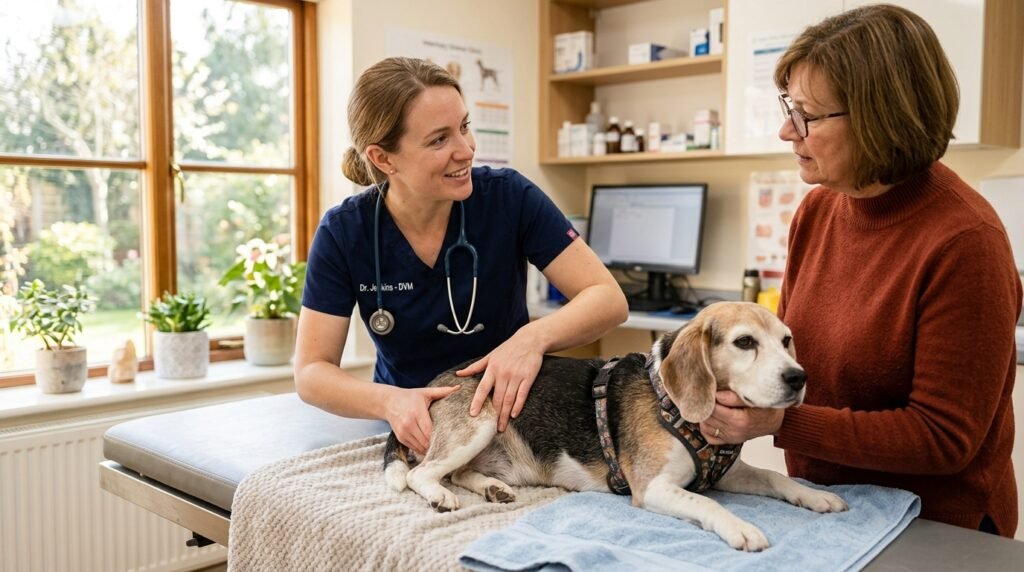
Watching your faithful companion rest quietly by your feet, you might assume they are simply enjoying a calm, peaceful retirement. But canine instincts run deep: in the wild, an animal that displays vulnerability, limping, or distress becomes an easy target. As a result, older dogs instinctively mask chronic physical pain for as long as possible.
Many pet parents wait for obvious signs of discomfort like crying out, whimpering, or dramatic yelping before realizing their dog is hurting. However, waiting for audible cries means missing the earliest, most manageable stages of chronic pain.
Recognizing the subtle behavioral, postural, and emotional cues of canine discomfort is one of the greatest gifts you can give your aging companion. By decoding these silent pain signals early, you can work closely with your veterinarian to restore their comfort, mobility, and vitality.
Quick Answer:
Senior dogs rarely cry out when in chronic pain; instead, they exhibit subtle behavioral and postural shifts: difficulty rising from a lie, night restlessness and pacing, heavy panting while resting in cool rooms, licking front wrists or sore joints, arched back posture (kyphosis), reluctance to climb stairs, and personality withdrawal or sudden touch sensitivity.
Key Takeaways:
- Vocalization is Rare: Less than 10% of senior dogs with chronic osteoarthritis vocalize; behavioral changes are far more reliable indicators.
- Panting at Rest: Rapid panting when the ambient room is cool and your dog has not exercised is a classic sign of sympathetic pain arousal.
- Repetitive Licking: Compulsive licking of paws, carpals (wrists), or flanks often signals referred joint or nerve discomfort.
- Multi-Modal Relief: Modern veterinary therapies (NSAIDs, Librela, Gabapentin) provide dramatic relief when initiated early.
This comprehensive guide details the eight silent indicators of pain in senior dogs, postural shifts, vocalization myths, and veterinary pain management options.
The Myth of the Crying Dog: Why Chronic Pain is Silent
Veterinary pain specialists categorize canine pain into two distinct forms:
| Pain Classification | Common Triggers | Observable Behavioral Signs |
|---|---|---|
| Acute Pain (Sudden Injury) | Stepping on a bee, torn cruciate ligament, fractured nail | Immediate yelping, howling, non-weight-bearing limping |
| Chronic Pain (Degenerative Disease) | Osteoarthritis, spinal spondylosis, dental disease, cancer | Silent: slow to rise, nocturnal pacing, panting, withdrawal |
Because chronic pain develops gradually over months or years, an older dog adapts by silently restricting their movements rather than making noise.
8 Primary Silent Signs of Pain in Senior Dogs
1. Hesitation Before Standing or Laying Down
Pay close attention to the transition moments: rising from sleep or lowering their body to the floor. An older dog in joint pain will pause, push heavily with front legs while hind legs tremble, or drop their rear down abruptly.
2. Restlessness and Nighttime Pacing
If your dog wanders room to room, circles repeatedly without settling, or groans each time they adjust position on their bed, aching pressure points are preventing restful sleep. Learn more in our guide on old dog restless at night.
3. Heavy Panting While Resting in Cool Rooms
Panting is normal after vigorous play on a hot summer day. However, rapid, shallow panting when your dog is lying quietly on a cool living room rug signals elevated adrenaline and cortisol from chronic pain.
4. Compulsive Licking or Chewing of Joints and Paws
Dogs frequently lick the skin directly over an arthritic joint (such as the carpus wrist joint or inner stifle knee) in an instinctive effort to soothe deep throbbing ache. Over time, this creates hair loss and raw “lick granulomas.”
5. Arched Spine Posture (Kyphosis) and Tucked Tail
A dog with back pain, hip dysplasia, or abdominal discomfort will stand with an arched spine, tucked pelvis, and head held low to shift body weight forward away from sore hindquarters.
6. Reluctance to Navigate Stairs or Jump into Vehicles
If your companion abruptly stops at the bottom of the basement stairs or refuses to hop onto the couch, do not mistake it for stubbornness. Their reluctance is a protective refusal to endure jarring joint impact.
7. Personality Withdrawal or Sudden Irritability
Pain drains emotional reserves. A gentle dog who used to greet you eagerly at the door may stay curled up in a quiet back bedroom. If touched unexpectedly on a sore hip or lower spine, they may growl, flinch, or snap defensively.
8. Shaking, Trembling, and Muscle Fasciculations
Involuntary muscle tremors in the hind legs often reflect muscle fatigue trying to compensate for unstable joints. For diagnostic steps, read our guide on old dog shaking and trembling.
Veterinary Pain Management Options
Modern veterinary medicine offers remarkably effective tools to eliminate senior pain:
- Targeted Prescription NSAIDs: Medications like Galliprant, Rimadyl, or Metacam reduce joint inflammation directly.
- Anti-NGF Monoclonal Antibodies (Librela): A breakthrough monthly injection that blocks pain signaling pathways without metabolizing through the liver or kidneys.
- Adjunctive Nerve Medications: Gabapentin or Amantadine to manage chronic wind-up neuropathic pain.
- Class IV Therapeutic Laser: Non-invasive infrared light therapy that stimulates cellular repair and reduces swelling.
For daily home comfort strategies, explore our guide on old dog comfort care and wellness.
Frequently Asked Questions
How can I tell if my senior dog’s limp is serious?
Any limp lasting more than 24 hours, non-weight-bearing lameness, or sudden onset with joint swelling requires immediate veterinary evaluation to rule out ligament tears, fractures, or bone cancer.
Can I give aspirin or Advil to my dog for joint pain?
Never. Over-the-counter human painkillers cause severe stomach ulceration, intestinal perforation, and irreversible liver and kidney toxicity in dogs.
Do joint supplements like glucosamine really work?
Glucosamine, chondroitin, and high-potency marine Omega-3s (EPA/DHA) nourish cartilage and slow arthritic degradation, especially when started early alongside vet-approved pain medications.
Why does my dog lick their front paws constantly?
While paw licking can indicate skin allergies, in senior dogs it is very frequently a manifestation of referred pain from cervical spine arthritis or elbow dysplasia.
Restoring Comfort to Your Companion
No dog should have to spend their golden years living with silent, manageable pain. By staying observant, watching for subtle behavioral changes, and partnering with your veterinarian, you can relieve your companion’s discomfort and restore their joyful tail wags.