

Receiving news that your beloved companion has entered the final stage of an incurable illness, advanced heart failure, or severe organ decline is an overwhelming, heart-wrenching moment. You hold your faithful friend close, and your mind fills with painful questions about how to protect them from suffering.
You wonder what veterinary hospice care actually entails and whether choosing hospice means giving up on your companion. You worry about how you will recognize when pain is breaking through, how to manage symptoms at home, and how to know when it is time to say goodbye.
Choosing hospice care is not giving up; it is an act of deep, selfless love. Veterinary hospice shifts medical priority away from exhausting curative interventions toward dedicated palliative comfort, dignity, and quality of life. By partnering with your veterinary team to build a personalized home hospice plan, you ensure your cherished dog’s remaining time is filled with tranquility, relief, and unconditional love.
Quick Answer:
Hospice care for senior dogs (veterinary palliative care) is a compassionate medical framework dedicated to maintaining maximum comfort, pain relief, and emotional well-being for pets facing terminal illness or advanced age. Rather than pursuing invasive cures, hospice focuses on symptom management (pain medication, anti-nausea drugs, subcutaneous fluids), hygiene support, and loving home nursing care until natural passing or peaceful in-home euthanasia.
Key Takeaways:
- The Hospice Philosophy: Focus transitions from curing disease to eliminating pain, nausea, breathlessness, and anxiety.
- The HHHHHMM Quality of Life Scale: Assess Hurt, Hunger, Hydration, Hygiene, Happiness, Mobility, and More Good Days than Bad daily.
- Proactive Symptom Protocols: Keep emergency veterinary rescue medications on hand for sudden breakthrough pain, vomiting, or seizures.
- Compassionate Farewell Planning: Hospice care works hand-in-hand with peaceful in-home euthanasia when quality of life can no longer be maintained.
This guide explains how veterinary palliative hospice works, practical home nursing skills, managing pain and nausea, tracking quality of life, and making compassionate end-of-life decisions.
What Veterinary Hospice Care Actually Involves
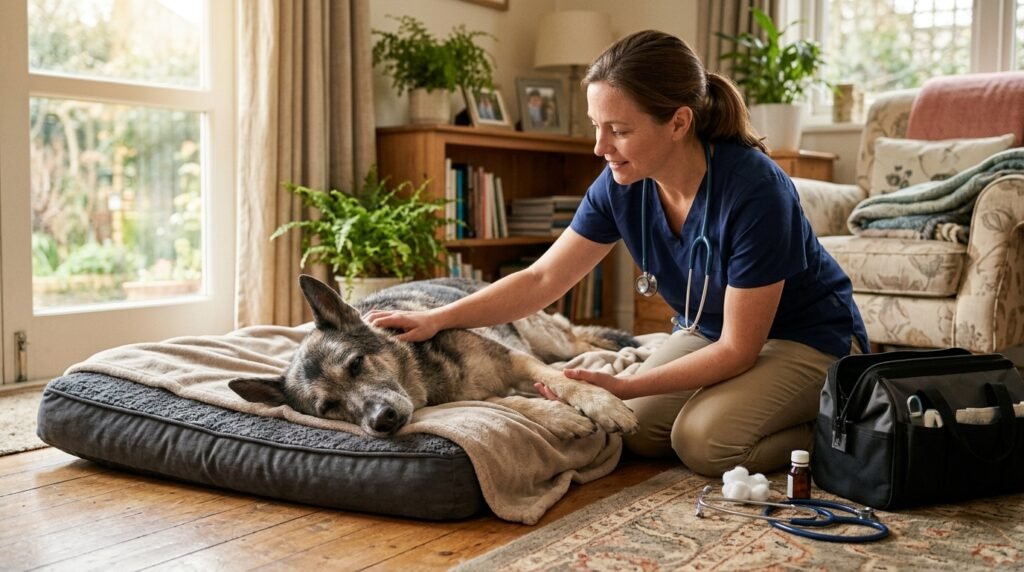
Veterinary hospice is modeled after human hospice care. It recognizes that death is a natural process and focuses on giving pets comfort and dignity in familiar home surroundings.
| Traditional Curative Care | Palliative Hospice Care |
|---|---|
| Frequent invasive hospitalizations, biopsies, surgeries | Care centered in the calm, familiar home environment |
| Primary goal: extend lifespan and eradicate disease | Primary goal: maximize comfort, pain relief, and emotional joy |
| Side effects of treatments tolerated for long-term recovery | Side effects eliminated immediately; comfort is paramount |
Hospice does not mean doing nothing; it requires active, attentive nursing care tailored to your dog’s specific medical condition.
Core Elements of a Home Hospice Care Plan
1. Aggressive, Multi-Tiered Pain Management
Uncontrolled pain is the primary threat to quality of life. Veterinary hospice teams utilize layered pain protocols tailored to the condition:
- Anti-inflammatory Medications: Modern NSAIDs or targeted monoclonal antibodies (like Librela) for severe osteoarthritis.
- Neuropathic Pain Reducers: Medications like Gabapentin to soothe nerve pain and spinal discomfort.
- Centrally Acting Pain Relievers: Tramadol or fentanyl transdermal patches for advanced bone cancer or severe visceral pain.
2. Managing Nausea, Appetite, and Hydration
Chronic kidney disease and liver strain frequently cause uremic nausea and stomach acid buildup. Your vet can prescribe:
- Anti-Emetics: Maropitant (Cerenia) or Ondansetron to halt nausea and prevent food aversion.
- Appetite Stimulants: Capromorelin (Entyce) or Mirtazapine to encourage eating.
- Subcutaneous Fluids: Administering warm balanced electrolyte fluids under the skin at home provides profound hydration relief for kidney failure patients. Learn more in our kidney failure in dogs guide.
3. Hygiene and Skin Protection for Immobile Dogs
Immobile senior dogs are vulnerable to painful urine burns and pressure sores:
- Waterproof Padded Bedding: Layer absorbent, washable hospital-grade pads over orthopedic memory foam mattresses.
- Regular Repositioning: Gently turn an immobile dog from one side to the other every two to three hours to prevent pressure ulcers and fluid accumulation in the lungs.
- Gentle Hygiene Cleaning: Clean soiling promptly with warm water and pet-safe chlorhexidine wipes, followed by a thin barrier cream like coconut oil.
Tracking Quality of Life: The HHHHHMM Scale
Deciding when palliative care is no longer keeping your dog comfortable is one of the hardest parts of hospice. Veterinary hospice pioneer Dr. Alice Villalobos created the renowned HHHHHMM Scale to evaluate quality of life objectively:
| Factor | Evaluation Focus (Score 1–10) |
|---|---|
| Hurt | Is pain controlled? Are breathing sounds clear and calm? |
| Hunger | Is your dog eating well on their own or with gentle hand-feeding? |
| Hydration | Are gums moist? Do they need subcutaneous fluids? |
| Hygiene | Can your dog stay clean, dry, and free of pressure sores? |
| Happiness | Do they wag their tail, enjoy petting, and engage with family? |
| Mobility | Can they stand with support or rest comfortably without panic? |
| More Good Days | Do good, peaceful days outnumber bad, distressing days? |
A total score above 35 generally indicates acceptable quality of life with supportive hospice care. For a printable checklist, review our senior dog quality of life checklist.
Recognizing the Active Dying Phase
As advanced disease reaches its end, your dog’s body will begin a natural shutdown process. Common signs include cooling of the paws and ears, refusal of all food and water, pale gums, and irregular breathing pauses.
To understand what to expect during this natural transition, review our in-depth veterinary guide on signs your dog is dying.
When to Transition to In-Home Euthanasia
While some hospice patients slip away peacefully in their sleep, many terminal diseases (such as congestive heart failure, internal bleeding, or bone tumors) cause acute crisis before natural death occurs.
In-home euthanasia allows you to protect your faithful friend from a traumatic emergency room visit. A mobile veterinarian comes to your living room, administers deep sedation so your pet falls into a peaceful sleep, and gently ends their suffering on their favorite bed surrounded by family. Read our complete guide on in home pet euthanasia for senior dogs.
According to veterinary hospice standards published on Lap of Love Veterinary Hospice services, proactive planning ensures that your dog’s final moments are characterized by peace, love, and dignity.
Frequently Asked Questions
How long does veterinary hospice care usually last?
Hospice can last anywhere from several days to several months, depending on the progression of the underlying illness and how well symptoms are managed.
Is dog hospice care very expensive?
Hospice is often significantly less expensive than emergency surgery, chemotherapy, or repeated ICU hospitalizations because care focuses on home comfort medications and nursing support.
Can I give my dog hospice medications on my own at home?
Yes. Your veterinary hospice team will train you on administering oral pills, transdermal pain gels, and subcutaneous fluid therapy comfortably at home.
How do I know when hospice is no longer enough?
When medication can no longer relieve pain, breathing is continuously labored, or bad days consistently outnumber good days, compassionate euthanasia is the kindest final choice.
Honoring Your Companion’s Final Journey
Providing hospice care is one of the most selfless, meaningful commitments you can make for your loyal companion. By focusing on comfort, relieving pain, and staying by their side, you transform their final days into a peaceful tribute to a lifetime of love. To evaluate daily wellness objectively, use our printable senior dog quality of life scale.