

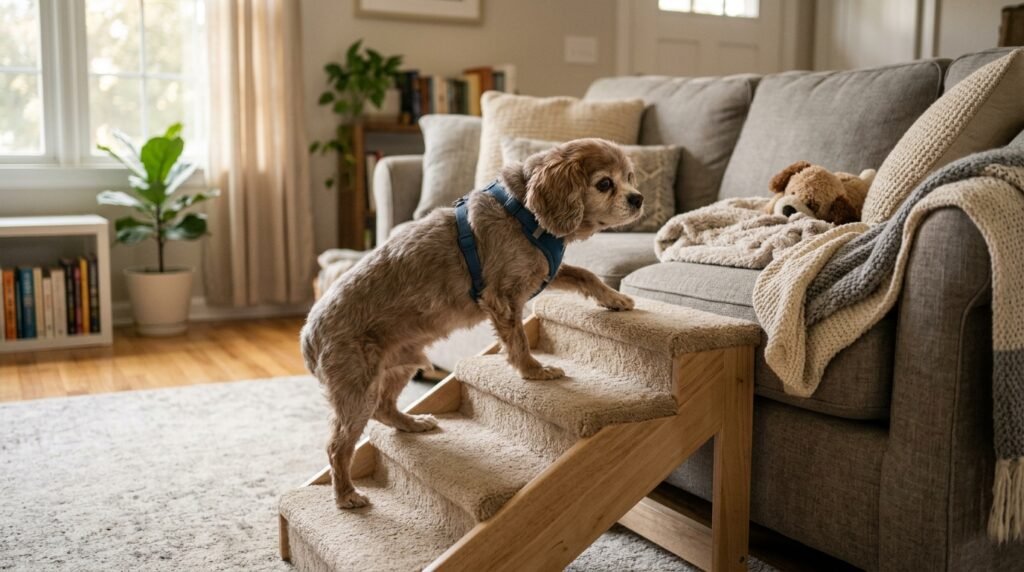
Watching your gray-muzzled companion pause at the edge of the couch with hesitant eyes tells you that leaping days have passed. You remember when they cleared cushions in a single joyous bound without a second thought. Now, you watch them measure the distance, shift weight anxiously, and sometimes turn away with a quiet sigh.
Every dedicated owner wants to keep their companion close without risking acute spinal injury or painful joint trauma. Many pet parents wonder if dog stairs for old dogs or incline ramps offer the safest pathway up to beds, sofas, and vehicles. Selecting the right mobility aid requires knowing how aging bones absorb impact and how specific designs support fragile paws.
Investing in appropriate indoor steps or ramps does far more than preserve furniture privileges. It protects vulnerable wrists, shoulders, and spinal discs from destructive shock forces every single day. With thoughtful product selection and patient positive training, your senior dog can move comfortably without fear of falling.
Quick Answer:
Dog stairs for old dogs protect vulnerable spine and hip joints from high-impact landings off furniture and vehicles. Ramps offer the safest zero-impact option for dogs with severe arthritis, IVDD, or vision loss, while shallow, deep-tread foam steps work well for agile small-to-medium seniors with limited floor space.
Key Takeaways:
- Impact Protection: Jumping down generates up to four times a dog body weight in concussive joint shock.
- Ramps vs Steps: Choose ramps for spinal disease and advanced arthritis; choose shallow steps for smaller, mobile dogs.
- Safety Dimensions: Prioritize deep step treads of ten or more inches, low risers under six inches, and textured grip.
- Training Protocol: Introduce steps flat on carpet with high-value treats before introducing vertical elevation.
The Biomechanics of Landing: Why Jumping Hurts
Most dog owners worry about the effort required for an older dog to jump upward onto a high bed. Veterinary orthopedic surgeons note that the downward landing poses far greater danger to aging skeletal structures. Gravity accelerates your dog downward, concentrating massive kinetic shock into their two front legs upon impact.
When a thirty-pound dog hits hardwood flooring from a twenty-inch couch, their front carpal joints absorb over one hundred pounds of force. In a young dog, elastic ligaments, thick cartilage cushions, and springy tendons dissipate that energy smoothly. For an older dog suffering from cartilage erosion, that concussion transfers directly into inflamed bone ends.
Repeated impact exacerbates conditions like elbow dysplasia, shoulder osteoarthritis, and cervical disc compression. Clinical findings from the American College of Veterinary Surgeons cruciate ligament and joint resources emphasize that repetitive micro-trauma from furniture jumps frequently triggers sudden ligament tears. Providing a gradual descent eliminates that destructive shock completely.
Ramps vs Stairs: Which Option Fits Your Dog?
Choosing between an incline ramp and a set of pet stairs depends heavily on your dog specific medical diagnosis and living space. Neither choice is universally superior; each solves distinct physical challenges for aging canines. Assessing your companion mobility limitations directs you to the safest solution.
When to Choose an Incline Ramp
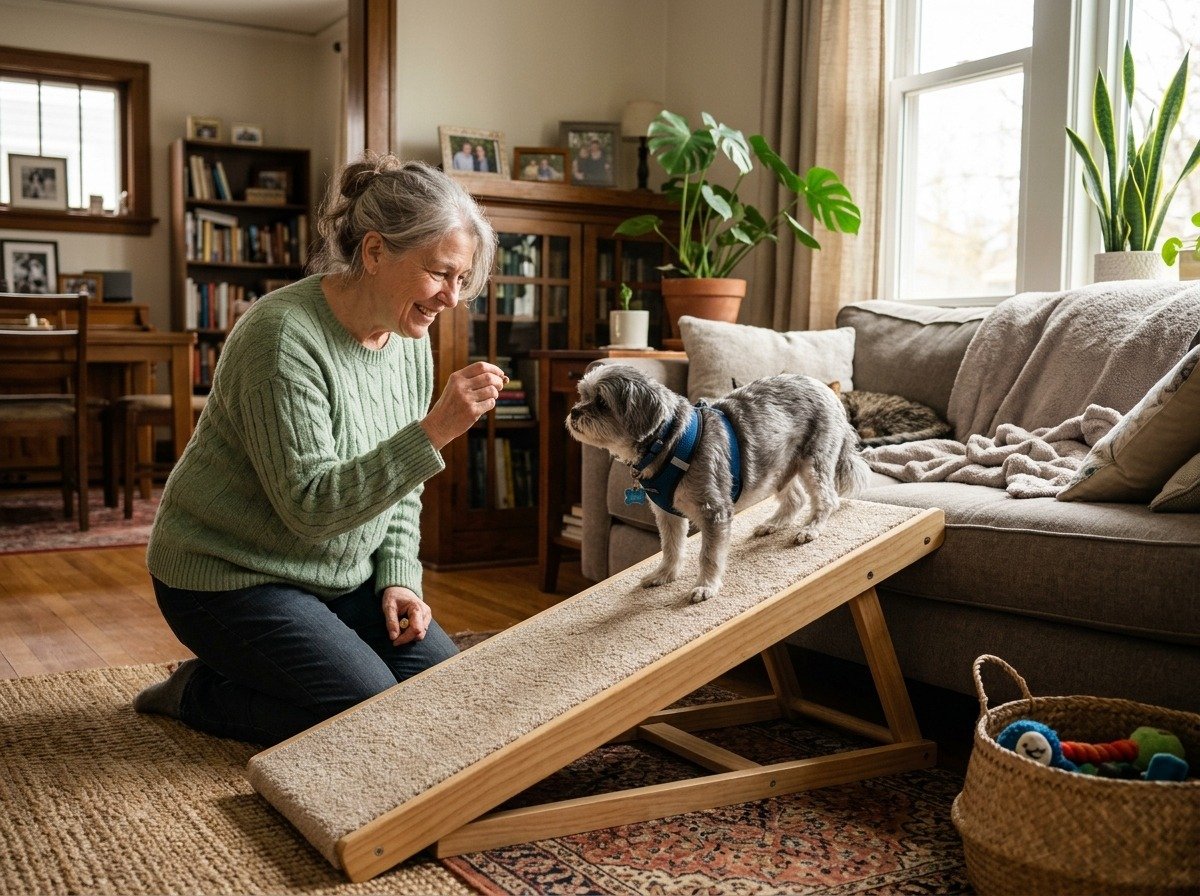
Incline ramps provide a continuous, flat slope with zero vertical steps. They represent the gold standard for dogs recovering from spinal conditions such as Intervertebral Disc Disease (IVDD) or lumbosacral stenosis. Neurological guidance from the NC State Veterinary Hospital neurology and spinal disease guidance warns that stair climbing forces spinal extension and flexion that can aggravate compressed nerves.
Ramps also benefit dogs with advanced vision loss, cataracts, or severe hind-limb weakness. An older dog with depth perception difficulties often fears stepping off an edge, making stairs terrifying. Walking along a carpeted ramp allows them to maintain steady paw contact without guessing step distances.
The primary drawback of ramps is their physical footprint. To maintain a safe, gentle incline angle between twenty and twenty-five degrees, a ramp leading to a tall bed must measure five to six feet in length. In tight bedrooms, fitting a long ramp requires thoughtful room rearrangement.
When to Choose Dog Stairs
Pet steps work exceptionally well for small and medium-sized senior dogs that retain reasonable balance and vision. Stairs consume roughly half the floor space of a comparable ramp, fitting neatly beside sofas and nightstands. For apartments and compact living rooms, steps offer practical daily access.
Stairs suit older dogs whose main challenge is mild arthritis or reduced jumping confidence rather than severe spinal disease. Climbing shallow steps feels familiar and intuitive to most dogs because they have climbed household stairs throughout life. Acclimating a hesitant senior to shallow steps often requires less time than training them on an incline ramp.
However, standard pet stairs made for young puppies are completely unsuitable for senior dogs. Aging canines need specialized dimensions that account for stiff hips and reduced flexibility. Knowing these dimensional requirements protects your dog from accidental tumbles.
Critical Safety Specifications to Look For
Never purchase pet stairs or ramps based solely on aesthetic appeal or low price. Flimsy, poorly proportioned steps cause more injuries than they prevent. Insist on the following four engineering specifications before bringing any mobility aid into your home.
First, inspect the tread depth of each step. Cheap pet stairs often feature narrow treads of five or six inches, forcing senior dogs to balance precariously on their toes. Look for generous treads measuring ten to twelve inches deep so your dog can place all four paws securely on each tier.
Second, evaluate the rise height between individual steps. Steep steps requiring seven or eight inches of lift strain arthritic stifles and hocks severely. Well-designed senior dog stairs feature low risers between four and six inches high, allowing gentle, shuffling ascents.
Tread Grip and Weight Stability
Third, examine the walking surface texture. Bare plastic, polished wood, or slippery faux leather surfaces present catastrophic slip hazards for senior paws. Choose heavy-duty ribbed carpet, rubberized grooved treads, or high-grit non-slip fabrics that provide dependable traction.
Fourth, verify total unit stability and weight capacity. If a ramp or stair wobbles, creaks, or flexes when your dog places a front paw on it, your companion will refuse to use it. Senior dogs possess acute sensitivity to unstable footing, and a single wobble can create lasting equipment phobia.
Ensure the manufacturer weight rating exceeds your dog body weight by at least twenty-five percent. Look for wide base platforms equipped with rubber grip pads that prevent the unit from sliding backward across smooth floors. Stable steps provide the security needed for confident daily use.
High-Density Foam vs Solid Wood Steps
Modern pet stairs come in two dominant construction styles: high-density molded foam and rigid frames made of wood or plastic. Each material brings distinct mechanical advantages depending on your companion weight and agility.
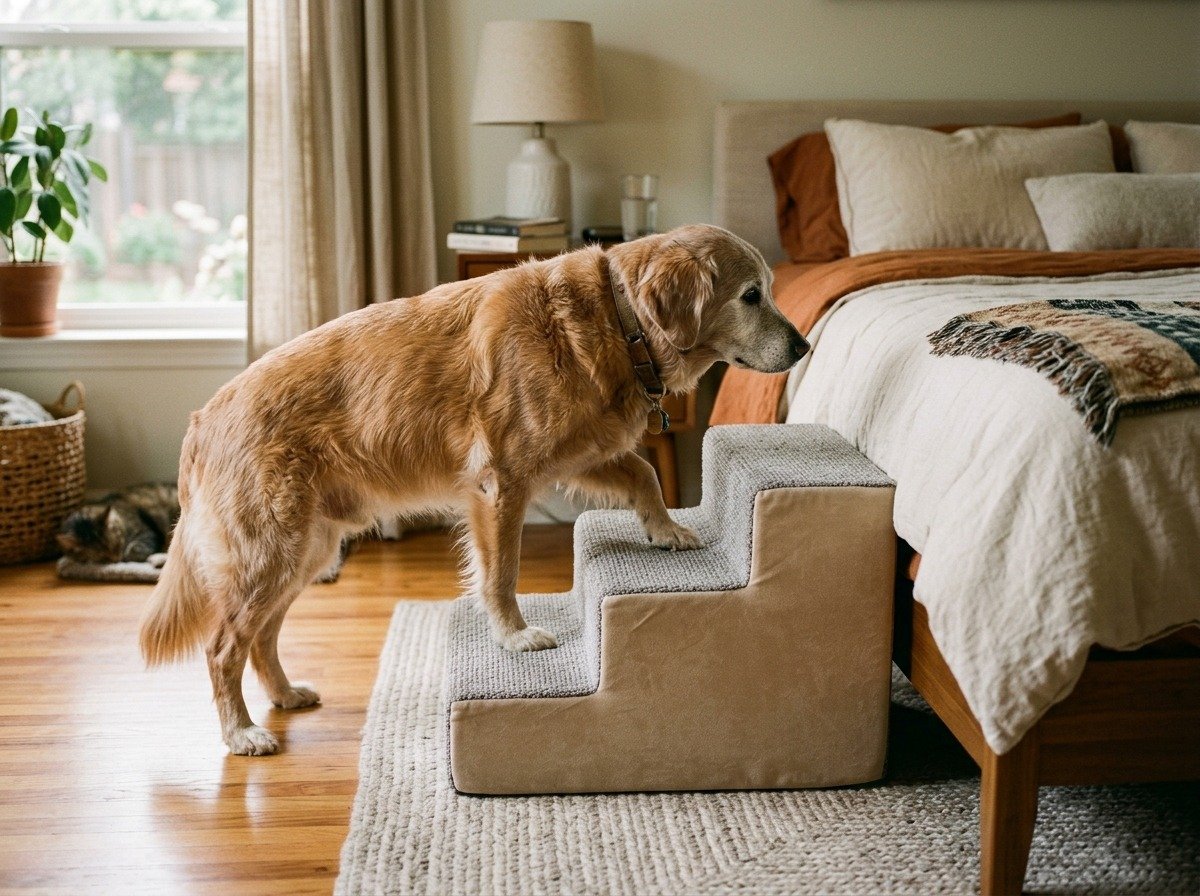
High-density furniture-grade foam steps offer gentle, shock-absorbing support for small and medium dogs under forty pounds. Foam steps lack sharp wooden corners, meaning your dog will not bruise tender shins if they bump the edge. They are lightweight, portable, and easily moved between rooms or vacuumed.
Ensure that foam steps use medical-grade, high-density core foam rather than soft sponge mattress filling. Low-density foam compresses under paw pressure, creating an unstable, sinking sensation that terrifies arthritic dogs. Quality foam remains firm and supportive while absorbing joint shock effectively.
Solid Wooden and Metal Frame Steps
For large-breed senior dogs weighing sixty, seventy, or eighty pounds, solid wooden or metal frame stairs are non-negotiable. Large canines generate substantial lateral force as they push upward, causing foam steps to tip or collapse. Hardwood furniture-style steps provide rock-solid stability that supports heavy weight without flexing.
Many solid wooden steps incorporate safety side rails or carpeted landing platforms that prevent accidental missteps. Some wooden models fold flat for convenient storage or convert seamlessly between stairs and a gentle ramp. Pairing sturdy equipment with a supportive home setup for senior dogs creates a secure sanctuary for aging joints.
Consider placing non-skid rug runners at the base of wooden stairs to provide secure approach footing. If your companion experiences morning stiffness, reviewing our guide on senior dog joint stiffness morning care helps ensure muscles are warm before tackling steps.
Comparing Mobility Aids for Senior Dogs
Choosing the correct equipment requires matching your companion physical size and orthopedic needs with appropriate specifications. The reference table below details how various mobility aids compare across key functional categories.
| Mobility Aid | Best Medical Use | Target Dog Weight | Floor Space Footprint | Joint Impact Level |
|---|---|---|---|---|
| Indoor Carpeted Ramp | IVDD, severe hip arthritis, cataracts, vestibular recovery | All sizes (verify ramp rating) | Large (4 to 6 feet long) | Zero impact |
| High-Density Foam Steps | Mild stiffness, small dog couch access, low bed heights | Under 40 lbs | Compact (20 to 28 inches) | Very low impact |
| Solid Wood Furniture Steps | Large breed mobility, tall beds, high lateral stability needs | Up to 150 lbs | Moderate (28 to 36 inches) | Low impact |
| Telescoping Vehicle Ramp | SUV and trunk access, preventing tailgate jumping injuries | All sizes (up to 200 lbs) | Foldable for cargo storage | Zero impact |
Matching the aid to your companion specific weight and diagnosis ensures safe daily use. Investing in proper dimensions prevents costly accidents and protects joint integrity over time.
Step-by-Step Positive Training Protocol
Never pick up an anxious senior dog and place them midway up an unfamiliar ramp or staircase. Forcing a frightened dog onto elevated equipment triggers immediate panic and creates negative associations that take weeks to undo. Slow, reward-based training builds genuine confidence.
Step 1: Flat Ground Acclimation
If using a folding ramp or detachable stairs, place the equipment completely flat on the floor in the middle of the room. Scatter high-value treats like cooked chicken or freeze-dried liver across the walking surface. Allow your dog to investigate, sniff, and step on the textured fabric at their own leisure.
Praise lavishly every time a paw touches the surface. Repeat this casual floor exercise for two days until your dog walks across the flat equipment without hesitation. This establishes that the new texture is safe, stable, and rewarding.
Step 2: Low-Incline Introduction
Next, set the equipment against a very low elevation, such as a four-inch stack of books or a low footstool. Hold a treat at nose level and gently lure your dog forward, taking one slow step at a time. Never pull on a collar or leash to drag them upward.
Reward every single forward step with treats and calm verbal praise. If your companion pauses or hesitates, let them stand quietly on the platform without pressure. Once they feel steady, lure them down the other side so they learn both ascending and descending mechanics.
Step 3: Blocking the Jump Shortcut
Once you place the steps or ramp beside your couch or bed, block the old jumping pathway temporarily. Place pillows, storage bins, or laundry baskets along the front edge of the sofa so your dog cannot attempt to leap down. This gentle barrier directs your companion to use the safe ramp or stairs naturally.
Whenever you see your dog approach the furniture, stand near the equipment with a treat ready to reward correct choices. Within a week, using the stairs or ramp becomes their automatic, comfortable habit. For dogs needing initial physical stability, exploring techniques for helping a senior dog get up provides supportive handling tips.
Common Mistakes to Avoid With Dog Stairs
Even well-intentioned pet parents occasionally make preventable errors when setting up indoor mobility aids. Avoiding these common missteps saves your dog from unnecessary fear and physical strain.
The most frequent error is choosing stairs that are too steep for tall beds. When pet steps feature five steep tiers without side barriers, older dogs risk falling backward when turning around. For beds higher than twenty-six inches, an extended incline ramp is almost always safer than tall steps.
Another common mistake is placing stairs directly onto slick hardwood or tile without non-skid underlays. When a dog pushes off the bottom step, the entire unit can slide backward, frightening your companion. Always place rubber grip mats underneath stairs to anchor them firmly against the floor.
Finally, never ignore early signs of pain or hesitation. If your dog suddenly stops using steps they previously navigated comfortably, their arthritis may have flared up. Learning to interpret subtle discomfort through our guide on recognizing senior dog pain symptoms ensures medical treatment begins before mobility deteriorates.
Frequently Asked Questions
Are dog stairs or ramps better for an older dog?
Ramps are generally safer for senior dogs with back problems, severe arthritis, or vision deficits because they eliminate impact steps. Shallow stairs work well for small, agile dogs where bedroom floor space is limited. Evaluate your dog balance and available floor area before deciding.
What size pet stairs are best for a senior dog?
Look for stairs with low risers of four to six inches and deep step treads of ten to twelve inches. Wide platforms allow senior dogs to place all four paws securely without feeling crowded. Ensure the width measures at least twelve to fifteen inches for small dogs and eighteen to twenty inches for large breeds.
How can I train my old dog to use a pet ramp?
Start with the ramp completely flat on the floor, scattering high-value treats across the surface. Once your dog walks across the flat ramp confidently, raise it by a few inches against a low stool. Gradually increase the incline over several days while rewarding every calm step.
Can pet stairs cause arthritis injuries?
Poorly designed, steep stairs can strain arthritic joints if the rise is too high or treads are slippery. Properly engineered senior dog stairs with wide carpeted treads and low risers protect joints from concussive jump landings. Always choose stable models with non-skid rubber base pads.
How do I stop my senior dog from jumping off the bed?
Place pet stairs or a ramp beside the bed and block remaining open edges with decorative pillows or storage benches. Direct your dog toward the ramp with positive praise and treats whenever they want to descend. Consistent gentle guidance builds a permanent safe habit.
Preserving Freedom and Closeness in the Golden Years
Watching your faithful dog age does not mean giving up the quiet closeness of snuggling together on the sofa. Providing dog stairs for old dogs or gentle ramps bridges the physical gap created by aging joints. It gives your loyal companion the dignity of independent movement while safeguarding their spine from sudden injury.
Take time to assess your living space, choose sturdy equipment with generous non-slip treads, and guide your companion with gentle patience. That small adjustment to your home honors their loyalty and keeps them safely by your side for all the cozy moments ahead.